General news
Introducing our 2024 Volunteers Lucy and Thomas
Hi everyone!
My name is Lucy and I am the new seabird assistant warden for the season! You will probably find me somewhere near Jenny's cove on the west cliffs studying the productivity of our puffins, guillemots and kittiwakes. You may also see me monitoring the fulmar population of Gannet's rock when you visit the island. I am a bird lover at heart and since finishing university, I have been lucky enough to be working closely with seabirds for the past 6 months during my time with the Mauritian Wildlife Foundation on the Round Island restoration team. I was part of a long-term monitoring project, catching, ringing and taking biometrics of, chicks and adult, Round island petrels and red-tailed tropicbirds. We also monitored the wedge-tailed shearwater population of the island. During my time in Mauritius, our team also surveyed reptiles such as keel-scaled boas and Gunther's geckos. On one expedition, I met Dr David Bullock who introduced me to Lundy as he was part of the major rat eradication team. Having been part of one also on Ile aux Aigrettes in September, I became interested in the Lundy as rat-free islands are so rare nowadays! When I saw the miracle story of the seabirds returning to exceptional numbers in two decades, I knew I would love to join the team! So far, I have been loving my time on Lundy, so if you see me around come say hi and have a look at the birds through my scope!


Hello,
My name is Thomas Weston and I am the Bird Observatory Assistant for the majority of this year. I am a 24 year old from Gloucestershire, near Bristol and I am generally found along the banks of the River Severn, so to find me in the middle of the Bristol Channel should come as no surprise. I have an interest in conservation and migration with my main roles being the completion of the daily census, helpig with ringing, helping Lucy with some of her seabird work as well as the day to day routine of the island. Even though I have a particular interest in understanding wildfowl and other waterbirds, this position will provide me with a greater understanding of seabird ecology whilst picking up new surveying skills and methods, whilst living on an island. I have previously volunteered at Slimbridge Wildfowl and Wetlands Trust since a young age, and have undertaken projects with Nightjars, Brent geese, Gulls and Greylags. Within the last couple of years I have completed completed a Masters in Biodiversity and Conservation with the University of Exeter and have volunteered at Skagen Bird Observatory in Denmark last Autumn completing migration counts and ringing. I have been ringing since 2016 and achieved a trainer permit with endorsements for passerines, near passerines, waterfowl and large gulls which enables some of the ringing surveys to be completed in Millcombe and at night especially. I am looking forward to working at Lundy and will be based on the island between March 1st until the end of September. If you see me around the island or at the evening log feel free to come over and say hi.

World Sparrow Day
How the Lundy House Sparrows Contribute to Research
Lundy’s resident population of house sparrows have been monitored by researchers for over 40 years. The Lundy Sparrow Project, although started at the University of Sheffield, has grown to be a collaborative effort, with researchers from both Imperial College and the University of Groningen in the Netherlands. Through close observations of these charismatic little birds, we’ve been able to better understand their lives, with researchers looking at questions such as how birds choose partners, how the dark markings on the male sparrows might affect their ability to find a mate, and how the friends they have affect their mate choice. In celebration of World Sparrow Day, PhD students who have worked on data collected from Lundy’s population have written a brief overview of how these birds are contributing to their research.
Yuheng Sun (University of Groningen)
My research has been primarily focused on ageing in wild birds. Studying ageing in wild animals is normally difficult because it is nearly impossible to track through an animal’s life to learn about their performance. However, the Lundy house sparrow population provides an ideal case for studying ageing-related questions in the wild. This is because the population is geographically isolated and immigration and emigration rates are extremely low, which allows us to track every individual throughout their life. Systematic monitoring has been running since 2000, providing sufficient data for studying ageing in this population.
My study question is what affects ageing? I am currently working on the effects of early-life environment on the decline in survival and reproductivity later in life. Initial results indicate that individuals reared in a bad environment start to decline earlier and faster, which suggests a “Silver Spoon Effect” on ageing. I am also interested in parental age effects, which can be the next question I am going to explore.
Sophie Wilkins (University of Sheffield)
My research has been primarily focused on looking at the long-term results of an introduction of mainland sparrows to the isolated Lundy population. In 1996 the number of breeding birds on the island dropped to less than 50 individuals. To improve the population’s chances of recovery, 50 birds were bought over from the mainland and released on Lundy. Through analysing the pedigree and whole genome sequencing data, I have established the impacts of this introduction on the native population.
The introduced birds that settled on the island primarily found partners among the native population, producing 43 broods within their lifetimes. By sequencing the genomes of the native and introduced birds, along with their descendants, I have compared the differences and similarities of genes in these three groups, allowing me to establish if the offspring of these introduced birds continued to survive and contribute to the overall population on Lundy.
I’ve also been investigating if this isolated population has experienced much inbreeding. Initial results suggest that the house sparrows of Lundy have maintained a low rate of inbreeding overall. Next, I will examine individual genomes to quantify the effects of inbreeding on individuals' survival and breeding success.
If you would like to know more about our sparrow research, you can read about it here.
First probationary year completed
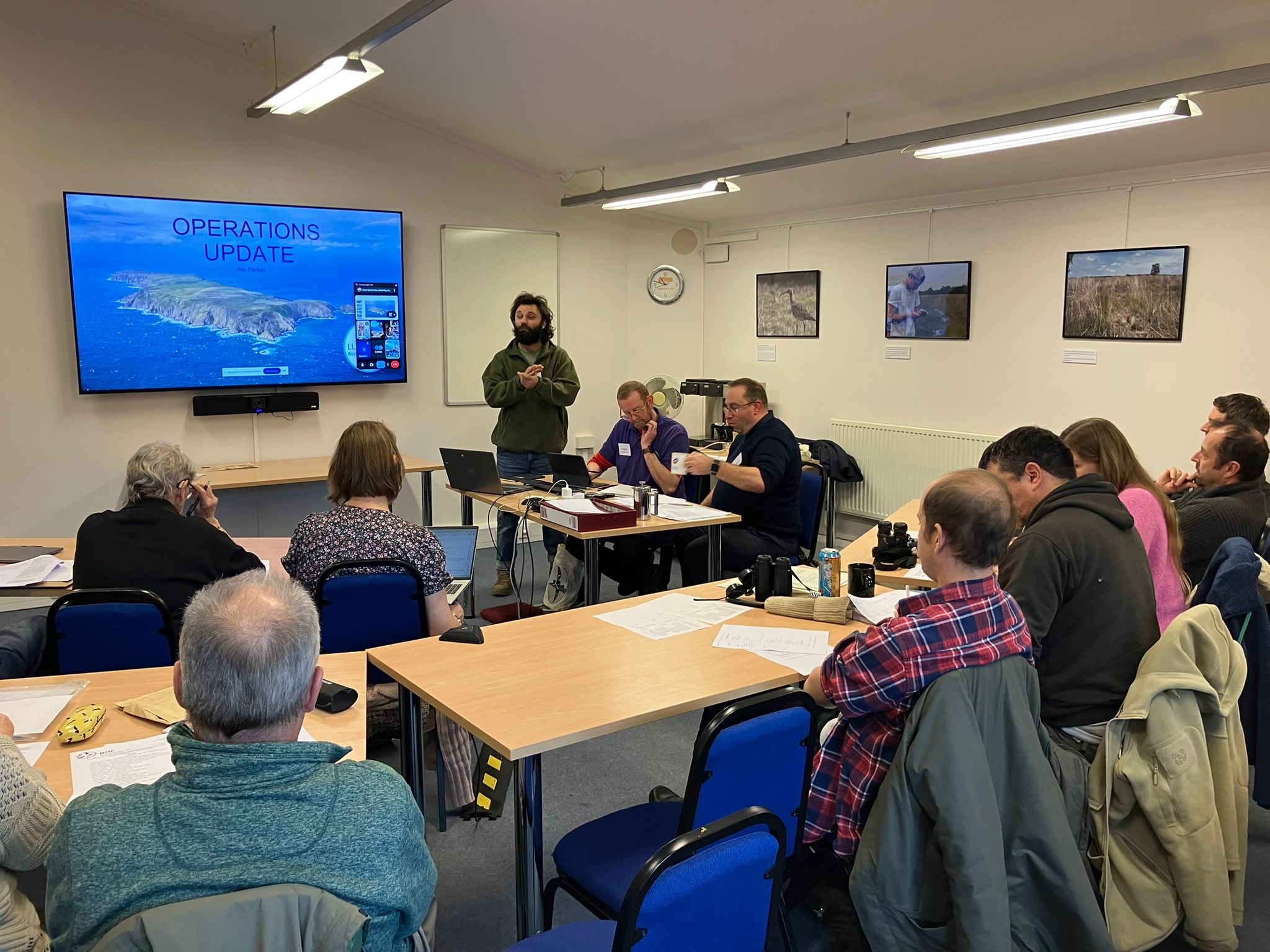
The Lundy Bird Observatory accreditation received in February 2023, was subject to a three year probationary period. The plan was for the Warden, Joe Parker, and the ringing group leader, Chris Dee, to attend the Bird Observatories Council AGM in Thetford on 2 February 2024 to provide a status update. Unfortunately, due to fog, Joe was unable to leave the island, but Luke Marriner, who was working nearby in Norfolk, was able fill the second Lundy representative place. Our presentation aimed to demonstrate that we are meeting the requirements for being recognised as a bird observatory and that the operational aspects were working smoothly. This was well received and there were no questions, so we are pleased to report a successful first probationary year and that we are still on course for full membership in 2026.
Apply now: Long-term Volunteering 2024
Applications are now open for our unique seasonal volunteering opportunities in 2024! Fantastic opportunities for budding conservationists to join the team and their their skills with Lundy Bird Observatory.
Various Positions Available
Bird Observatory Volunteer Assistant Warden (01 Mar - 25 Oct)
Seabird Volunteer Assistant Warden (26 Mar - 01 Aug)
Atlantic Grey Seal Volunteer Assistant Warden (01 Aug - 25 Oct)
Volunteer Assistant Ranger (11 Mar - 25 Oct)
Accommodation is provided and earn free meals throughout the duration of your stay by volunteering with the housekeeping and tavern teams!
Closing date for all applications: 29th December
Full information about all of the positions and how to apply can be found od the Landmark website here.