


Bird Sightings
September 30th - A trickle of acro's
A small arrival of migrants dropped in overnight once the rainfall subsided in the wee small hours. Song Thrush and Eurasian Reed Warbler both ringed in Millcombe early doors, with an accompanying cast of Common Whitethroat, Pied Flycatcher, three Firecrest and seven Goldcrest all logged in the valley through the day. The Short-toed Lark continues to favour the track south of Halfway Wall and both Barton Field drake Wigeon were back on show after a day in hiding seeing out yesterday's gale force winds. Elsewhere, two Sedge Warbler were seen at VC Quarry, a vocal Reed Bunting at Belle Vue Cottages, two Cormorant tracked north and an additional two Firecrest occupied St Helen's Copse, plus belated news of a Merlin near Pondsbury yesterday evening. A short seawartch at dawn offered singles of Manx Shearwater and Kittiwake off the east coast.  Sedge Warbler ©Tom Williams
 Kistvaen Pond wetting up nicely after yesterday's downpour © Joe Parker
September 29nd - It's a blowout
The unrelenting force-10 south-easterlies deteriorated into a post meridiem deluge making for challenging field conditions and limited shelter for grounded migrants. Census scrapped by on two calling Firecrest in Millcombe and a juvenile Kestrel hunkering down behind a drystone wall on Ackland's Moor. 39 Swallow attempted the journey south and a steady south-easterly movement of Herring Gull mid-morning totalled 104 individuals. The Short-toed Lark again showed well along the main track parallel with Pondsbury at 0730, however it would appear the 2 drake Wigeon have cleared out.
Photos in the hand during a nocturnal ringing session last night...
 'Greenland' Wheatear in the hand, South West Field - Tom Williams
 Common Snipe in the hand, South West Field - Tom Williams
September 28th - another Yellow-browed Warbler
A calm day with sunshine and blue skies saw a smattering of fresh migrants recorded across the island - including the 2nd record of Yellow-browed Warbler for the autumn, found in Millcombe pines during the morning census. The Short-toed Lark continues its stay and was seen feeding on the main track between Quarter wall and Halfway wall by visiting birders in the afternoon. 57 Blackcap and 8 Chiffchaff were the first increase in records since the large fall on the 24th of September. 19 Goldcrest represents the highest count for September thus far, with 3 Firecrest joining them. A single Spotted Flycatcher was seen around Millcombe and ringed in the early evening. The fine weather proved suitable for diurnal migrants with a Grey Wagtail and 3 Tree Pipits, the highest day count since the 16th, overhead. Hirundine passage appears to have slowed despite the good weather, with 34 Swallow and 9 House Martin seen. 2 Whinchat and 4 Wheatear were recorded - a 'large' individual ringed in the evening was confirmed by biometrics as an adult female 'Greenland' Wheatear (ssp. O. o. leucorhoa). Two drake Wigeon were seen again in Barton Field, 3 Water Rail heard including a bird at Pondsbury, and a single Cormorant flew high over Millcombe in the afternoon. A Golden Plover was heard briefly on the airfield during the clear night also.
 Short-toed Lark, on track near Pondsbury - Tom Williams
 Wigeon, St Helen's Field - Joe Parker
September 25th-27th Sightings - first Yellow-browed Warbler of the autumn
The eagerly anticipated first Yellow-browed Warbler of the autumn was found in the early afternoon of the 26th at Quarter Wall Copse by Angus, after an apparent mid-day arrival of migrants including 4 Firecrest and 3 Spotted Flycatcher, plus a Marsh Harrier in-off at the Landing Bay. The Short-toed Lark has been seen daily and continues to show well, feeding on the main track between Pondsbury and Halfway Wall. 2 Whitethroat seen on the morning of the 25th seem to have departed the island, along with the majority of migrant warblers from the fall recorded on the 24th. A flyover calling Tree Pipit was recorded during census on the 25th, and single Grey Wagtails were also logged on the 25th and 26th. 2 Whinchat were seen on the morning of the 27th associating with Stonechat at Old Light and Pondsbury, with 1 recorded on the 26th and 2 on the 25th also. On the wader and waterfowl front, 4 Golden Plover were logged on the 25th, 2 Teal have been seen at Pondsbury on the 25th and 27th, and 2 drake Wigeon in Barton Field on the 25th, decreasing to a single bird on the 26th and 27th. Strong westerly winds on the 25th led to an increase in seabird sightings, with 87 Gannet seen passing the island as they re-oriented out of the Bristol Channel, with single sightings of Common Gull on the 26th and 27th also noted. Some notable sightings from the MS Oldenburg on a return journey outside of the Lundy recording area on the 26th included Balearic Shearwater, 2 European Storm Petrel, 4 Manx Shearwater, 12 Kittiwake, 30 auk sp., and an Ocean Sunfish.
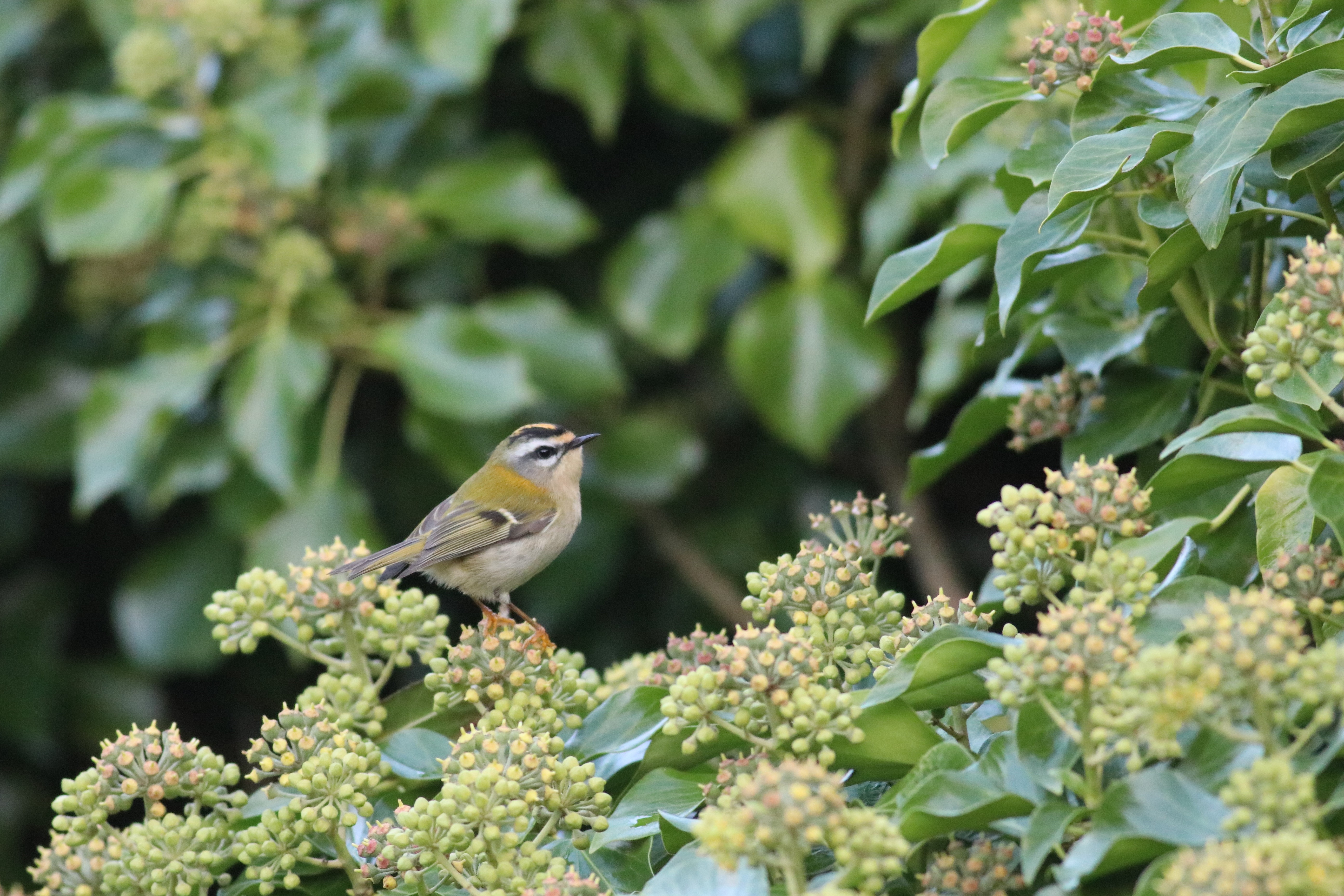 Firecrest, Millcombe - Tom Williams
 Grey Heron, Pondsbury - Joe Parker