


By Thomas Weston
It’s the start of the month, and with autumn moving quickly in the bird world, it is amazing to see what has already passed through, and what may be around the corner. September is a time for more migration, and a few more scarcities, and maybe the odd rarity too.
September is a time the weather changes. All it takes is one low pressure to come through to make you realise that autumn is well and truly here! With windier and wetter weather than anytime since April, it is certainly doing just that here. September also sees a change in the island, the bracken starts to die back, and the leaves begin to change too. September is a time of more birders, bird ringers and more specialised guests. The summer holidays have come to an end now, and with only 7 weeks of boats left, this is the time to see Lundy fully wild and wonderful.
We think of the breeding season being over and for most that is true. Our resident species have well and truly done for the year, and the migration of our migratory species is in full swing, so they have also finished breeding too! A new Swallow brood found in one of the nests previously used this year with two eggs was a surprise. However, on inspection, it seems like the two eggs present have been abandoned, maybe as a result of the change in weather. However, the end of the breeding season for the Manx Shearwaters has not yet come! The majority of our adults, and fledglings have now left the island, but this morning I checked the artificial boxes with Jessie, and weighed the final four chicks. Being Jessie’s last day on the island as a volunteer, before returning to the mainland, it was great to be out and to see the chicks one last time.
The chicks were of very good size and weights. One was sleek and barely fluffy, another a little fluff around the vent, one with the stereotypical mohawk vibe with fluff on the side too, whereas the youngest of the box birds was relatively fluffy, though losing it quickly. The two oldest could easily fledge, though with the moon very bright last night, it could be a race against the clock this evening. I am sure they will be off and have all my fingers crossed for a little more cloud cover and then they will be able to head on off on their journey to South America. It will be amazing to see what we find next time in the boxes, though it seems like this may have been the last check with birds present!
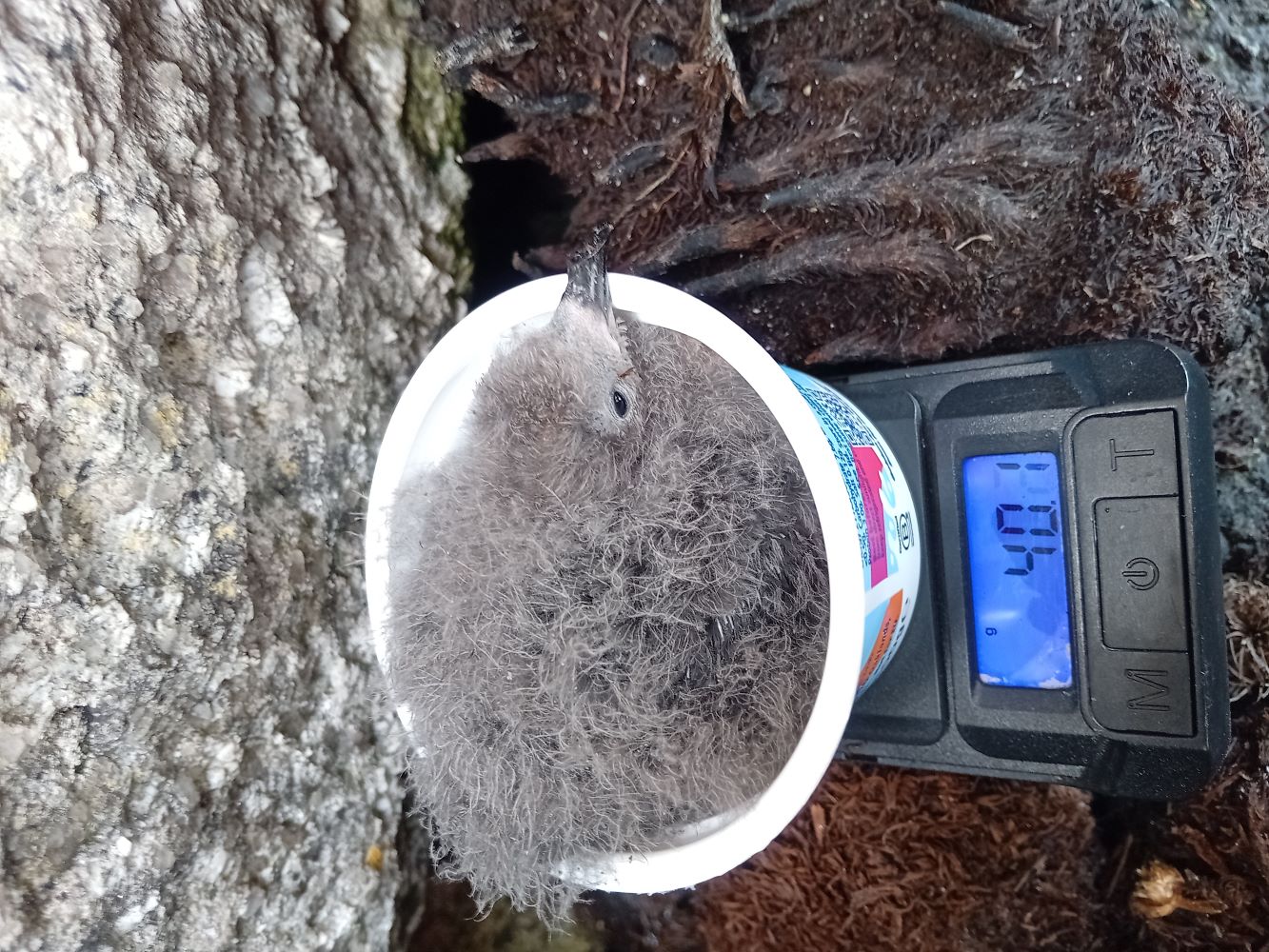 Storm Petrel chick at an undisclosed site by Thomas Weston
Our work with the seabirds is not over yet though. Another species still breeding is European Storm Petrel, which could go on into November! So, plenty more checks for me and the team to undertake in the meantime. Unfortunately, due to site sensitivities and the risk of disturbance, we have not been able to share our amazing work this year on this species just yet. However, a cute chick pic above gives an indication of how well they are doing, even after a later breeding season start.
After completing the Manx Shearwater box checks, I came on back and had a chilled morning ahead of my Tavern shift. It will be interesting to hear what Greg has seen on census. A Grey Wagtail spotted by him was the first of the autumn, but we shall find out more later….