


By Thomas Weston
With the wind blowing from the NW again, it was a good day to go down to the valley and undertake some Millcombe ringing. Moths by Greg was not undertaken today due to the wind, so the team set up base and opened a few of the nets in hope for some migrant warblers.
It was not long before the wave of Willow Warblers came through between 7-8am. The wave was mostly downslope from the Ugly and out to the SE. A few, presumably birds that did not have enough energy supplies were caught as they headed back up the valley, but the majority were downslope. An impressive and phenomenal migration moment in the day resulting in 50 birds being caught and ringed. There was a good backup cast of 1 new and 1 retrap Chiffchaff, a new Wren, 1 new and 1 retrap Goldfinch, 2 new Sedge Warblers, a new juvenile Dunnock, 2 new Blackbirds, and a retrap House Sparrow. Due to the lack of moth trapping this morning, Simon undertook some bushcraft activities including making rope out of stinging nettles! And teaching the Birders Week team how to successfully undertake this process without being stung.
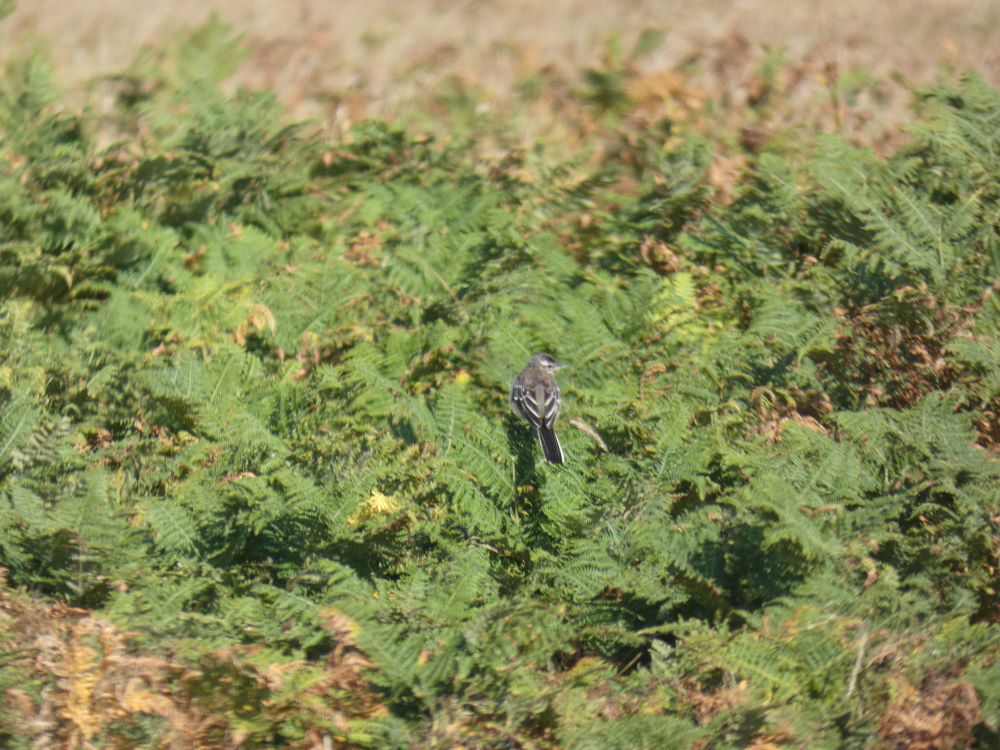 Channel Wagtail at Rocket Pole Pond by ThomasWeston
I undertook census whilst the ringers were in charge of Millcombe. In addition to above, there were 17 more Willow Warblers, single Spotted Flycatcher, 2 Whitethroats, 2 Sedge Warblers, 42 Wheatears showing an even larger arrival than yesterday, a single Sand Martin, a Rock Pipit in the Campsite, the Channel Wagtail male and female in Barton Field, whilst their fledged chick was by Rocket Pole Pond, 13 Swallows and a flyover Curlew. This juvenile type bird was heard way north of Quarter Wall, at a guess nearer Tibbetts. The call was distinctive and the bird casually headed south with a Herring Gull, bypassing the Airfield, Stoneycroft and heading SE before being lost to view. It was not the only Curlew seen today, with what was believed to be an adult female type with a longer bill seen around Rat Island this afternoon/evening.
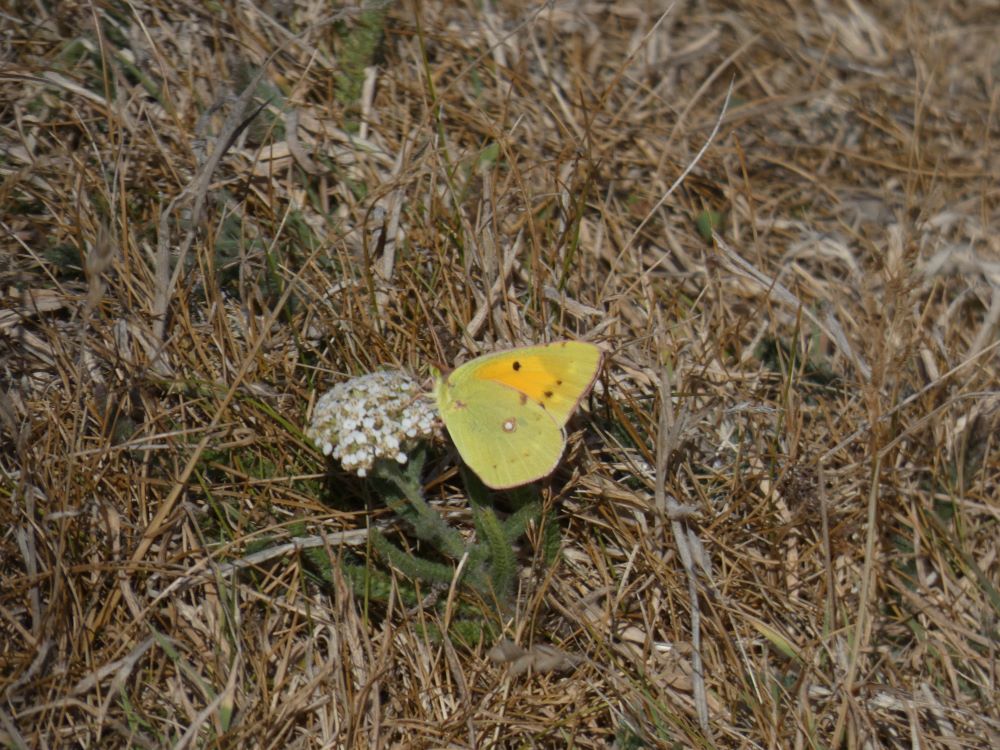 Clouded Yellow Butterfly at Benjis by ThomasWeston
Another Conservation Team task, as well as the boat day routine was the routine Butterfly Survey along the east coast. Today, Jessie and Kirsty undertook the survey and saw good numbers of butterflies including an increase in Clouded Yellow, Painted Lady, Small Heath, Common Blue, Red Admiral, two species of whites and a Grayling spotted by one of the Birders Week participants.
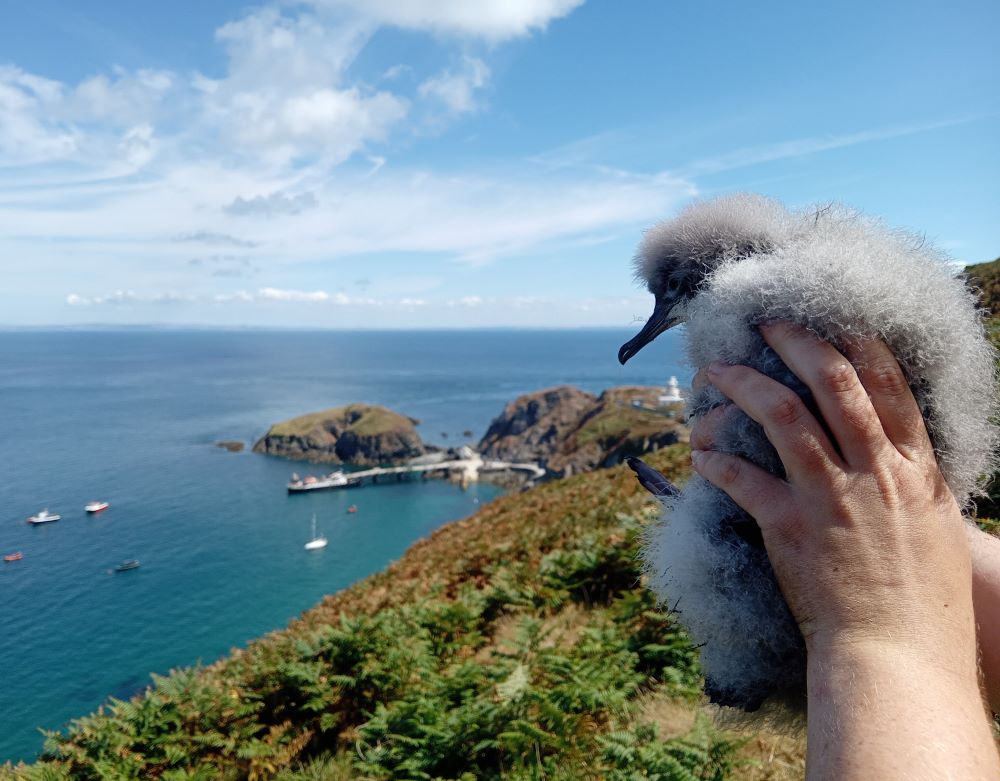 Manx Shearwater Chick by Mathilde
After some much needed lunch break, we decided to check an area of cliffs along the east coast where we do not tend to go night catching. Without raising too many expectations, we started to check some Manx Shearwater burrows and quickly started to find chicks! Based on our productivity boxes, we knew there should be some big chicks around, and it was great to see the birds in the natural burrows at the same, or similar size to those we are monitoring. Even with a small sample of 6 chicks found, it shows our birds can be representative for those around the island’s colonies. We also caught two adults in the burrows. More amazingly, one was ringed in September 2019 as an adult. We believe this bird to have been misaged, as an adult in September is quite uncommon, and the proportion of juveniles on the wing at that time is rather high!
At the end of the short session, we said goodbye to three participants who were heading off to jobs and work. The rest of the team headed back for some food before I gave a talk about Blackcap and Chiffchaff moult strategies, ahead of the autumn bonanza, as well as undertaking wildlife log ahead of an evening of nothing planned! Bliss.