


By Lucile Doyen
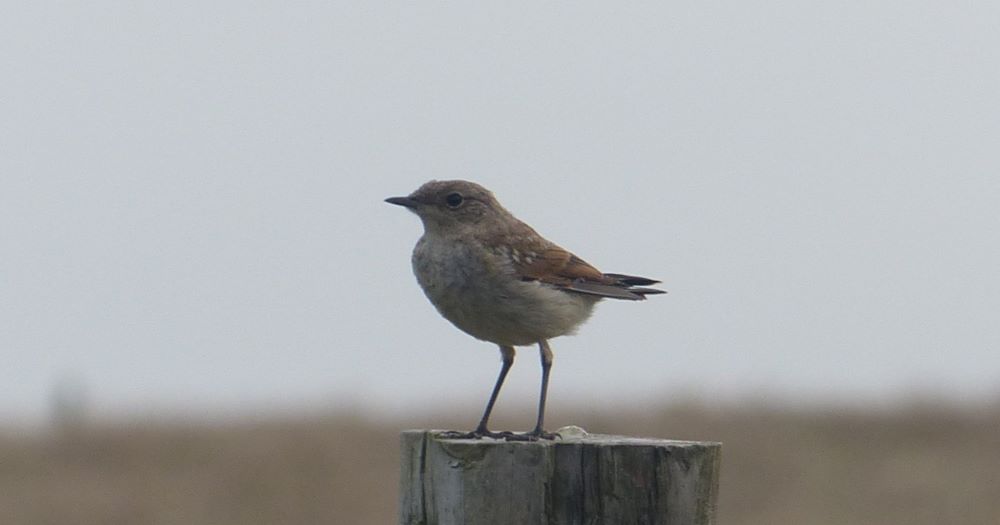 A Wheatear juvenile by Lucile
For Emma, Jessie, Thomas and I, this week started with a nice little tour on a designated path, which would hopefully allow us to meet some young Wheatears (Oenanthe oenanthe). The little expedition took place at dusk and would end early on Monday, just after midnight. Thomas was leading with a thermal camera, through which he detected the birds sleeping on the path before catching them with a net. Out of 14 birds seen, 9 were successfully trapped and ringed! We first measured the tarsus width of each individual to confirm the subspecies and ensure fitting the correct ring size : the british subspecies would take a smaller (A) ring than the greenland one (B sized ring). Wheaters are a very interesting species : they have a complete ossification of the skull in only two months, which usually take around six months in juvenile passerines (Svensson, L., 1992)1.
1Identification Guide to European Passerines. Lars Svensson. British Trust for Ornithology.
Later in the morning, I monitored the last active brood of our House Sparrows (Passer domesticus). This is the second brood of a couple of one year old sparrows, which re-used the outstanding nest they made for their first brood. This may have allowed them to save some time, and the time interval between their two broods was 7 days (with a mean of 12.75 days for our population, s.d. = 4.34). This was a rather little brood of just two chicks, one of them being unfortunately half the weight of the other when weighed at 5 days old. At ten days old, the imbalance in food intake between the two siblings got the better of this little chick. Life can be rough, but it is also beautiful. All nestlings from first broods made it, and we got a good survival of 72.7% in our second broods, with a population now estimated to 73 House Sparrows! It is a real pleasure to see them around, way more numerous than at the beginning of the breeding season.
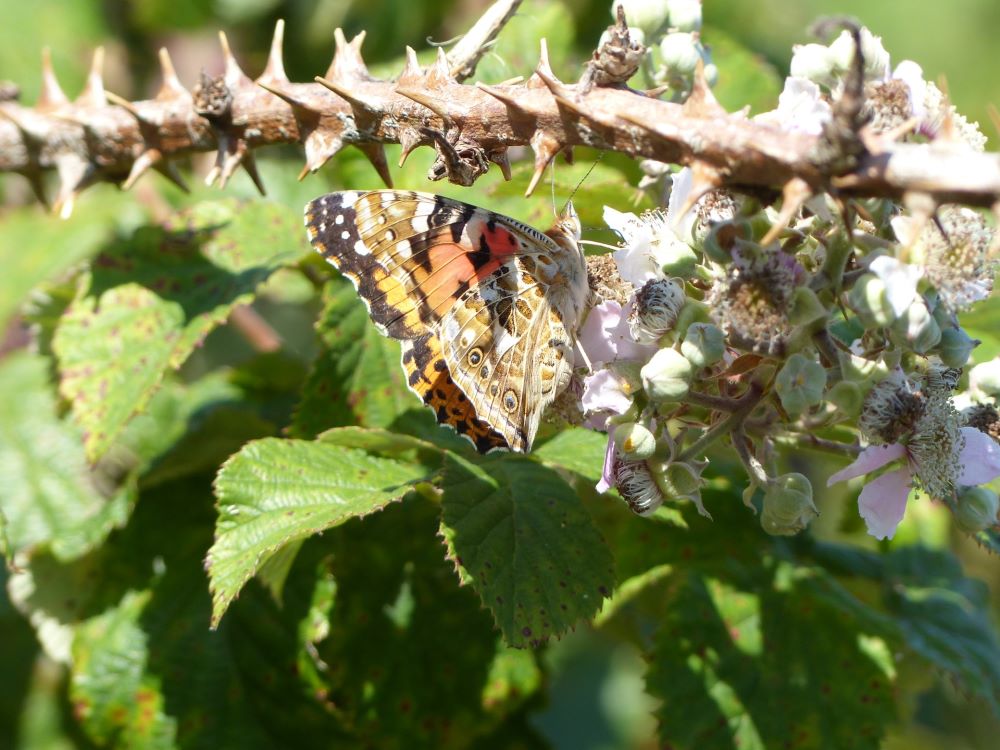 Painted Lady by Lucile
In the afternoon, I walked along the east coast. I started the promenade by following butterflies: mostly Red Admirals (Vanessa atalanta), Painted Ladies (Vanessa cardui) and Meadow Browns (Maniola jurtina).
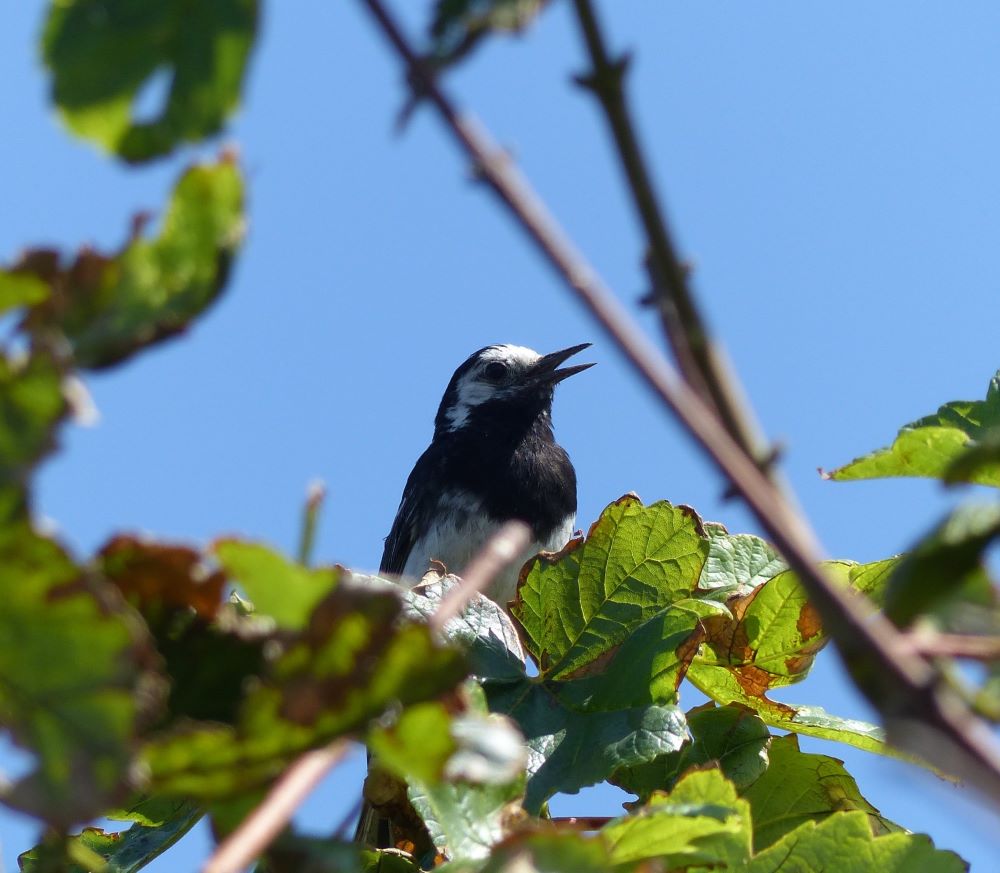 Pied Wagtail by Lucile
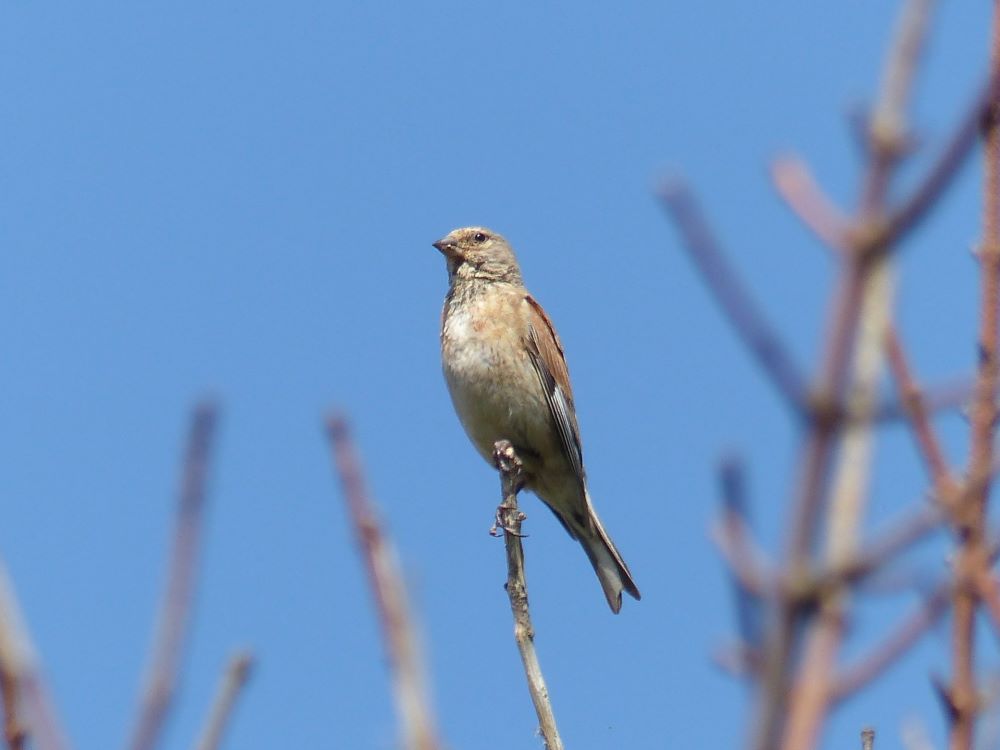 Linnet by Lucile
On the first tree, 3 Pied Wagtails (Motacilla alba) and a Linnet (Linaria cannabina) have found shelter on the trees. Adult and juvenile Stonechats were flying around, landing on fences and bracken. A lot of migrant Willow Warblers halted on the island, and I could see ten of them hiding on the vegetation just around the goldfish pond.
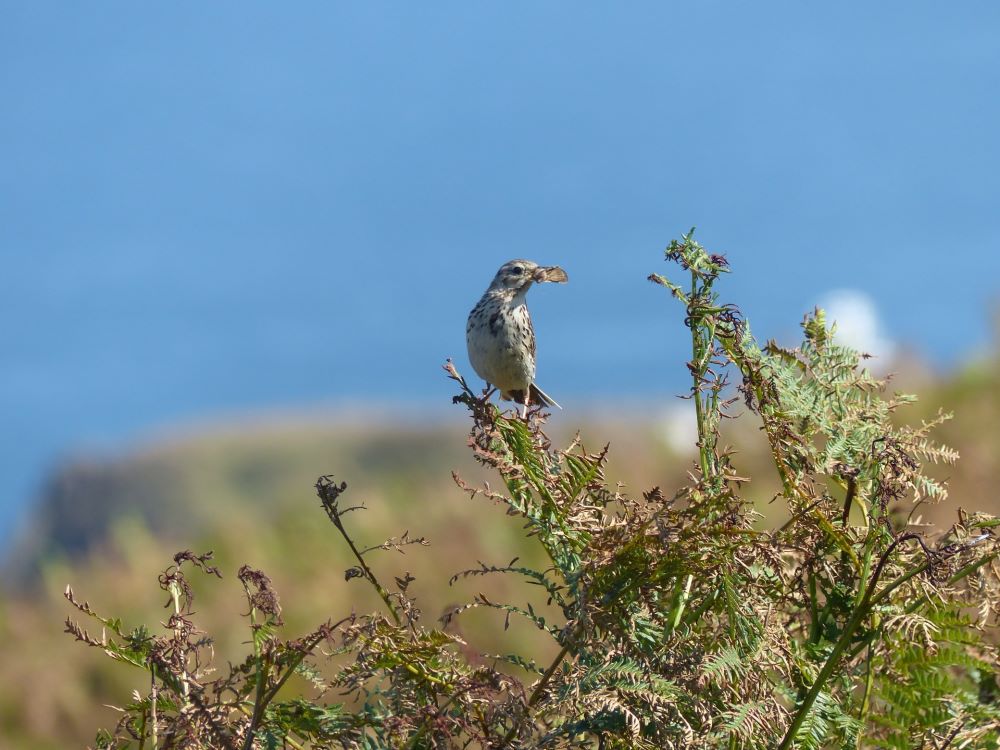 Meadow Pipit by Lucile
The promenade led by butterflies ended with one of them being caught by a Meadow pipit for the goûter.
The day ended up with a Wingspan game, a board game where players collect bird cards, eggs, resources, and try to get the best score out of this. I teamed with Chloë, and playing a Ring-billed Gull and a Bald Eagle led us to victory! We hope the former arrives on the island this autumn.