


By Jessie Dermody
Yesterday evening, five brave heros set out to retreive an old abandoned lobster pot, and rescue the crabs trapped inside. It proved to be much more difficult than we thought it would be, as the pot was stuck on the seabed. On the swim out to the pot, I counted a school of 16 Sea Bass. In the end, we dove down to tie ropes to the lobster pot, then used these and a tractor to pull it up onto the jetty. We snapped one rope in the process. Luckily, we and the crabs all made it out alive! We liberated two Brown Crabs, a very sad three-legged Spider Crab, and an army of Spiny Squat Lobsters of varying size. The squat lobsters (coloquially known as squobsters) were very nice to see, as this species is quite elusive - despite their bright colouration. They love to wedge themselves into small crevices in deeper water, and they move very quickly whilst they are in the water. Generally, it is difficult to catch more than a quick glimpse of one unless you are scuba diving. There was a lot more life on the pot, including Dirty Sea Squirts, several Keel Worm species and plenty of Long-clawed Porcelain Crabs. We didn't want to harm or remove the sessile life on the pot from the environment, so we cut out the parts that would trap anything else and returned the frame to the water as an artificial reef. Ideally, the pot would have been found before any bio-fouling had occured, but as it had already happened, we had to compromise.
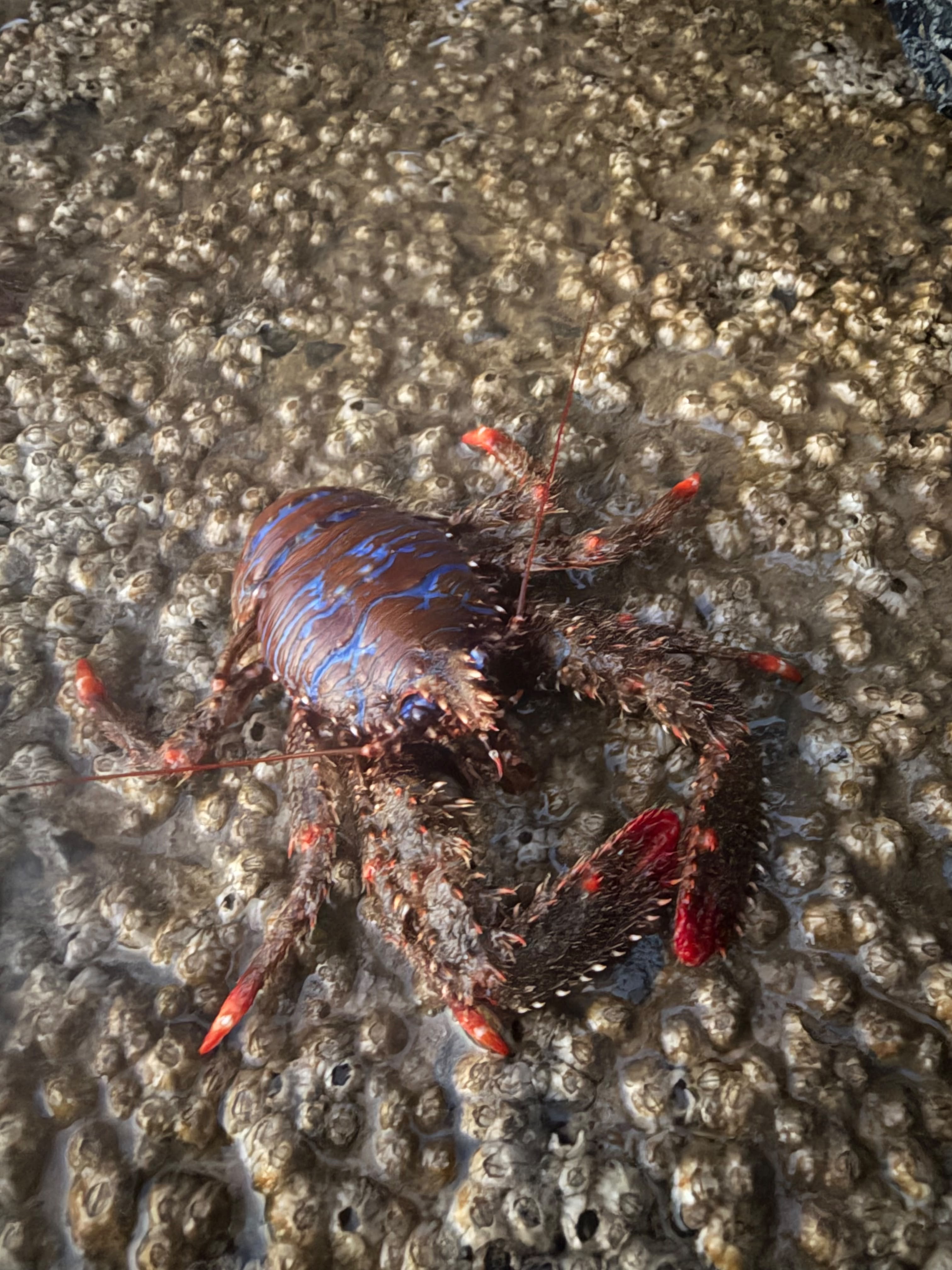 A large Spiny Squat Lobster after being released from the lobster pot. Photo by Chloë Langmead
Today was a very exciting marine day - we had two snorkel safaris in the morning, followed by our first BRUV deployment from the islands new RHIB! The snorkel safaris went well, we saw a lot of Spiny Starfish, and plenty of Ballan Wrasse as usual! The snorkellers really enjoyed looking at the many Snakelocks Anemones on the seabed. The underwater scenery in the rocky reef is so beautiful in the sunlight.
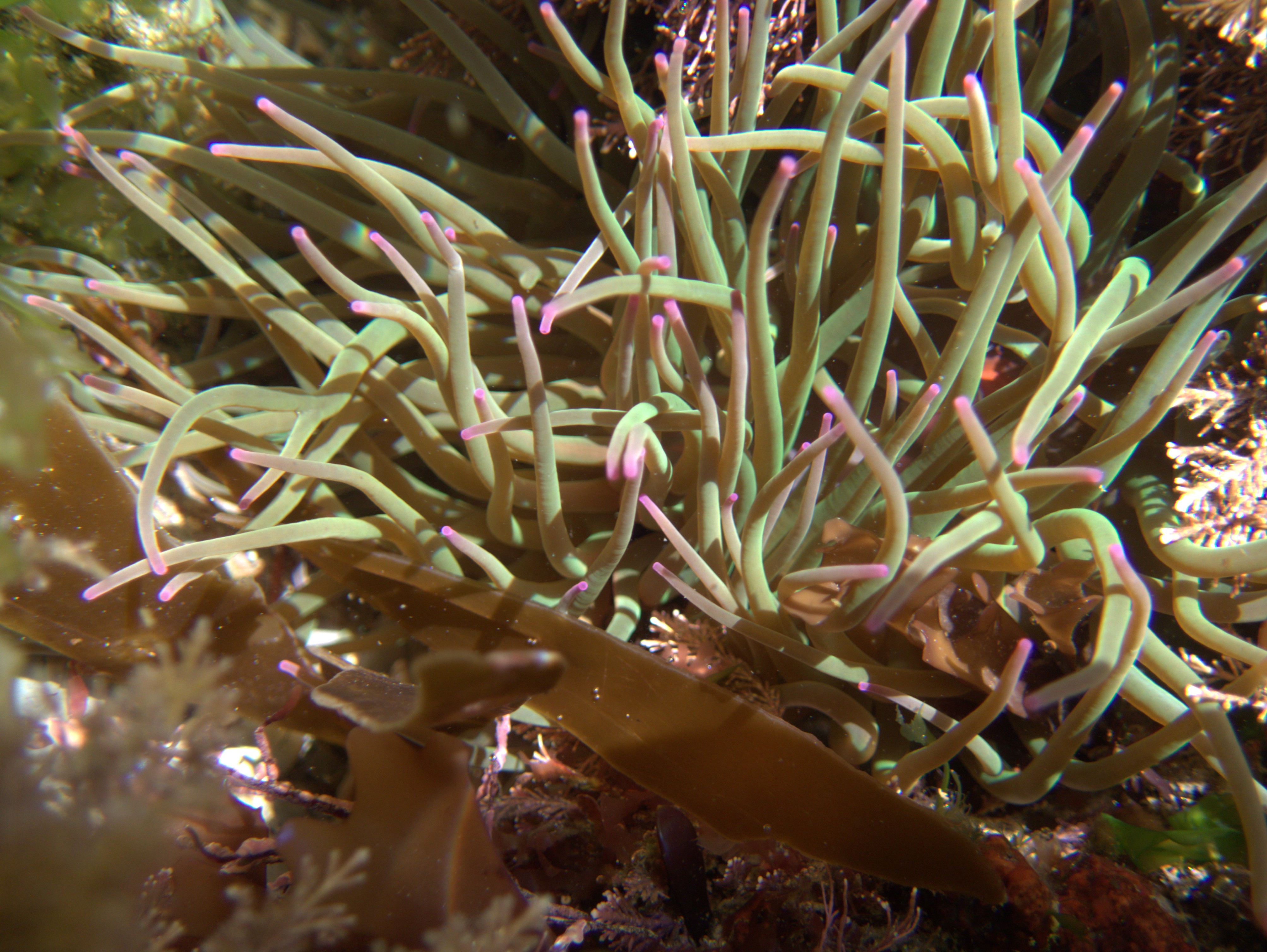 A green Snakelocks Anemone. Photo by Jessie Dermody
After we'd dried off, we loaded the RHIB with the BRUV and its bait. My friend Abi was visiting, filming for her Masters project, so she came along to film and conduct some interviews from the boat. We headed around the east side of the island, to Quarry Bay. There were no seals hauled out on the rocks, so we carefully approached until we were at 7 meters of depth. Chloë and I dropped the BRUV over the side of the boat, and we left it there for an hour. We had a little trip around the island whilst we waited. There were five Gannets following the thermal streams close to the boat, so we got some lovely veiws of them. There were also lots of Shags and juvenile gulls on the water, and some seals hunting. Abi interviewed Chloe and Tara about the BRUV, then we pulled it up and returned to shore.
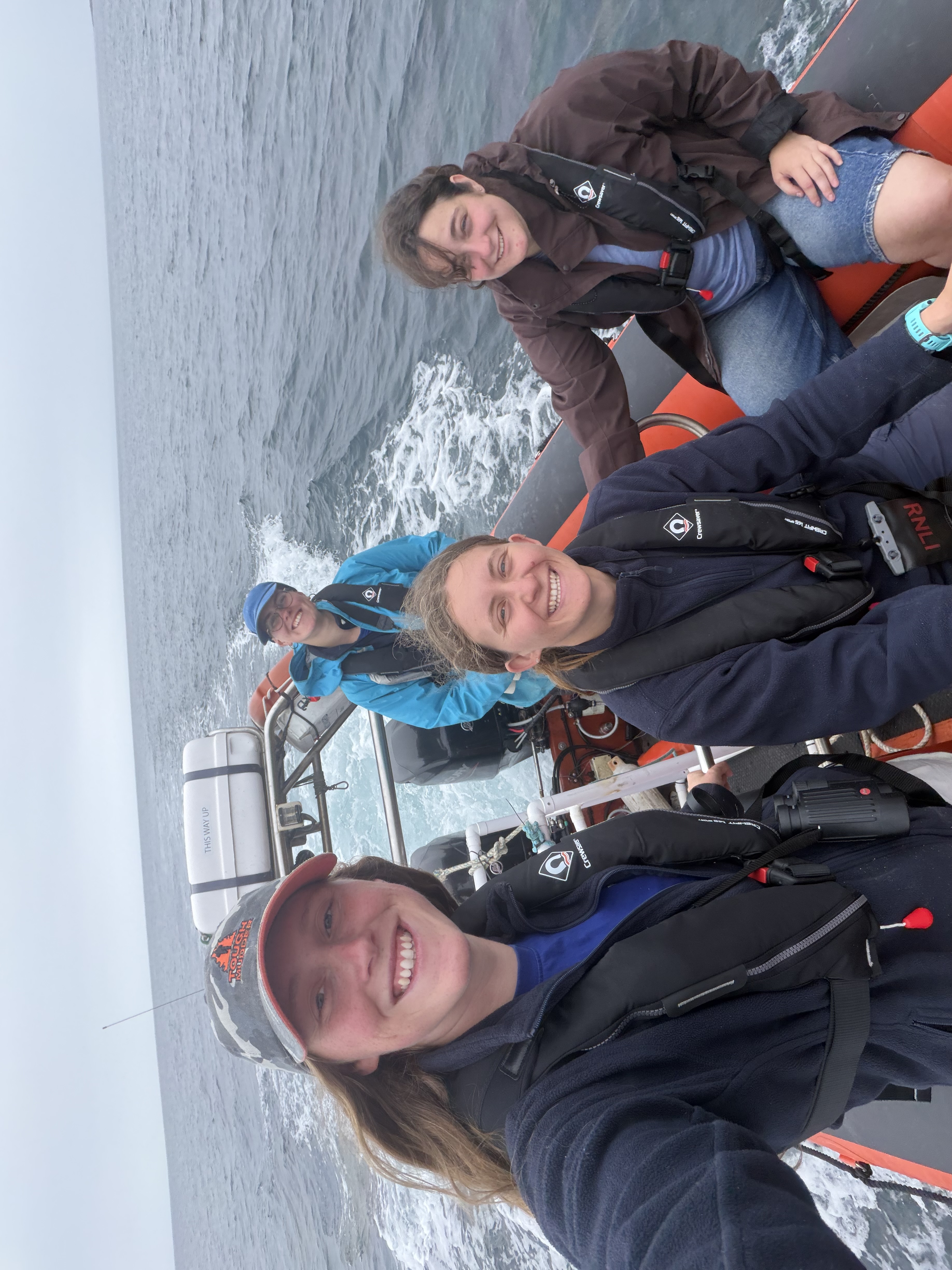 Todays BRUV deployment team! Photo by Chloe Langmead.
This was our first BRUV deployment withinin the No-Take Zone around the island, where no fishing is allowed. Usually we deploy in the Landing Bay, which is more acessible, but is also an area that is fished recreationally. Immediately upon the camera entering the water today, it recorded an unidentified wrasse species. In the first five minutes of footage, an additional four adult Pollack and a female Cuckoo Wrasse were observed! In 35 minutes of footage, I observed six fish species including all five of the common wrasse species: 2 Ballan Wrasse, 1 Corkwing Wrasse, 1 Goldsinny Wrasse and 5 Rock Cook. This is a lot more activity than we have had in our previous deployments, which could be due to a number of factors - e.g. the site being in the centre of a kelp bed, or the lack of fishing here. At the moment, we would need to do more deployments to test this.
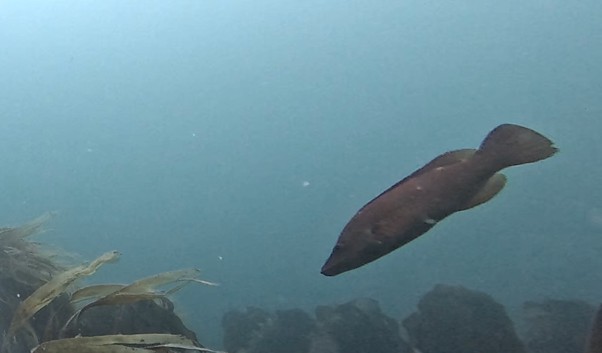 A large female Cuckoo Wrasse as seen by our BRUV