


Bird Sightings
24/05/2026 – Hot weather, a cold and a Golden Oriole
By Greg Lee
A very pleasant day on Lundy, with the maximum temperature creeping up to 21.4°C. Sadly, I had picked up a rather unseasonal bug, so I wasn’t in full working condition whilst trying to maintain a consistent source of hydration to fight off the worst of the illness. However, it didn’t stop me having a nose around Millcombe early in the morning where once more I connected with one of the Golden Orioles seen over the weekend, this bird giving a brief flypast at the top of Millcombe before landing in the mature trees. Commoner migrants were represented by a Spotted Flycatcher, Whitethroat, Willow Warblers, House Martins and Swallows. Thomas, who had done census during the morning also reported a Turtle Dove at the top of Millcombe, loitering with the long-staying Collared Dove. I had no such luck tracking down this, sadly, now scarce migrant to Lundy in the heat haze. Perhaps most striking though was a fascinating inversion over the sea, with a blanket of fog covering the Bristol Channel with the cliffs of North Devon still visible over the clouds. Unsurprisingly, in the heat, most of the birds were laying low, so sightings in the afternoon were limited although a Hobby seen at Old Light was a good spot of this migratory falcon.
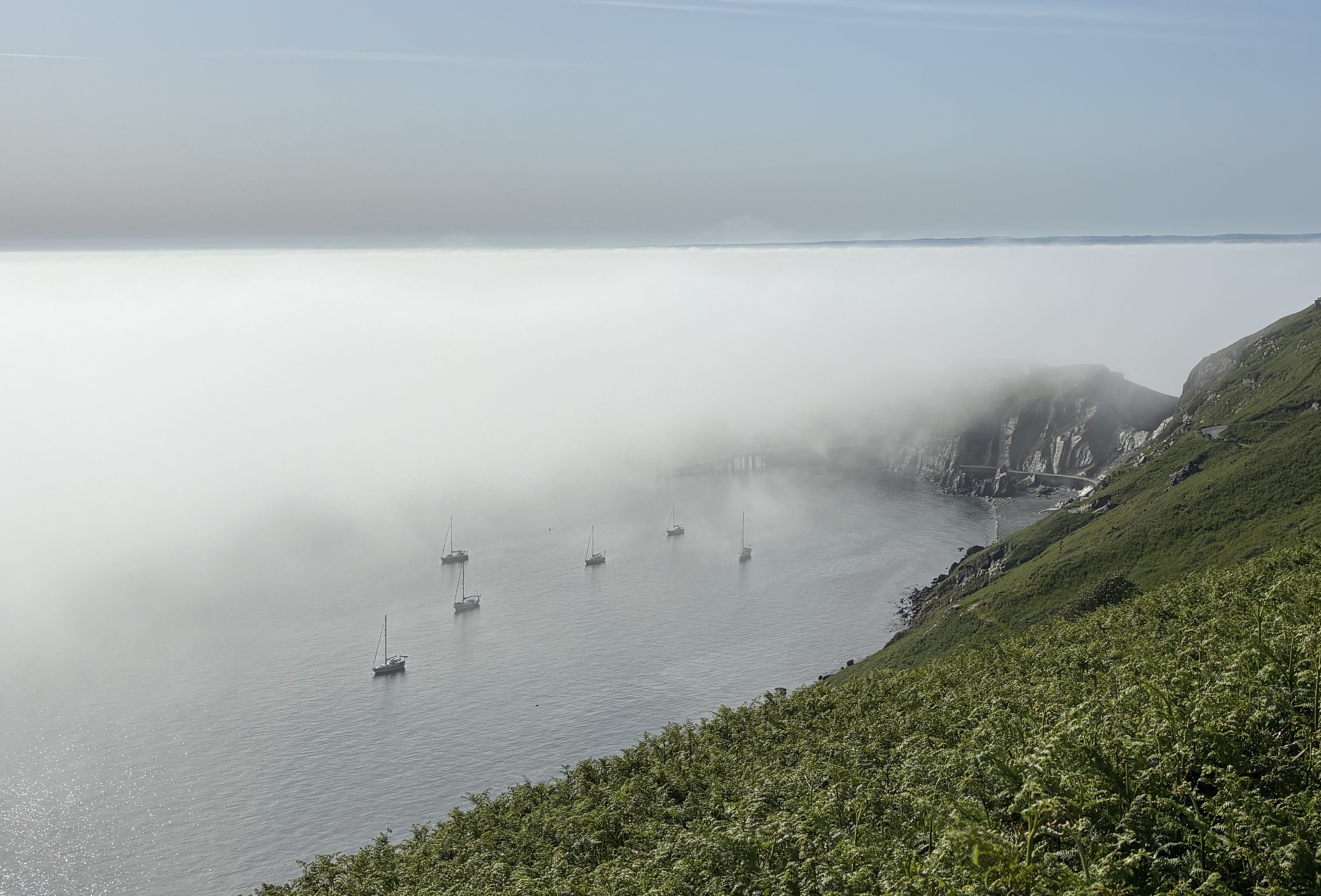 Inversion over the sea by G.Lee
In the afternoon, having seen a report of the Turtle Dove being seen flying from Barton Field, I decided to check the field itself where I was pleased to spot the Turtle Dove feeding quite happily in an exposed area of bare ground, blissfully unaware of my presence. It seems a fair few of these birds have been seen at other coastal headlands over the past week.
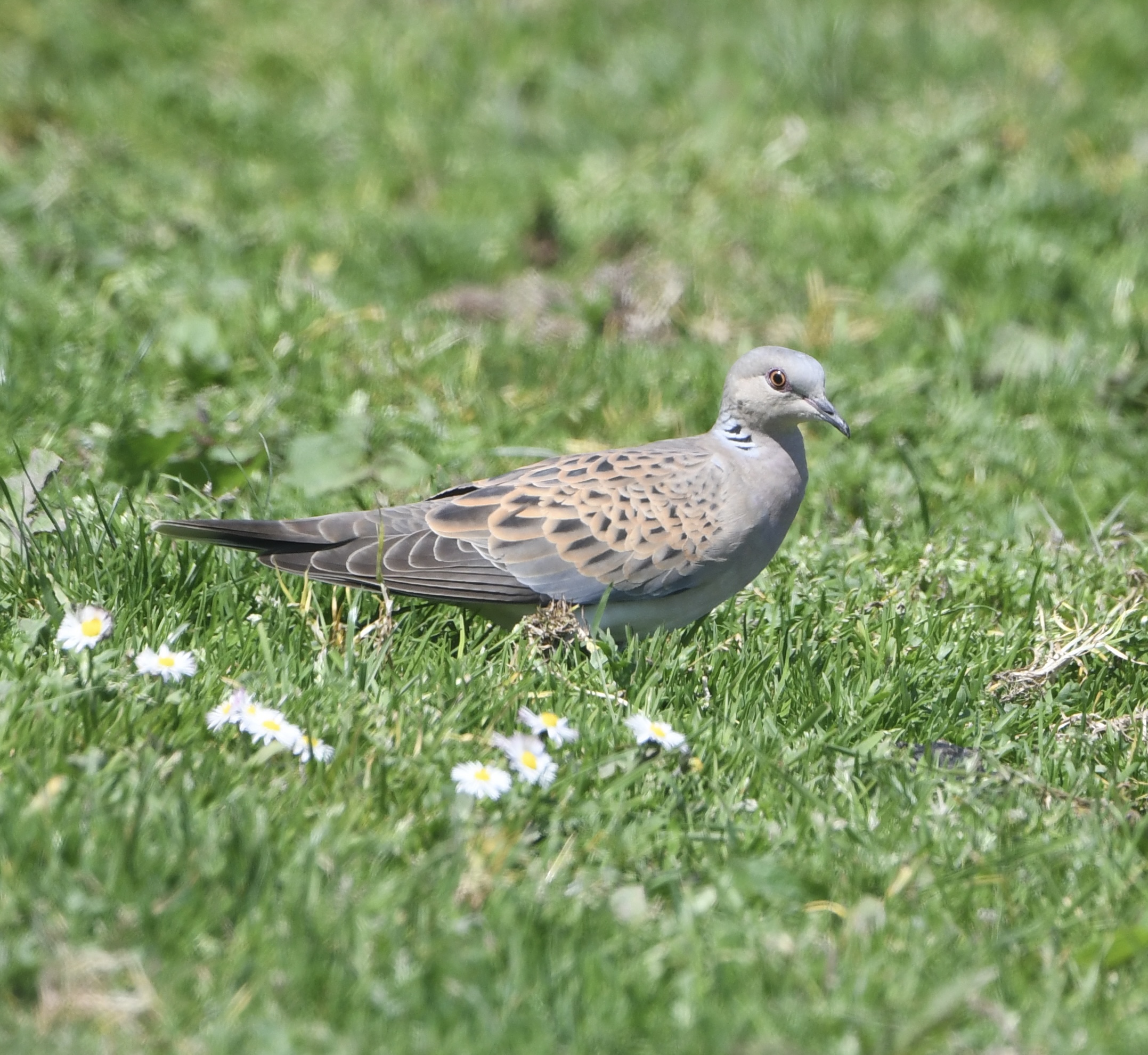 Turtle Dove by G.Lee
On the other hand, the insects were thoroughly enjoying themselves in the heat with no less than 293 Painted Ladies seen across the island, though it was likely there were many, many more. In addition, Small Heaths are starting to appear across the island, and these tiny sun-seeking butterflies of short turf can be readily seen along the coast of the island. In the cooler evening air, I decided to have a short walk over to Old Light, along with many butterflies, every footstep in the long grass seemed to kick up several Diamondback moths, which had also appeared on the warm winds. Looking over the wall near the water tanks, I then picked up a large dragonfly with a direct and powerful flight motoring towards me from across Ackland’s Moor. Immediately, I noted the green/brown colouration to the abdomen and thorax and the brown eyes along with a slight bronzy colour to the wings identifying it as a female Vagrant Emperor, which had probably arrived with all the other insect migrants on the warm winds. After a brief pause in its flight to investigate the water tanks, it then zoomed off on its way northwards as the light began to fade. A summer-plumaged Golden Plover on the Airfield was an additional bonus, seemingly enjoying the shorter turf on the runway.
23/05/2026 – Short Bird Blog
By Thomas Weston.
I was in the Tavern today, so all sightings come from other members of the Conservation Team, members of the public, and during my Tavern breaks.
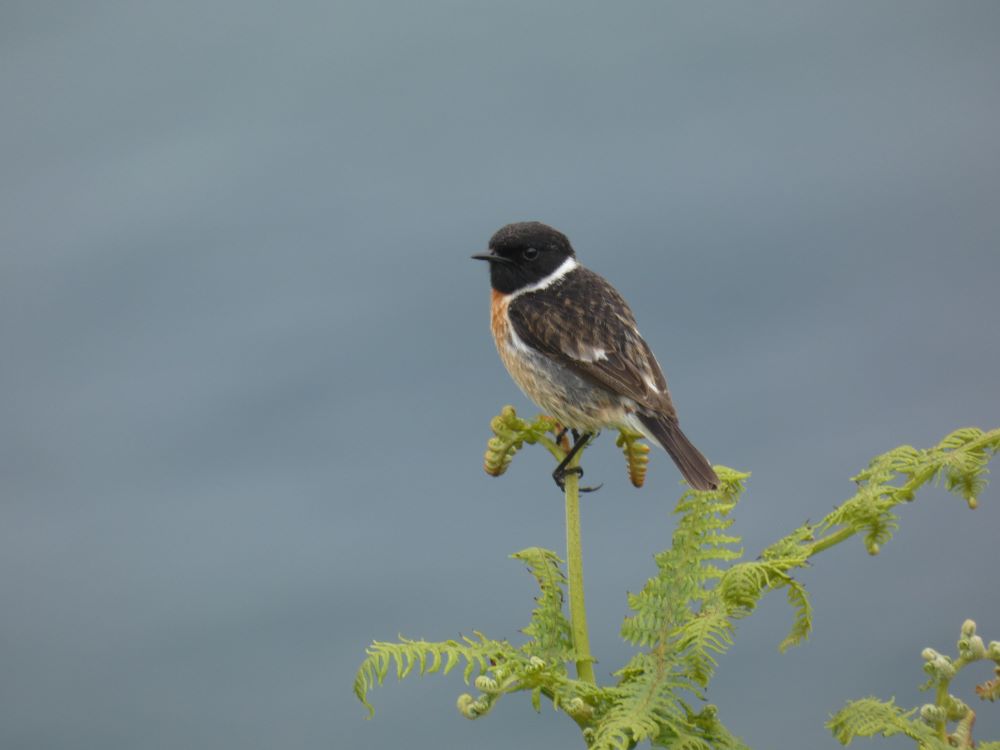 One of the species Simon saw on census, the Eurasian Stonechat. ThomasWeston
Simon undertook census this morning. He saw 8 Mallards, 6 Feral Pigeons, 8 Oystercatchers, 5 Great Black-backed Gulls, 94 Herring Gulls, 2 Lesser Black-backed Gulls, 6 Shag, 4 Carrion Crows, 2 Skylark, a single Swallow, 7 House Martins, 2 Willow Warblers, 6 Chiffchaffs, single Whitethroat, 8 Wren, 11 Starlings, single Song Thrush, 6 Blackbirds, single Spotted Flycatcher, 4 Robins, 2 Stonechats, single Wheatear, 8 House Sparrows, 5 Dunnocks, 10 Meadow Pipits, 4 Chaffinches, 37 Linnets and 7 Goldfinches.
Sightings from members of the public included amazing views of Hobby seen on the East coast between St John’s Valley and Tibbetts; 2 Golden Orioles darting between Millcombe and Quarter Wall Copse; 2 Sedge Warblers, a Tree Pipit, and a Reed Warbler on the Lower East Side Path; our pair of Channel Wagtails busy feeding and flying between Barton Field and Lower Lighthouse Field; and a Turtle Dove in St Helen’s Copse! An impressive species total today.
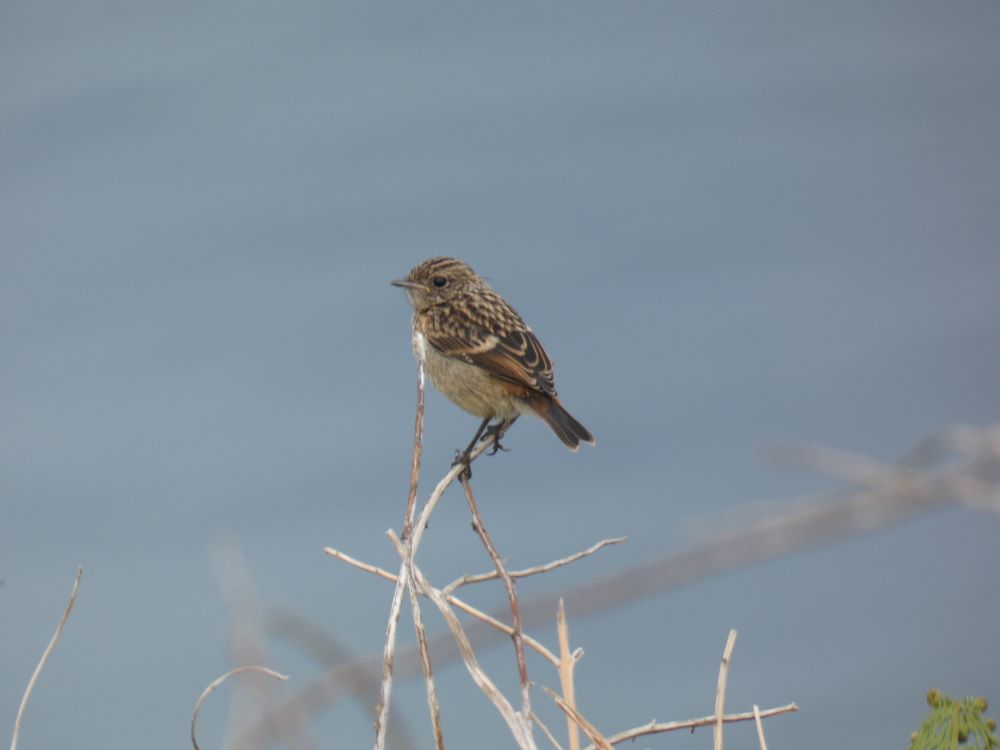 A juvenile Stonechat along the UESP. Thomas Weston
My sightings from the day included an evening walk along the Upper East Side Path. This included 3 Spotted Flycatchers, 2 fledged broods of Stonechats, singing Chaffinch, 4 Blackbirds, singing Dunnock, 4 pairs of Linnets and Meadow Pipits, 3 House Sparrows, 16 Shags, 100+ Diamondback Moths, 30+ Rush Veneer, 30+ Red Admiral and 40+ Painted Ladies.
22/05/2026 – Wheatears on the West
By Greg Lee
The first still day for a while and an indicator of what should be an upturn in the fortunes of the weather over the next couple of days.
Today, Thomas, Eleanor, Maddie and I joined Tony and Ann Taylor who are currently here adding to the Wheatear colour-ringing project on Lundy. We concentrated mainly on the Castle area in the morning where a couple of unringed birds were present along with already colour-marked individuals. It was quite the success today with three new birds added to the project along with a previously known individual which found the temptation of a Waxworm all too strong. Since many birds now have hungry mouths to feed, any good food source is worth taking. Whilst waiting patiently, it was also apparent that a large movement of House Martins was going on with large flocks of birds pushing through in the low cloud along with the occasional Swift racing over. Meanwhile, there was also a significant arrival of insects with Painted Ladies beginning to stream through. Looking at Benjamin’s Chair, we also noted some Puffins now amongst the Razorbills rafting offshore, over the next couple of months they should become a regular feature of census on this part of the route. An attempt to catch more Wheatears further up on the West Coast in the afternoon wasn’t quite as successful, but the settled weather over the next few days should provide further opportunities.
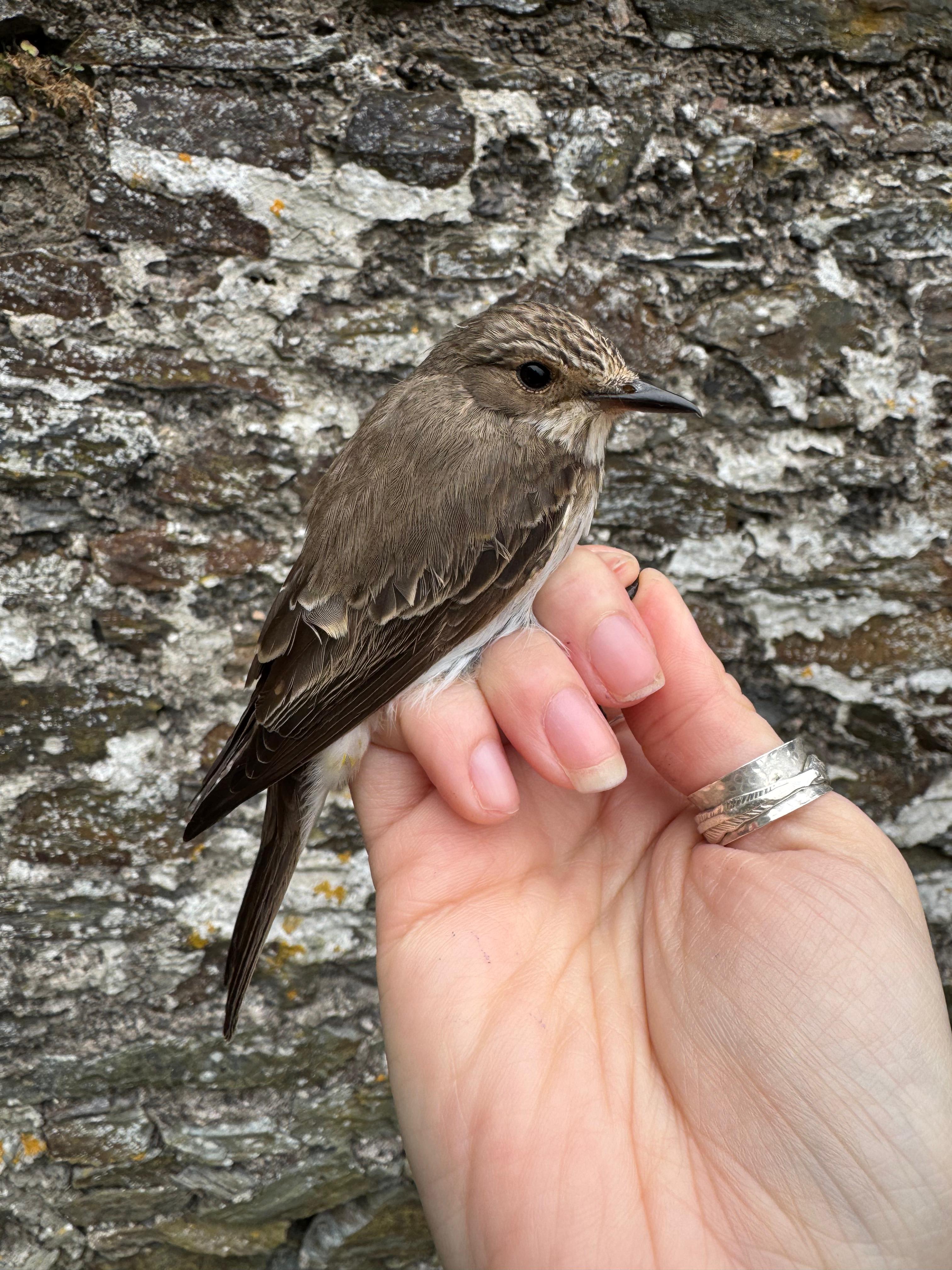 Spotted Flycatcher
Elsewhere on the island, it was a good day for birds with two new Golden Orioles found on the East Side near Quarter Wall Copse and the amazing sight of three Cuckoos perched along the fenceline near Quarter Wall. More additions in what has been a good spring for both these species on Lundy. A Tree Pipit overhead was another good record, a Pied Flycatcher at Goat Island, two Reed Warblers were logged and Spotted Flycatchers totalled 14 across the island. Perhaps the highlight of the day was a smart male Red-veined Darter, just the third record of this migrant dragonfly species for Lundy.
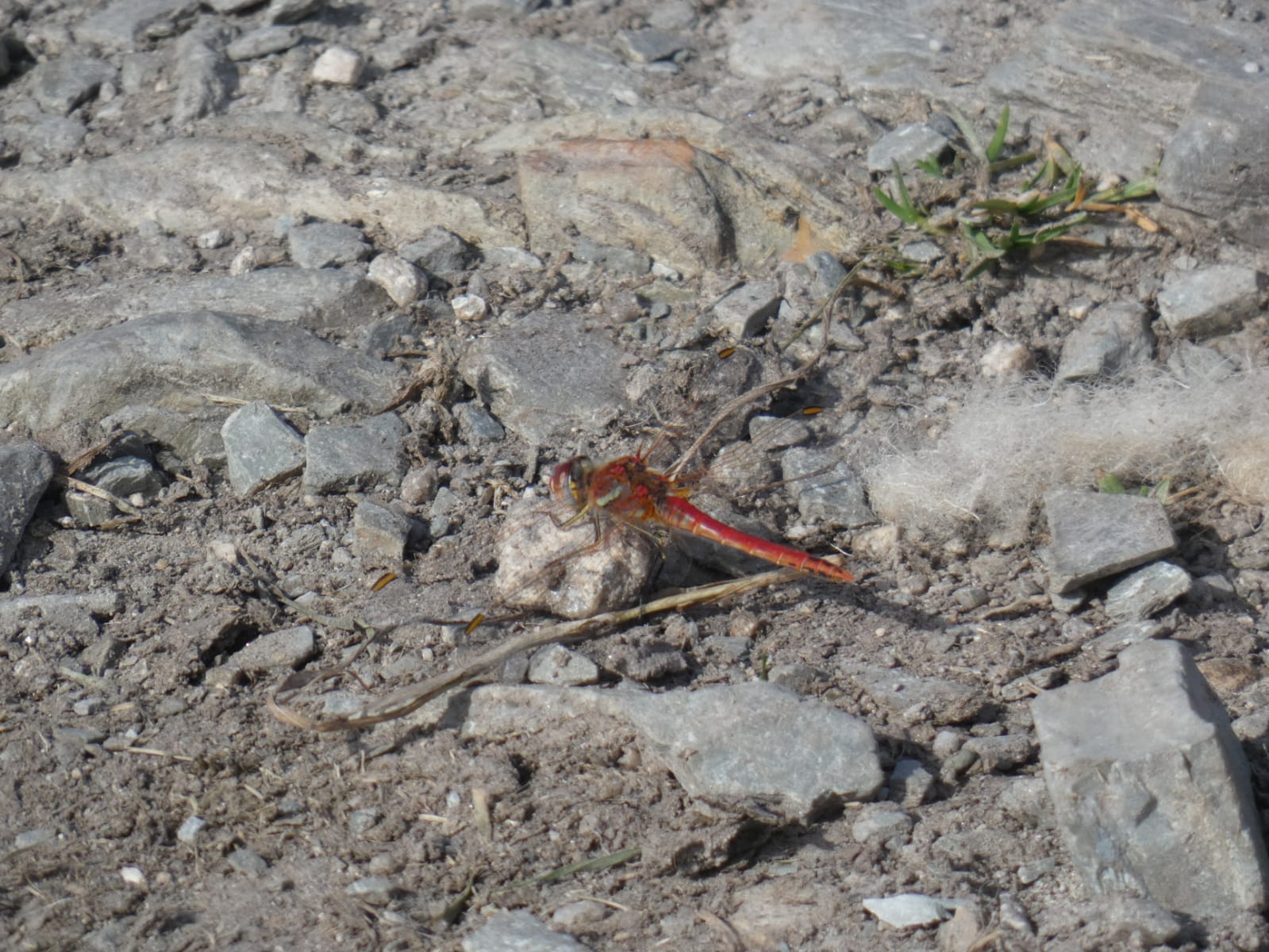 Red-veined Darter by Thomas Weston
21/05/2026 – A Few Surprises
By Thomas Weston
The morning started with me going down to Millcombe to lead a Lundy Field Society (LFS) Ringing demonstration. It was rather breezy from the SW and there was fog on the plateau which did not fill me with much hope. However, parts of Millcombe were calm and the nets I planned to open were in the shelter. The meetup and start time were both 6am, though on walking down I could hear people chatting and having tea and coffee. It was only a couple of mins after 6am but everyone was super keen, and I was just opening nets!
I was joined by another S permit ringing trainer Rackie, as well as conservation team member Maddie (with Alex), plus 20 LFS participants. The session started well with a nice range of species. Singles of Goldfinch, Linnet and Blackcap were nice, followed by a couple of Chiffchaff, an unusually new male Dunnock in full breeding attire, as well as a pair of Chaffinches – one being new and the other a retrap. The surprises came in the form of the ‘Acros’. We ended up catching 3 Sedge Warbler and 2 Reed Warbler. Amazingly, whilst the ringing demonstration was going on we ended up seeing at least three more Sedge Warblers fly in off the sea and land in Smelly Gully, and a third unringed Reed Warbler remained singing in Millcombe Pond. Where else would you like to be when that’s the best habitat around?
The session ended around 10:00, though I was lucky enough to see some of the moths from the LFS Moth Trapping session too. A personal favourite was Chinese Character, though the Buff Tips are always fun to see.
Back to birds and there was a burst of Spotted Flycatcher migration noted on the way up to the Tavern. This was also noted by Greg who was on census this morning. At first he initially saw at least five in Millcombe, though birds migrating through led to at least seven being seen whilst walking up after the end of the session – in reality I think there were a few more! In addition to this there were at least four along the East Coast, and I subsequently found another at Old Light, so there were at least twelve on the island today.
Whilst Maddie, Emma and Greg were helping RSPB undertake some seabird surveys in Jenny’s Cove, the rest of the Conservation Team consisting of Simon, Tara, Eleanor and I met a wildlife film crew who are keen to showcase our Puffins and Manx Shearwaters. We showed them a Puffin colony on the west coast, and we saw about thirty-six individuals on the water which was nice and gave food for thought for the coming filming days. We aimed to show the team the Manx Shearwater study colony, though some logistical issues led to this being delayed until the evening. As a result, we walked back to the Village and before we had a well-earned chill, after the 5am start and busy daytime + nighttime schedule, the next surprise flew overhead calling. It was a Red-throated Pipit, a rare bird who has not been recorded on the island since 2023. The bird gave two or three calls as it flew over heading from East to West. The bird was independently heard by me and a fellow bird watcher who were both close in distance, but unaware of each other’s presence or the fact we both heard the bird. We discussed our observations of this bird and confirmed each other’s thoughts and beliefs. Amazing!
Ready for the evening ahead and a night on the cliffs with the Conservation Team and hopefully some Manx Shearwaters too! And with the wind noticeably dropping, the temperatures rose! The cold, miserable, windy and wet weather of the past few days was just a memory as the warm, high pressure rose from the south. Surely there will be some rather more special birds on the way!