


Bird Sightings
04/05/2026 – Strange things in the fog
by Greg Lee
Census again this morning, but this time with less of a threat of rain but instead a low hanging fog making observations a bit more challenging. The Cuckoo was again present in Millcombe and even started singing, the first one I had heard sing this year. There appeared to be a few Sedge Warblers around and the Garden Warbler was bubbling away in the Secret Garden with two Spotted Flycatchers in close proximity. At the Quarries, a female flavissima Yellow Wagtail was amongst the ponies, occasionally vocalising. Back in the village, the sight of two Feral Pigeons enjoying the seed provided by the Sparrow project caused some amusement, although the two researchers didn’t quite share the cheer. That being said, a Garden Warbler also caught in the sparrow nets was a bit of a bonus.
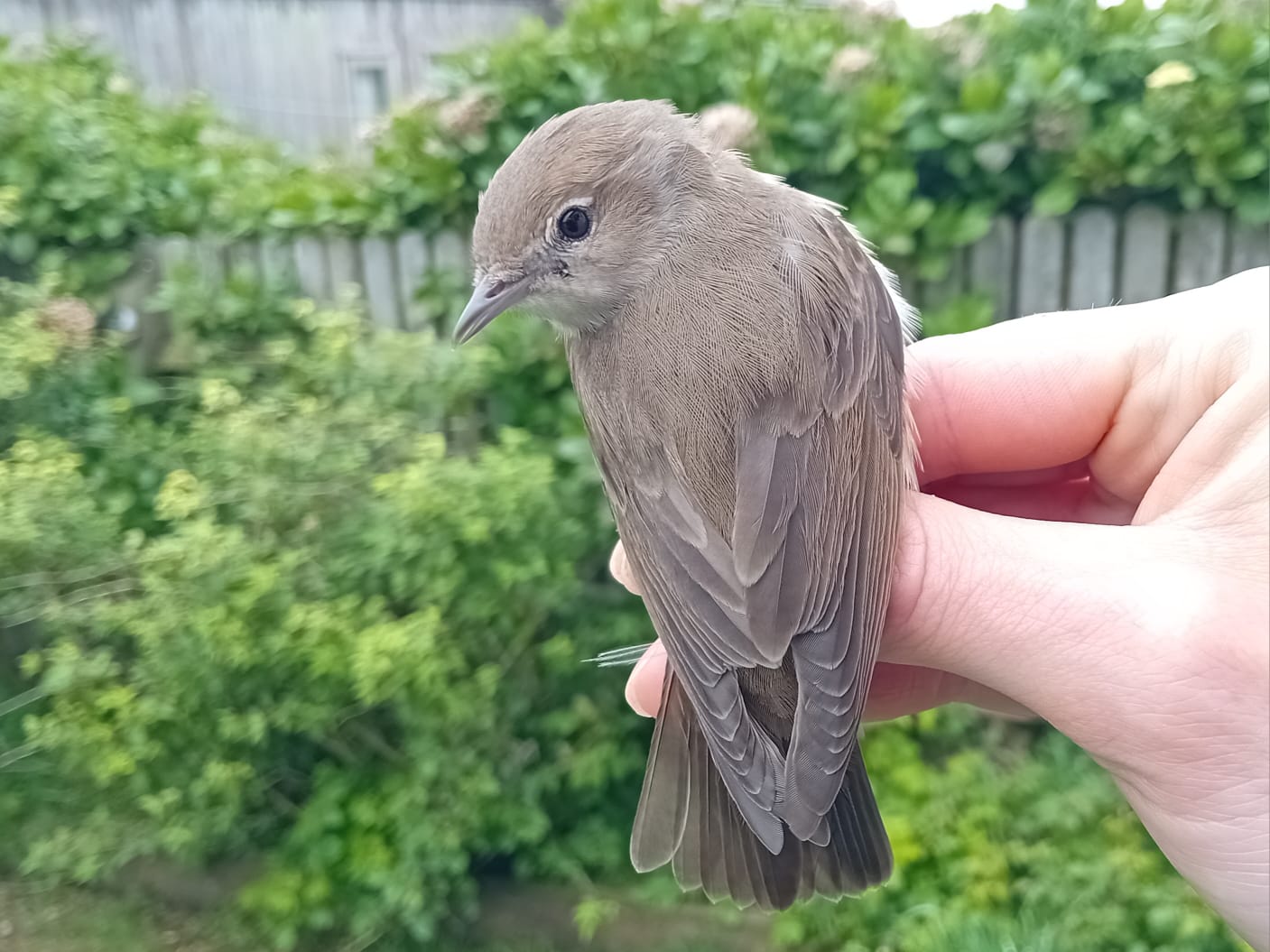 Garden Warbler by Thomas Weston
After census, the Conservation Team had a quick meetup including new Volunteer Maddie Kirby who joins us for this month helping out with Observatory tasks. We have a busy couple of months so watch this space!
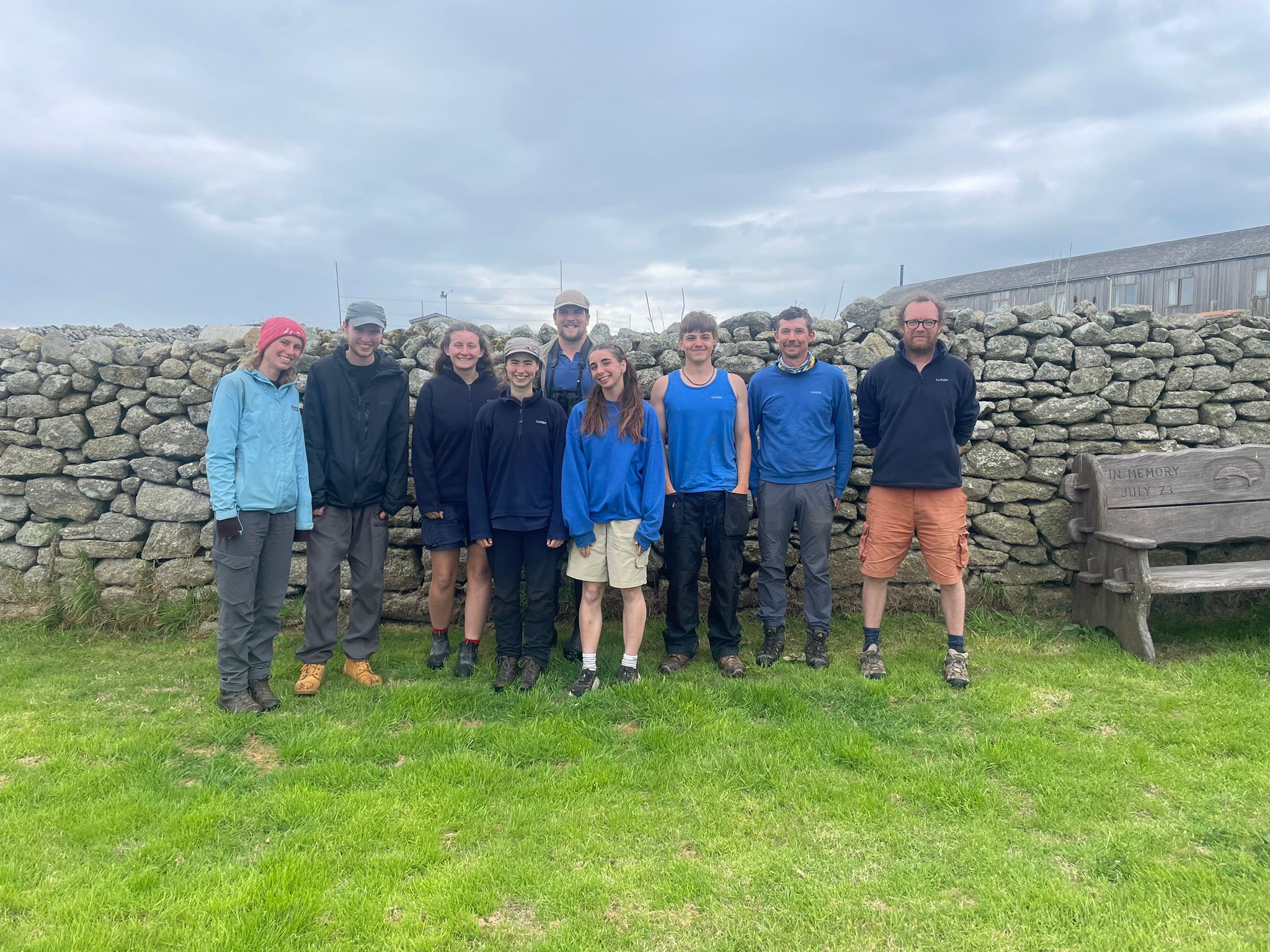 Conservation Team 2026 (L-R) Eleanor, Thomas, Tara, Emma, Greg, Maddie, Tolly, Roger and Simon
Other observers had a successful morning with the Golden Oriole being relocated by one observer near Quarter Wall Copse. Then, they managed to pull out a very nice island-rarity in the form of a Tufted Duck at Pondsbury and a nice drake at that. Only the 28th record for the island for this diving duck species. Later on, a male Pied Flycatcher was in Millcombe Pines, three Whimbrels on the West Coast, two Dunlins over Middle Park and a Firecrest above Quarry Beach. However, bird of the day was again an evening discovery with a mixed flock of Yellow Wagtails including our now familiar Channel male, the British female, a female Blue-headed Wagtail and a very smart Grey-headed Wagtail, the latter just the 8th record for Lundy.
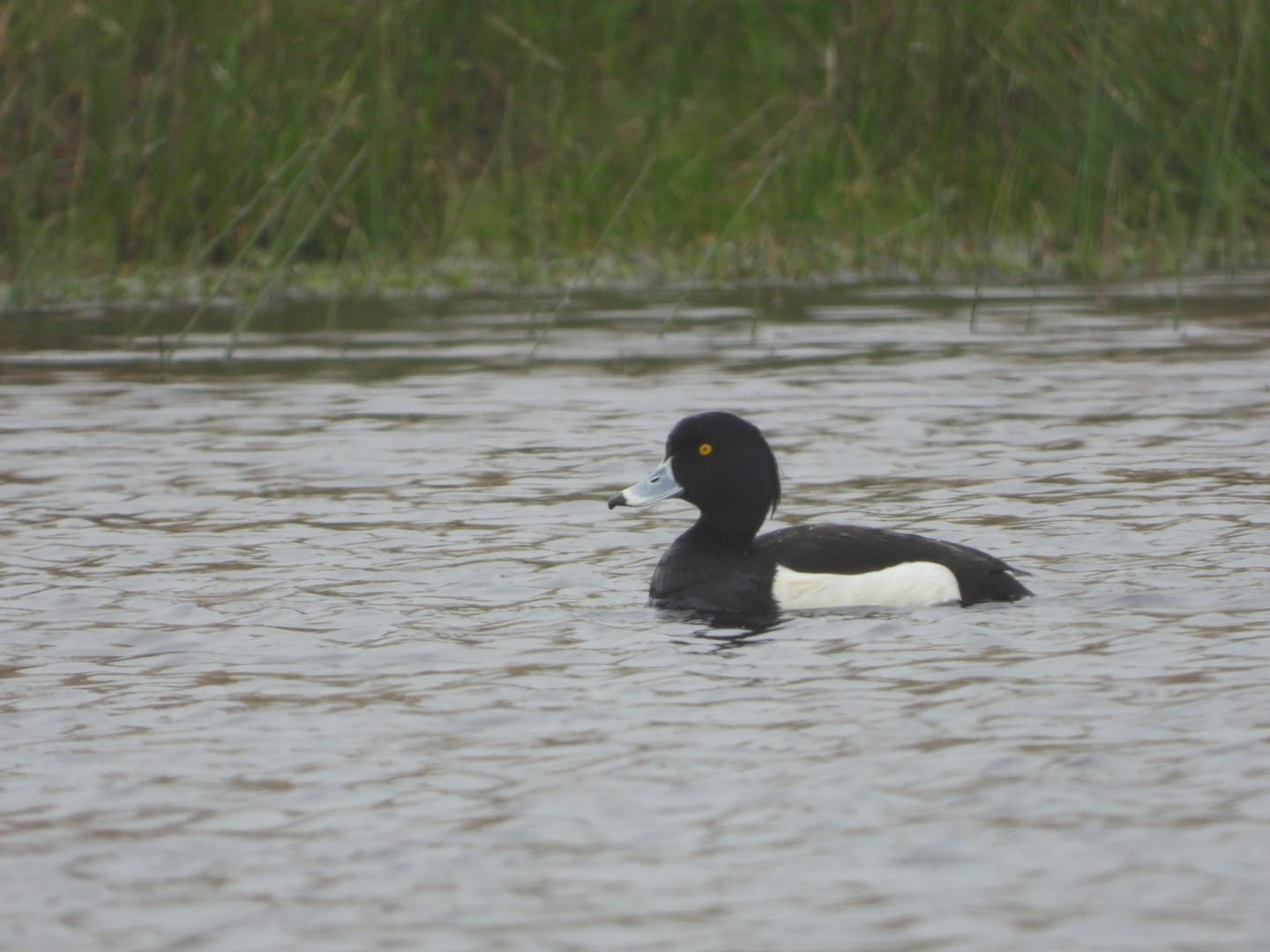 Tufted Duck by Neil Barnes
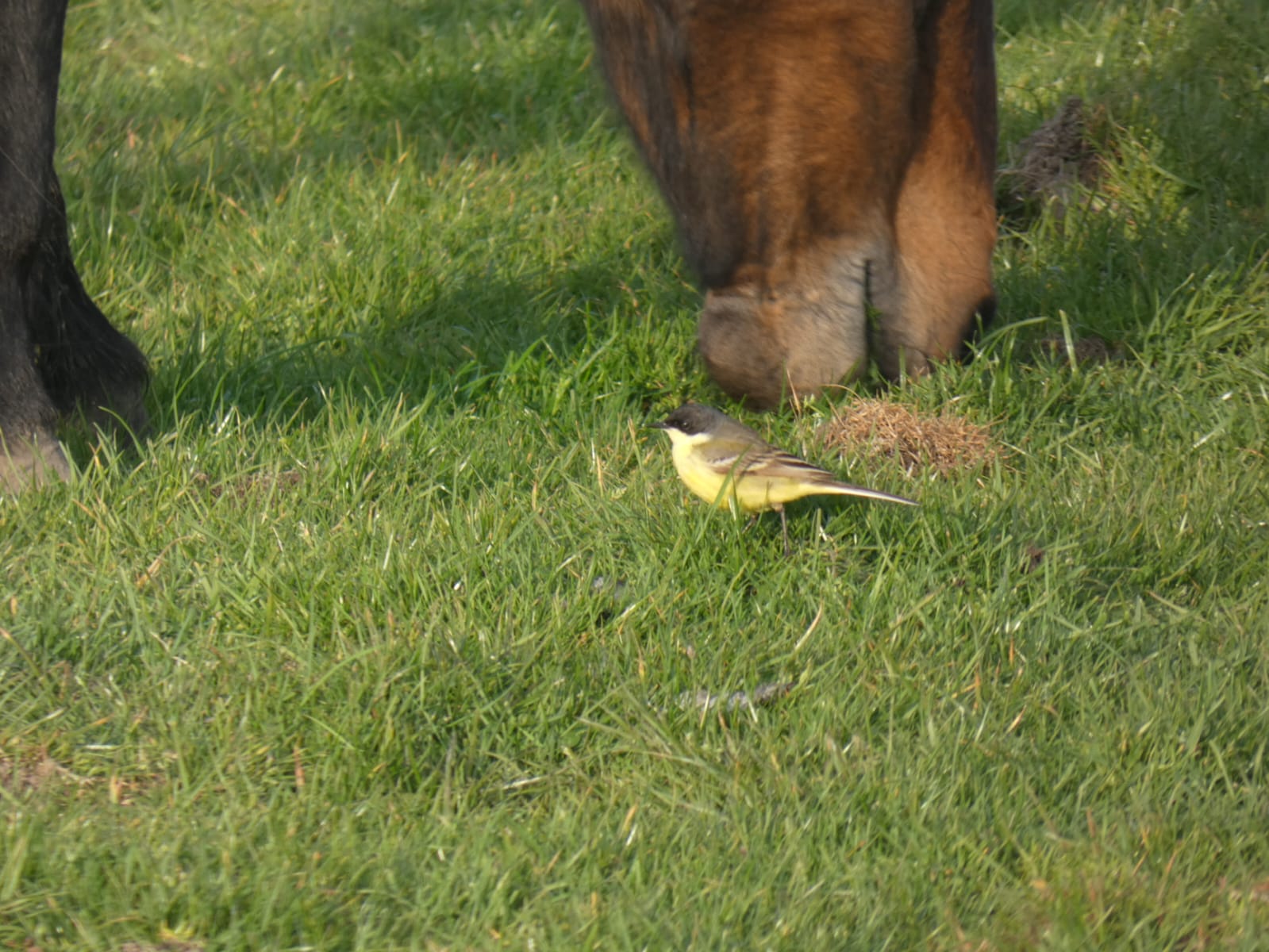 Grey-headed Wagtail by Thomas Weston
 Interesting flags flying on May 4th....
03/05/2026 – Golden Oriole
By Greg Lee
A close feeling in the air on census this morning was my first impression of the day with a rolling band of rain clearly threatening on the horizon. A Cuckoo singing in Millcombe and St Helen’s Copse was a nice surprise, though I was unsure if this was the bird I had photographed the previous day. A Garden Warbler singing too could feasibly have been the same bird, but a charming female Redstart was new in as she worked her way up the valley. By the time I had reached the Rocket Pole area, the fog and rain had descended, and this section of census was quiet and very damp, though the island was very much in need of some good rainfall. At Pointless Wall, a few Willow Warblers were hiding in the Gorse bushes but as I approached Quarter Wall gate, I spied a very soggy-looking Whitethroat, that clearly wasn’t a big fan of the rain either but was still feeding along the wall. Another five were also working the scrub along Quarter Wall, with a Sedge Warbler also in the general area. As I headed back to the Village, things started to clear and I was surprised to see two Spotted Flycatchers along the Wall, with another three on the various fencelines along the East, indicating that they may have just arrived with the rain. As I started to encounter other warblers in the village I pondered whether a mid-morning arrival was about to occur, with a British flavissima Yellow Wagtail feeding up on the floor. Two Whimbrels associating with the gull flock near Barton Field were also bonuses to the census and seemed to be quite happy in the area.
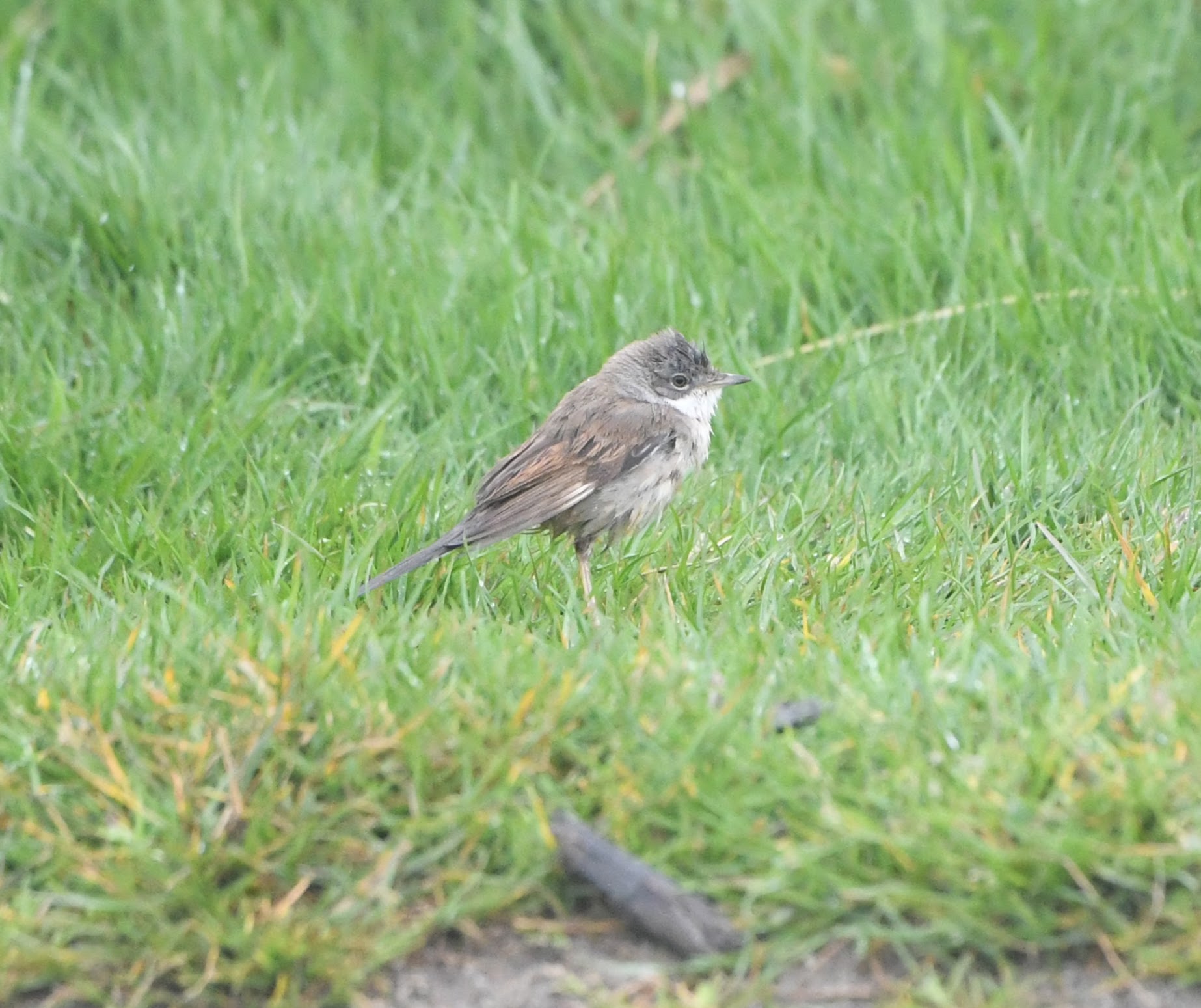 A rather soggy Whitethroat by Greg Lee
Whilst the birds were arriving, we also welcomed a boatload of Devon Bird Club members onto the island, who immediately set about birding the various corners and hotspots. With so much coverage, it seemed inevitable that something would turn up. Since I had a KP shift in the evening, I decided to take it easy after lunch and spend some time back in the Lodge. Since I don’t appear to get mobile signal at all in the Lodge, I said to Emma (who does get mobile signal at the Lodge) if a message came through about anything that seemed unusual, she had permission to knock/pound/kick down my door. Within five minutes of me going into my room, I heard the door to the accommodation swinging open and rapid footsteps approaching my door with Emma exclaiming that an alert had just gone out of a Golden Oriole found along the fenceline in the field behind the church! So, with optics and camera armed we rushed out to the area where a small crowd of appreciative birders were gathered including Tara and Lundy Island cargo co-ordinator Steve. The bird was showing very well, particularly for a species that is more than adept at hiding in the canopy of mature trees, even the luminous adult males, and on Lundy, often favours hiding in Millcombe or one of the East Side Copses.
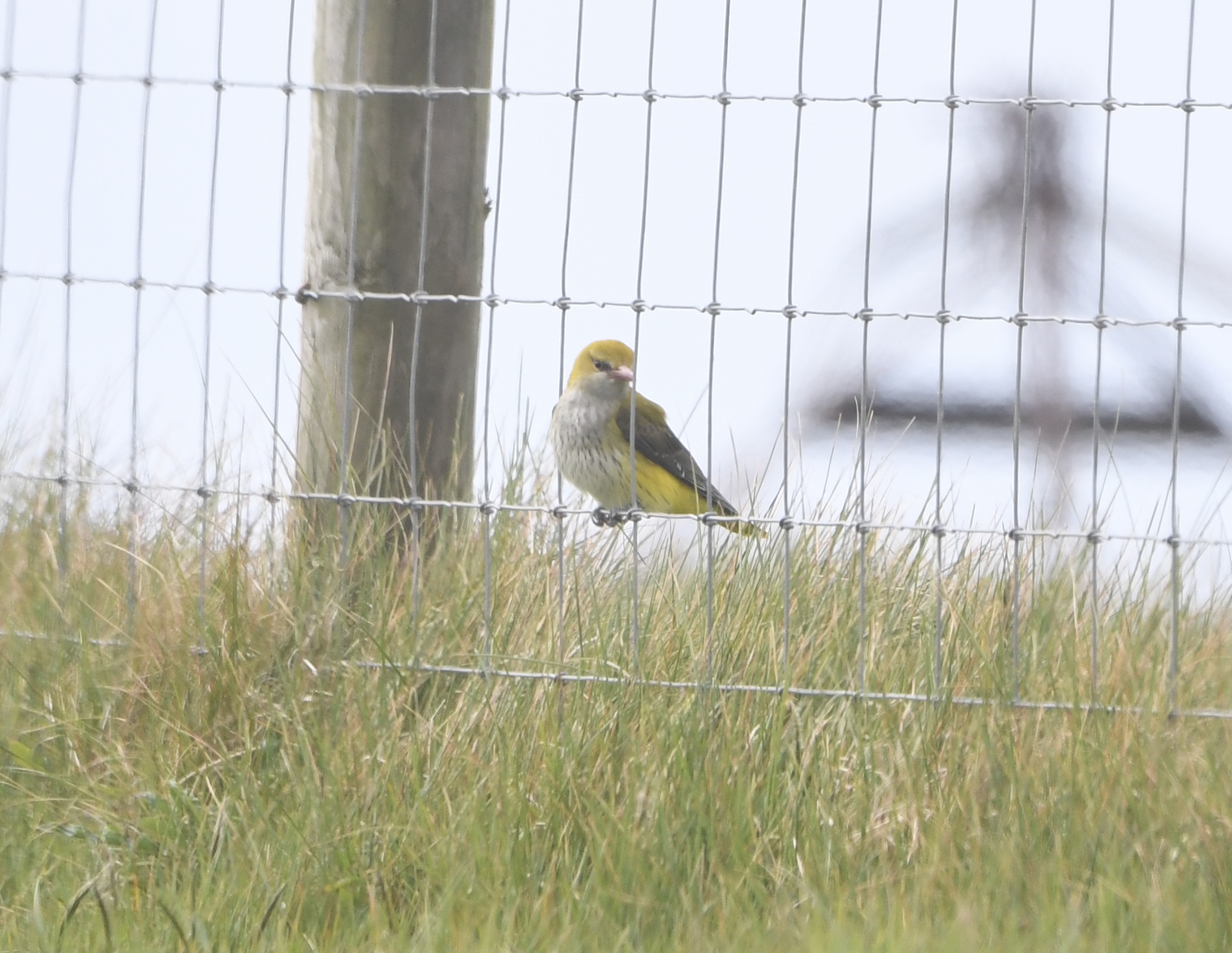 Golden Oriole by Greg Lee
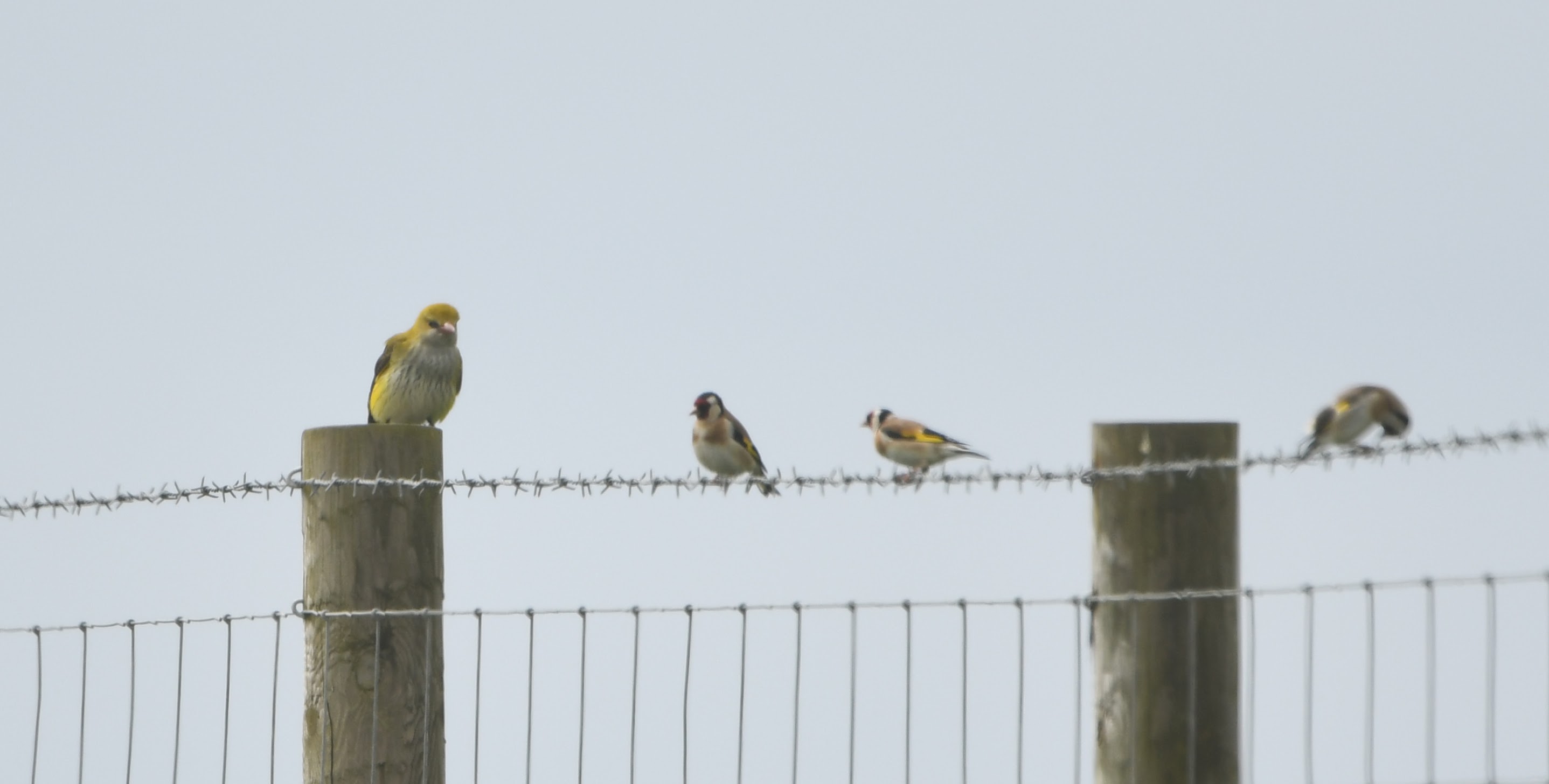 Golden Oriole meets Goldfinches by Greg Lee
Elsewhere around the island, another two Whinchats and Tree Pipits were discovered, and commoner migrant totals included 13 Spotted Flycatchers, 20 Whitethroats and 13 Sedge Warblers. Late evening, with low cloud and forming and a late moon rise, it was decided that conditions were sufficient enough for some night-catching, with two Meadow Pipits caught. However, the whole time it was clear that there had been a big return of Manx Shearwaters with a cacophony of noise all around the island. Perhaps unsurprising as late evening, large rafts of approximately 2500 birds were seen on the flat waters off the Tavern by staff. With a small team over the two hours, 44 birds were processed, with a few new birds and several subsequent encounters.
02/05/2026 – Seabird Saturday
By Emma Abel
The day began with clear skies and low wind, lucky for the day trippers who had a smooth crossing on the Oldenburg.
Opening the moth trap in Milcombe, we were greeted with some new species for the year including a Buff Ermine, Foxglove Pug, Lime-speck Pug and Early Thorn.
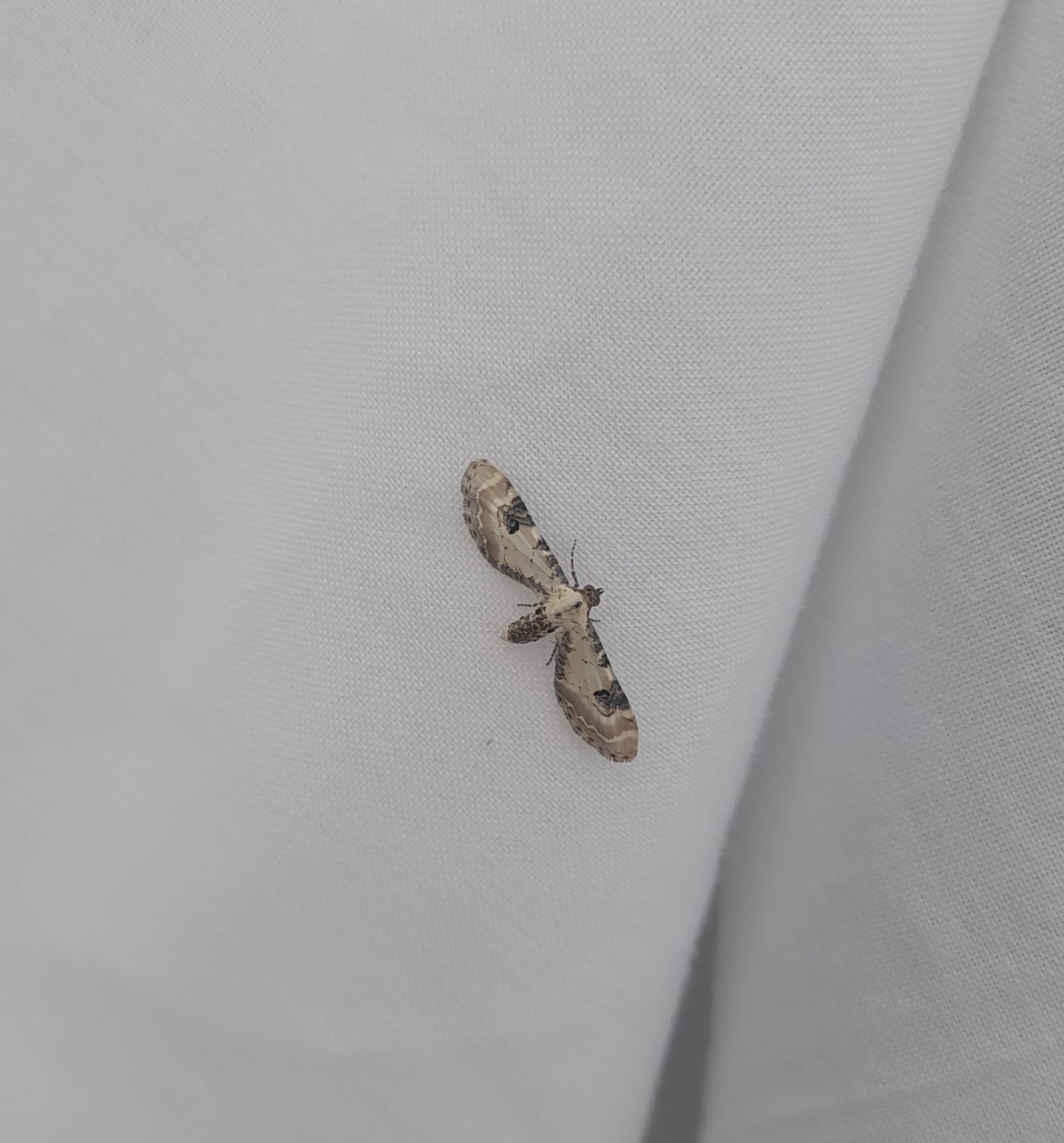 Lime-speck Pug by Emma Abel
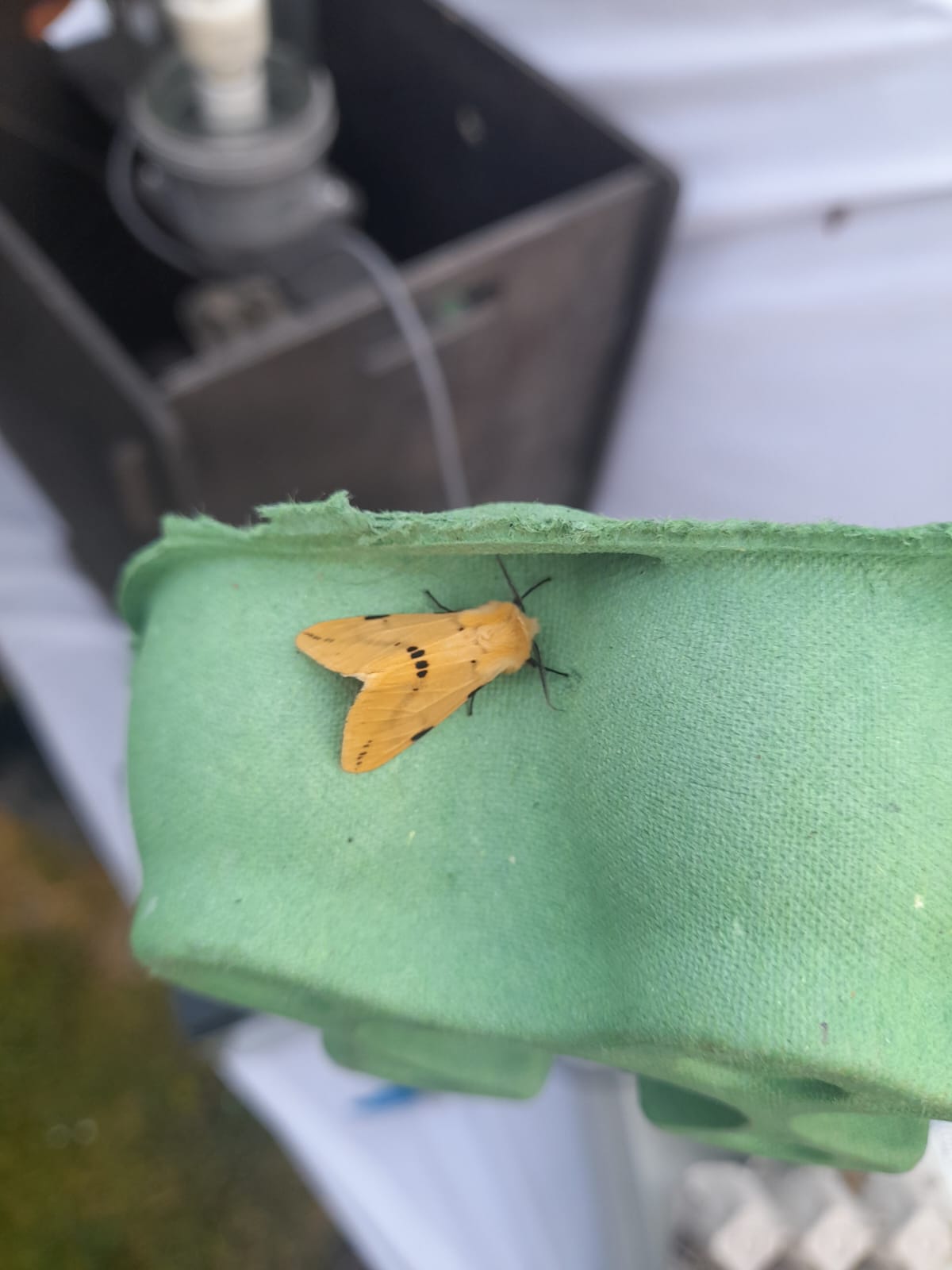 Buff Ermine by Emma Abel
The seabird station was very busy with lots of people heading to Jenny's Cove, hoping for a glimpse of Puffins. With highest counts of 53 on the cliff at one time, all visitors got to see their promised puffins, basking in the sun and waddling around with nesting material. Auk activity was very high, with over 2000 Guillemots crammed together on the cliffs, some ledges at least 5 birds deep. Razorbills nestled together in their pairs, enjoying their personal space. Wheeling Kittiwakes joined in with the Auk calls, creating the lovely soundscape of a busy seabird colony.
In other bird news around the island, it was a quieter day for migrants, with Sedge Warbler numbers rising but Chiffchaffs and Willow Warblers not what they were in peak spring migration. Millcombe was the hot-spot for terrestrial bird sightings, with a Cuckoo hanging around most of the morning. A Tree Pipit at the Ugly, a Garden Warbler in the secret garden and a Spotted Flycatcher hanging around in the trees. Over near old light a male Redstart was seen along with a Reed Warbler at Pointless Wall. Finally, down in the landing bay was one Common Sandpiper hopping around on the rocks by the jetty.
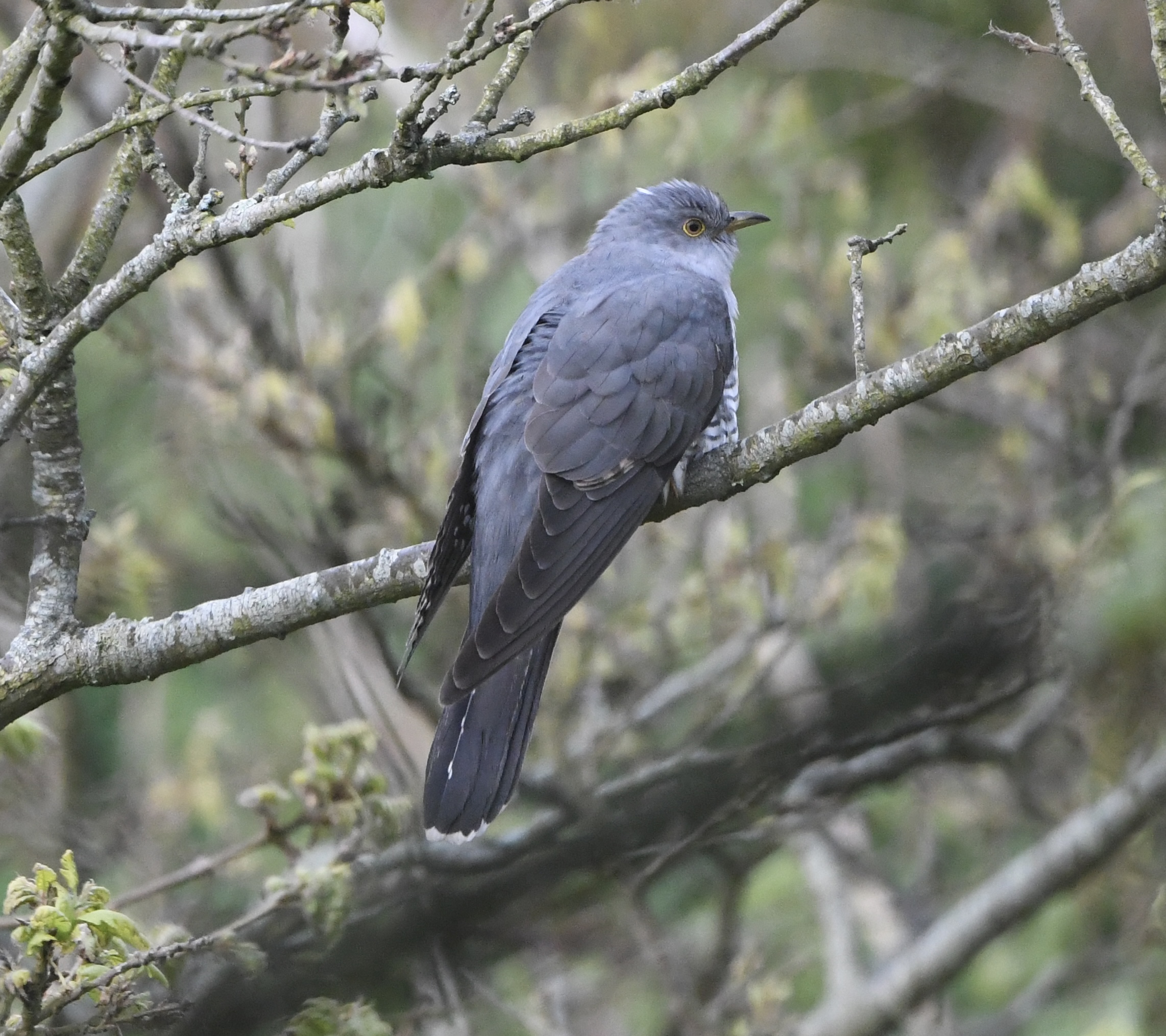 Cuckoo by Greg Lee
01/05/2026 – A Spring Day
By Eleanor Harris
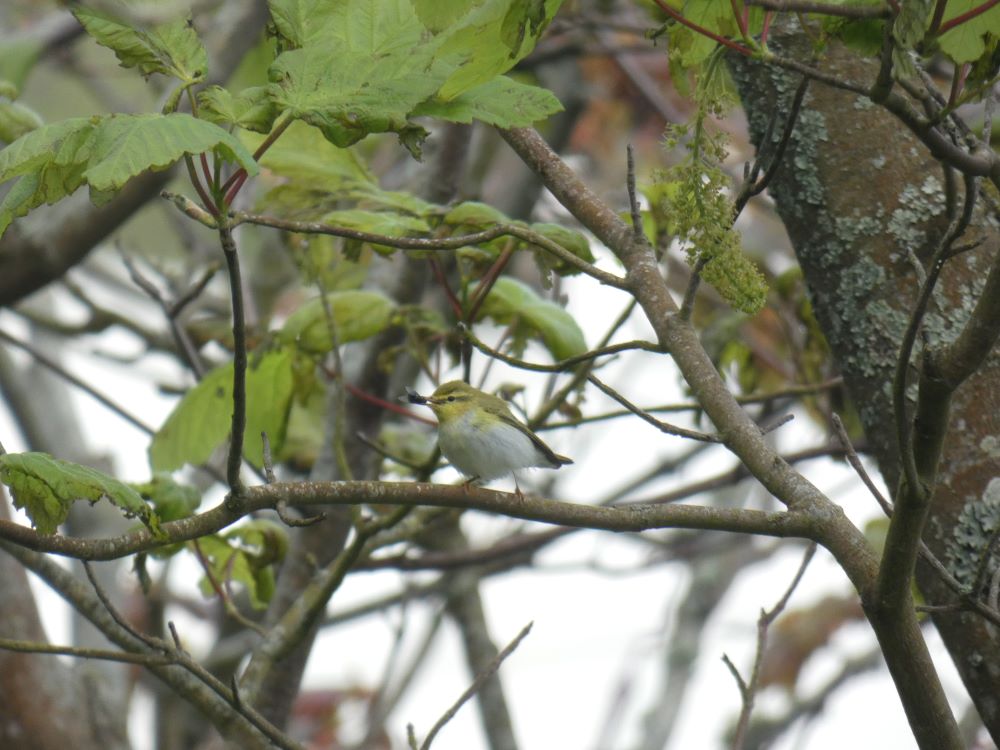 Wood Warbler in Millcombe by Thomas Weston
The plan for the morning was to have a ringing session in Millcombe. After the rather windy days of the last week it was great to be out on such a calm morning, which was a total change from the strong Easterly winds which have been blowing through the island. Heading down to Millcombe, the valley was buzzing with birdsong, and this was a good sign of what was to come. The ringing session was rather quiet with more birds outside the nets, but the birds spotted were rather special indeed. Some of the memorable birds of this morning were a Wood Warbler at Battlements Corner spotted by some visiting birders, a second singing Wood Warbler spotted by Thomas, and a stunning Hawfinch by Greg. It was great to be out in Millcombe as it was alive with song and activity, so we will keep you posted with what turns up in the next few days.
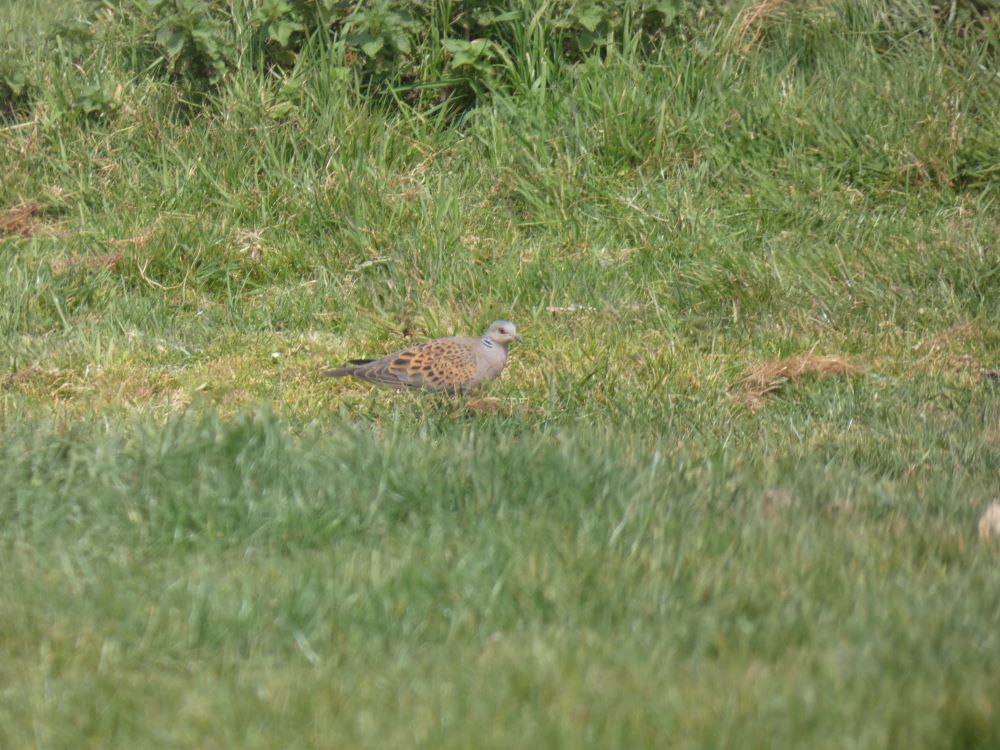 Turtle Dove in Brick Field by Thomas Weston
It was beginning to get a little quiet so we decided to pack up and continue with the day. After some lunch we decided to head for a walk to North End as we had a report of a Little Egret by one of our visitors. This is a rather rare Lundy find so we were both keen to see if we could refind the bird. As we were walking up the track we spotted a Turtle Dove in Tillage Field. This was rather special as they are becoming increasingly rare in the UK due to habitat loss through agricultural intensification as well as trouble along the migration route. It was a great bird to come across and my first, but also great to share this with some of the guests.
Our walk continued to North End with a good number of Wheatears, Meadow Pipits and Skylarks seen along the way, as well as a passage of Swallows and Sand Martins. We headed in the direction of Long Roost and found a good observation point to survey the area resulting in large numbers of Guillemots seen colonising the cliffs, five Puffins out to sea and a few Razorbills. It is great to have the seabirds back but we will see what this year brings in terms of numbers as it is notable that the harsh winter and storms have taken their toll. The Little Egret was nowhere to be seen so we decided to move on and check a few other possible locations but with no luck. One of the most random finds of today was a Willow Warbler and Blackbird at North End. Losing track of the time we headed back to the village to make some dinner and head to Wildlife Log to hear what other birders have seen.