


Bird Sightings
28/06/2026 – Lundy Half Marathon
By Simon Parker
A special day on Lundy as a boat full of runners was deposited at the landing bay before heading up the steep climb to start the 2026 Lundy Half Marathon. I've known about this race since I started here in January, much talk has been had surrounding tactics and how to survive the particular perils of running Lundys trails. Running is one of my main hobbies so I was eager to join in with the fun, six people from the Island took part this year, Me, Tara, Ian, Sarah, Becky and Pete. After some tactical carb loading the night before, the morning consisted of us all lounging around the village prepping and trying to calm Pete's enthusiasm. Mercifully, the heat had dropped off from the savage high temps that dogged the beginning of the week although it still felt like a furnace on the sheltered East side. Lundy race is hard, there's no sugar coating it, I've ran a lot of races in the past and Lundy ranks up there as one of the toughest. Lots of annoying elevation, steps and steps and steps, technical East track with bottlenecks, and wind, always a headwind.
Fuelled on by Jelly babies, pineapple and fizzy water (questionable choice) I actually felt pretty good and flew round the first half, fatigue crept in on the West and by the time I was on the main track home I was starting to will it all to be over. Pre-race chat on the Island had put me down as one of the race favourites, In the end I finished in a respectable 6th place, something to build on next year! The whole Island team did well with Ian and Tara racing each other to the finish, Pete shaving over 10 minutes off his last effort and Becky coming in as one of the fastest females. Notable mention to Sarah who completed and did absolutely zero training after being peer pressured at the last minute.
 Claiming the title for "Most Colourful Shoes"
As the crowds shuffled back to the Oldenburg to make the crossing back to the mainland, the weather shifted to a strange cold wind which brought in the cloud and ruined the staff barbeque. A classic British BBQ event with everyone retreating indoors as the rain started.
In wildlife news... There were some notable entries in the logbook including 60 Shag and 23 Juvenile, this is from the newly arrived Shag colour ringing team who are looking to find as many juveniles as possible to start collecting data on our Shag population. 100 Puffin were entered and a singular Kestrel, the Sparrow population is increasing steadily with a new ringed adult recorded on a camera trap taking the total to 30 adult birds. A lone Buzzard which seems to have wandered over to check out the landscape was also seen getting chased by Crows just off the South.
27/06/2026 – Bizarre Buzzard
By Emma Abel
This morning started cool as Greg and I headed out to carry out some Puffin, Guillemot and Kittiwake monitoring before the heat of the day began. Jenny's Cove was busy with the usual calls of adult auks accompanied by the high pitched peeps of their growing chicks echoing up from the shelves down below. As a couple of weeks passed since the first chicks were seen, some of the Guillemots and Razorbills are almost big enough to pick a nice evening and jump off their cliff down into the water. Puffins take longer to develop from hatchlings to fledgelings so I continued my observations of adults bringing Sand Eels back to their burrows. Quite an entertaining sight as their speed of entry into smalls is quite impressive, such velocity employed in order to avoid other birds robbing them of their hard earned fish. Especially relevant for those that have their front doors right next to hungry Herring Gull and Lesser Black-Backed Gull nests.
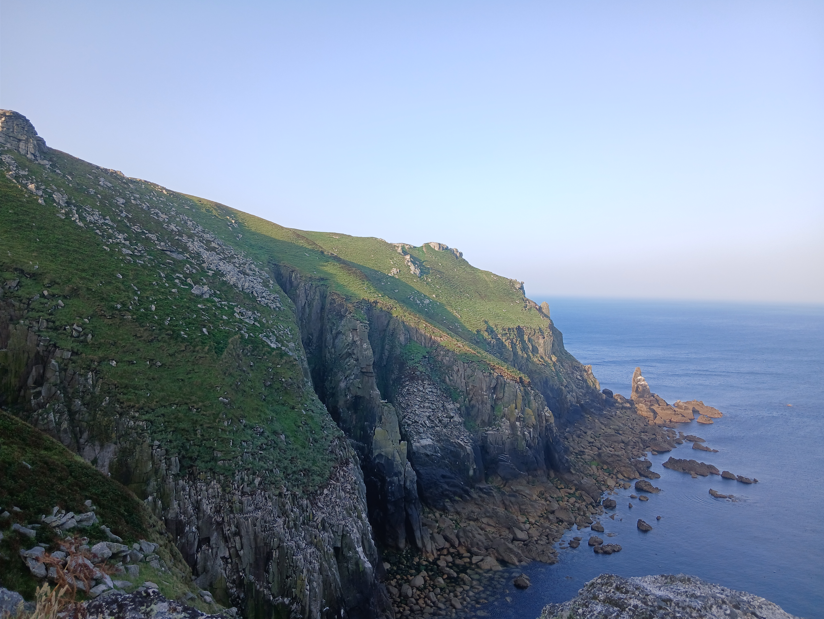 Jenny's Cove in the morning sun by Emma Abel
Most Puffin chicks, affectionately known as Pufflings, stay deep in the safety of their burrows waiting for their parents to ferry in a fresh load of fish. However, occasionally when they are big enough they will wander to the entrance of their burrow and look out at the world, which was a special sight that I got to witness today! As I was scanning the cliffs, I noticed a small dark bird sitting next to a Puffin and was delighted to realise that it was a young Puffling with its smoky features opposing the bright colours of its guardian that quickly ushered it back into the burrow.
Another interesting sight from the cliffs was a Razorbill perching on a rock, showing off its legs which were a yellow colour unlike the usual dark black legs of its species. Presumably a genetic mutation leading to an unusual colouring, that had not affected its plumage in any way.
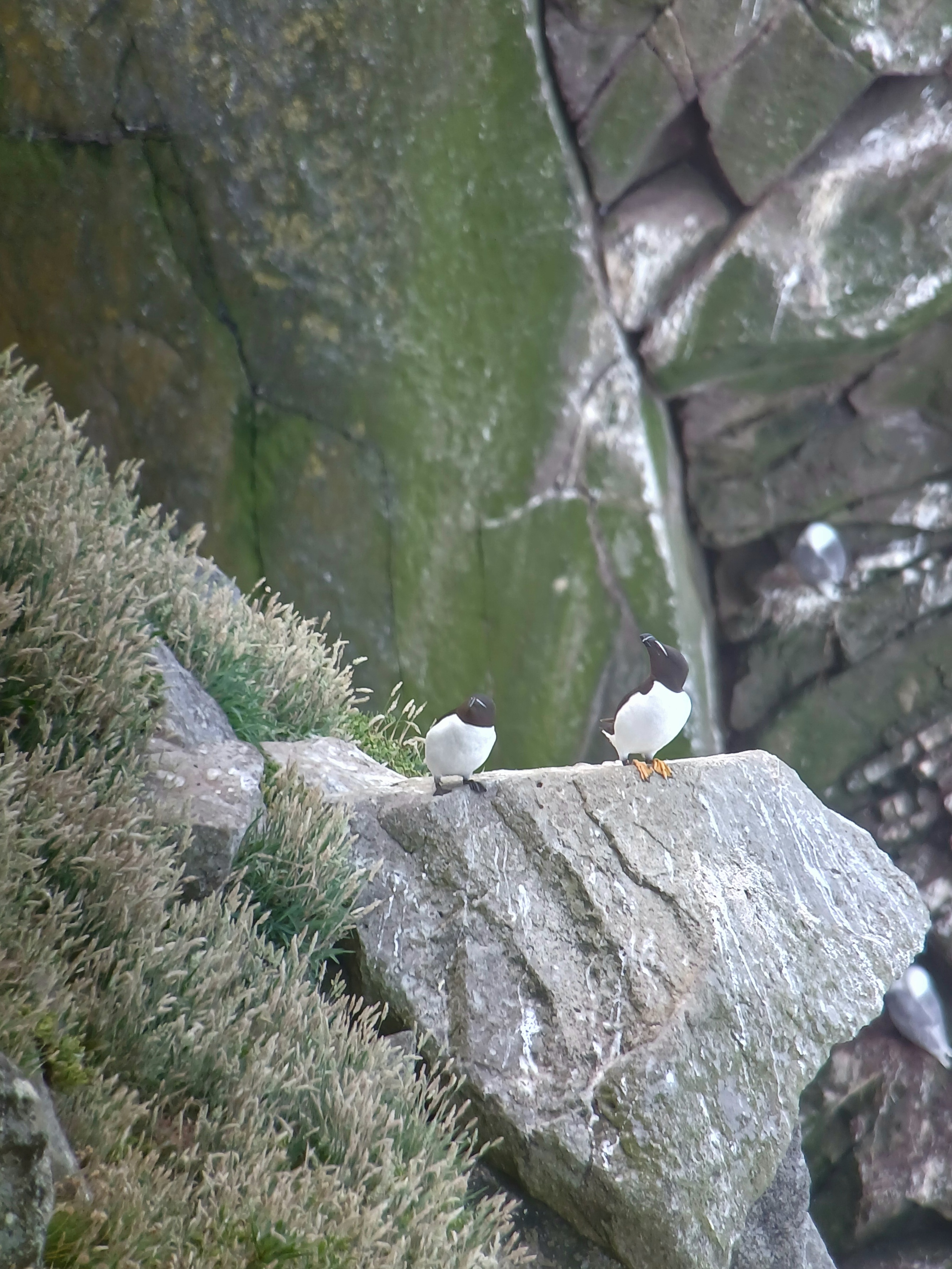 Razorbill with yellow legs by Emma Abel
After finishing my Puffin monitoring, I headed to Aztec cove to join Greg as I have not seen my Aztec plots and wanted to get a glimpse of some chunky Kittiwake chicks. As we were heading back up the cliff, Greg noticed a gull being bothered by a large raptor, excitedly pointing it out to me while trying to find it as it dipped down behind the hill. Binoculars trained on the mysterious bird we saw that it was in fact a Buzzard! A bird that seems so common elsewhere in the UK, yet on Lundy is an uncommon sight to see, with this individual being the first since August last year. We saw the Buzzard lazily flying away inland, losing sight of it until 30 minutes later, when setting up for Seabird Station we once again heard the gulls alarm calling and had a lovely view of the bird soaring overhead, heading inland once again.
We ended the afternoon with a very pleasant Seabird Station, chatting to visitors in the sun. No more pufflings were seen but people were very pleased with their colourful Puffin sightings and a large Herring Gull chick was providing the baby charm.
26/06/2026 – Snorkel Safari Report!
By Jessie Dermody
Although the day today started off pretty grey, it was lovely down by the water. The assistant warden team - Tara, Chloë and I had some snorkel safaris to run. They were all quite well attended, and we had some lovely crystal clear water. We always start out examining the columns of the jetty, as these act like artificial reefs and are teeming with wildlife. Some particularly charismatic residents are the Montagu's Blennies, small, territorial fish who will often pop out to try and scare you away from their patch. These fish have beautiful blue spots along their columns and a single red tuft on their heads. Two Spot Gobies are also very common around the columns of the jetty, and we saw several shoals of these tiny fish today.
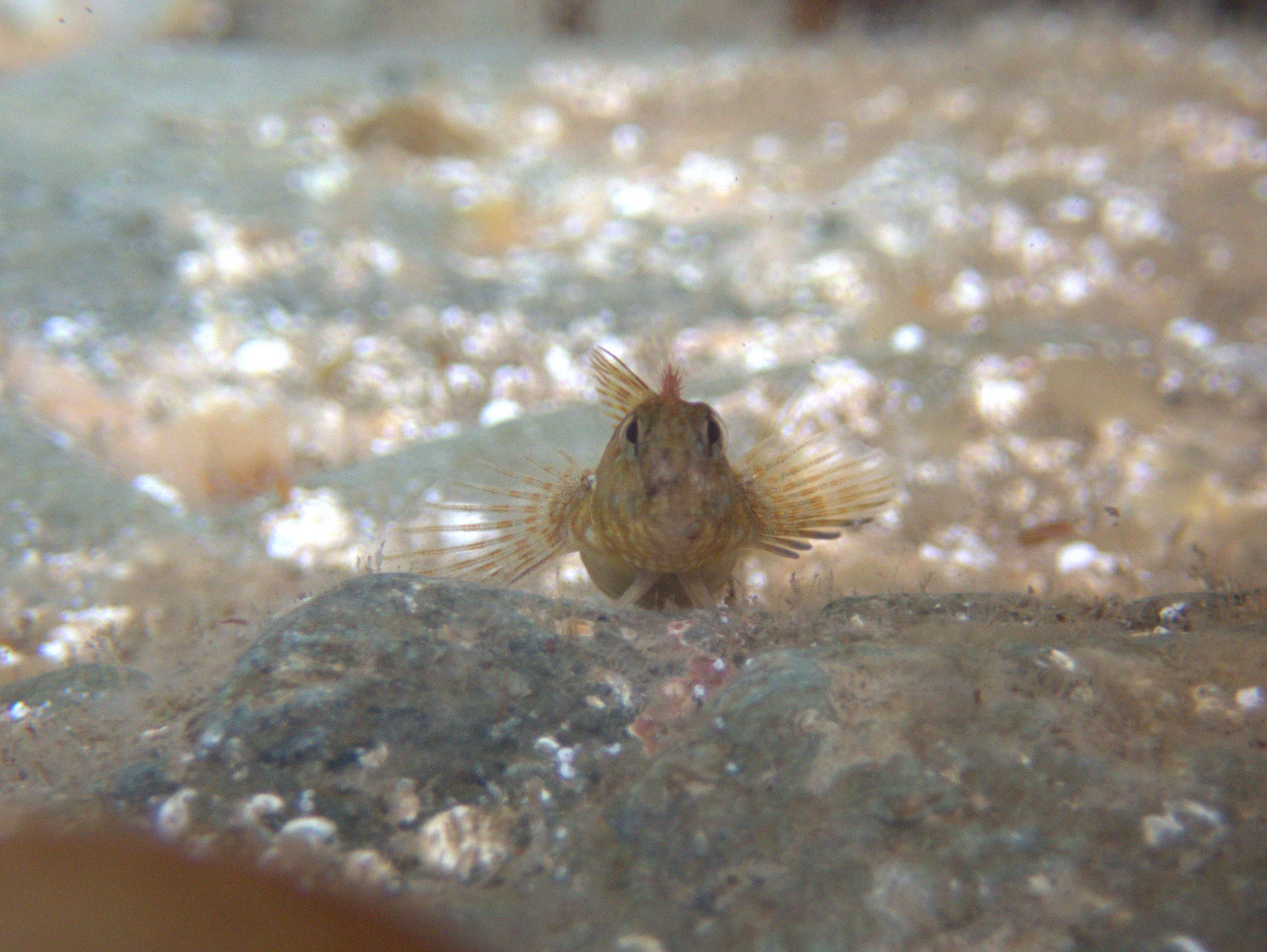 A Montagu's Blenny defending its territory in devils kitchen. By Jessie Dermody
These columns are also home to plenty of sea slugs! This is because they are covered in hydroids, bryozoans and sea squirts, which lots of sea slugs like to eat. We are now entering the sea slug section of the sightings report, so buckle up! We spotted four Facelina auriculata sea slugs on the columns today – a beautiful slug covered in pink and iridescent blue cerata. These were munching on the eggs of a Doto sp. sea slug. Nearby was a lovely Polycera capitata, and some Sea Lemon eggs! A Sea Lemon is another type of sea slug, a big slug that looks like a type of sponge.
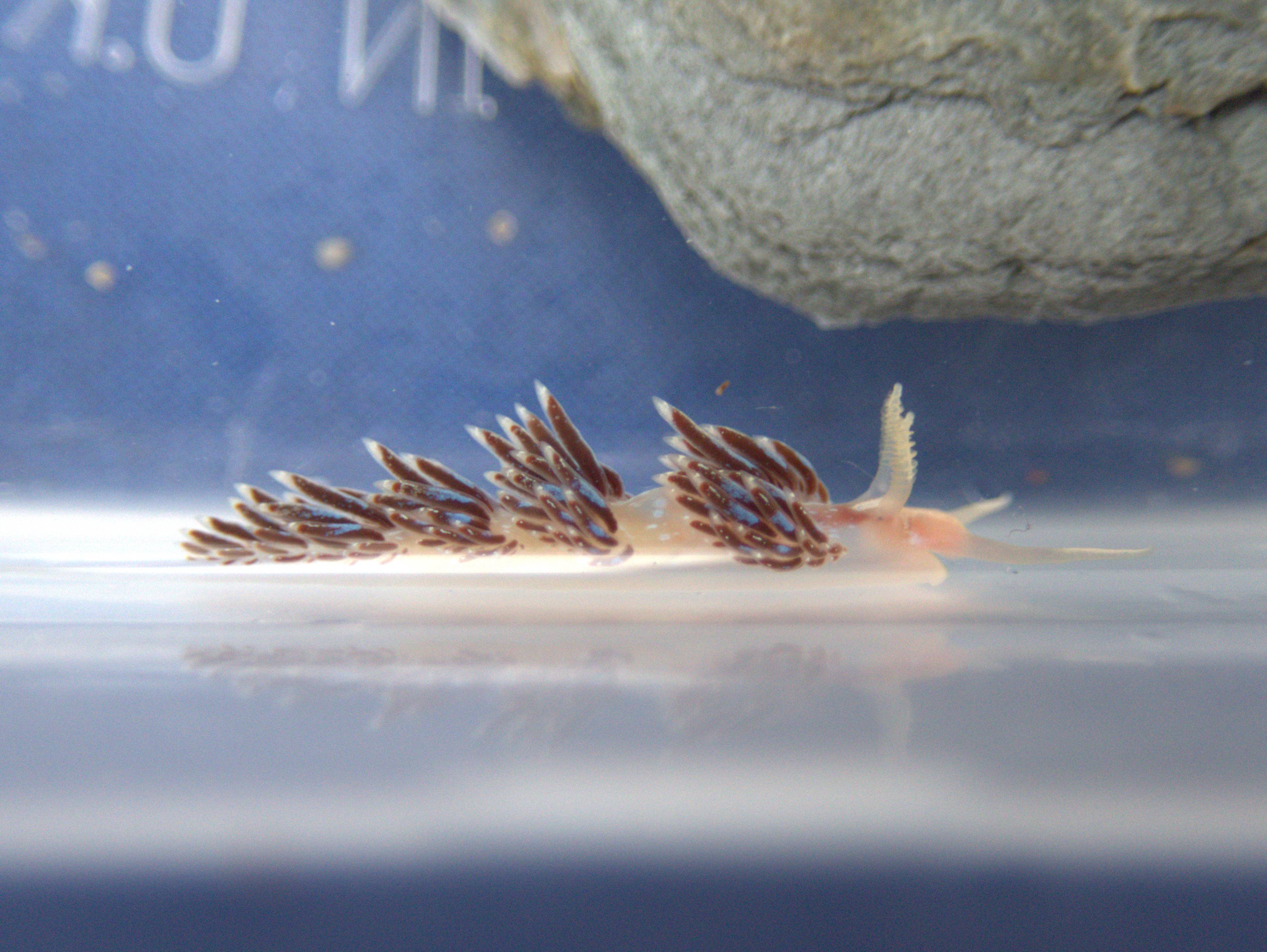 A Facelina auriculata sea slug by Jessie Dermody
Before we headed back to shore, we spotted a large Spiny Starfish crawling across the seabed beneath us. They move quite quickly as they have hundreds of tube feet beneath their bodies. As we moved over the seaweed of the rocky reefs, we saw lots of Ballan Wrasse and juvenile Pollack.
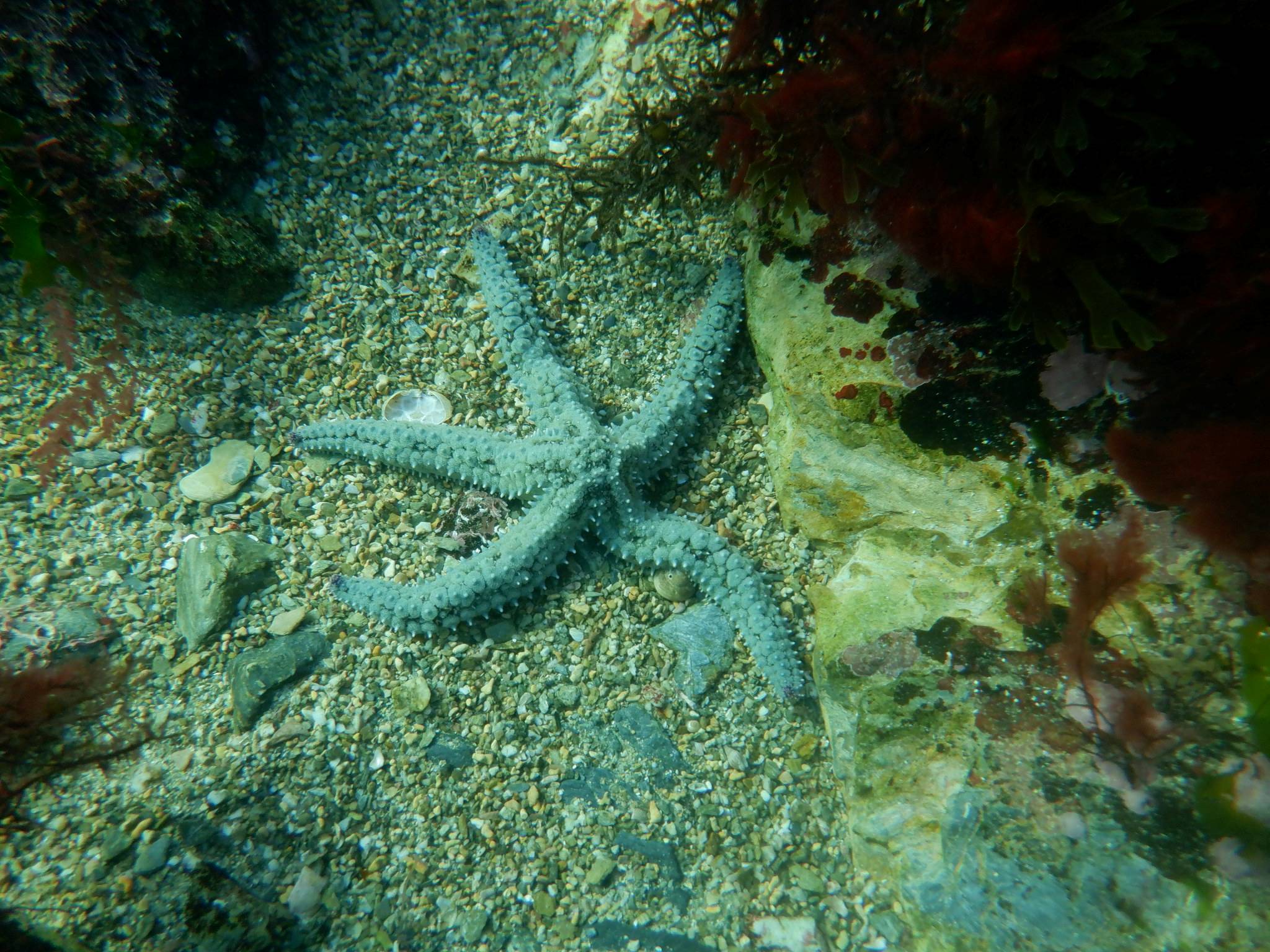 Spiny Starfish by Jessie Dermody
Once we got out of the water, we dried off and enjoyed some well deserved lunch at the tavern. After that I headed back down to the Landing Bay with the ‘rat pack’ to complete the important task of checking all the rat boxes. There are seventy of these boxes hidden around the island, and they help us ensure that the island is still rat free. Each box contains a bait made of chocolate and wax, which we need to check for teeth marks each months. If we did find any thick, rat like teeth marks, that would mean we would need to begin the process of extermination again. The island celebrated its 20th year of being 'rat free' last week, and we want to make sure it remains that way! Our ground nesting seabird colonies, like the Puffins and the Manx Shearwaters, would be put at risk if rats ever returned to the island. Thankfully, I have found no signs of rodents in the boxes this week.
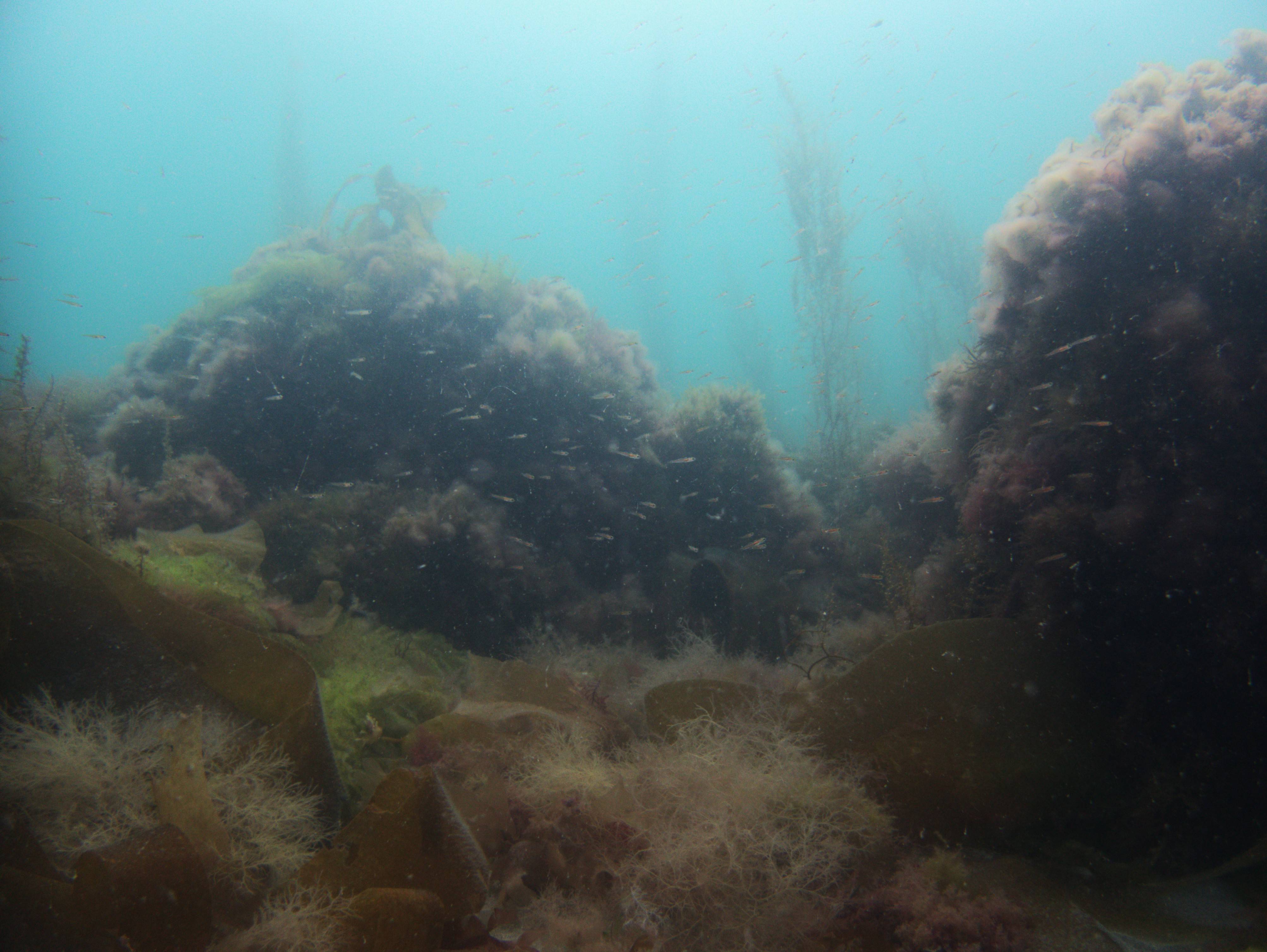 A shoal of tiny two-spot gobies within the rocky reef, By Jessie Dermody
After I’d finished rat boxing, I felt I deserved another dip in the sea! I enjoyed the feel of the water on my skin, and the reflection of the sunlight in the water. On my way back I found a lovely piece of Sea Beech growing out of a piece of kelp on the seabed. I often pick up and examine pieces of kelp that have broken away from their moorings, as this is a great way to spot sea slugs. No slugs today, but lots of sponges and parasitic sea weeds.
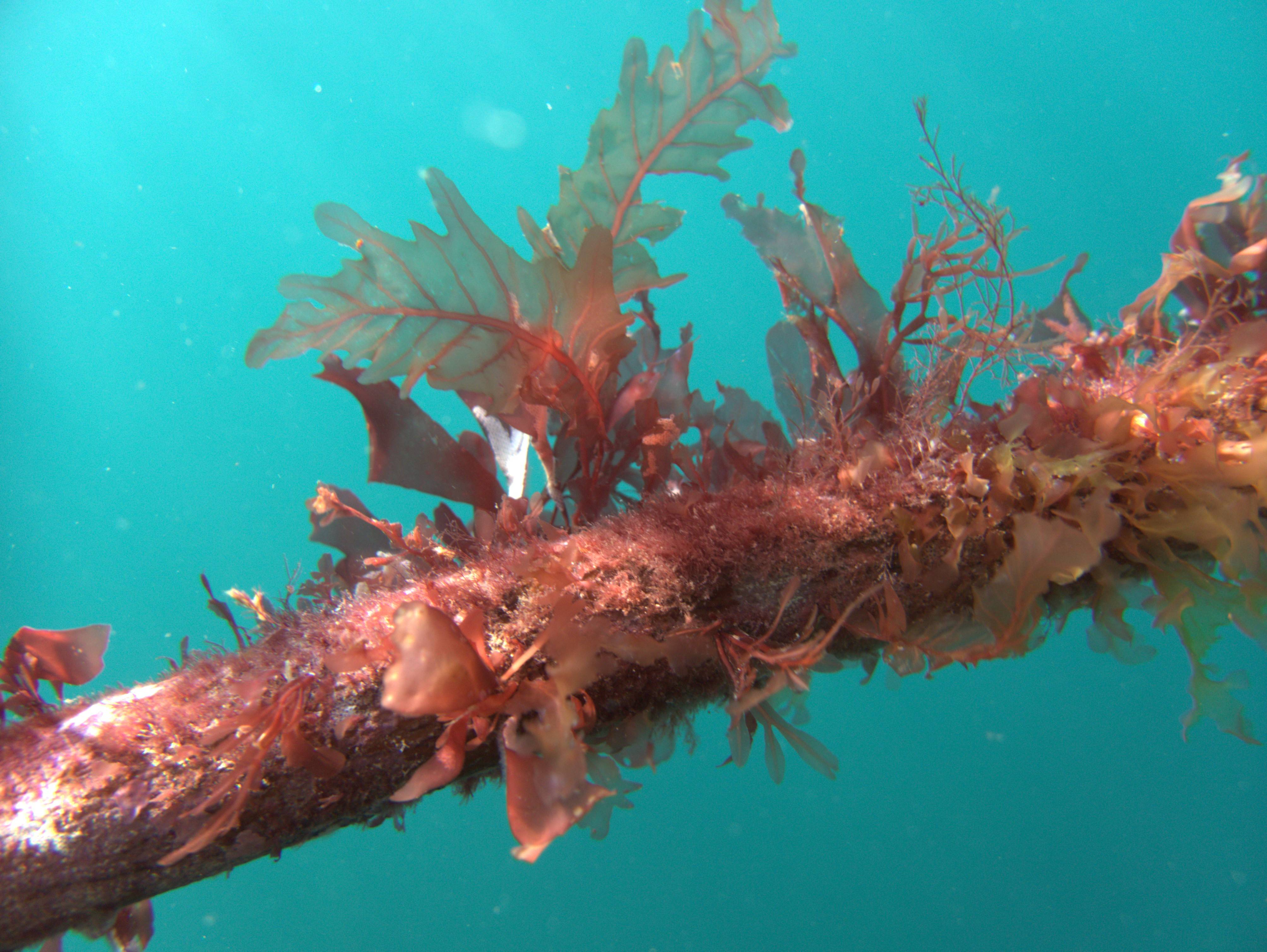 Sea Beech and other seaweeds growing out of an old piece of kelp. The Sea Beech is the longest of the seaweeds pictured here, and looks a bit like leaves. Photo by Jessie Dermody
Thanks for reading, see you next week!
25/06/2026 – The heatwave breaks
By Greg Lee
A scorching hot day on the island today, with the recent heatwave reaching its apex, though I'm sure those reading on the mainland will see the island high of 28.6 degrees and prefer that to what their own thermometer is reading!
I was out early with another survey of the Kittwakes and Guillemots at Aztec Bay. Even at 6:00am, the warm breeze was more than comfortable so I was not looking forward to the inevitable rise in the heat. Heading beyond Halfway Wall, I picked up a nice surprise flying over, a Redshank, no doubt an early migrant moving on after possibly failing to breed. Over the next few weeks, birders across the country will see an increase of this noisy wader on their wetland and estuary patches as young birds and postbreeding adults being to appear. They aren't quite so common on Lundy but perhaps a bird may appear on the rocks down in the Landing Bay.
The Guillemot chick numbers are increasing with a range of ages amongst the chicks, although some adults remain on their large eggs. Indeed some youngsters are now not far off jumping and gradually the ledges will begin to empty out of birds. Whilst doing my surveying, another sound and sign of the changing seasons caught my ear, the raucous and far-carrying call of a Sandwich Tern and sure enough, I spotted two birds diving and flying southwards. The tern migration in July and August is always an enjoyable experience for me and although I won't be sifting through large flocks of Sandwich Terns for other smaller species such as Black or Roseate whilst on Lundy, unlike at some other Observatories, any small signs of Tern passage will be greatly appreciated.
Once I'd finished my work for the day, I avoided the heat of the day and did some office-based jobs. Once the temperatures had somewhat repealed in the evening, I joined a few members of the Conservation Team for a swim off the Jetty. Usually, I'm often hesitant to get in and choose to slowly descend my way into the cold water. Today, I chose and different method and plunged straight in, which ultimately paid off.
 Storm clouds behind South Light by G.Lee
As darkness fell, so the storm clouds came and as dusk fell, great streaks of lightning flashed the sky from all angles. With the humidity so high and the clouds so dense, I optimistically set the moth-trap at Benjamin's Chair, hoping that the south-facing light may tempt some migrants in. Even within just a few minutes, it was clear the moths were very busy, with many insects coming into the light, so the optimism was high for a busy night in the trap!