


Bird Sightings
15/06/26 – Happy Monday!
By Chloë Langmead
Happy Monday, I hope you all had great weekends!
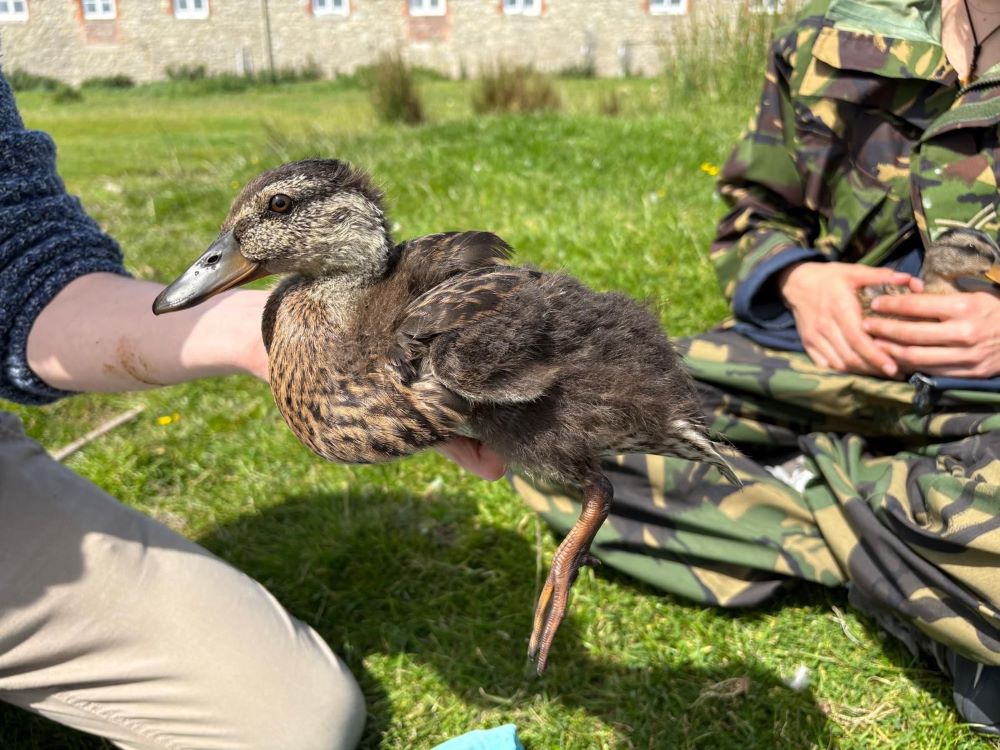 Mallard Duckling. Photo by Jayden
Yesterday morning, Thomas, Lucile, Jayden, Tara and I went out to catch 3 Mallard ducklings to ring. This went very smoothly and was exciting as not many Mallard get ringed on Lundy. We hope to go back next week to ring the adults while they moult.
This morning started with a seal disturbance survey at Brazen Ward. It was fairly high tide so there weren’t many seals about, most were probably off foraging. However I was treated to the cool sight of a Peregrine flying right past me, carrying a freshly killed bird (unfortunately it passed too quickly for me to tell the species)!
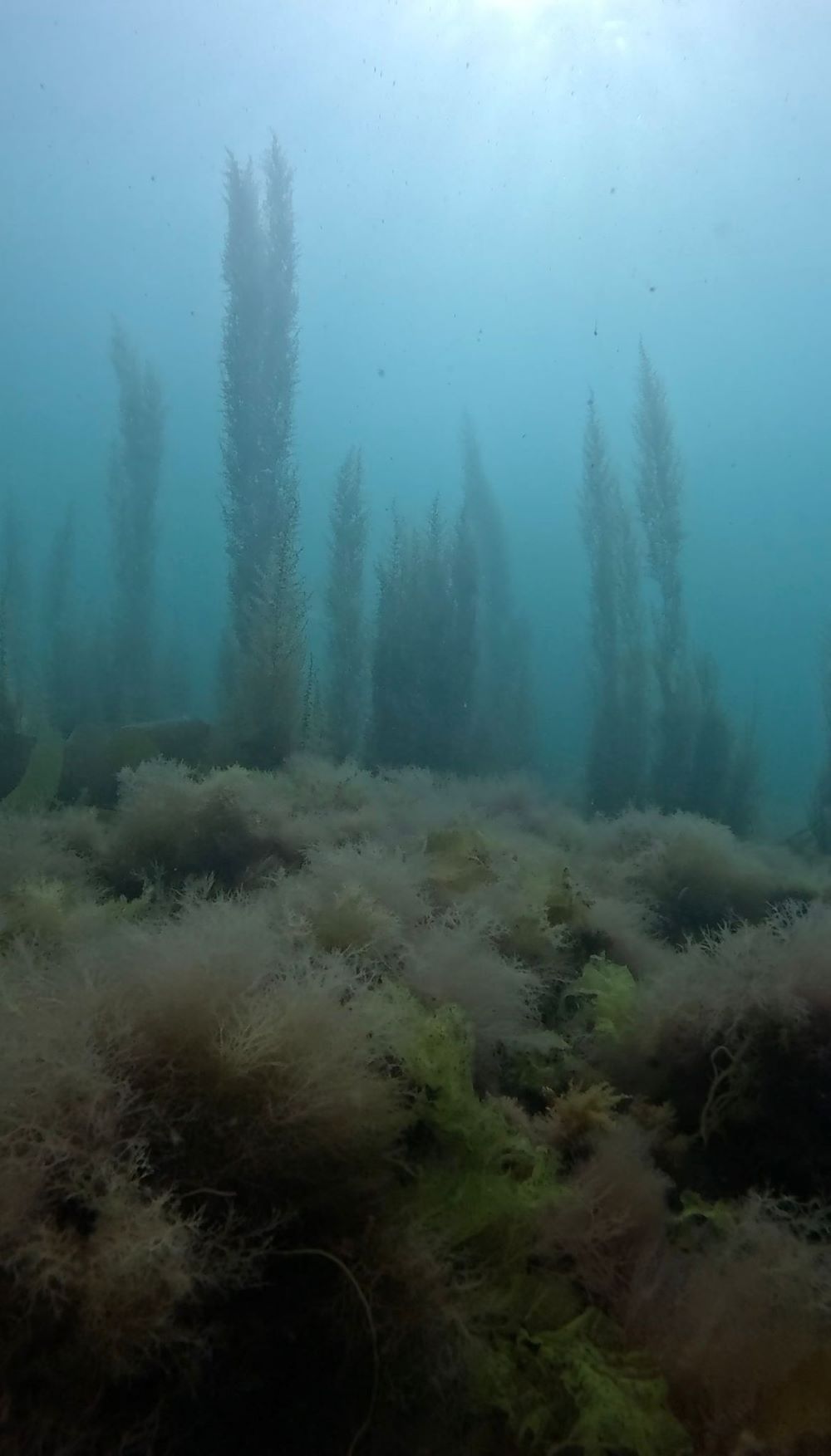 Due to a lack of Bears on the island, we're going on a Snorkel Safari! Pic by Chloë
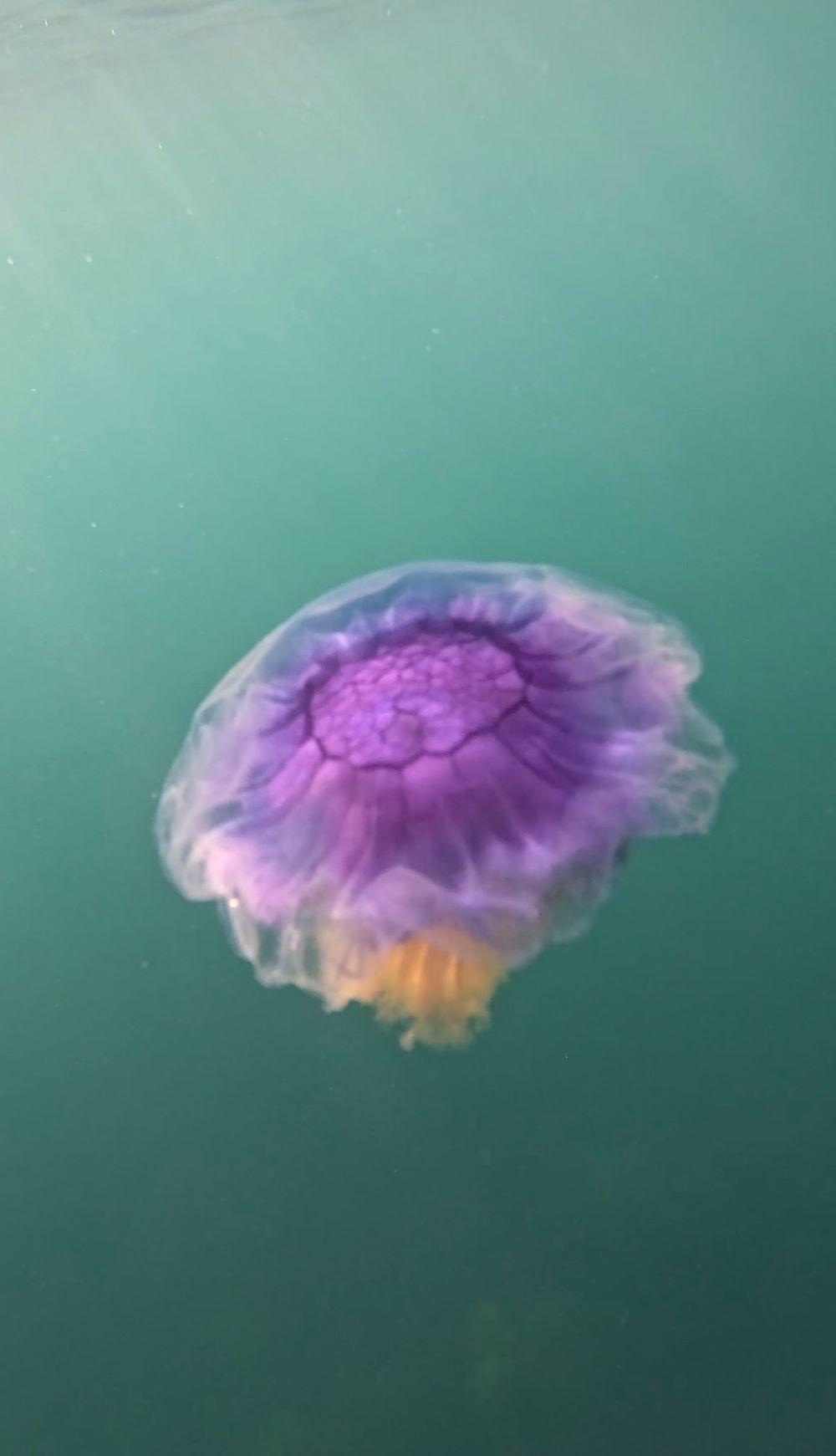 Blue Jellyfish by Chloë
Next it was off to the Landing Bay for the first snorkel safari of the year! Despite the visibility being less than ideal due to some easterly’s we still had a great time! After getting fully geared up in neoprene we found lots of awesome marine life! Some of the highlights were Cowries, some big Shrimp, an intact Edible Crab moult, Dead Man’s Fingers coral and Jessie found a Nudibranch!
14/06/2026 – A Bonanza of Butterflies
By Jessie Dermody
It was a bit of a slow start for the conservation volunteers this morning, as island karaoke went on until very late last night. After 3 strong cups of coffee, I began to walk up to the northeast of the island to complete my scheduled seal disturbance survey. I was rewarded for my efforts by many butterflies along the way! This was one of the first sunny days since I have been on the island, and it was lovely to see the migrant butterflies and moths in full force! We had a total count of 40 Painted Ladies across the island, and around 30 Red Admirals. This is a big step up from last week, when I walked the butterfly survey route and only saw one Small Tortoiseshell.
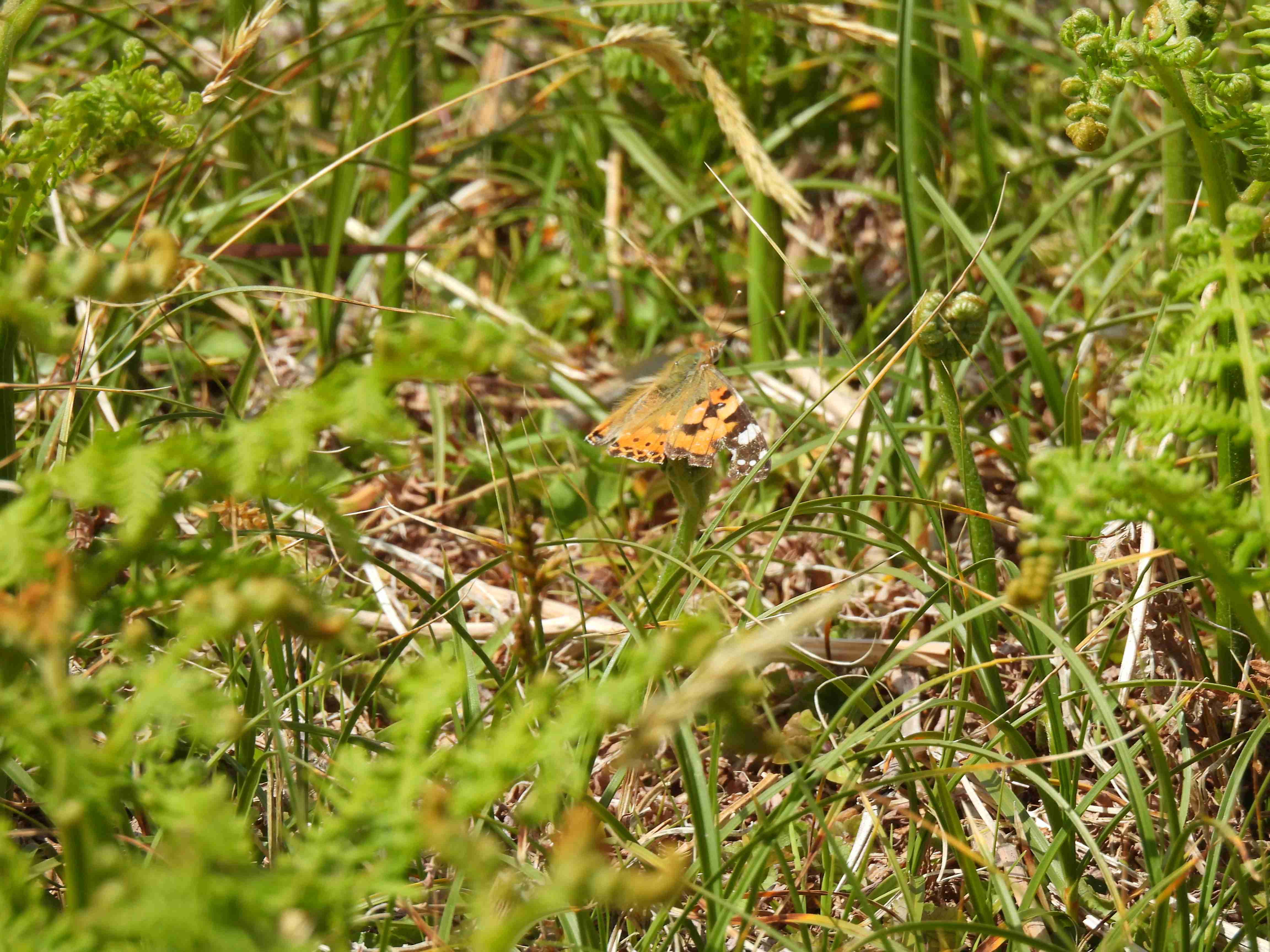 A painted lady butterfly by Jessie Dermody
Unfortunately, I did not see as many Seals during my survey. I also witnessed quite a bit of disturbance of resting seals in the bay, with several seals scared off the rocks into the water by a boat. There were only four seals in the bay when I got there, which is crazy as last week at the same site, around the same tide, there were 38 seals. For most of the survey, I watched one lonely seal (she was pretty cute though!). The decrease in numbers at this site is likely due to disturbance.
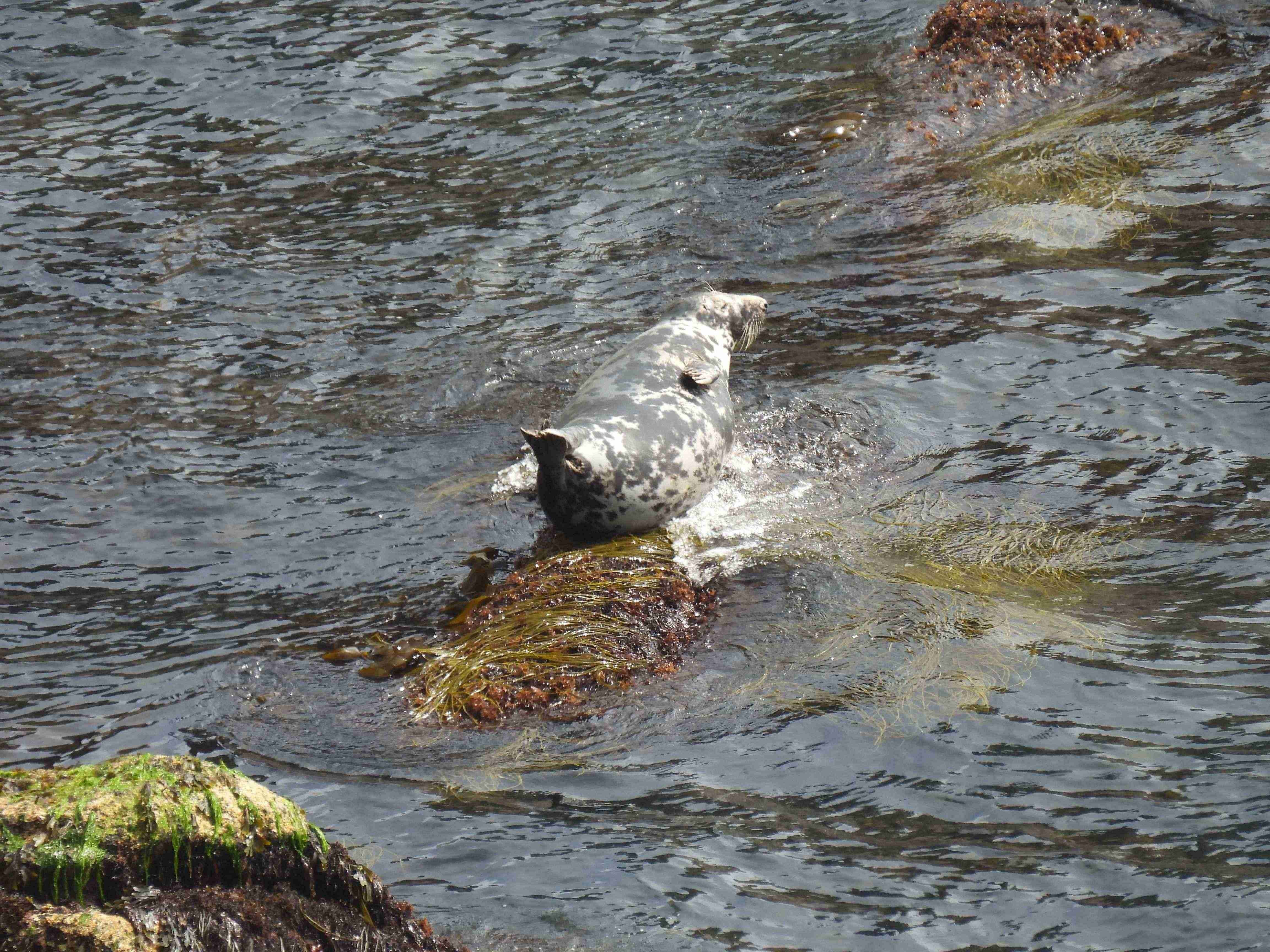 The lone seal in gannets bay. She is 'banana-ing' which indicates she is calm and resting. Photo by Jessie Dermody
Grey Seals “haul out” (flop onto the rocks) during the hours around low tide to digest the food they caught while the tide was higher. If the seals get stressed during this time, they cannot digest their food properly, so they lose a lot of energy. Even something as small as people walking on the cliff nearby can cause enough stress to disrupt digestion in a seal. Regular disturbances like this have been shown to have some very severe impacts on seal colonies over time, like causing them to move to areas that do not have optimal conditions for them or shortening their lifespan. The Seal Research Trust has some great resources about this on their website: What to do if you see a disturbed seal.
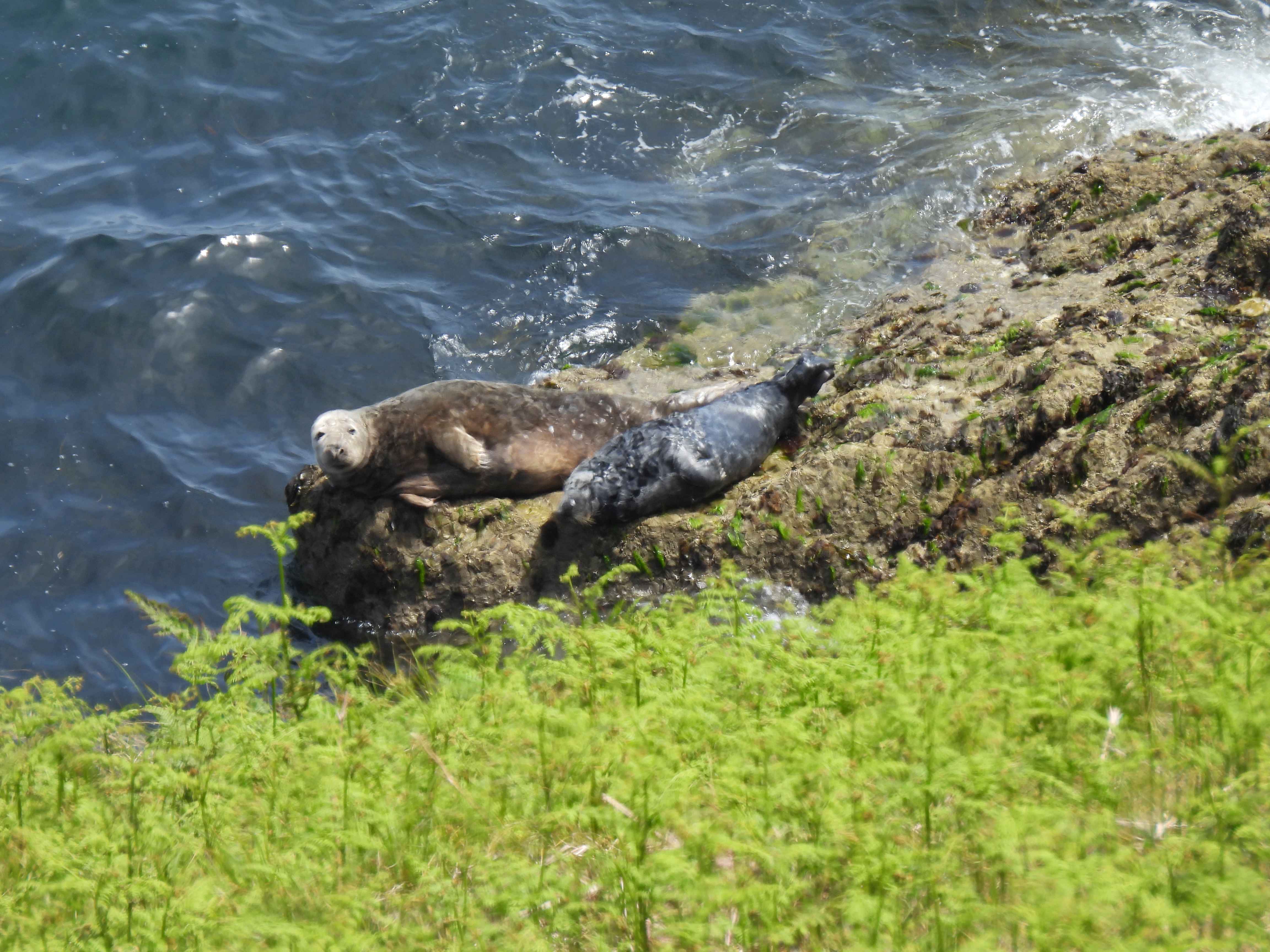 One seal in this photo has been disturbed by me on the cliff, while the other is not bothered. Photo by Jessie Dermody
When Chloë and I do our disturbance surveys, we are watching the seals for any signs that they are stressed. We note down the causes and how severe their stress is based on how they act. A seal that is looking around at you or at something else while hauled out, has been disturbed slightly. A seal shifting or moving positions on the rock while looking around has been disturbed more, and a seal that rushes off the rocks into the water, or dives down with a splash, has been severely disturbed. We do these surveys to measure how much disturbance effects our seal colony, so that the island's warden team know when and how to act to mitigate any disturbance that could have long-lasting impacts. The island's seal colony is impacted by disturbance a lot, especially since they are known to be very friendly, so they attract many visitors. If you witness any severe disturbance incidents whilst on the island, please do report these to the conservation team, with evidence if you can!
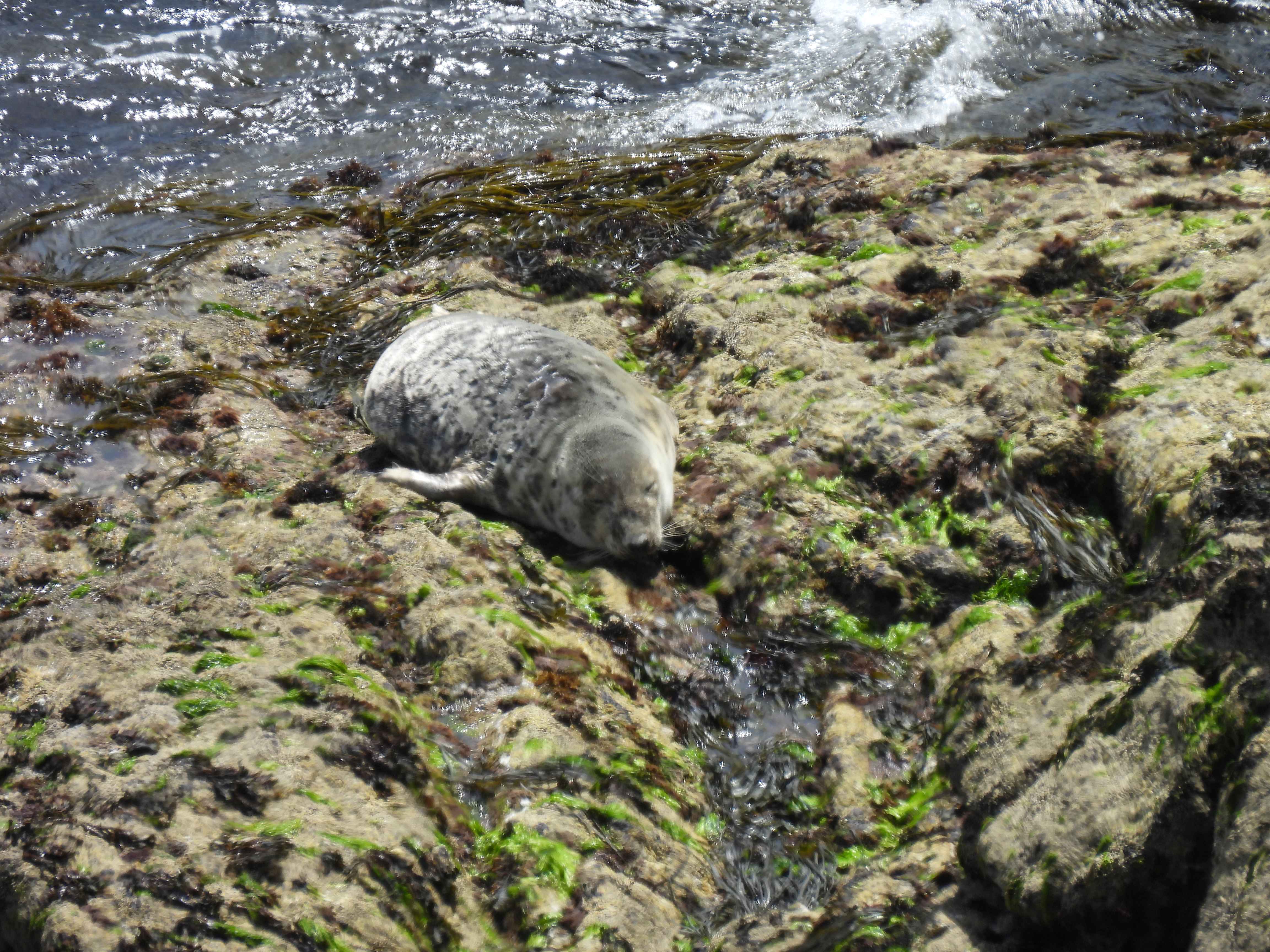 A sleepy seal in the bay by Jessie Dermody
After my survey, I took my time to the walk back, as I wanted to count all the butterflies I saw outside the census route on the way. I also kept up a count of the bird species I saw. I am not as good at counting as some of the other volunteers, but hopefully I will get better over time! I counted 13 Painted Ladies, 8 Red Admirals, 7 Small Heaths, 3 Shags, 7 Oystercatchers, 9 Linnet, 5 Skylarks and two Carrion Crows on that walk. I also met a friendly Rose Chafer beetle! I took a lot of photos along the walk as well. I returned from my travels to make some tasty pasta, then spent the rest of the day trying to get the seal disturbance videos I had taken onto my laptop and hanging out with the other volunteers. An early night was required, and I fell asleep as soon as my head touched my pillow!
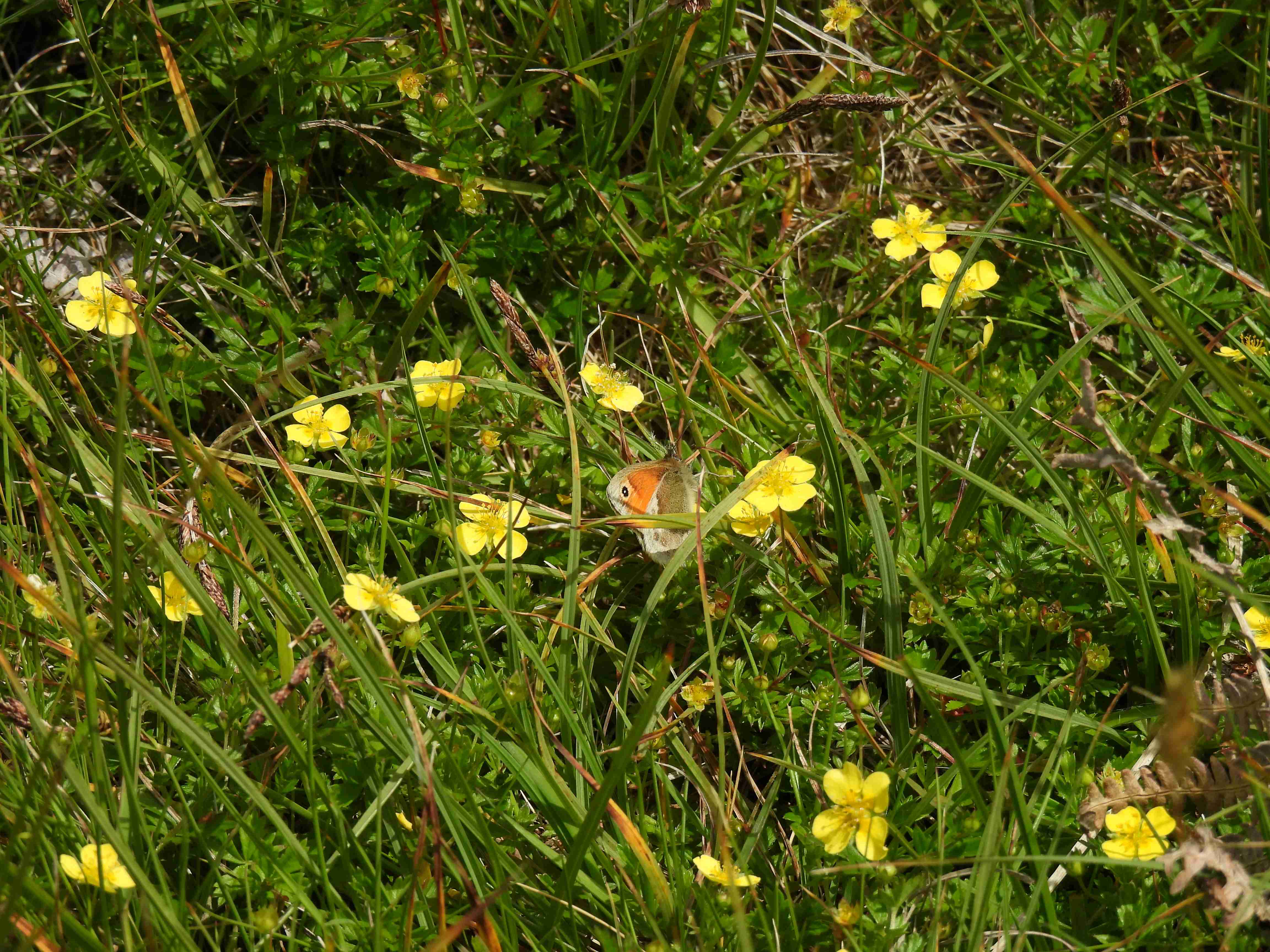 A Small Heath butterfly by Jessie Dermody
13/06/2026 – Is autumn upon us?
By Greg Lee
The first settled day for what seems like ages. As a result, I was quick to head out and do an early morning patrol on census joined by Emma. Although migration is nearly over (for the timebeing), the patrols at the moment are certainly full of life with plenty of young birds to be enjoyed. Noisy brown Starling chicks squawk at and follow their parents all over the place, young Goldfinches lacking the red facial colours of the adult birds flit in the sycamores and streaky, young Linnets seem to be in every bush! Meanwhile, other birds were still on parental duties with Blackcaps, Chiffchaffs and Willow Warblers seen carrying food to their fledglings. In the meantime, our Millcombe Spotted Flycatcher pair were taking advantage of the drop in the wind to flit out and snatch insects on the wing. Our well-known Song Thrush is still going strong too, though the repertoire seems to have stalled, with passage waders being a firm favourite. Over on the Airfield, a female Mallard with a brood of nine small ducklings in tow, waddled into the thick Bracken and disappeared.
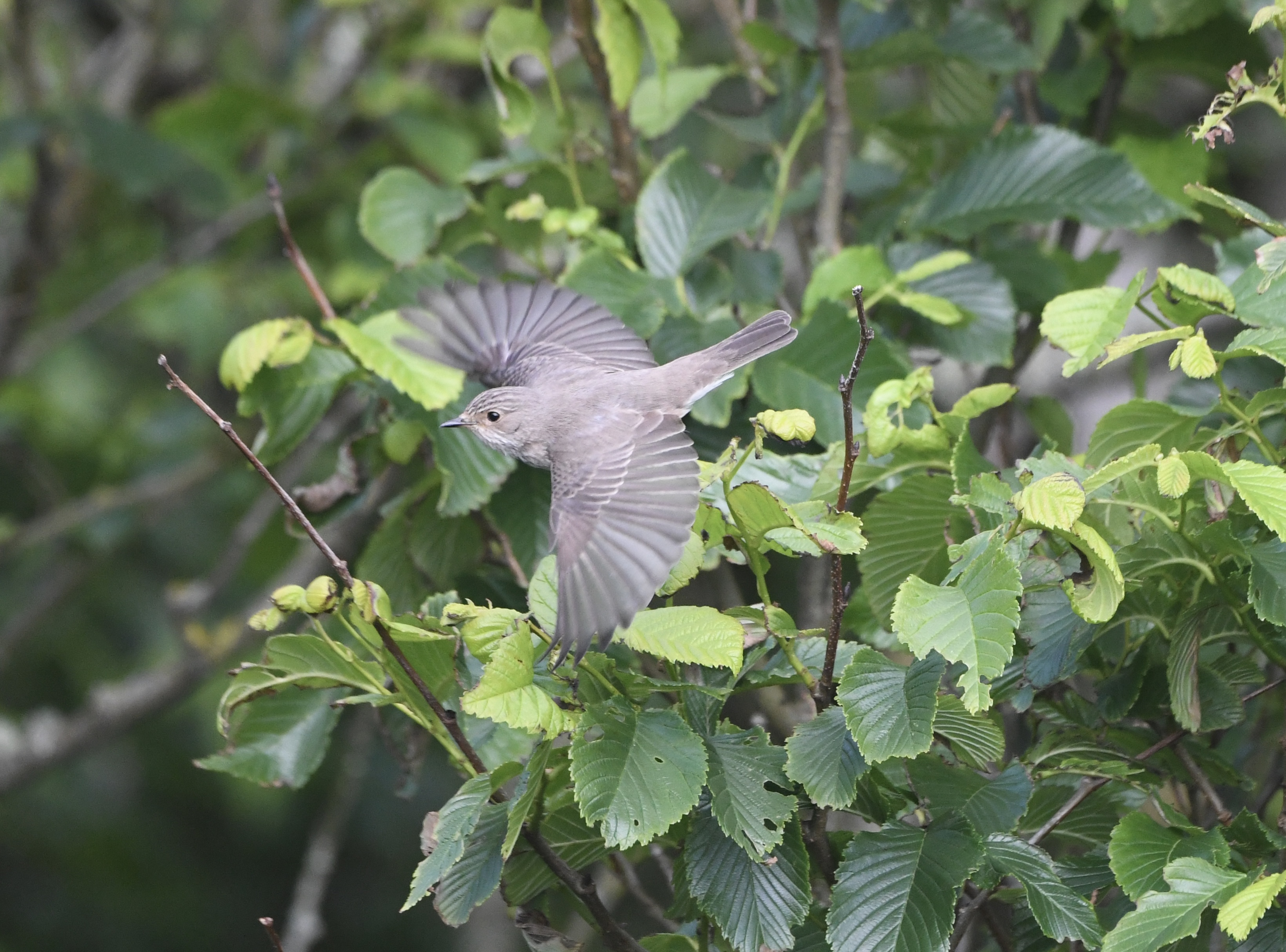 Spotted Flycatcher by G.Lee
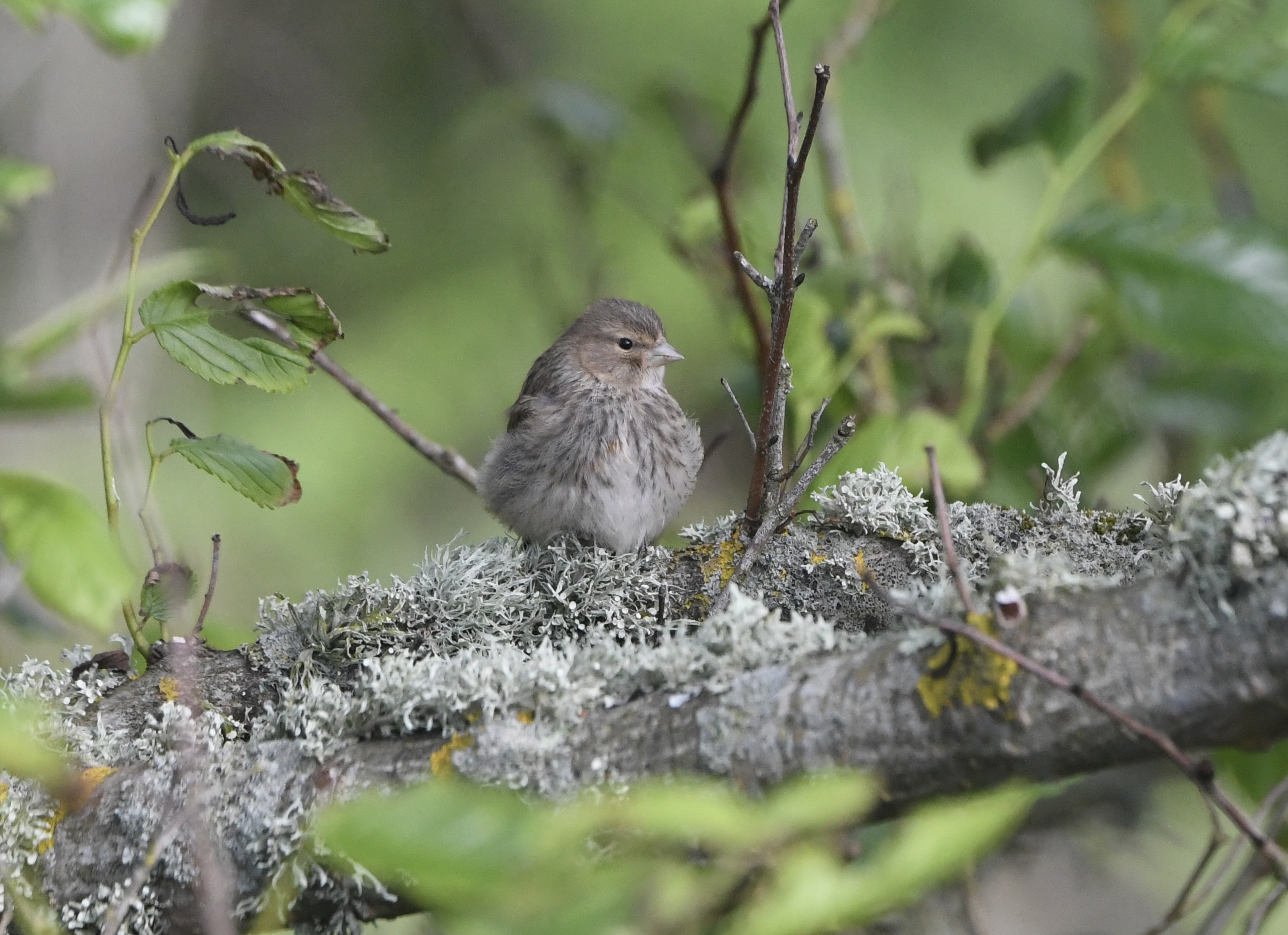 Linnet by G.Lee
For a lover of the outdoors, it seems to be some sort of cruel irony that I'm somewhat allergic to it, the long grass near Government House releasing a dust cloud of pollen. Cue sneezing, itchy eyes and a streaming nose, my nemesis at this time of year. Emma, (positively unaffected by the offerings from the grasses), may well have frolicked through the vegetation just to further exemplify the blissful existence that I can only imagine the non-sufferers have in summer. So, once census was completed, the eyedrops and antihistamines were produced to prevent people wondering if my glassy, red eyes were an insight into my wellbeing.
Then, it was out to the coast to lead the seabird station at Jenny's Cove for the host of day-trippers and new staying guests arriving on the island. On the way, a party of Swifts streaming overhead and screaming caught my ear. Back in my small Gloucestershire village where I grew up, I always hallmarked the day that these marvellous birds would arrive back on territory to swirl in the summer skies. Whilst the Swifts may have been late spring arrivals, a Sand Martin heading southward wasn't so clear. Most Sand Martins pass through in March and April, with May birds generally being quite late. On the contrary, one of the first autumn migrants I expect to see moving southward in July are small parties of Sand Martins moving through. So, was this bird a failed breeder that decided to head back to warmer climes? Or was it a tardy spring migrant that had stalled its journey northward? Even though I often treat mid-July as the start of autumn. I concede that it may be just a tad early to start treating the biridng as though autumn is here, though I'm sure some southbound waders will be spotted before June comes to an end.
The biggest surprise came on the walk back when I spotted a small dragonfly basking on the main track. I saw this was a Darter sp. which, with the lower sections of the eye being blue, helped to identify it as a Red-veined Darter, our third record this year of this migrant species to Lundy. Unfortunately, as I didn't have a camera to hand, I had to take record shots through my binoculars.
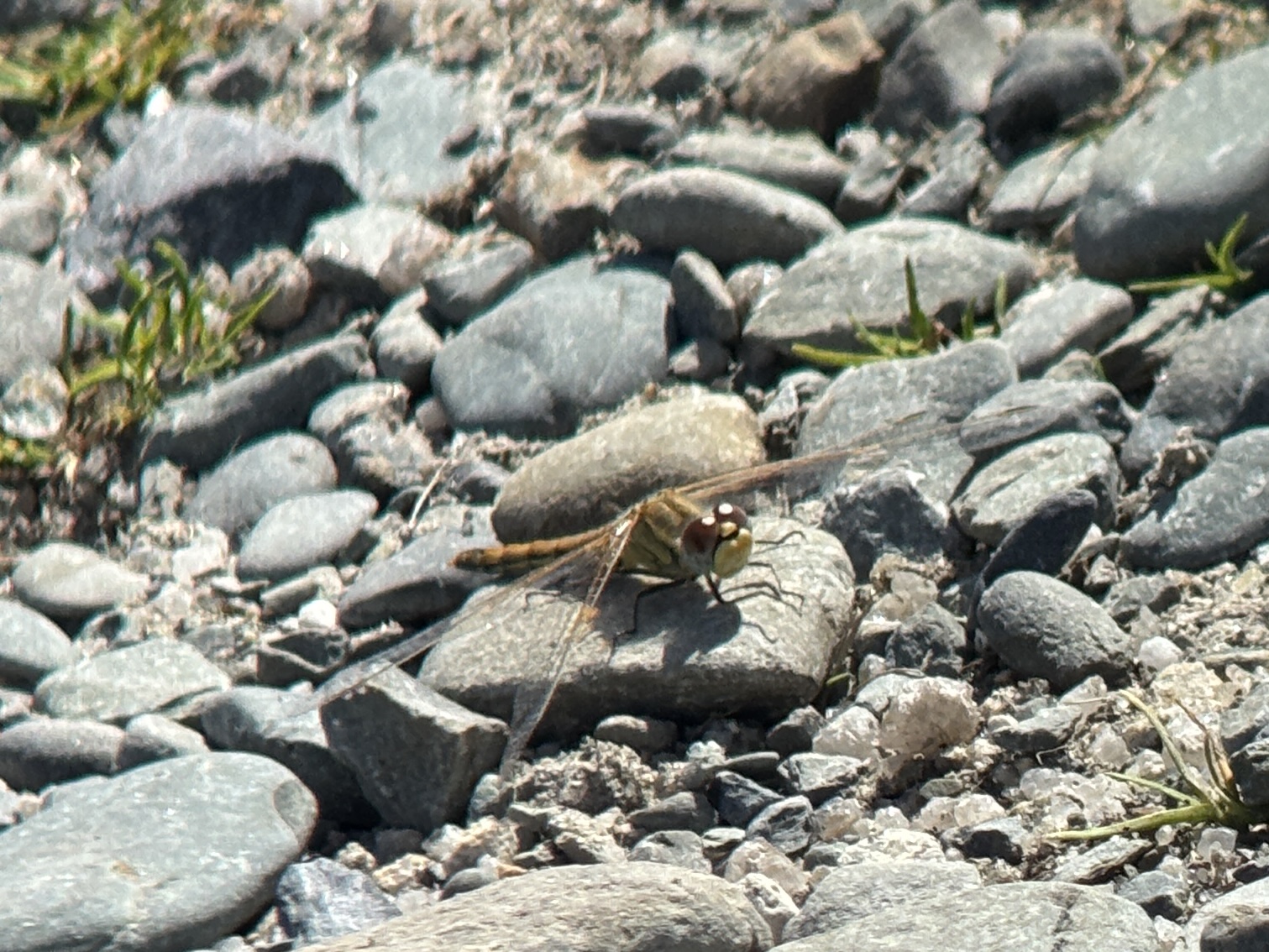 Red-veined Darter by G.Lee
12/06/2026 – Sea Slugs and Shearwaters
By Emma
Today was another grey blustery day, but that did not stop Chloë, Jessie and visiting rockpooler Eleanor heading down to the Landing Bay to do some rockpool surveys. They were quite successful finding many interesting species of sea slug, including some Celtic Sea slugs with their lovely gherkin body shape. An exciting find was Trapania maculata which is a rarely seen slug species in the uk, and not usually found in shallow rockpools like where it had been floating around when Eleanor found it, alongside its cousin Trapania pallida. Another beautiful invertebrate found was a Candy Striped Flatworm, matching its name very nicely with red and white stripes running along the length of its flattened body.
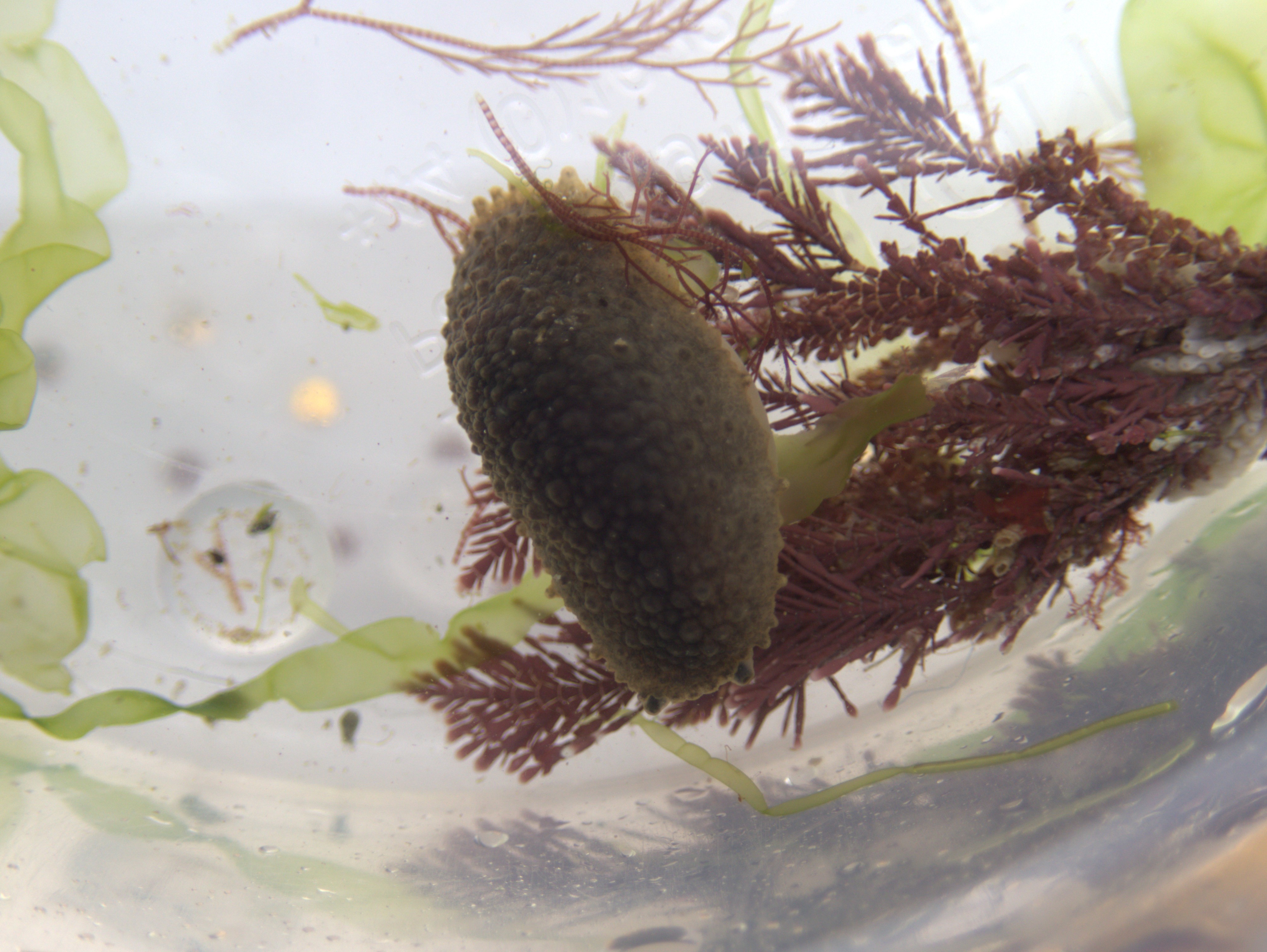 Celtic Sea Slug by Jessie Dermody
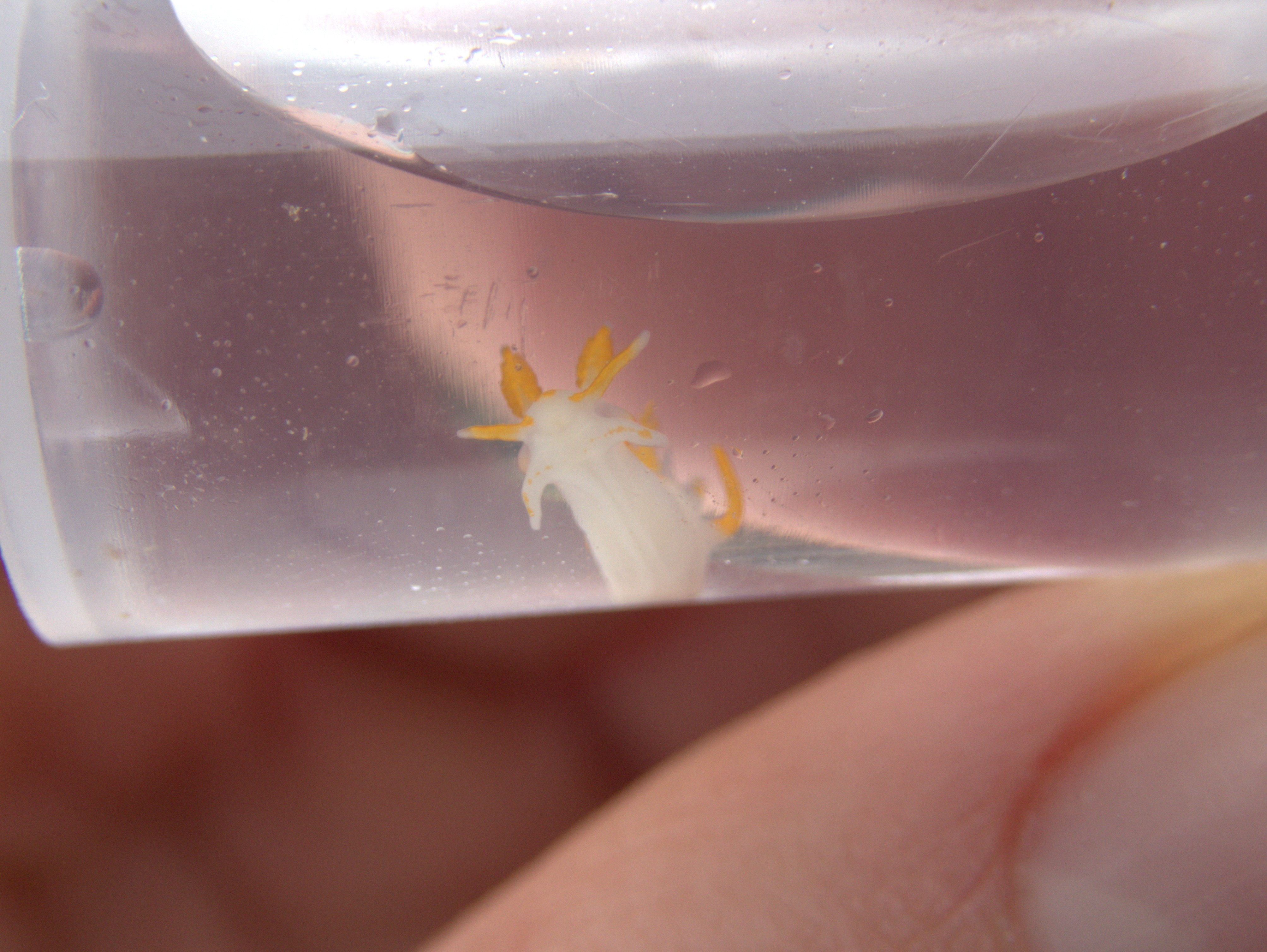 Trapania maculata by Jessie Dermody
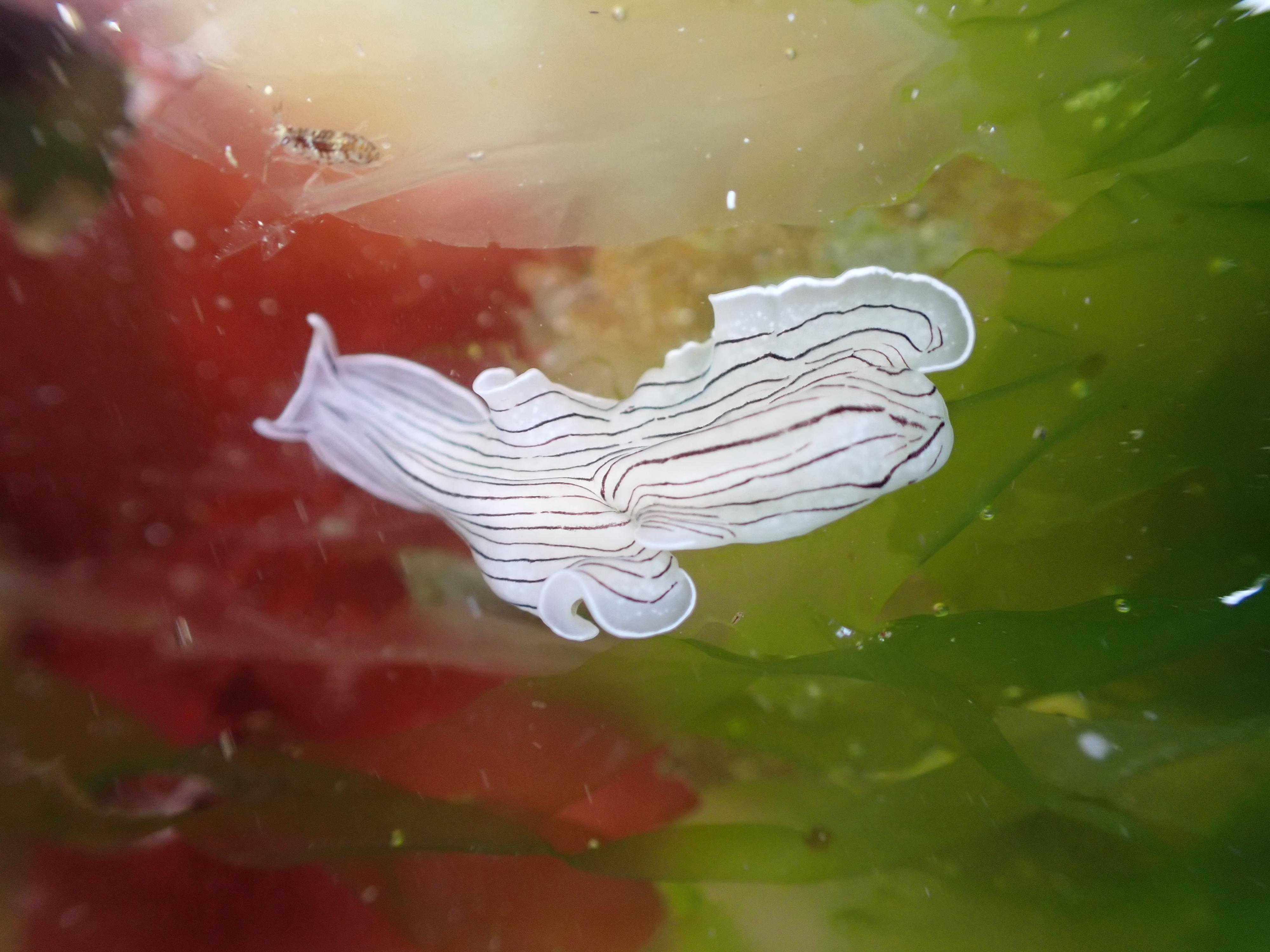 Candy Striped Flatworm by Chloë Langmead
Elsewhere on the island, the gap between the Spring and Autumn migration periods is leading to low numbers of new birds passing through. However bird numbers are ever increasing as more and more fledglings emerge from the bracken, bushes and cavities, with a plethora of young Wheatears, Linnets, Starlings and more hopping around learning how to be birds. Thomas managed to read a ring number of an adult male Mallard and discovered that he had ringed it as a duckling 2 years ago on the island, which is very sweet to hear as many of the ducklings we have seen this year have become Raven snacks.
Greg and I ended the day with a seawatch, settling in the Ugly with a scope and watching out over the ocean. Whilst we did not see any migrants of the skua type (definitely not holding out for one!) we did see a couple thousand Manx Shearwaters flying close over the waves, putting on a graceful display of speed and acrobatics. Gannets were joining the party soaring high above the waves on air currents, a young individual showing off its dark feathers. Razorbills and Guillemots were heading out low over the waves to fetch fish for their hatched chicks, wings flapping frantically, holding up their little black and white bodies. I then had to run off to the Tavern to end my day with a tavern shift but slowed to walk through the Pines and listen to the Blackbird song echoing around the valley.