


Bird Sightings
24/06/2026 – Sunsets and Sweltering Heat!
By Chloë Langmead
Hiya everyone!
This morning started slower than usual as we had a late night out ringing. Last night Jessie, Tara and I went up to North Light earlier than the rest of the conservation team to have a beautiful sunset swim! The water was crystal clear and the sun sank beautifully into the ocean as Razorbill calls soundtracked our swim.

Despite our late night, this morning Tara, Jessie and I were soon wide awake due to the pungent smell of defrosted Pollock. We spent the morning preparing to deploy our BRUV (baited remote underwater video), starting with the task of preparing bait. Cutting and portioning fish is a messy job on a good day, but the intense heat today made it even more so!
We deployed the BRUV at the Devil's Kitchen today. It was high tide, so we floated the BRUV out on a kayak and pushed it along in the water. Once we picked a spot we dropped it down and left it for an hour. I then had to head up for a tavern shift, but Simon kindly stepped in to help with the retrieval, and it sounded like a proper operation hauling it up between two kayaks!
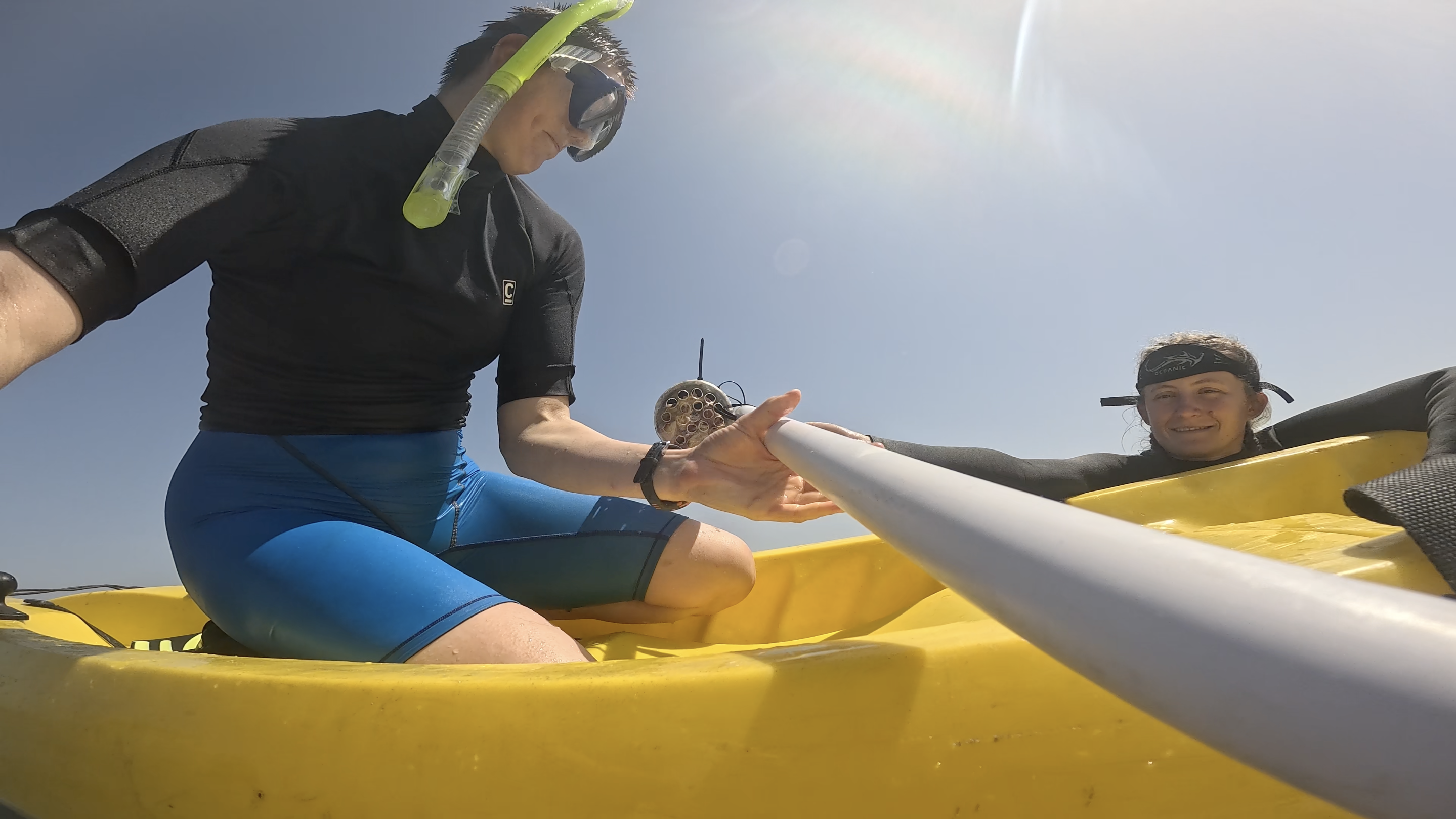
Unfortunately, there isn’t very much to see on the footage, other than the kelp swaying, but we did have a couple of passing jellyfish including some Blue Jellyfish. We are working on improving our deployment method and we will be shortening the BRUV, so it is closer to the seabed, trying different locations and bait types.
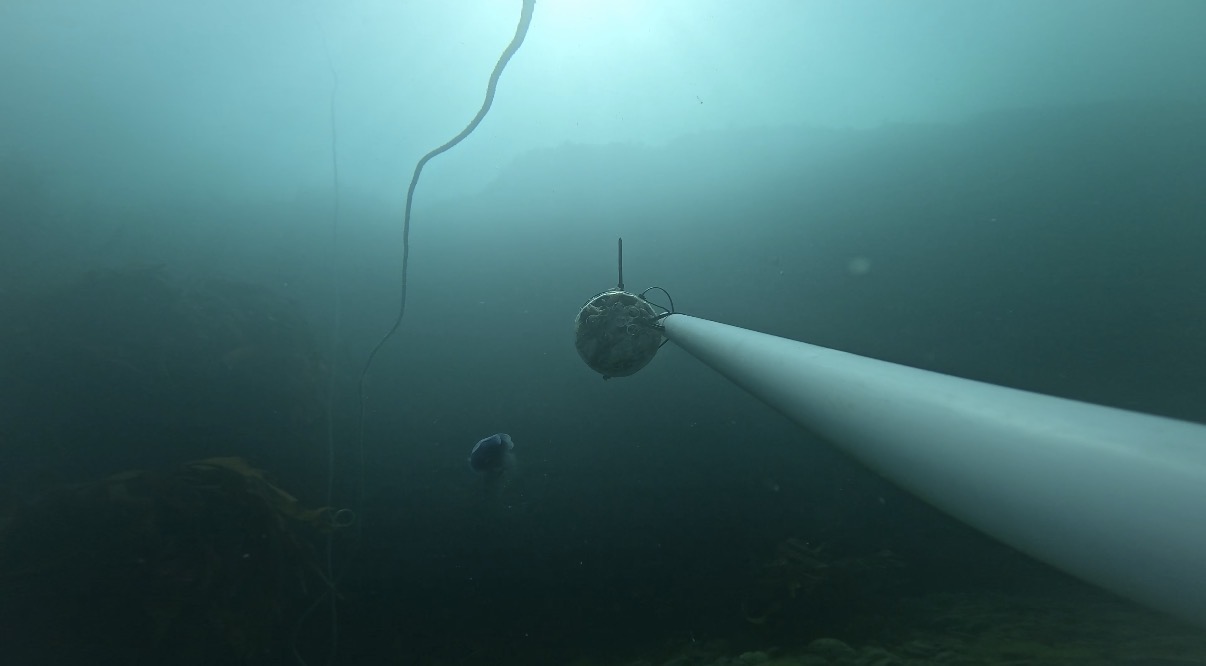
Blue Jellyfish seen on BRUV. Photo by Chloë
23/06/2026 – A Busy Bird Day
The day started with a travel day meeting as it was a boat day on a glorious day.
There were many tasks to get completed today, and even at the time of writing a lot of those tasks are still to be completed.
Firstly, a walk to North End was required to drop off some equipment. Eleanor and I started walking around 8am and made a slow wander north with the poles. We spotted around 60+ Painted Lady, a Black-tailed Skimmer and about 30+ Red Admirals along the main track. Skylarks and Meadow Pipits filled the sky with song, and the calls of Linnets could be heard too. When approaching Widow’s Tenement, we accidently flushed a Quail, this could well be a migrant or it could even be on territory as we have had a few records already this year in seemingly the same spot. The equipment was dropped off soon after and we spotted a few loafing Puffins, a flyby Small Tortoiseshell and had nice views of the seabirds.
A wander back and a trip down to see the boat in was required as we were celebrating both the 20yrs Rat Free Celebrations and the arrival of Emma and Nick who are here to help with some Gull/seabird ringing over the next couple of days, as well as some permit assessments for our trainees on the island. A sweltering trip up and down Millcombe was super sticky, and the highlights were the Song Thrush, Stonechat, our local breeding Starlings, and a few Shags in the Landing Bay.
After a well earned break and a lunch stop in the shade, we joined the celebrations and checked the Manx Shearwater boxes whereby we were able to show the group of leading experts, scientists, conservationists and landowners the true success of the Rat Eradication 20yrs ago. And what better to be shown then a very fluffy, a few day old Manx Shearwater chick! Something that was unimaginable over 20 years ago when rats ate and decimated the seabird colonies on the island.
After some much needed admin, some food was had and then an evening of Storm Petrel catching resulted in 50 birds being caught including 34 new and 16 retrap.
22/06/2026 – Jenny's Cove Count and Red-rumped Swallow
By Thomas Weston
Today was our annual Jenny's Cove count. The team assembled at the Tavern where Eleanor, Tara, Greg, Emma and I set off to count the cove. Emma and Greg had just got back from counting moths in the trap and their non-moth highlights included another Red-veined Darter (10th record ever for the island – though the 7th this year already) as well as a small passage of departing Swifts. There have been a good number seen passing on the North Devon coast this morning too which is amazing to see.
We set off at a leisurely time of 08:25am and headed off north up the track. There were small flocks of Linnets and Meadow Pipits in the grass, and a friendly family of Wheatear were in Brick Field. As we passed Pondsbury, a distant check of the waterbody yielded a very quiet scene, though a Common Snipe was accidently flushed from near the track. A local failed breeder or returnee from the North?
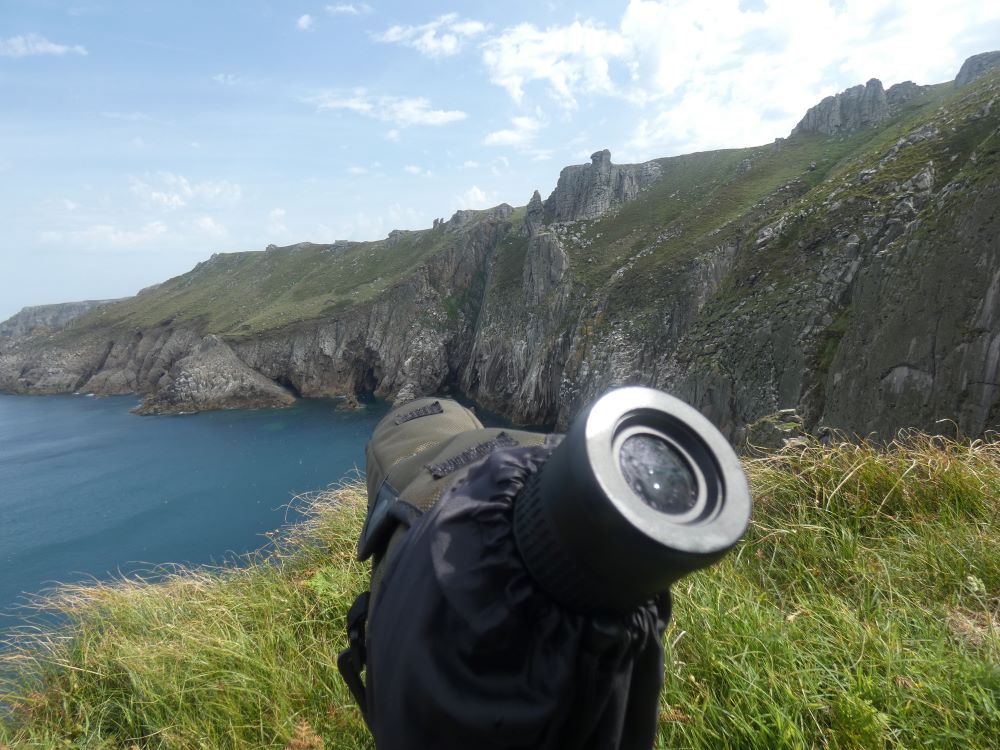 Jenny's Cove Count by Thomas Weston
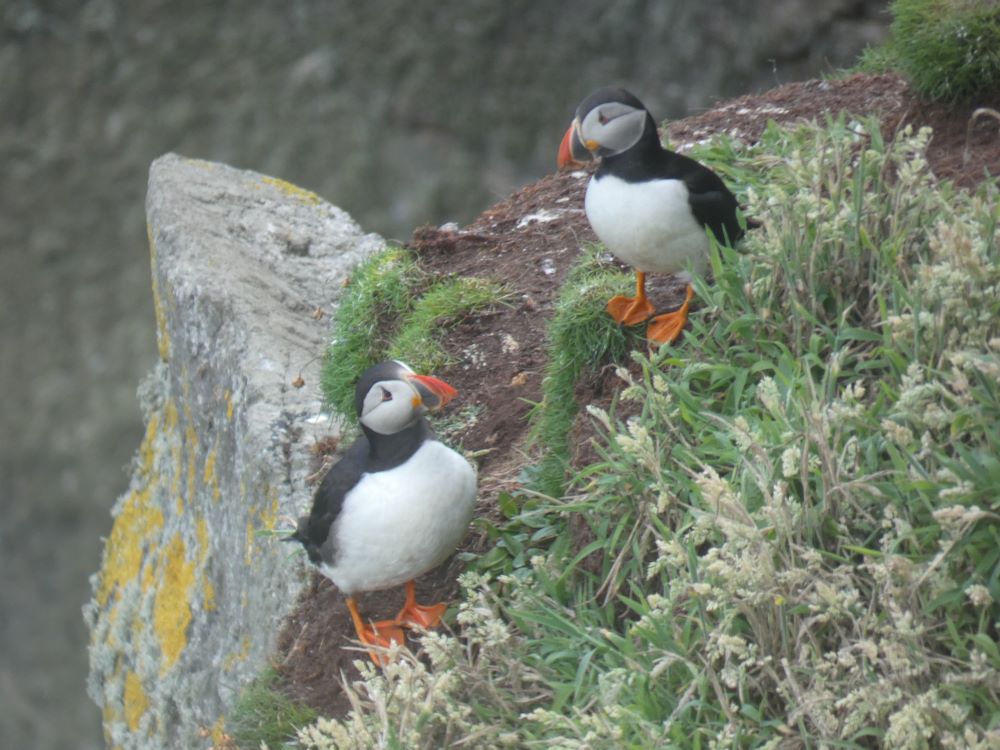 Puffin at Jenny's Cove during the Jenny's Cove Count by Thomas Weston
At Jenny’s Cove we split into two teams. Tara and Greg went to the northern sections of the cove and surveyed four viewpoints whereas Eleanor, Emma and I surveyed the southern sections. With a brisk east wind and lovely sunny weather, we remained cool in the heat. Counts were extremely successful, and we have some good results which we hope to publish in the ‘General News’ section of the website. I spent the afternoon combining the totals and there are some certainly some good results from today!
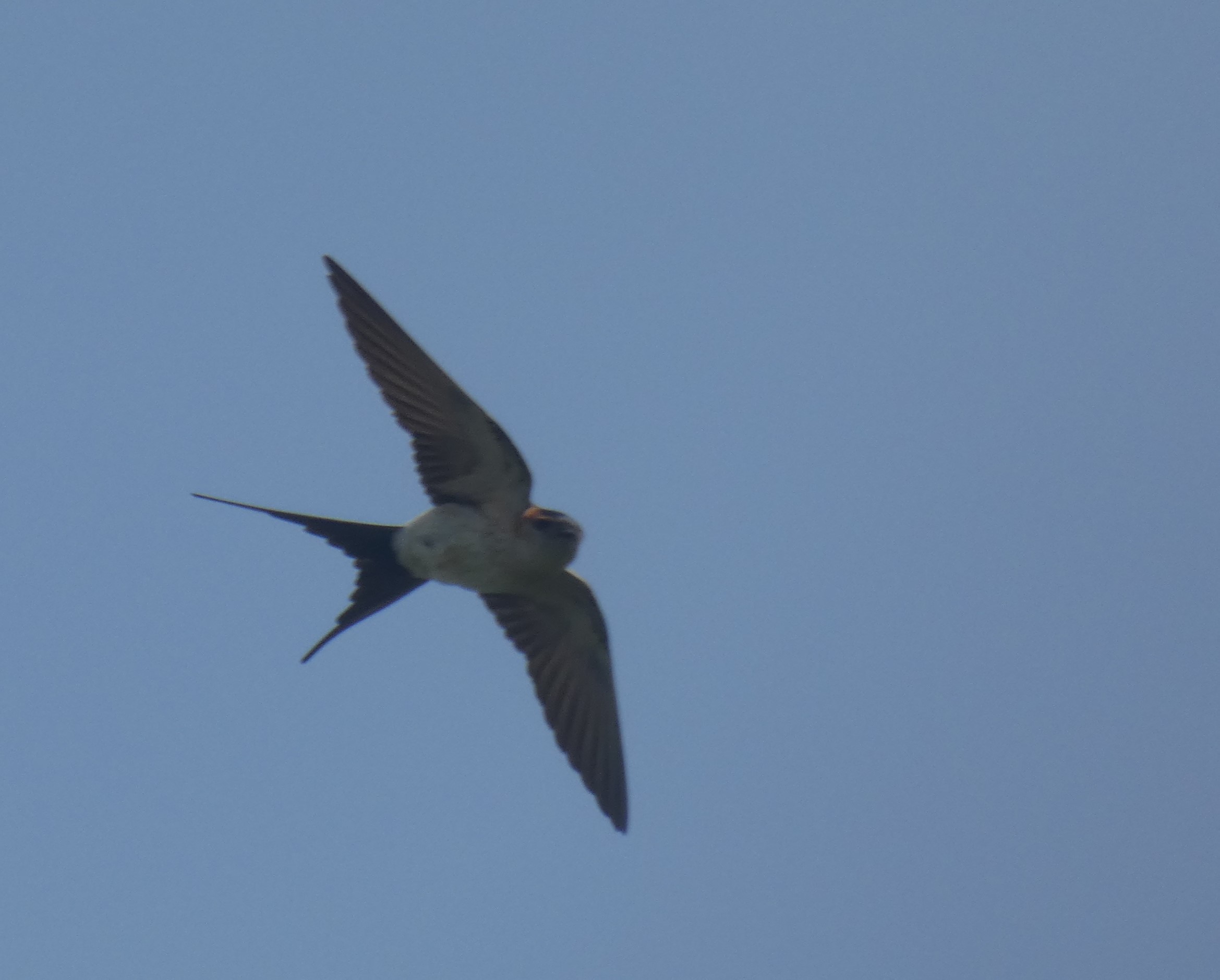 Red rumped Swallow over the Village and Bartons by Thomas Weston
On our way back, we had just dropped Greg and Emma off at the Lodge. A few hundred metres south of the Lodge, around the Barn area, we spotted a white-rumped hirundine flying towards us. It looked a little like our seemingly over-summering House Martin loitering over the Village, though as it flew by it was obviously a Swallow in structure but without binoculars, I couldn’t see many more features. The penny dropped, and on its return over our heads heading back south towards the Church it was a Red-rumped Swallow. I ran to the Lodge to get the volunteers out and posted on the island’s bird news WhatsApp chat for birders to join.
The bird loitered across the southern end of the island, heading between the Lambing Shed and the Castle whilst the wind blew from the SE. The bird remained on island for about 1hr before a band of rain (due to some atmospheric breakdown on the mainland) came across, forcing the wind to go E and then briefly SW as the band passed. This rain gave the bird enough of a inspiration to leave and head out from the Castle not to be seen again! A stunning find and so lovely to get everyone onto the bird.
I completed some Bird Obs admin and headed back for dinner baking in the heat. A walk around Millcombe as it cooled yielded some good local breeding totals of residents and our breeding migrants before heading up to our Daily Bird Log. Whilst log was being completed a flock of 30 Swifts headed around the Church screaming as they passed. Amazing and a sure sign of summer!
21/06/2026 – Summer Solstice
By Thomas Weston
My day started at 4am this morning, a slight glow in the sky and the sounds of the Millcombe Song Thrush, plus a rather active Swallow filled the air as I disturbed from my sleep. The original (non-bird) alarm was set a little later and I was up, washing up by 5am so everything was ready for the morning. I then headed down to Millcombe in the first really nice sunshine we have had for a while. It was also quite warm to start and by 6am I had the nets open.
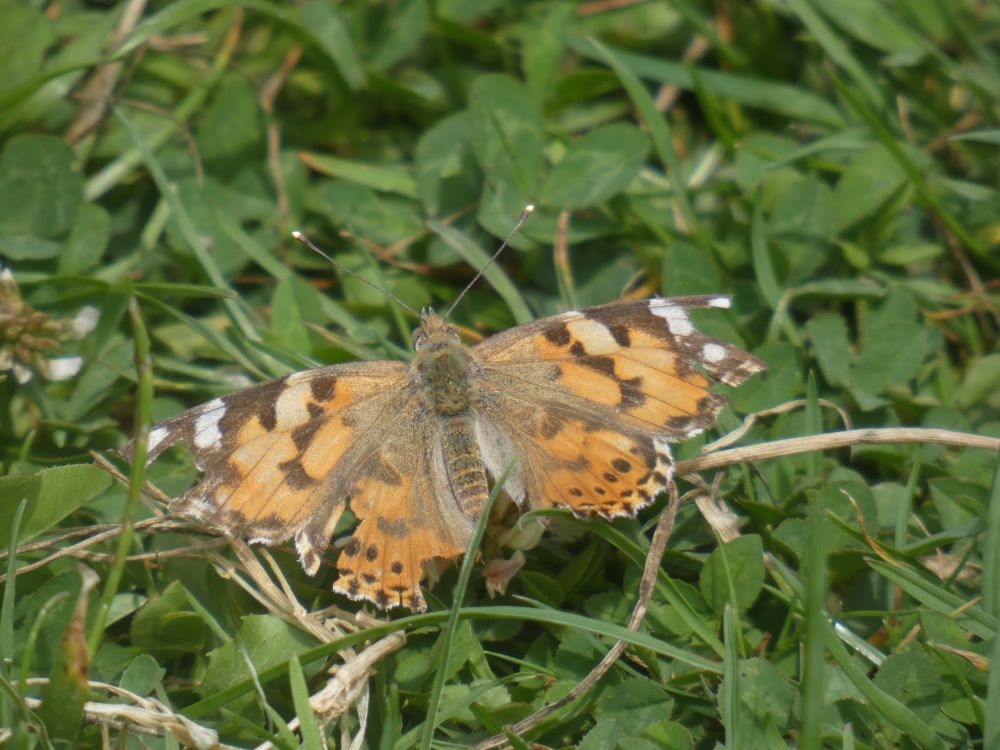 An early start made some look more tired than others: a Painted Lady by Thomas
Millcombe woke up. The session was quite quiet to begin, though a Spotted Flycatcher flying around the Gas Store was a highlight. There were 10 birds caught, ringed and/or processed today: 3 new Linnets, including a stunning adult male; our breeding pair of Blackcap with the female being new and the male caught earlier in the Spring; a new juvenile Chaffinch fully fledged and ready to go; a retrap breeding Goldfinch and a retrap breeding Dunnock. The highlight for me are always the lesser know and lesser appreciated birds so the new juvenile and retrap adult Wren were pretty good highlights. Even more so, we found it’s nest! A rather artistic looking one and one we will record for the BTO Nest Recording Scheme in due course.
I packed up around 10am, as it got a little too warm to be sat in the blaring sun. I came back to the office, completed some of the Bird Day admin, inputted the ringing data, and before I knew it, it was lunch time already.
The Conservation Team met up in Barton Field with the aim to catch the presumed moulting Mallards. However little to our knowledge, the ducks had not started moulting and flew off as soon as we got there. The ducklings were nowhere to be seen and the temperature rose more so we all headed off a little hot but alright. The butterflies and moths out today were nice to see, a walk around Millcombe in the afternoon yeiled two broods of fledged Willow Warblers, with another brood reported to have fledged at the Terraces too! On dropping off the ringing book, I took it a little steadier ahead of my Tavern shift covering for a poorly member of staff.
Eleanor and I worked together, had dinner together and decided a summer solstice walk was needed. We walked through Millcombe and found 3 Pipistrelle Bats and heard the first jumping Guillemot chick, a sign of things to come and a weirdly seasonal change as we head into midsummer/ ornithological post-breeding/autumn!