


Bird Sightings
15/07/2026 – Sunny Census
By Thomas Weston
The day started last night, out walking the Village looking for Wheatears for ringing. The aim was to catch and ring as many Wheatears as possible to see how many come back to the island in future years where they can be caught and colour ringed as part of the Lundy Wheatear Retrapping Adults for Survival (RAS) Project. The night was successful with an hour and a half session in very very calm conditions resulting in 6 new birds out of 12 birds seen - a positive 50% catch rate.
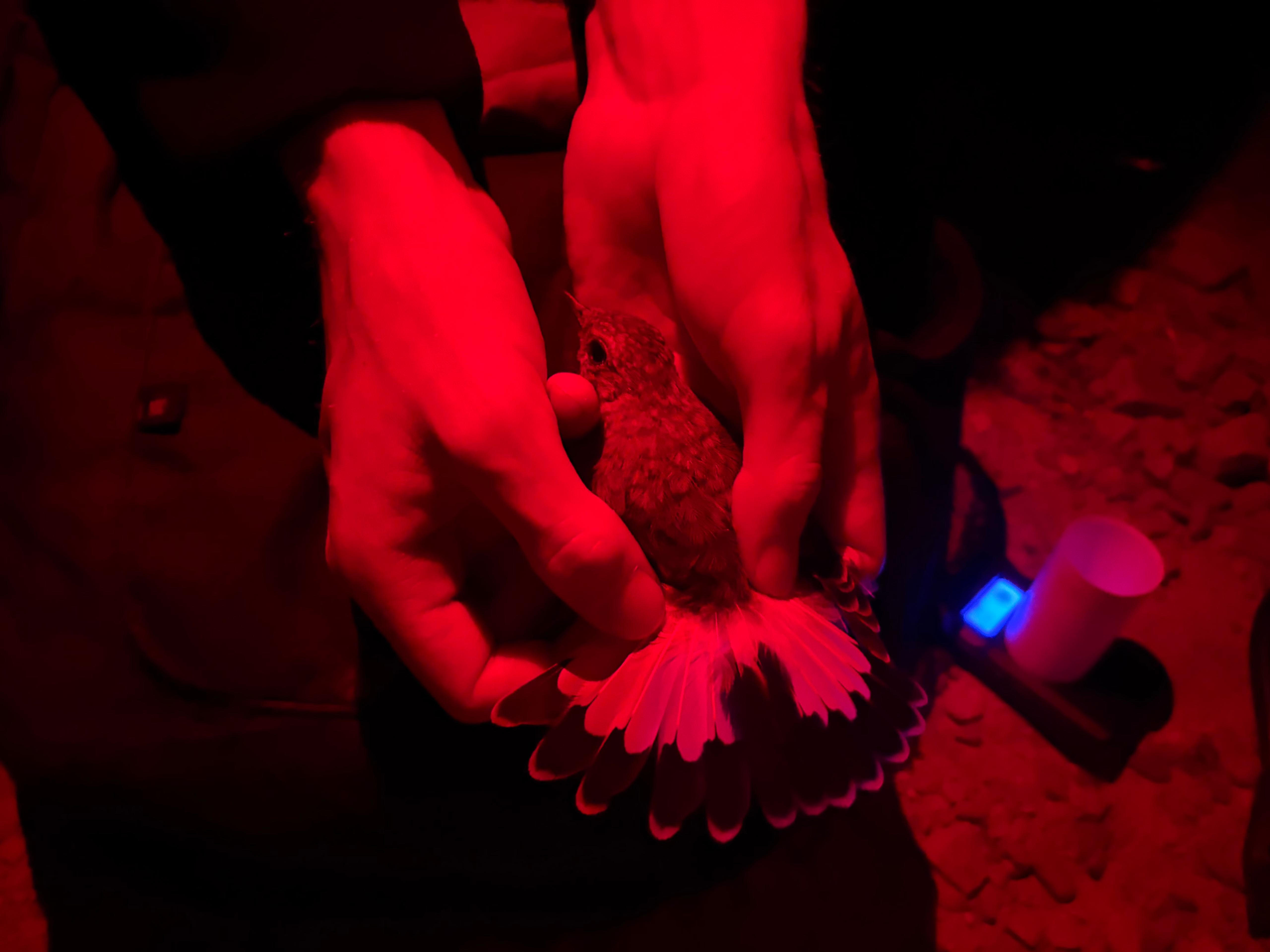 Wheatear metal ringed in the Village. Pic by Chloe
A few hours later and the sun was in the sky and a strong wind again! The wind seems super strong during the morning before dying off by the evening. However, this didn’t deter me from undertaking census this morning, and the sun was nice and bright encouraging some butterflies to emerge from the undergrowth – Painted Lady, Meadow Browns, and Green-veined White. Bird wise, it was quiet but rewarding. There were mixed finch flocks including Goldfinch and Linnets, as well as a nice feeding frenzy off Rat Island again with Gannets, Manx Shearwaters, and Kittiwakes all in the flocks again. The gulls were diverse this morning but were only the larger trio – Great Black-Backed, Herring and Lesser Black Backed, despite hopes the easterly wind woud push some more of the smaller scarcer ones across. In Millcombe, a Willow Warbler and a Chiffchaff were both present, with a flyby Kestrel and Peregrine the most notable overhead. Moving round the fields there were a few suspect Meadow Pipits around the census route showing signs of second broods, and we hope to find another couple of nests before the season finishes. After a few late nights recently out catching Wheatear, it was amazing we did not see any ringed birds on my travels – especially as we went out last night! We shall see if some start to appear, or whether there is a larger movement around the island then we imagine! Moving onwards, the highlight of this morning was a Grasshopper Warbler that was flushed underfoot near Old Light. The long grassy coloured warbler flew over the wall and dived into cover in the graveyard. It was not seen again, but the wind did not help in this location. The rest of the day was based in the office inputting data, writing rarity descriptions, and making sure our nest records for the BTO Nest Recording Scheme were up to date.
14/07/2026 – A Hedgehog!?
By Thomas Weston
Today was a windy travel day. A day which was uncertain for many reasons – was the boat coming? Would it land? Would people have to stay another night? However, for me the day started quite early and before the power came on. I put the washing on just as the power was switched on and had a rather chill start to the day watching passing Swallows, Starlings, and House Sparrows from the house.
Around 8am I started census. It was blustery and Millcombe was quite windy. A couple of Swallows flew over and charms of Goldfinches made it on to the list. Linnets were scattered across the area in loose groups of 4-10. The Wrens were calling quite a bit today, with both juveniles and adults noted. Whilst Wheatear adults moult, the juveniles were the showiest today. However I did see an adult male and female in known breeding areas. Before leaving the upper section of Millcombe, two Chaffinches completed the current finch set on the island with anticipation for other finches to come soon!
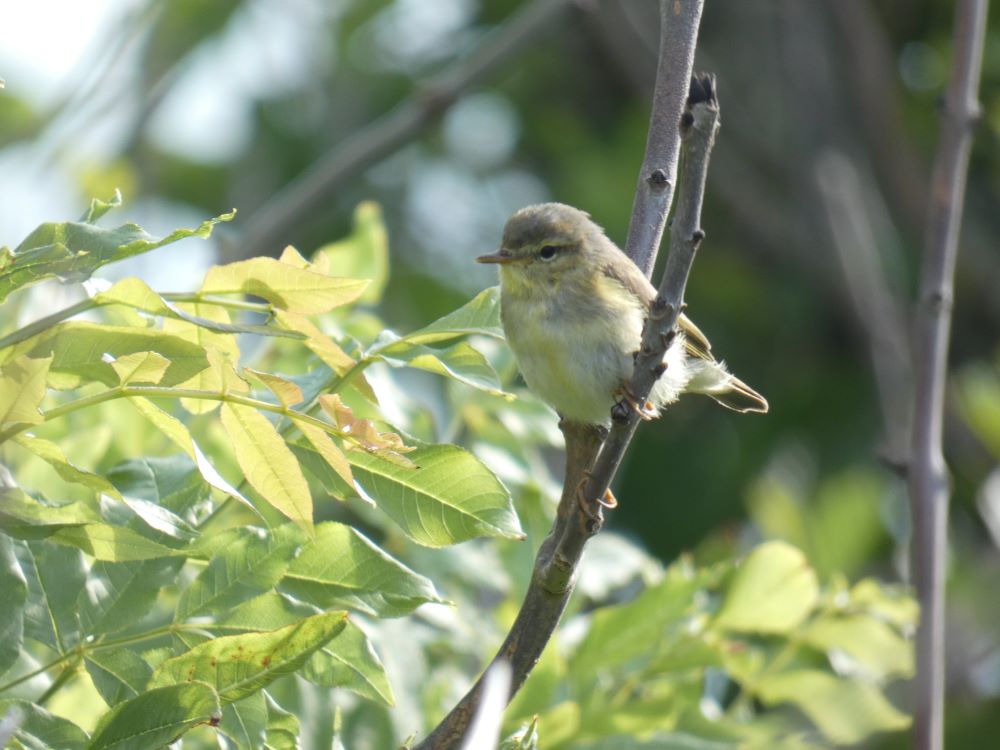 Lundy-born Chiffchaff by Thomas
A feeding frenzy near Rat Island/Benjamin’s Chair yielded 20 Manx Shearwaters, 4 Gannets, 6 Great Black-Backed Gulls, 70 Herring Gulls, 8 Lesser Black Backed Gulls, and 3 auk spp just too far away to see. Five Shags joined the party as I was heading away from the Landing Bay, where a few Meadow Pipits carrying food were noted along the banks – perhaps some late second broods yet to fledge? A Pied Wagtail in the vicinity of Brambles has been around for a while, but great to see! In the bushes a pair of Stonechat, a Willow Warbler, a Chiffchaff, and a Woodpigeon were the best in the wind. Small birds were really challenging to find up to Government but did include a Whitethroat and a Blackbird. Carrion Crows have bred around the island successfully this year with 9 adults and 3 juveniles noted on the way out of Millcombe and on the south coast.
Looking towards the Castle, there were 2 Ravens in the sky being mobbed by crows. On the South Coast a calmer feel prevailed. A Swift flew by, and small flocks of passerines hid in bushes and flew out of the grass when I was passing. A nice range of butterflies were seen with Painted Lady, Red Admirals and Meadow Browns all being noted. Birdwise, the Starling flocks must have been hiding, as only a few were seen today. Thee best of the bunch included 2 Sand Martins – a sure sign that Bird Autumn is here! A Mallard in front of the house and a small proportion of the island's House Sparrows were the last couple of species noted.
Off to the Tavern for me. The boat was weather delayed, and stayers didn't arrive until 2pm by which point my break had almost started. There were no bird reports from visiting guests, but we shall see later as they settle in, and my break comes to an end. However, there was an unusual report of a Hedgehog. These adorable, spiny, garden visitors are much loved, but they are a biosecurity hazard on the island (due to the predation risk they pose to the eggs and young of ground-nesting birds, from Skylarks to shearwaters) and luckily for our breeding birds, it was not alive on arrival. Nevertheless, a fascinating find – and extremely bonkers record!
We shall see how the rest of the day goes…
13/07/2026 – Census returns!
by Greg Lee
Today saw a marked shift in the calendar, the return of the daily Observatory Census as we gear up for autumn. Admittedly, it has only been a month since we stopped the spring migration census, however it signals the starting of that busy and anticipated time in the British birding year. This season, we shall be doing census right up until November so lets hope that it can be as productive as spring for some varied and busy days!
It perhaps wasn't the most auspicious start today, with a very strong easterly breeze that swayed the trees and drowned out any avian sounds coming from the bushes. In a couple of months, a similar direction to the breeze could potentially be quite exciting but it is a little early at the moment. Millcombe itself was quite quiet but as I reached the top of St John's Valley, I came across a real pocket of activity with a group of young sparrows being joined by a Pied Wagtail, some Stonechats, a Dunnock and two Willow Warblers. The latter were certainly local progeny but by the end of the month, we should expect to see migrants from elsewhere passing through, perhaps even in considerable numbers. For now though, it was enjoyable watching the lemon-yellow juveniles working through the bushes and trees. Heading up to Old Light, I then spotted two Sand Martins somehow flying against the wind and heading southwest towards the village, with a Swift also spotted distantly over the Airfield indicating there was some migration afoot in spite of the windy conditions.
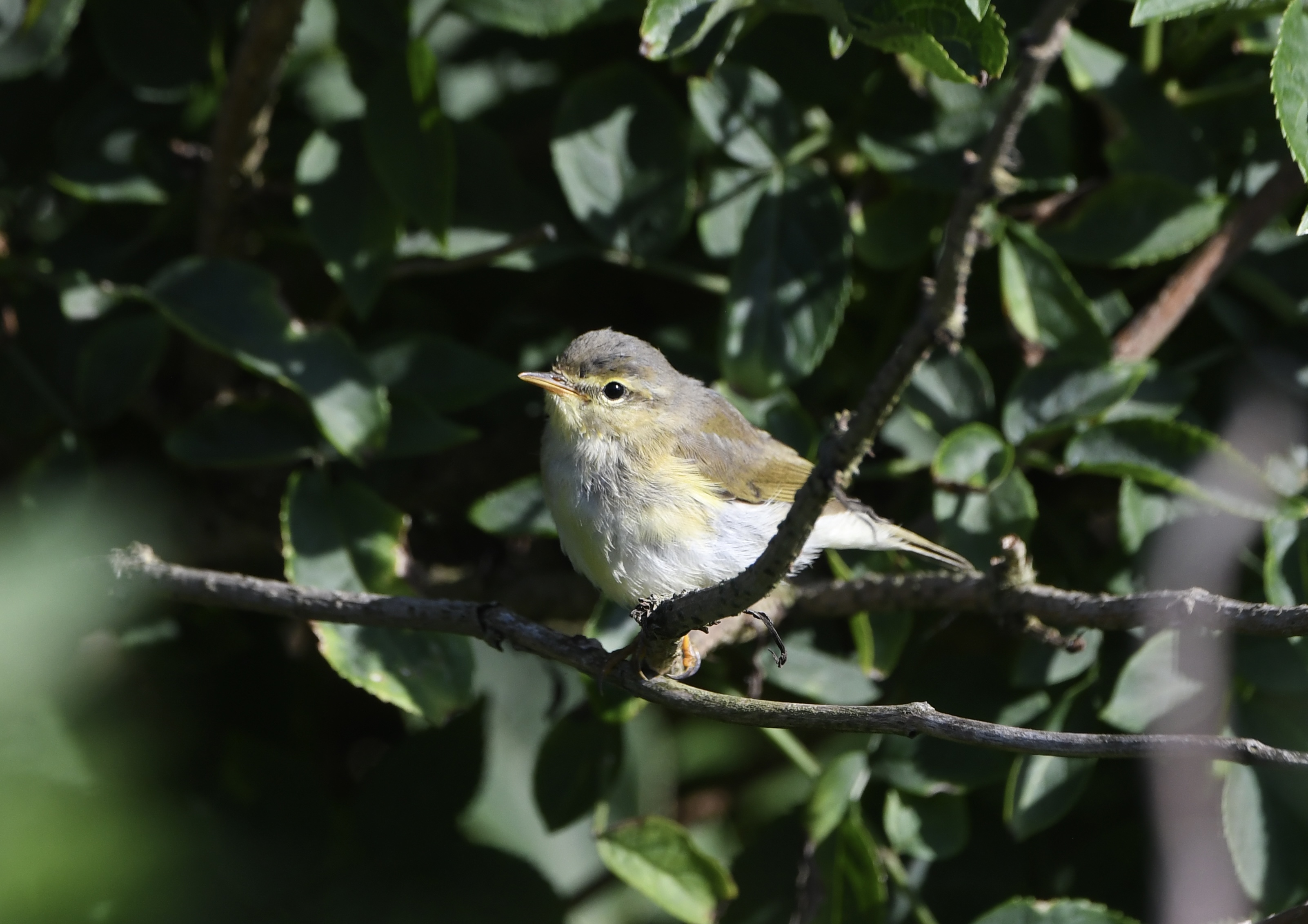 Willow Warbler by G.Lee
The rest of census saw birds generally lying low with a few Meadow Pipits squeaking in the areas of long grass and another Collared Dove also appearing in the Village. On the other hand, it was surprisingly good for Red Admirals, with an influx clearly underway of these migratory butterflies. The rest of the morning and early afternoon saw some data input and also collating the various descriptions of Golden Orioles collected during the spring, with at least nine different individuals thought to have occurred on the island!
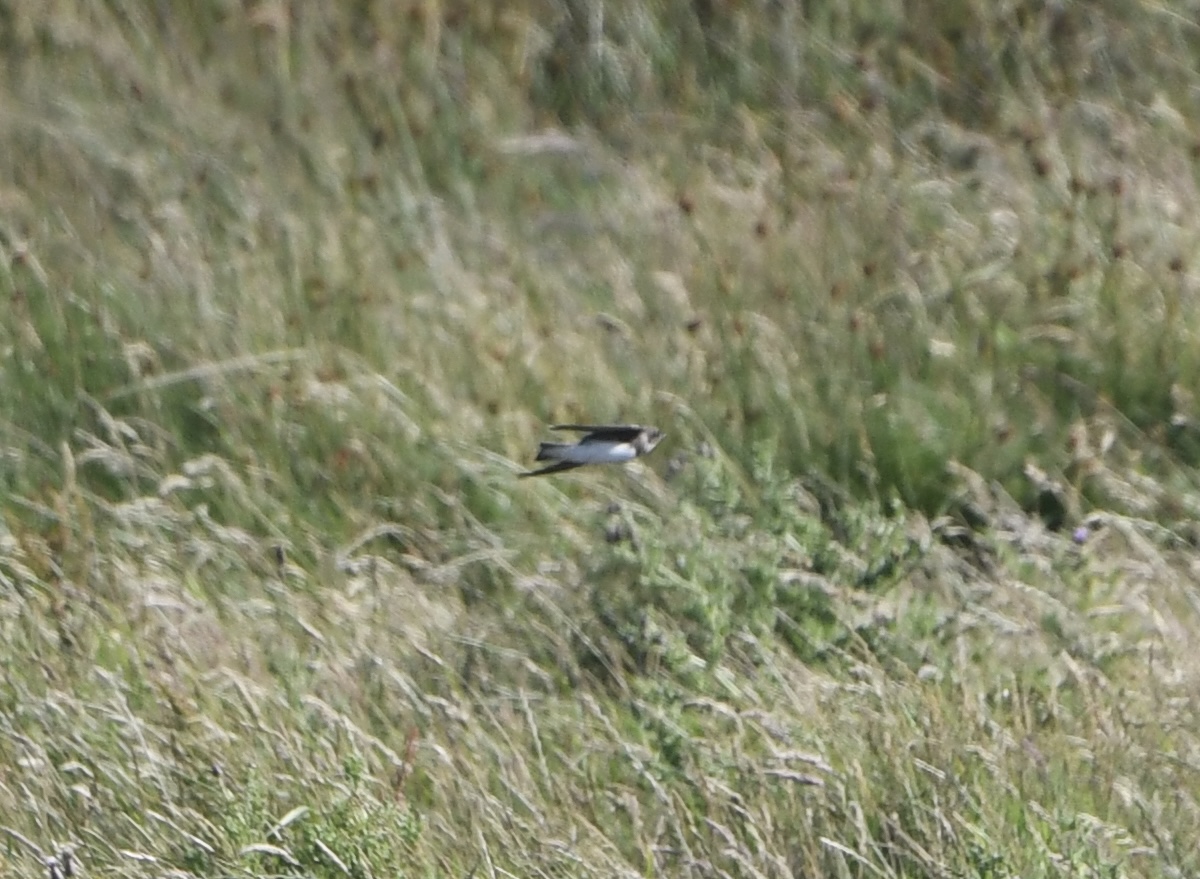 A windblown Sand Martin by G.Lee
Thomas and Eleanor undertook a seawatch from the Ugly in the late afternoon and were rewarded with some good gull activity including five Black-headed Gulls, which so far this year have been quite scarce on the island.
12/07/2026 – Starlings, Shearwaters, Swifts and Swallows!
By Thomas Weston.
Sunday starts with an S and so do most of the birds seen today!
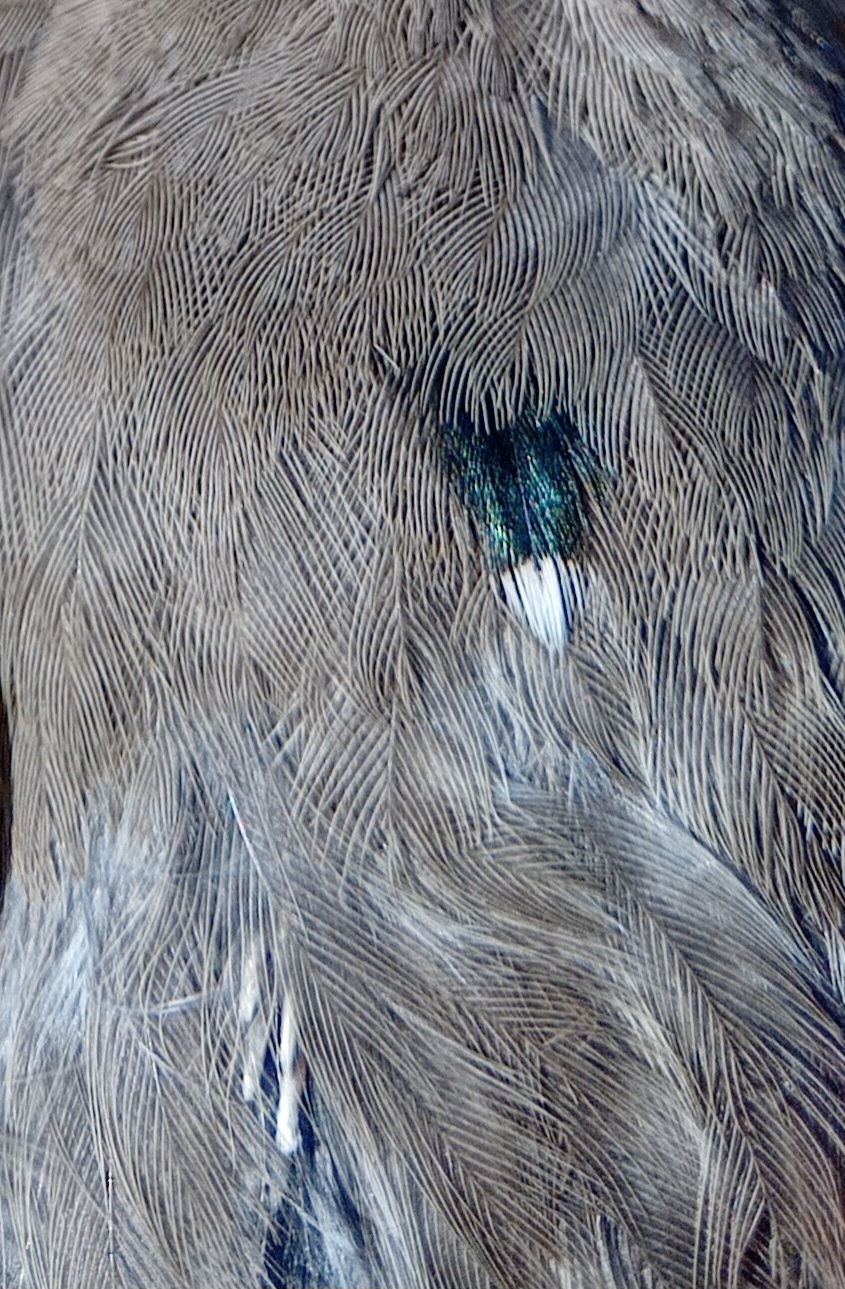 Signs of moult in our Starlings!
Ringing this morning with Luca and Lucile went really well. Our mission was to catch an unringed wild brood House Sparrow. A brood we have been seeing since the third week of June and during recent ringing sessions, both of its siblings have been caught and colour ringed, blood sampled and pit tagged leaving just the one bird out of three. This for context was the only unringed House Sparrow of ringable size on the island. Yes, the Sparrow Project has reached that moment where they have almost completed what most Pokemon players dream of. Alas today was the day. Lucile ringed a brood in a box and whilst checking the traps I returned with our target individual. Almost completely the same biometrics as the previous two, we knew we had finally found our last fledged wild brood individual - until the next! By way of Starlings we caught and we processed 14 in total - 1 new and 13 retraps. The retrapping is great, watching their moult develop and the birds being a lot bigger now then they were in the nest back in May! A cute round circle and soon to have that glossy plumage for the first time.
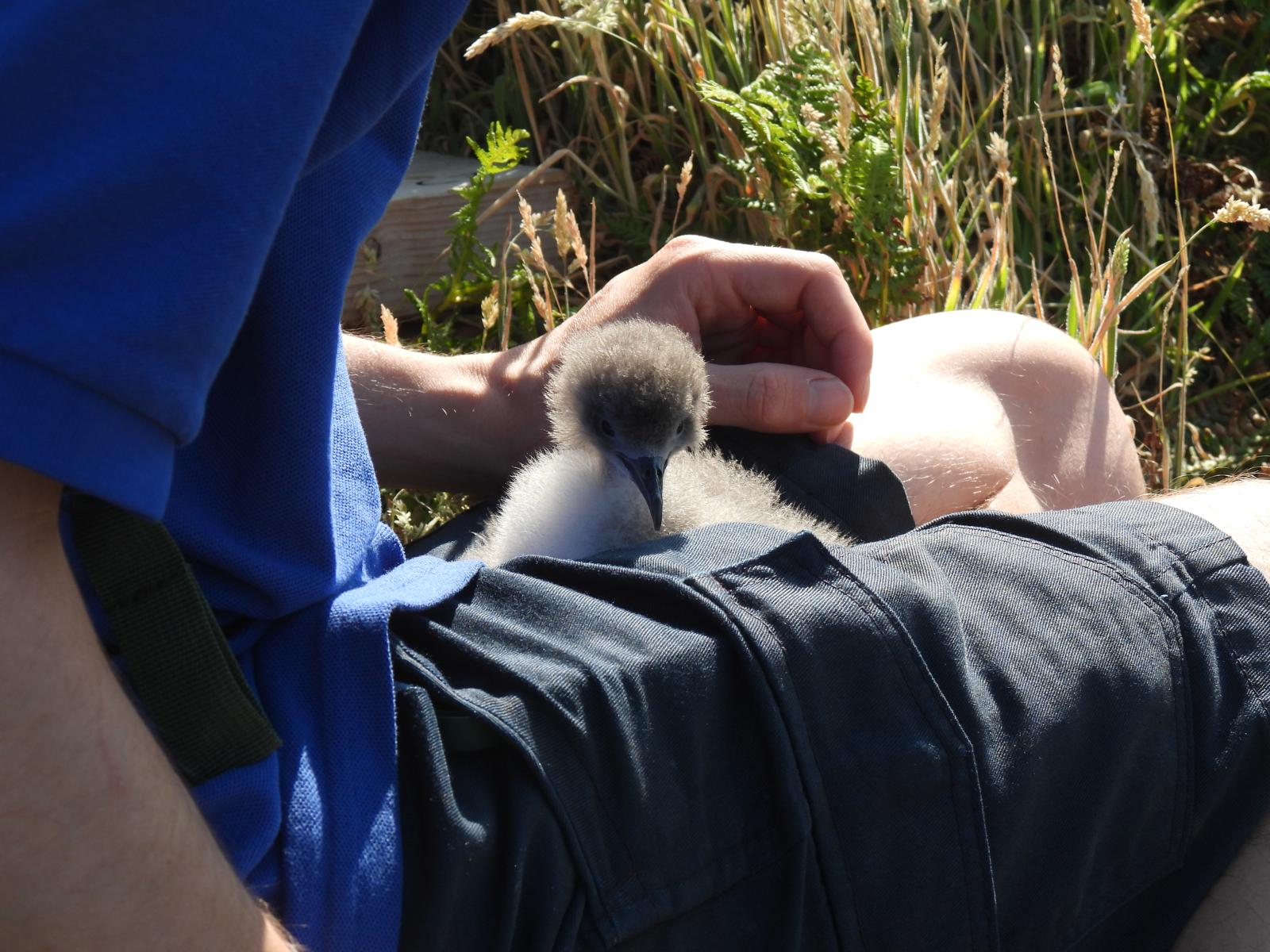 Weighing and measuring our Manx chicks. Jessie
A couple of Sand Martins headed south later and at 10am I gave a walk and talk about Manx Shearwaters, showing guests and staff the cutest and fluffiest breeding birds we have on the island currently. The chicks are growing well and it was a surprise to find a further chick had hatched. A nest we thought had failed, turned out to be a success! Having an expected hatch date of the 22nd June, it is certainly a 'late one' though not 'too late' in the shearwater world. It is so great watching them grow and to be in the company of people who love the Shearwaters too! We really feel privileged every time. On our way back, a seemingly slight passage of Swifts was ongoing with some coming a few metres in front of the face! More came through later which was nice.
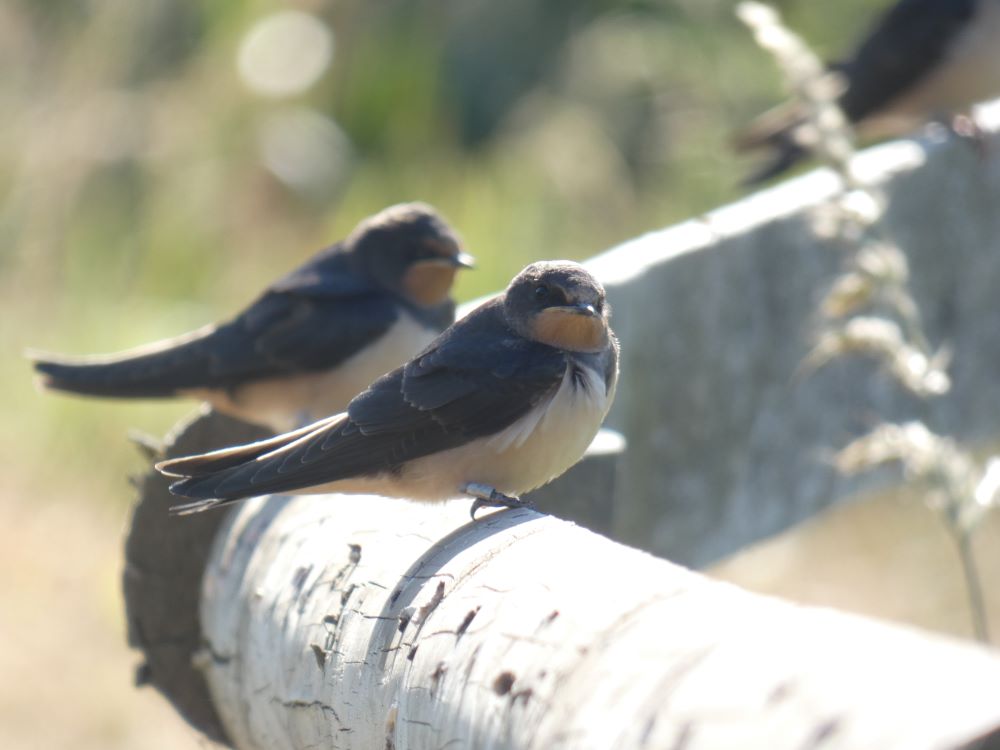 Governement brood were the 2nd to flegde this year, with another four active nests. Thomas Weston
Gathering a team together after some lunch we checked on our Swallow broods. With fine weather and adults happily feeding, we manged to ring two broods whilst another brood were too small to ring, whilst the final pair were on eggs. This means we have had at least 6 broods of Swallows this year, a high in recent times!
Back to the office for admin and catching up on emails before an evening of blog and log later!