


Bird Sightings
23/03/2026 – Hawfinches, Basking Sharks and more...
By Thomas Weston
Following on from the amazing posts of the fellow Conservation/Bird Obs Team, today was a day of east winds vs west winds. The weekend started nicely with east winds gracing the island, a pleasant warm arrival gateway for species. However, Sunday changed and a weak front from the west came into play and colder conditions came from the Atlantic. Move onto today and we awoke to a very warm and calm conditions over the island. A slight east/south east wind was a very lovely wind and the migrants reacted too.
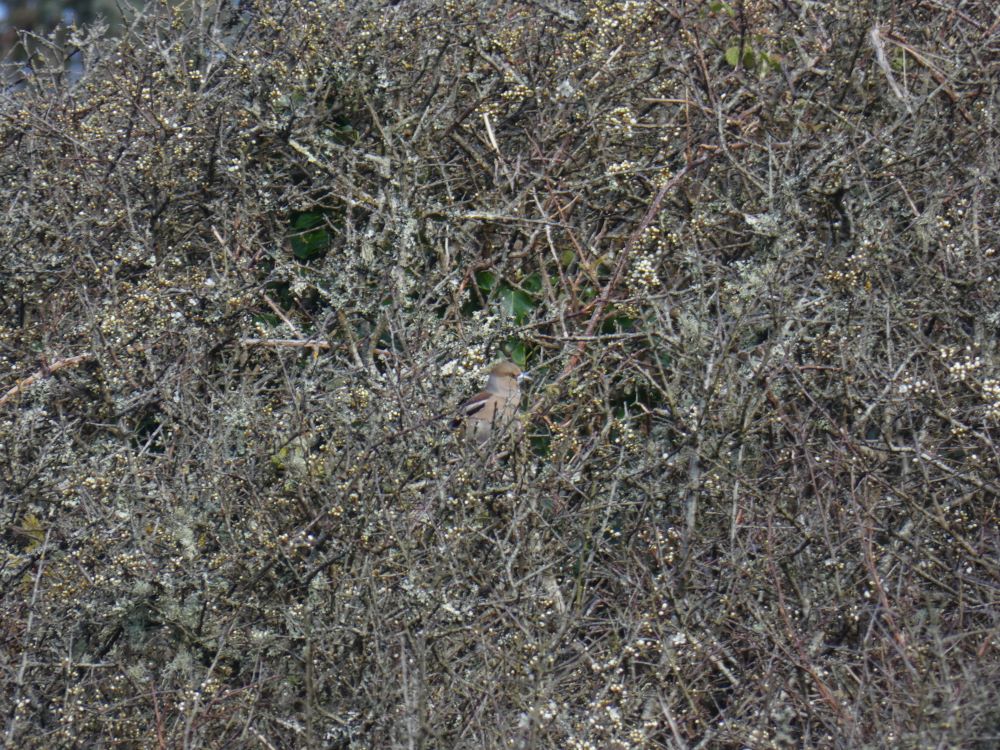 Hawfinch in Millcombe. Thomas Weston
Census started well, birds seemed to be on territory in Millcombe and this included the Song Thrush belting out its song. However, nearby a second Song Thrush and a Redwing (possibly our last of the winter season) was seen on the path round to the Ugly. The conditions in the Landing Bay were nice and calm, though the breeze did produce to odd wave from the east. Here I was greeted by a Red throated Diver and a flyover Siskin which was much appreciated. Walking around the Ugly, I heard the Water Rail on territory in the bramble who during this section gave a few pig squeal calls. Moving just a few metres more and to my surprise a female/second calendar year Hawfinch jumped out of the Blackthorn and sat on the top feeding on the buds. Amazing! A species so secretive and subtle in a forest/woodland environment and it was great to see at such a close range. To my excitement, I dropped my pen and the sound caused the bird to hop below, allowing me to continue onwards. In total I saw this bird a few times within a few minutes and it seemed to slowly make its way up the hill towards the Ugly but with no sign half an hour later I am not sure where it went.
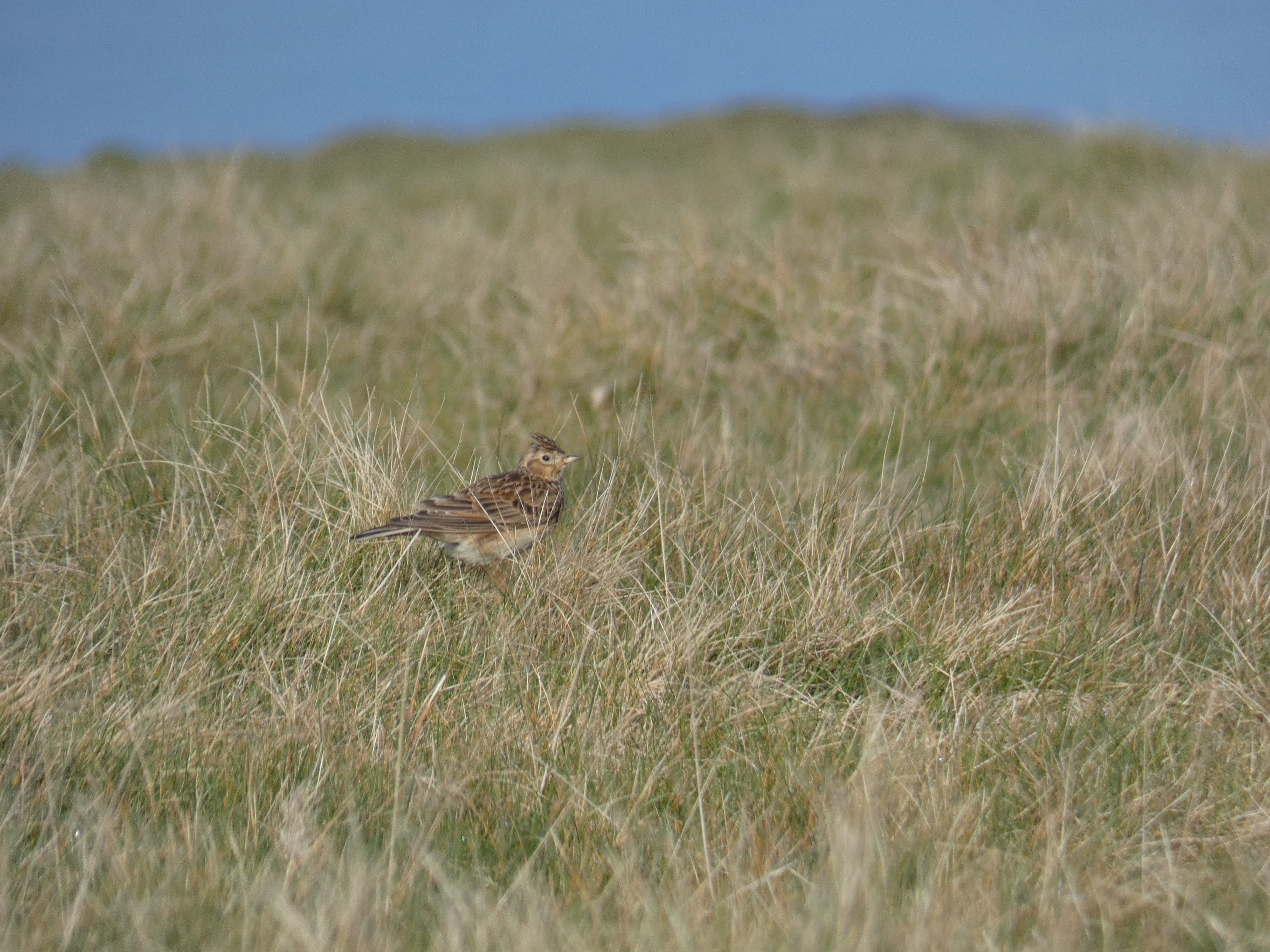 Skylark in South West Field. Thomas Weston
Moving onwards, there were 5 Chiffchaffs and 2 Blackcaps in the valley and a few Goldcrest heading into the Pines. Onwards and upwards towards Brambles Villas and a few more residents singing was very lovely to hear in such calm conditions. Through this section 4 Woodpigeons were heard and a flock of 4 Goldfinches too. At Benjamin’s Chair the rafting Razorbills showed well and moving on round the sky was full of Skylark and Meadow Pipit song. The Airfield held a few Pied Wagtails but the best birds here were the pair of Wheatear males seen chasing flies across the landing strip. A small flock of Sand Martins were the best from the rest of census before an afternoon of Tavern called. A great start to the day!
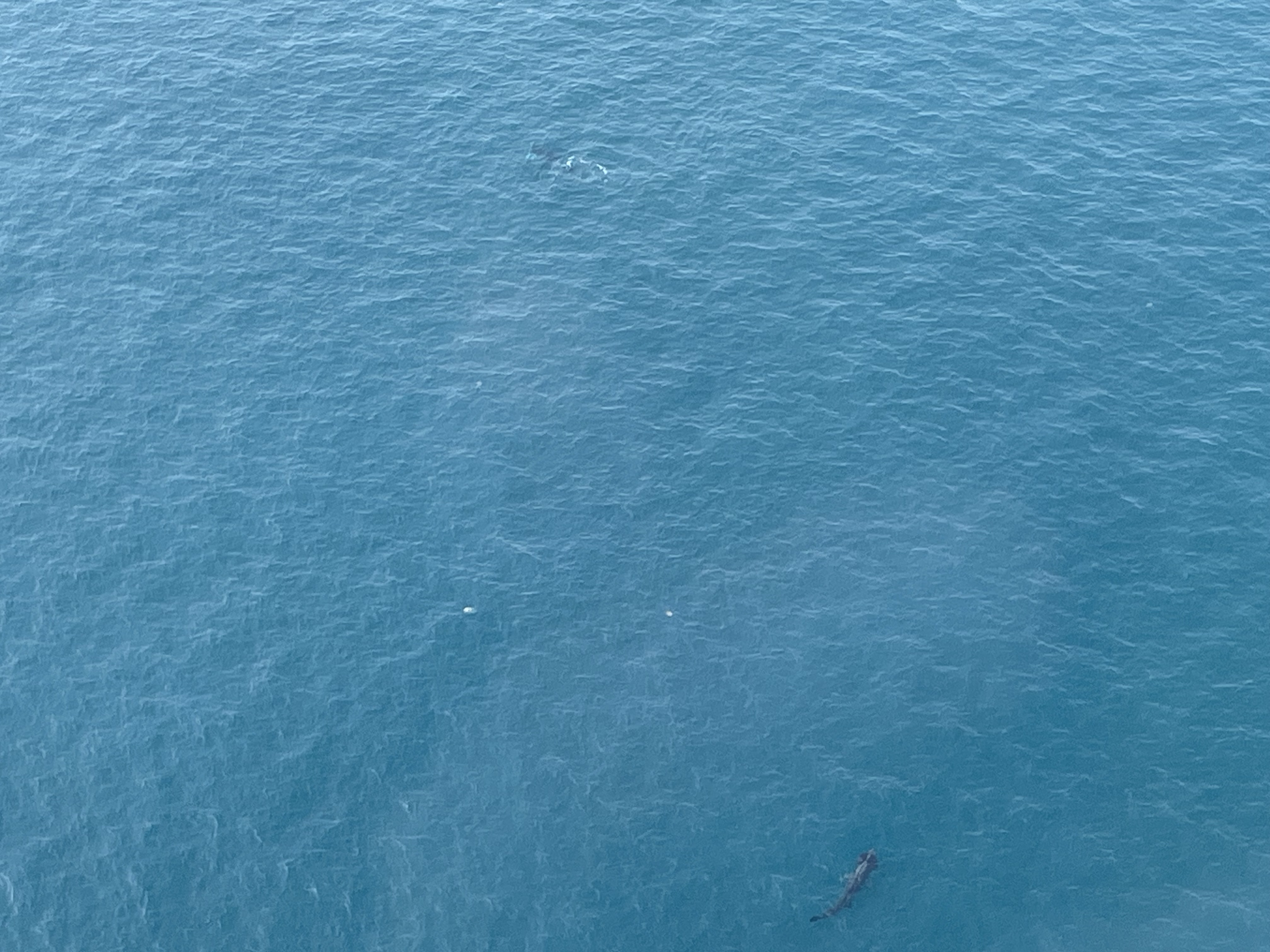 Spot the Basking Sharks (2 or 3 in pic). Tara McEvoy-Wilding
During my Tavern shift, Tara alerted me to the fact that some of the guests on the helicopter had seen some cetaceans. She was lucky enough to get a free trip to the mainland and back to confirm there were at least 4 Basking Sharks and a lone Minke Whale moving between Lundy and Hartland Point. Incredible!!! More exciting news came from the lectures of a visiting course trip who had great views of a Black Stork moving North up the island from Quarries onwards. This record is being submitted to the Lundy Bird Observatory and County recorder for acceptance. And to round off this post, we welcome our new Bird Observatory volunteer Warden Greg Lee who will be joining the team until November. Greg will be out completing census, helping with ringing, some of the socials and finding some good species along the way. Watch this space….
22/03/2026 – Feral stocking
By Simon Parker
Feral is one of my favourite words, it's often been used in the past to describe my past lifestyle choices or appearance. But today it was counting Feral animals, not looking or behaving like one.
The annual Feral stock count is carried out once a year to give an idea of how many animals are on the island. On a small island, large numbers of herbivores can easily damage the vegetation if their numbers are too high. Equally, if the numbers are too low, the Islands vegetation can get out of hand. How do we count the feral stock on Lundy? What a great question! Read on...
Essentially, we gather in a line that spans the width of the island. Using radios to stay in contact, we slowly walk North and push the animals with us. When the animals eventually run past us South, we count them. Once we reach the North Light, it's time for Tunnocks and tea.
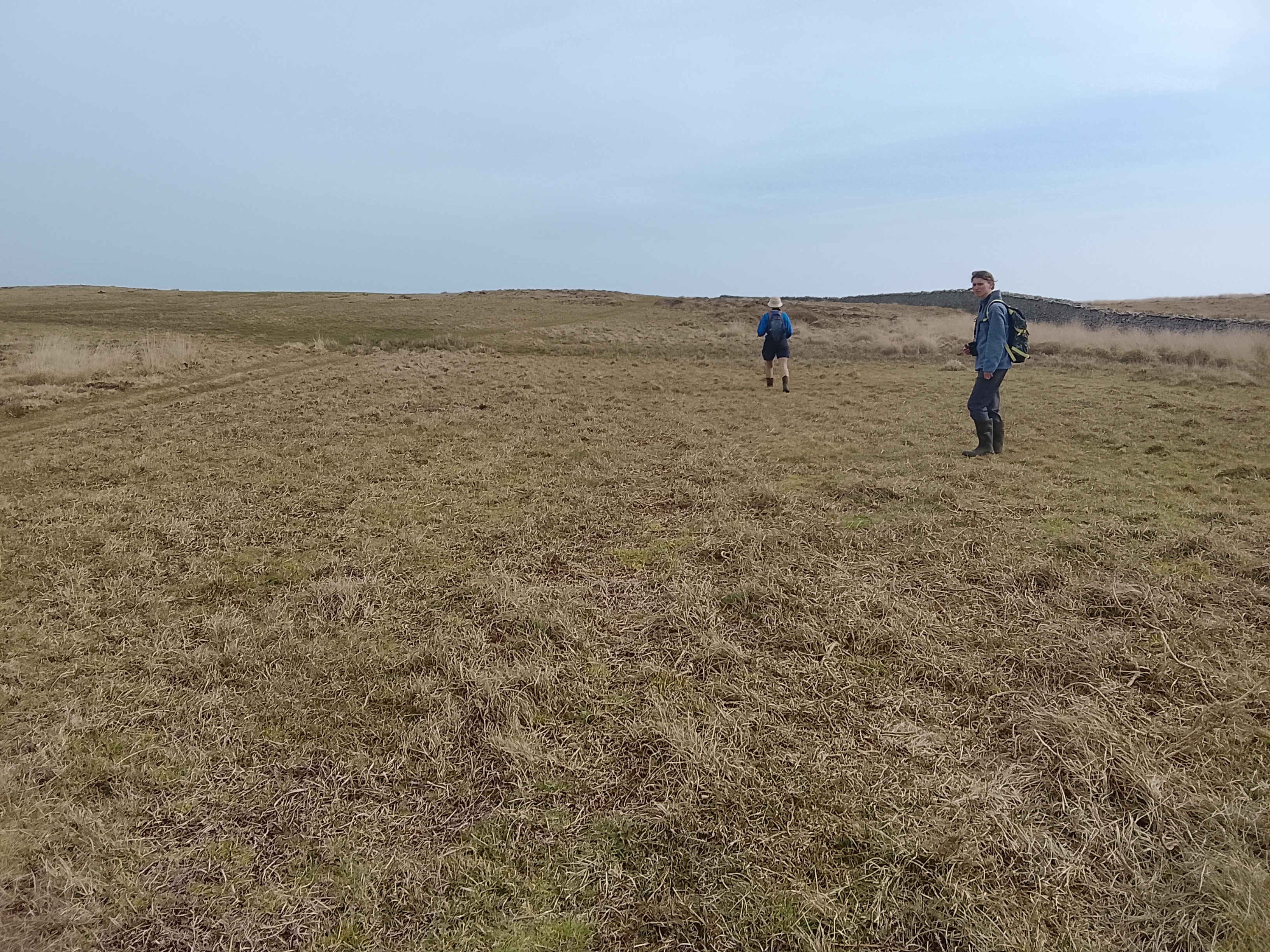 Walking the line
On Lundy, the Feral stock consists of Sika deer, Soay sheep and Goats. Goats are the least numerous with around 30 on the island, Sika at around 100 and Soay are up around 250. All three of these animals are tied to the Island through heritage, tourism, grazing and supply for the tavern. Anyone who has had the game pie, will of been eating one or more of these animals in the tavern. After some complex maths, the numbers that we have will dictate our management plan for the coming winter.
We also used this opportunity to count the breeding birds as part of a new project. This year we plan on mapping the terrestrial breeding bird population to give us an idea of what's breeding, where they're breeding and what birds are being successful or not.
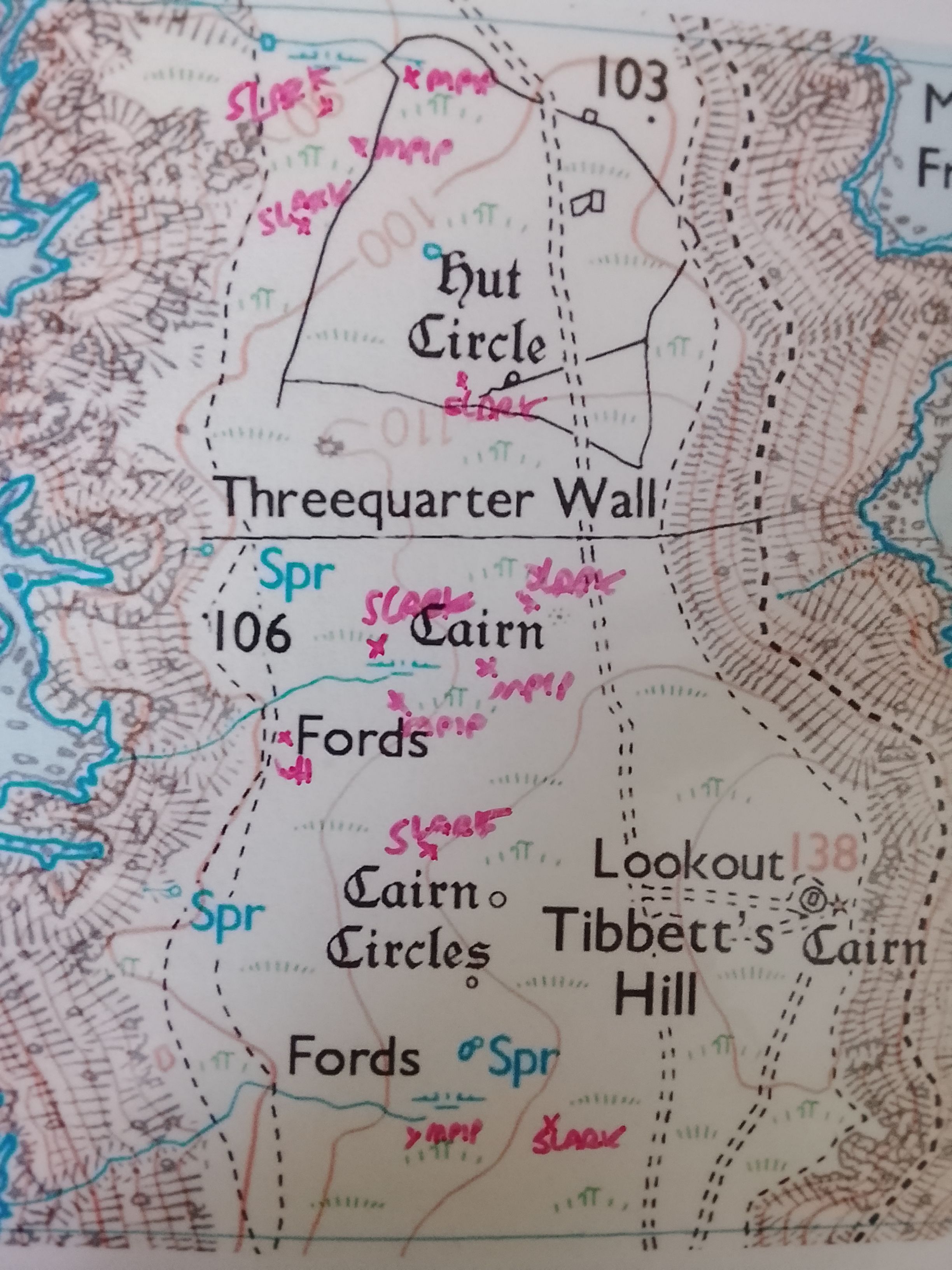 No treasure was found
So... Bird wise, we managed to spot 5 pairs of Peregrine, 22 Meadow Pipits, 10 Skylarks all singing and on territories, Mallard, Wren and Teal were spotted around Pondsbury along with the Grey Heron. Red-throated and Great Northern Diver were also spotted down in the Landing Bay. On the West coast, we had numerous Razorbill, Guillemots and Puffin all making the most of the calm weather. Blackcap, Chiffchaff, Willow Warbler and Firecrest have all been spotted up in Millcombe valley but not in large numbers. A successful weekend's counting!
21/03/26 – The Celtic Sea Slugs are back!
By Tara McEvoy-Wilding
This weekend the Feral Stock team are over to count the Sika, Soay and Goat populations, so me and Simon went along to help. It is important that we get an accurate idea of their population each year so we know how many we will need to cull in the winter to prevent the island being overgrazed. In order to count them, we spread out in a long line and walk slowly across the whole island, recording everything that passes us to the left. The weather was amazing and the birds were making the most of it- I passed lots of singing Skylarks, and two Wheatears at Jenny’s Cove. Jenny’s Cove was a hive of activity with 10 Puffins and lots of Guillemots on the slopes and cliffs!
Now I’m sure you’ve all been wondering where the marine content has been… so look no further! Today was one of the lowest tides of the year so I hoofed it back from three-quarter wall to go rockpooling! Spring has sprung in the marine world- new seaweed was growing out the rocks and fresh kelp was shining in the sunlight!
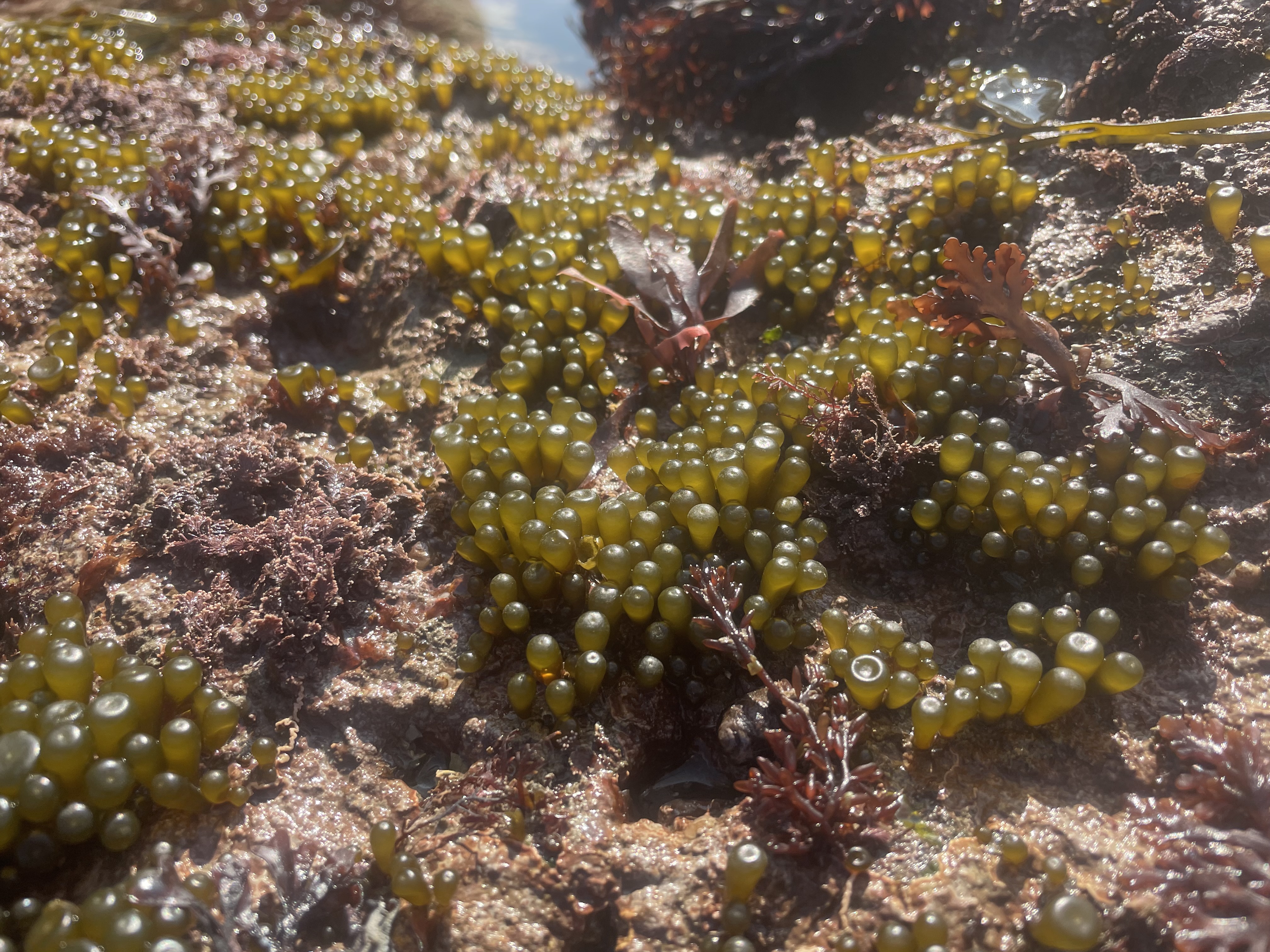 New Thong weed (Himanthalia elongata) growth near Rat Island
My old favourites the Celtic sea slugs were out in force- I managed to find 8 very tiny ones, ranging from 2-5mm in size. Celtic sea slugs are an unusual species of sea slug as they breathe air a bit like us whereas most other sea slugs have gills like a fish.
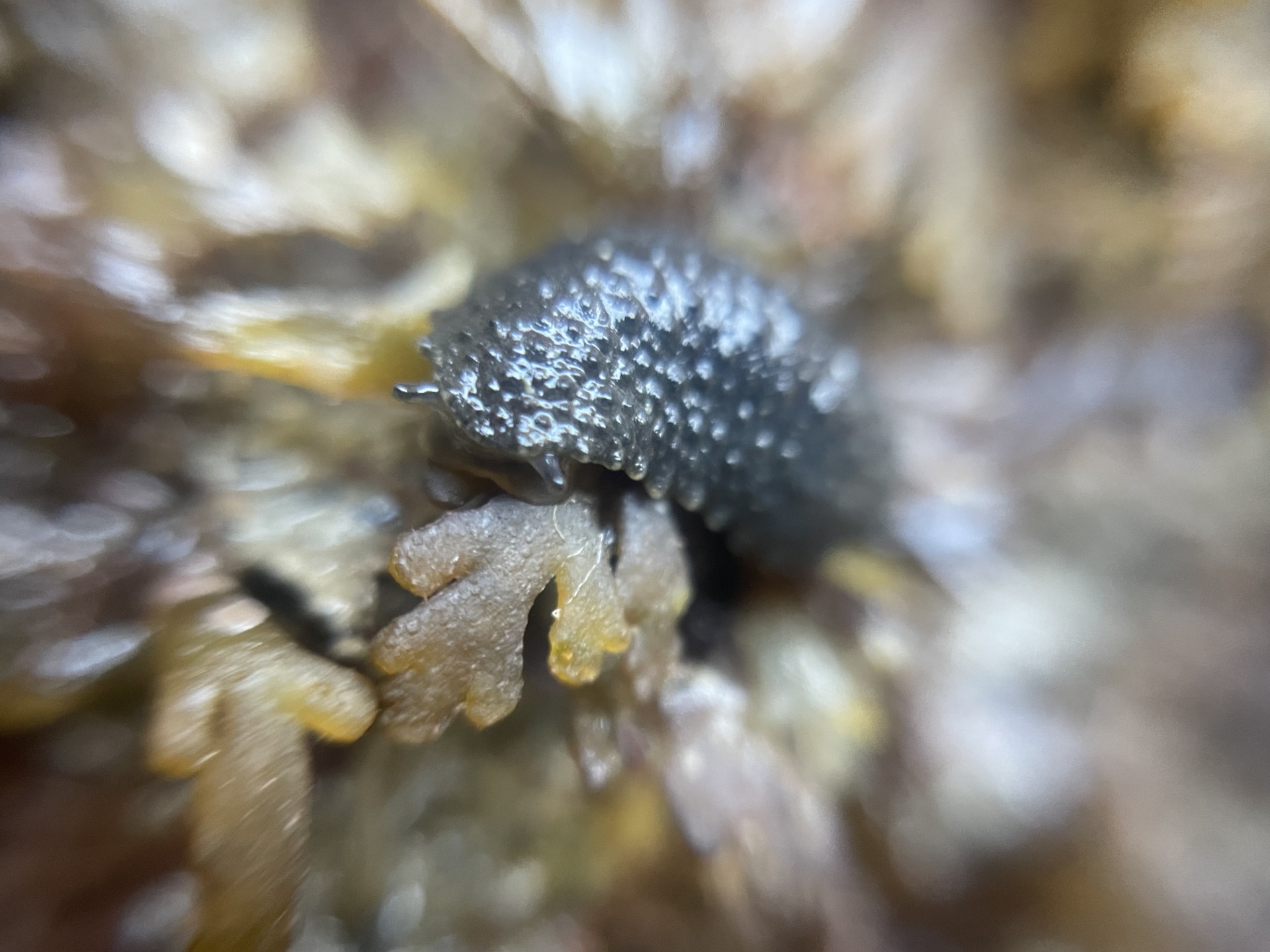 The underappreciated Celtic Sea Slug
The real highlight was the 128 Scarlet and Gold Star Corals that I found in 4 locations- one of which was new to me! They are usually not seen whilst rockpooling as they prefer slightly deeper water, but as the tide was so low I was able to view them.
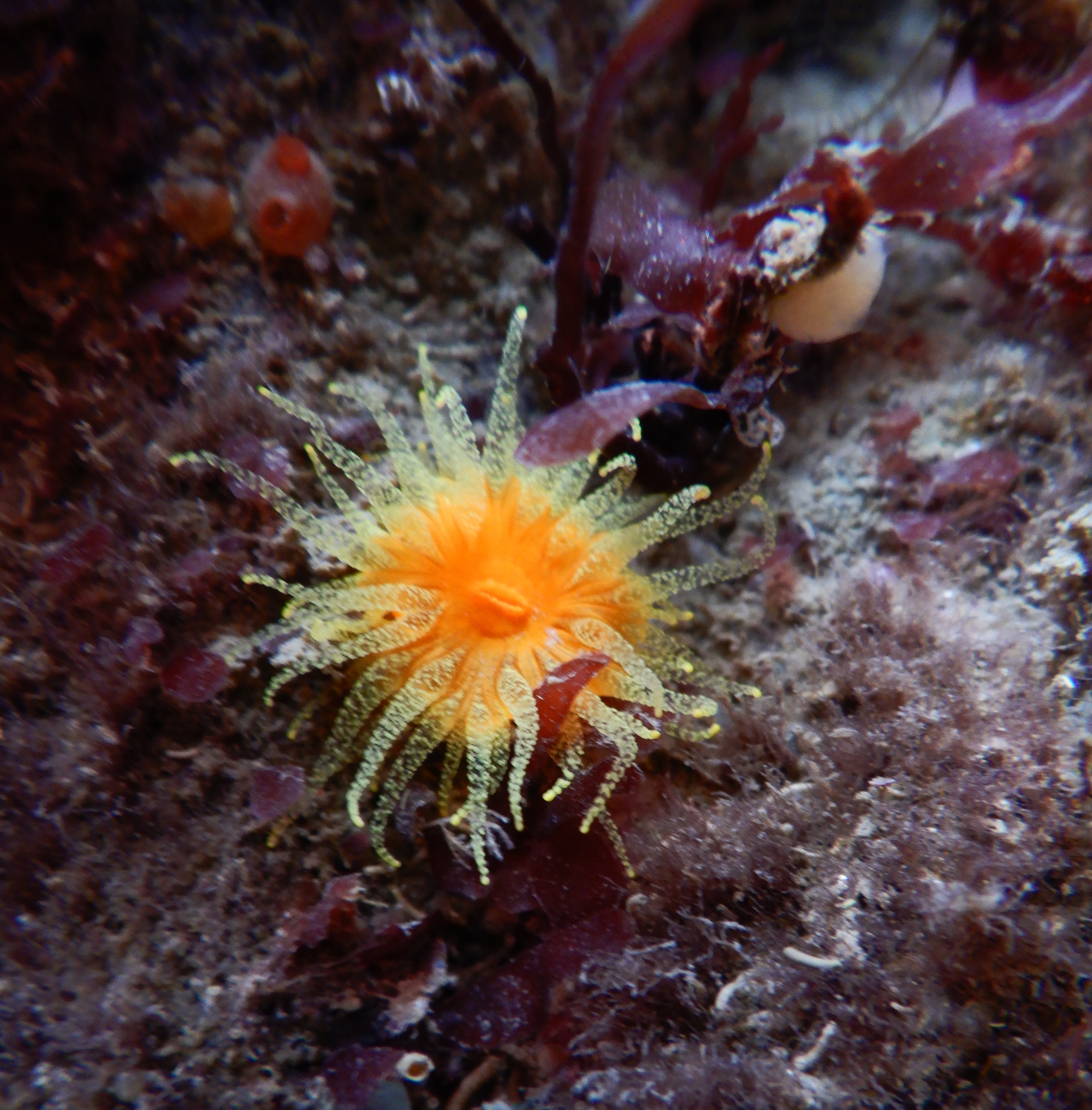 Scarlet and Gold Star Coral under the Jetty
I also recorded 7 species of crab, 5 species of anemone, a funky worm that I believe to be Alentia gelatinosa as well as a seaspider Nymphon sp. Overall a successful rockpool!
Back in the birding world Thomas and Eleanor were finally able to open up the mist nets in Millcombe Valley and ringed the first Willow Warbler of the year! Let’s hope this good weather stays!
20/03/2026 – Breeding Birds
By Eleanor Harris
It really does fell like spring is coming upon us quickly with the weather warming and the island starting to become busy. Today the island looked rather beautiful with signs of spring around. It was one of the first busy travel days of the season with Tara helping with Helicopters and Thomas on Housekeeping. The weather is changing with the Oldenburg arriving yesterday to drop of much needed supplies before the busy sailing season commences at the end of the month.
Today marks the first day of our new Terrestrial Breeding Bird Survey which will be running monthly from the 20th to the 23rd. This survey aims to understand a little more about our breeding birds and how they are fairing on the island, taking into consideration breeding areas and numbers. It is an exciting time for the island to understand a little more about our local and migrant birds. We look forward to keeping you posted with updated and our findings but if any of you would like to get involved on your next visit it would be great to have your help.
Today started with census which covered three of our squares. It was great to be out and enjoy the sunny weather before work. It was a busy morning with the sky full of birdsong on such a beautiful morning. Some of the highlights for census was pairs of Meadow Pipits and Skylarks plus a Goldfinch showing well. It was a busy morning with the warm weather bringing in some new arrivals so we will keep you posted over the next few days. After the survey was completed I headed to work.
Meanwhile Thomas was housekeeping with some of the highlights being two Siskin and some Sand Martins. The real highlight came with a Black Redstart spotted in the village which later flew over the staff accommodation and into the camping field. On my break between shifts I was lucky to see the Black Redstart and enjoy some of the evening sun before returning to work.
Overall it was a great day all round with migration and arrivals. We all look forward to seeing what the next few days and months bring and how Lundy changes with the coming Spring.
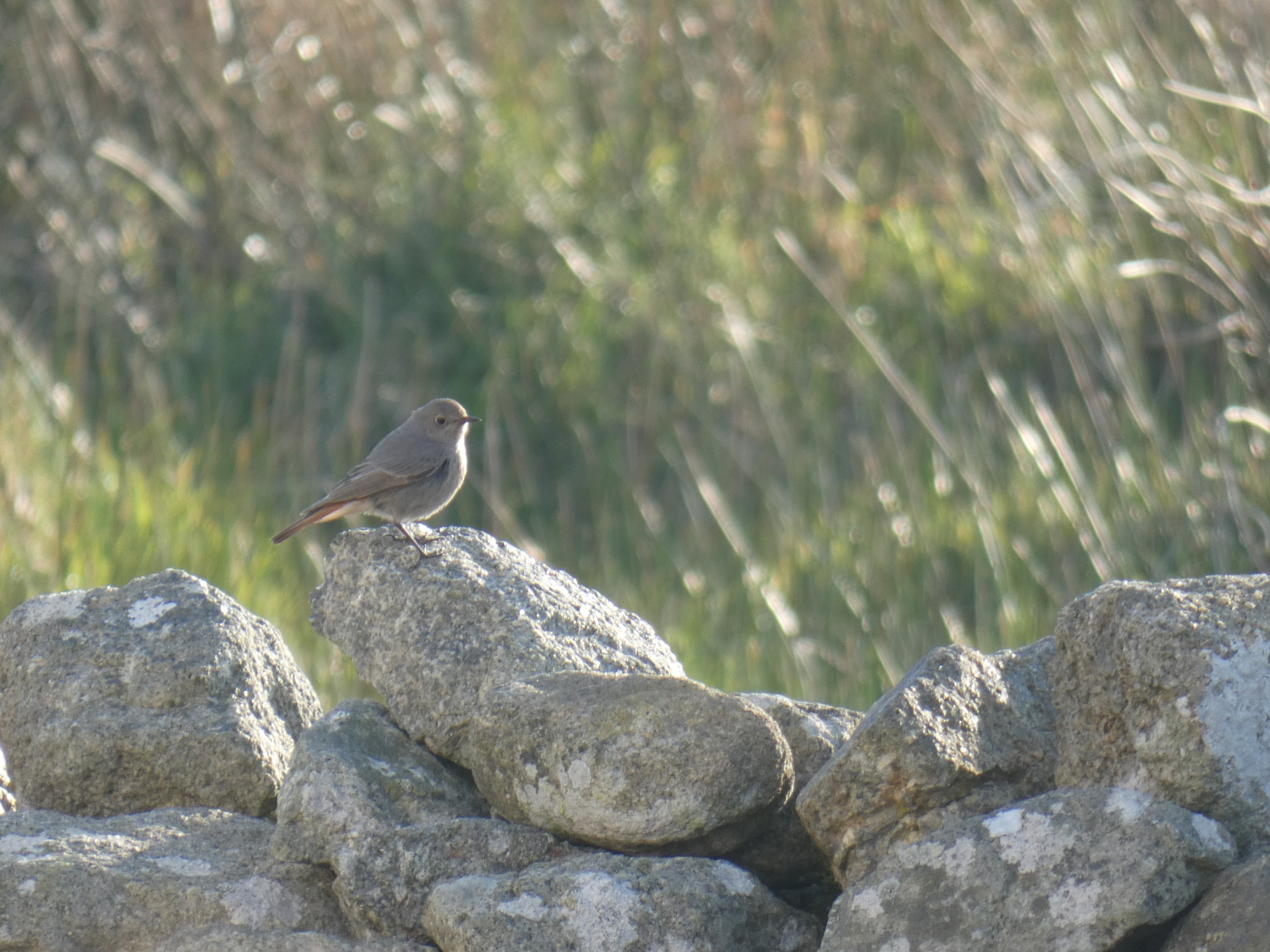 Black Redstart in the Village TW