


Bird Sightings
27/07/26 – A Myriad of Marine Critters
By Jessie Dermody
Yesterday evening, five brave heros set out to retreive an old abandoned lobster pot, and rescue the crabs trapped inside. It proved to be much more difficult than we thought it would be, as the pot was stuck on the seabed. On the swim out to the pot, I counted a school of 16 Sea Bass. In the end, we dove down to tie ropes to the lobster pot, then used these and a tractor to pull it up onto the jetty. We snapped one rope in the process. Luckily, we and the crabs all made it out alive! We liberated two Brown Crabs, a very sad three-legged Spider Crab, and an army of Spiny Squat Lobsters of varying size. The squat lobsters (coloquially known as squobsters) were very nice to see, as this species is quite elusive - despite their bright colouration. They love to wedge themselves into small crevices in deeper water, and they move very quickly whilst they are in the water. Generally, it is difficult to catch more than a quick glimpse of one unless you are scuba diving. There was a lot more life on the pot, including Dirty Sea Squirts, several Keel Worm species and plenty of Long-clawed Porcelain Crabs. We didn't want to harm or remove the sessile life on the pot from the environment, so we cut out the parts that would trap anything else and returned the frame to the water as an artificial reef. Ideally, the pot would have been found before any bio-fouling had occured, but as it had already happened, we had to compromise.
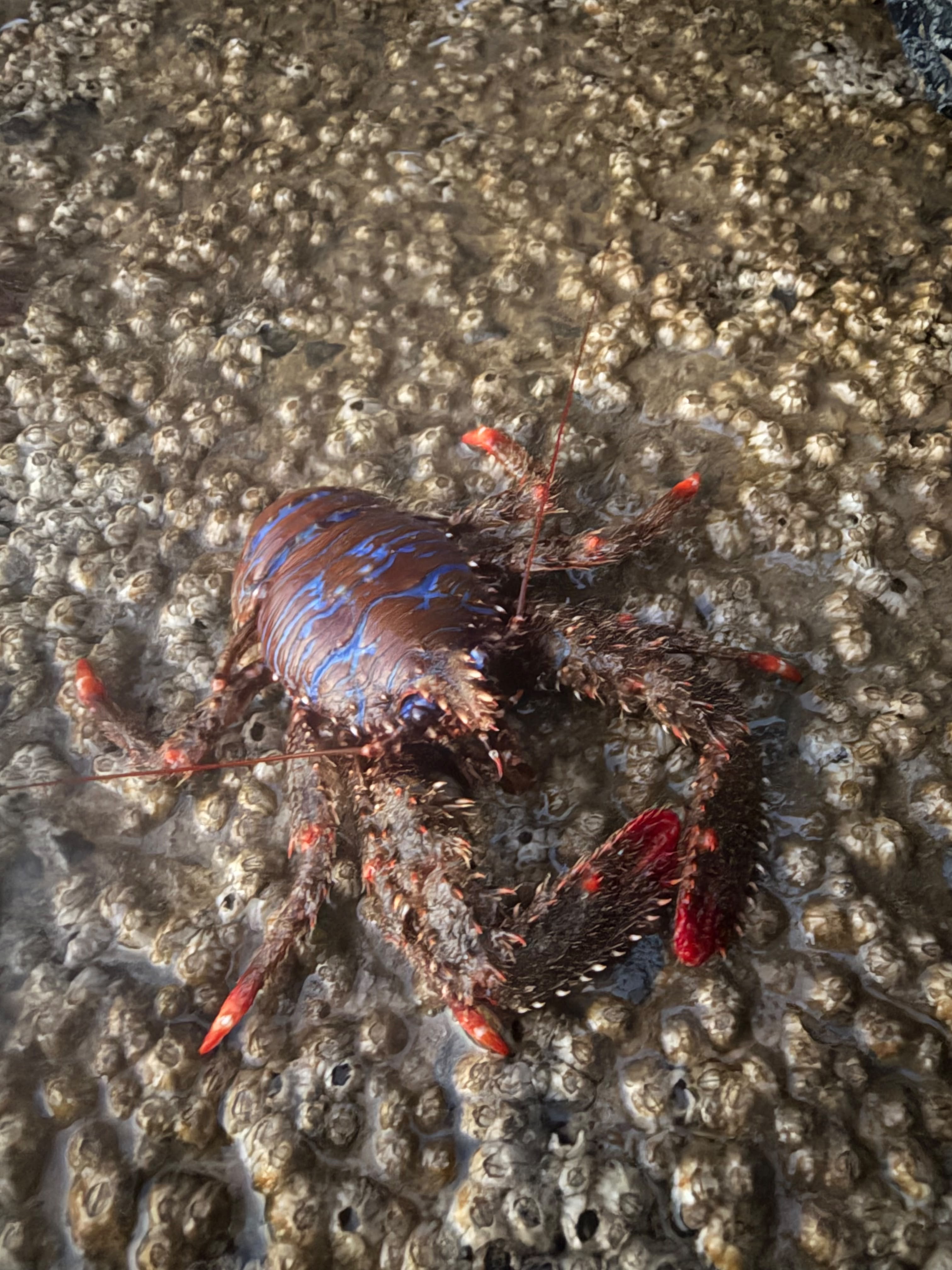 A large Spiny Squat Lobster after being released from the lobster pot. Photo by Chloë Langmead
Today was a very exciting marine day - we had two snorkel safaris in the morning, followed by our first BRUV deployment from the islands new RHIB! The snorkel safaris went well, we saw a lot of Spiny Starfish, and plenty of Ballan Wrasse as usual! The snorkellers really enjoyed looking at the many Snakelocks Anemones on the seabed. The underwater scenery in the rocky reef is so beautiful in the sunlight.
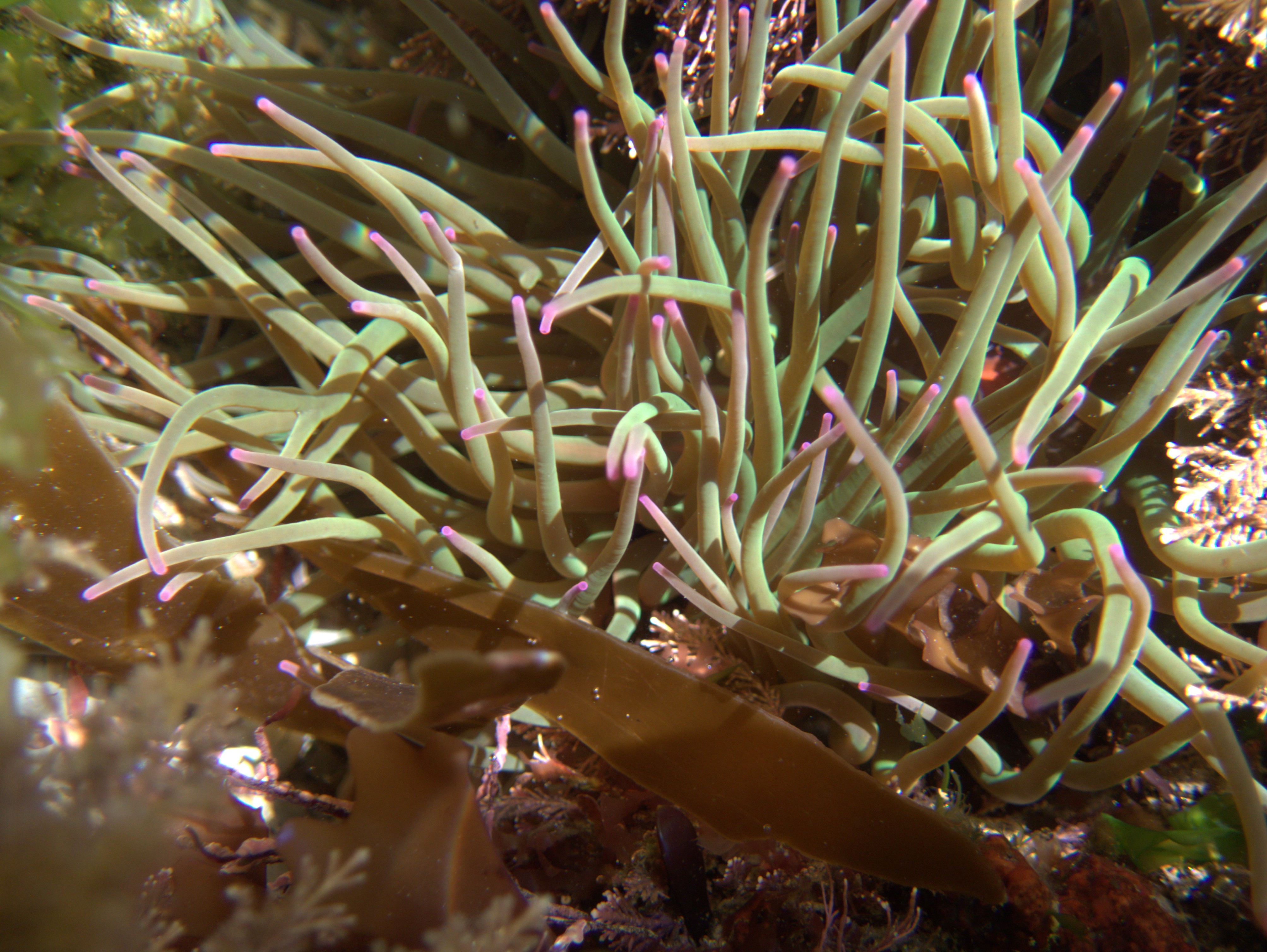 A green Snakelocks Anemone. Photo by Jessie Dermody
After we'd dried off, we loaded the RHIB with the BRUV and its bait. My friend Abi was visiting, filming for her Masters project, so she came along to film and conduct some interviews from the boat. We headed around the east side of the island, to Quarry Bay. There were no seals hauled out on the rocks, so we carefully approached until we were at 7 meters of depth. Chloë and I dropped the BRUV over the side of the boat, and we left it there for an hour. We had a little trip around the island whilst we waited. There were five Gannets following the thermal streams close to the boat, so we got some lovely veiws of them. There were also lots of Shags and juvenile gulls on the water, and some seals hunting. Abi interviewed Chloe and Tara about the BRUV, then we pulled it up and returned to shore.
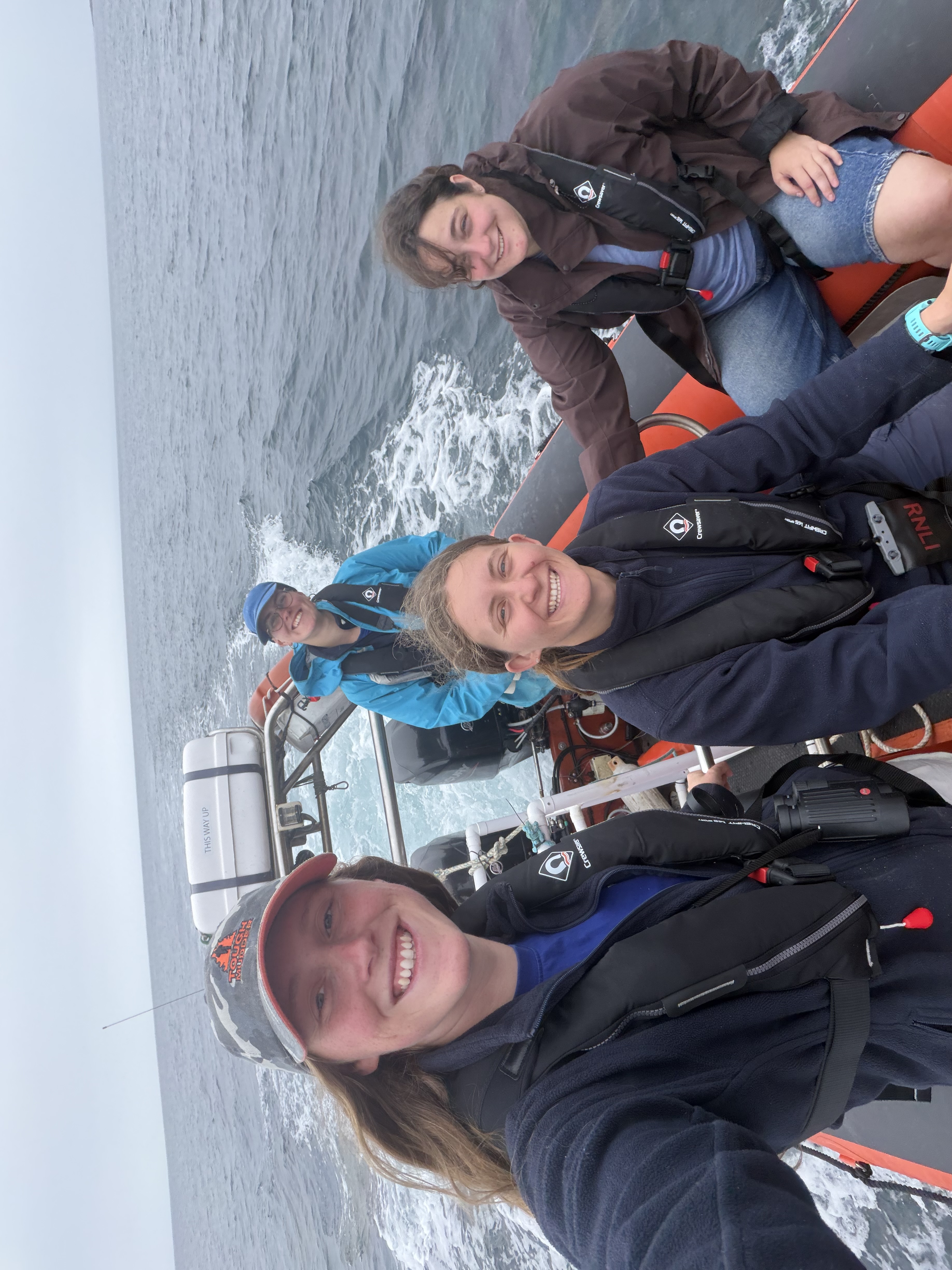 Todays BRUV deployment team! Photo by Chloe Langmead.
This was our first BRUV deployment withinin the No-Take Zone around the island, where no fishing is allowed. Usually we deploy in the Landing Bay, which is more acessible, but is also an area that is fished recreationally. Immediately upon the camera entering the water today, it recorded an unidentified wrasse species. In the first five minutes of footage, an additional four adult Pollack and a female Cuckoo Wrasse were observed! In 35 minutes of footage, I observed six fish species including all five of the common wrasse species: 2 Ballan Wrasse, 1 Corkwing Wrasse, 1 Goldsinny Wrasse and 5 Rock Cook. This is a lot more activity than we have had in our previous deployments, which could be due to a number of factors - e.g. the site being in the centre of a kelp bed, or the lack of fishing here. At the moment, we would need to do more deployments to test this.
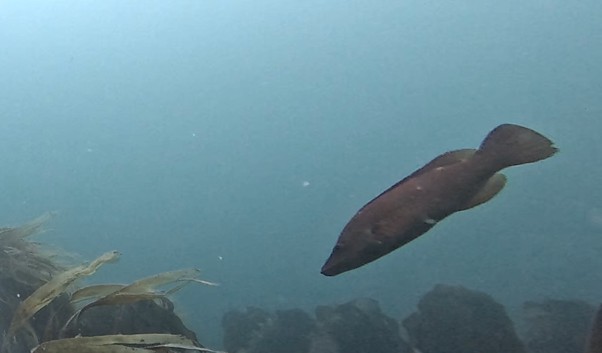 A large female Cuckoo Wrasse as seen by our BRUV
26/07/2026 – Caspian Gull and Clegs
by Greg Lee
Wow! It was nice to wake up to a day with cloud and coolness in the air, following a very brief dosing of rain during the night, the first for many, many weeks. As it was still windy, census was understandably quieter with Willow Warblers just edging into double-figures across the entire duration of the patrol. However, the overcast skies made seawatching quite tempting with Manx Shearwaters clearly skimming over the waves, though I was desperately hoping some of the larger Shearwaters being reported off the Cornish coast would come into view. As I walked down the Beach road, I noted a few young gulls in the water, mostly Herring Gulls, but one particular bird seemed to be enjoying doing aerobatics, flying up and rapidly diving down. As I quite enjoy a bit of Gull photography, particularly young gulls with all the patterning to their plumage, I decided to snap some photographs when I became acutely aware of this bird having a striking white upper tail with a neat black tailband, quite unlike any Herring Gull at this age. Looking at the head, there was also a distinctive shawl along with a clean belly and axillaries on the underwing. Realising as many photos as possible was a good thing, I identified that this bird was a Caspian Gull, just the 2nd record on Lundy, after Thomas and Eleanor spotting the first in early spring, of this increasing species in the UK. As it was still quite fresh moulting to 1st-winter plumage, the head wasn’t as pale and standout as it will be over winter, but certainly it was still distinctive enough to catch the eye. All that time spent looking and sifting through winter gull flocks on various estuaries, rubbish dumps and even freshwater areas has certainly paid off this time.
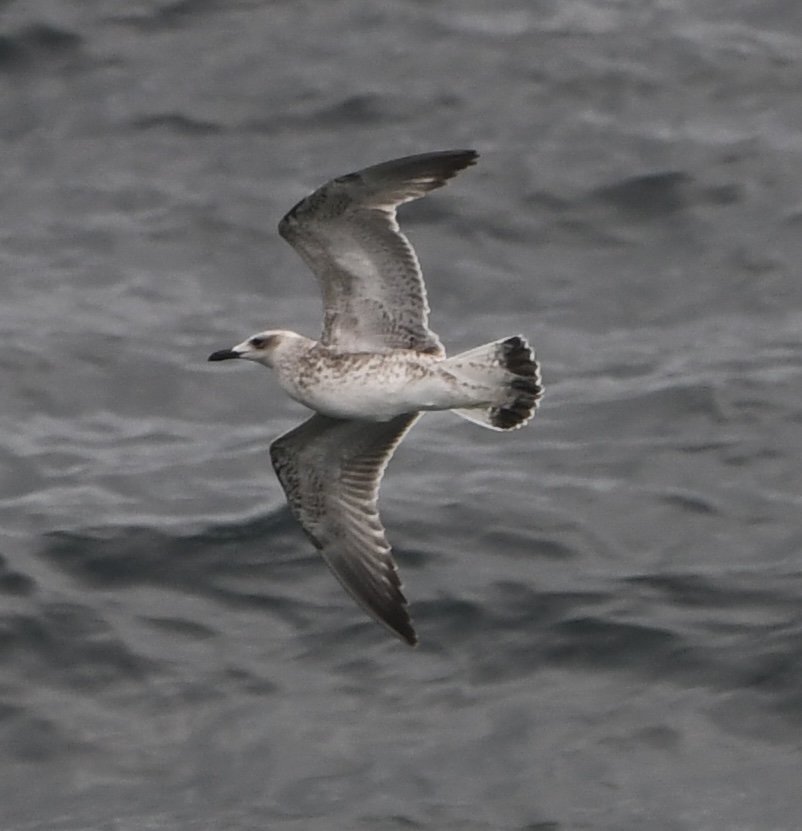 Caspian Gull underside by G.Lee
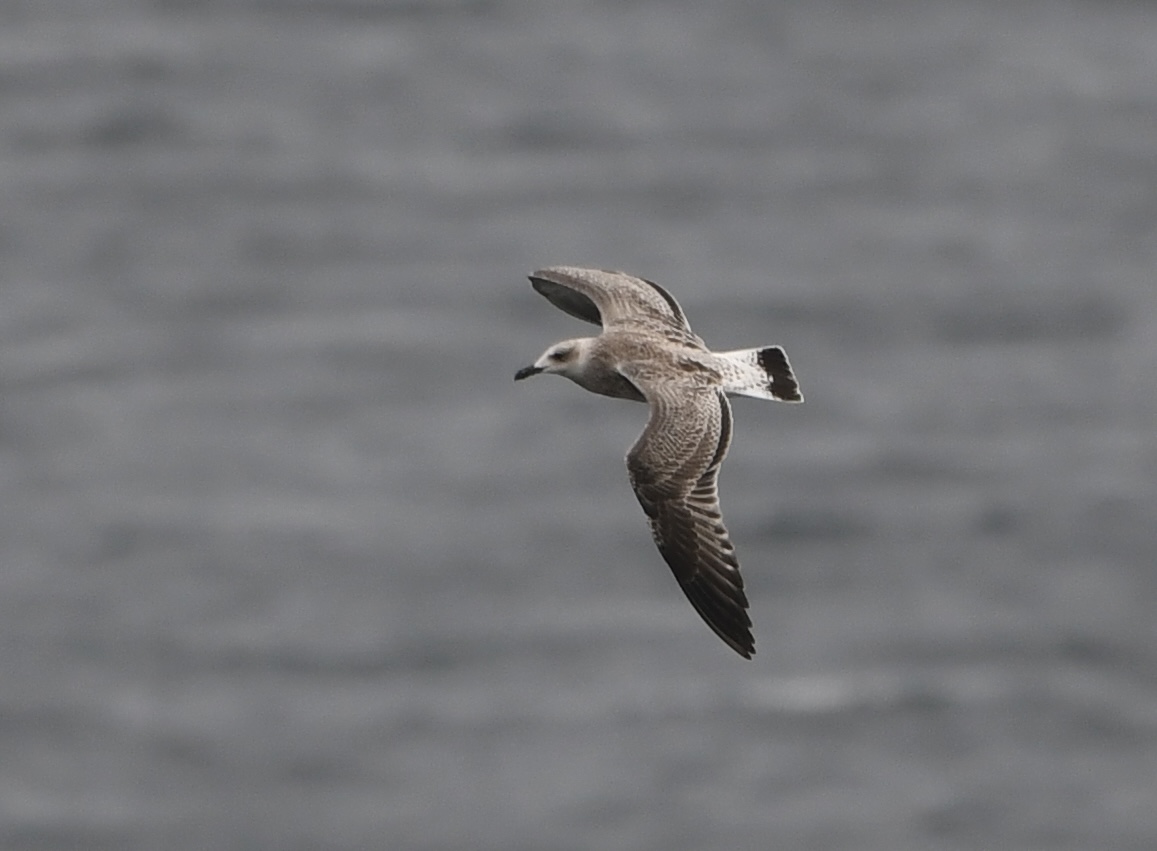 Caspian Gull by G.Lee
The rest of the walk was quite quiet with the low cloud making for quite a different feeling compared to the glorious sunny weather the island had experienced over the past month or so. Butterflies were much reduced with Painted Ladies leading the charge with just seven individuals during my walk. The Linnet flocks remain impressive, whilst like clockwork, every time I reach Quarter Wall gate on census, my warm mammalian blood seems to always attract the attention of horseflies. Fortunately, as they are used to biting large livestock such as Cows and Horses, they aren’t quite used to their victims being armed with hands that can cover almost the entirety of their body, therefore they can be swatted away very easily. I believe this particular species of horsefly is Notch-horned Cleg (Haematopota pluvialis), however I’m open to suggestions of other species. Although they are trying to saw at my flesh, I do find the striking pattern of the eyes quite beautiful, though this is appreciated only quickly before my blood is drawn.
The rest of the day was spent in a horsefly free environment with lots of seabird data needing compiling and entering now the season has finished. Notably, I was on Kittiwakes which sadly saw the Aztec birds being plundered very quickly by other avian predators. However, in better news, lots of young Kittiwakes are now fledgling and swirling safely in Jenny’s Cove!
In the evening, members of the Conservation Team went out to catch some Wheatears. With the full moon, it was a harder ordeal, but we were treated to some beautiful noctilucent clouds drifting over from the high Arctic. Three Wheatears were caught though, one being new and the others being re-traps from previous sessions. There does seem to have been a reduction in Wheatear numbers recently, are the juveniles leaving the island already?!
25/07/2026 – A Varied July Census
by Greg Lee
Census today with a breeze and heavy dew in the morning making for a cool start as I got out of my tent. Millcombe appeared quiet to begin with, Willow Warblers just tipping over into double-figures in the morning. Interestingly, a young newly fledged Song Thrush was a notable sighting. This indicates that our ever-present male during spring actually did find a mate, though just clearly enjoyed the sound of his own voice. One of the Blackbirds was in heavy moult, having been run ragged by the demands of his chicks through spring, it was clearly enjoying spending time hiding and moulting its feathers. I then found a pair of Blackbird wings on the Beach looking quite like a predated pair of Manx Shearwater wings, indicating one juvenile hadn't quite made it. Migrant Hawkers are starting to become daily features of census now and I spotted several of these dragonflies on the wing during the morning, but I was also lucky to see one perched and obtain a photo near Government House.
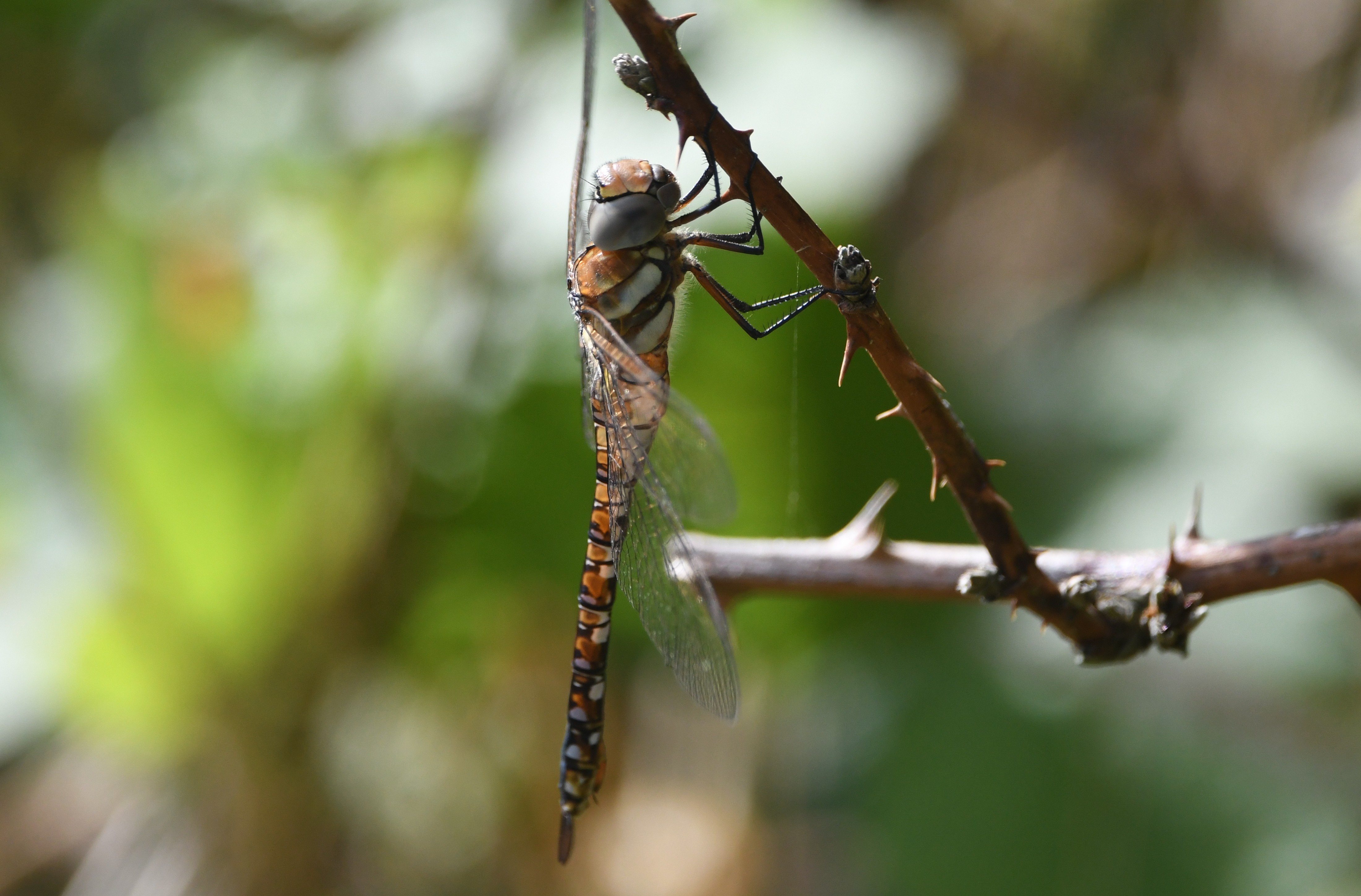 Migrant Hawker by G.Lee
The Channel Wagtails were around Rocket Pole, one noisily calling, whilst a Kestrel was also hovering over the site, enjoying the slight raise in the breeze. Offshore, a few Kittiwakes looked absolutely tiny against the waves, whilst the larger Gannets were soaring distantly across the water. At Stoneycroft garden, which is quickly turning into one of my favourite sites to check, I stopped and waited, staring at the two small bushes in the centre of the garden. Lo and behold, a Reed Warbler soon appeared and enjoyed skulking through the vegetation, just another species to add to a strong roster at this spot so far this autumn. What else will occur? A Willow Warbler nearby was also welcomed but most of the birds around the garden were Linnets, with several other large congregations seen at various points across the census route. Meadow Pipits too are becoming even more conspicuous, the buff-coloured juveniles looking quite distinctive compared to their parents.
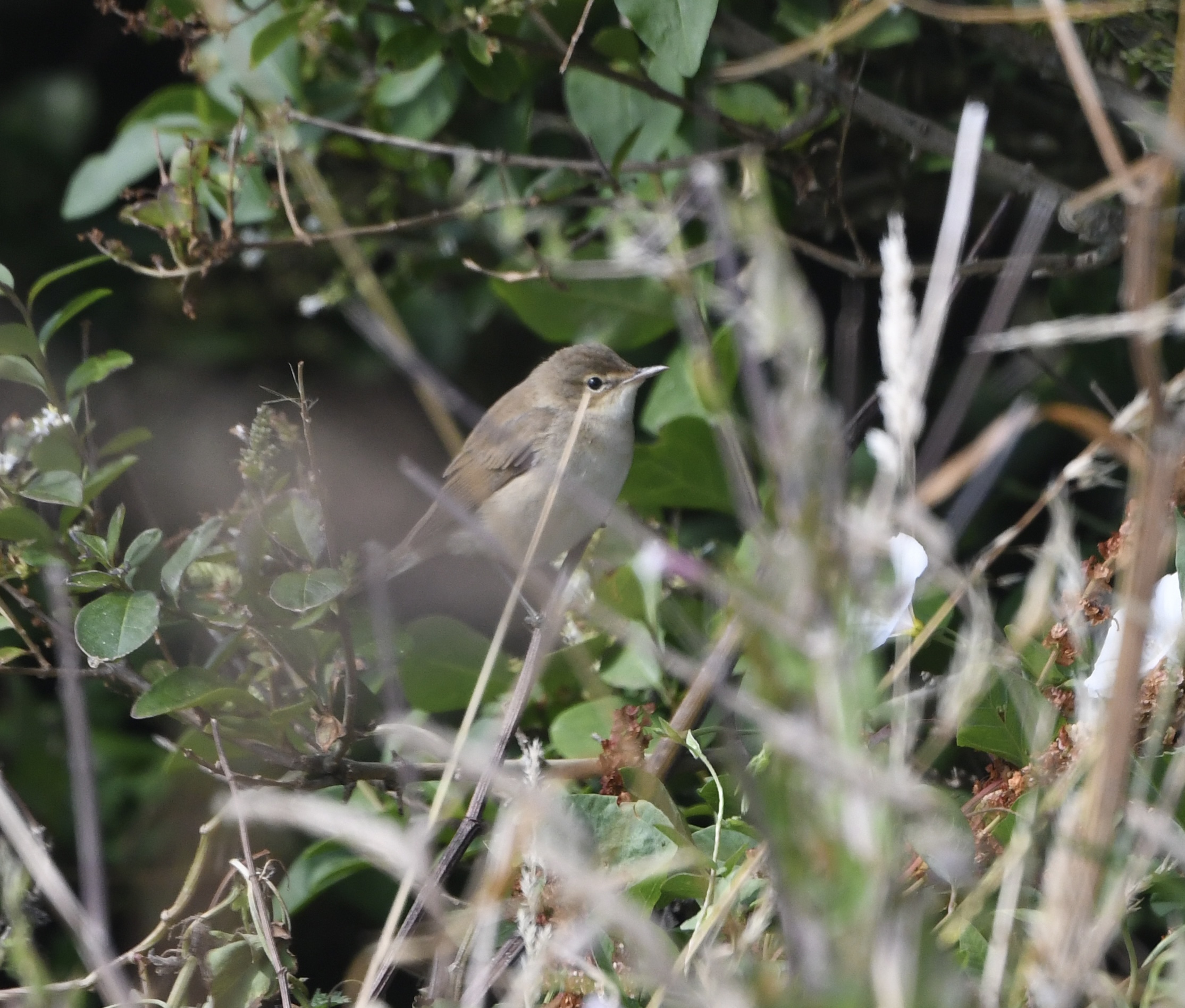 Reed Warbler by G.Lee
Over the Airfield, my first Whimbrel of autumn bubbled away, though remained unseen. Hopefully we may get some rain to provide standing water for when wader passage really ramps up, though we may need a lot on our parched island! The usual spot near Pointless Wall also delivered a Sedge Warbler flushed from the Bracken before it dived into deep cover. As I headed back into the Village, a Swift whizzed over northwards.
Then it was office work time with some seabird data and general Bird Observatory data needing inputting. An important and interesting task to do now that the seabird season is over. It will be interesting to see the results of the long hours of work that Emma and I put into the seabird monitoring from mid-May into the middle of July. As I stepped out of the Tavern after my KP shift, I walked through the Laundry garden where I was amazed to see 100+ Silver Ys all nectaring on the bush in the garden, clearly some moth migration was afoot!
Other sightings of note today included a Black-headed Gull seen by Thomas in the Landing Bay mid-morning and just nine Puffins seen at Jenny’s from the Seabird Station by Jessie.
24/07/2026 – A new Song Thrush!
by Thomas Weston
The day started with a walk around the census route with Eleanor as it was our day off.
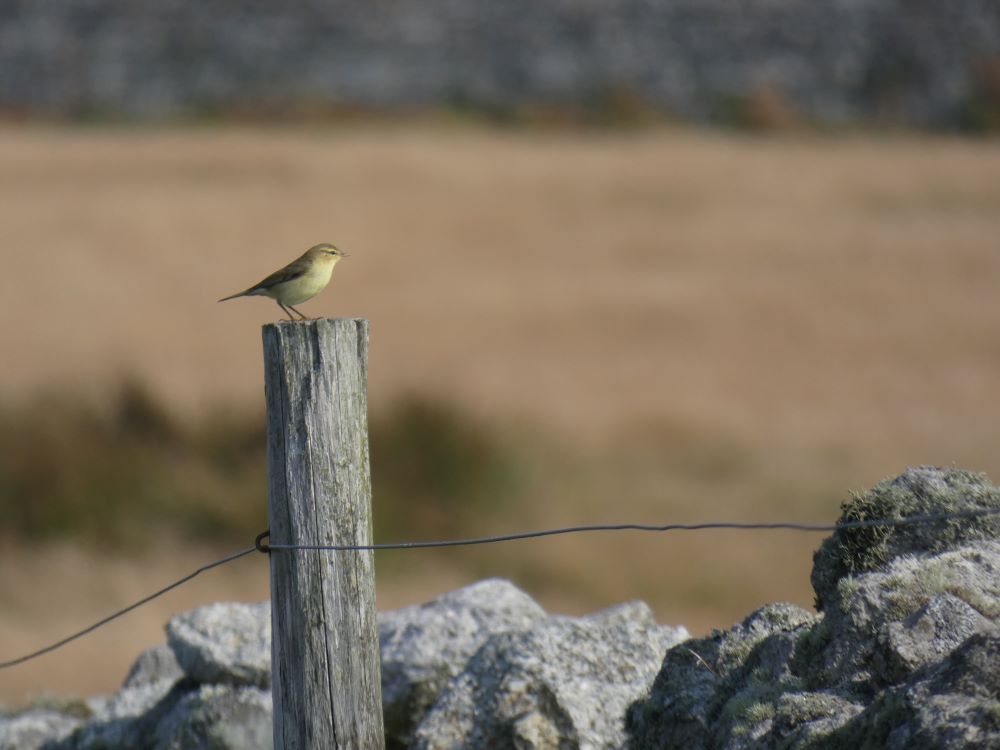 Willow Warbler by ThomasWeston
We are now seeing migration daily, the lull of summer has lifted and for the couple of weeks or so we have been seeing a nice pulse of Willow Warblers and the first few other migrant species. With the cliffs as bare as rock, census shifts from flocks of auks to passing Gannets, Manx Shearwaters and today, a large feeding frenzy of over 270 Kittiwakes. A whale, perhaps, but on this occasion we will never know!
Migration overhead/or birds actively moving through the island is what we refer to as 'vismig', quite simply Visible Migration, and it will be a term we use a lot soon! Well, we hope so...
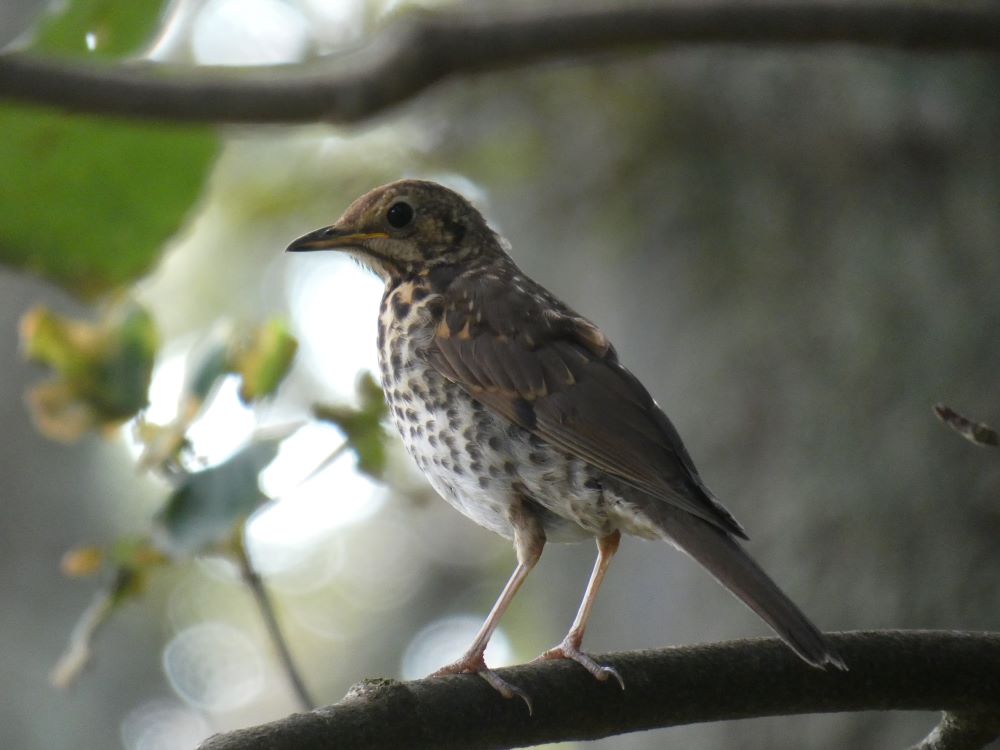 Unringed juvenile Song Thrush by Thomas Weston
A Yellow Wagtail over Benjamin's Chair was undoubtably a migrant species, as well as the little 'flock(?)' of six Migrant Hawker dragonflies circling above the chair in the lee of the wind. In Millcombe, the highlight was indeed 2 Song Thrushes. We have had an already ringed male hanging around for months, singing his heart out and not attracting a mate. This male we know has been present for the past two years, leaving the island every late summer/autumn and returning again in spring. The only guesses we have of where it goes is based on the song – mimicing Curlew, Greenshank, Grey Squirrel, Chough, must mean somewhere near the coast? In France, Devon or Cornwall? Anyway, we recently caught another male and ringed this one at the bottom of Millcombe. But today, a nice obvious juvenile was seen. Was this born on island but not seen by any of us for months? It can't be, it's still got a bit of a gape! Did census not being undertaken in June lead to a secret brood being born and raised? Either way, this juvenile is a stunner - a classic fresh bird which could have migrated quite a distance or could have been born a lot closer to home! We shall never know.
Census finished with flocks of post-breeding finches, a flock of 5 Stonechats, and 11 Skylarks in the Airfield alongside a plethora of other species around.
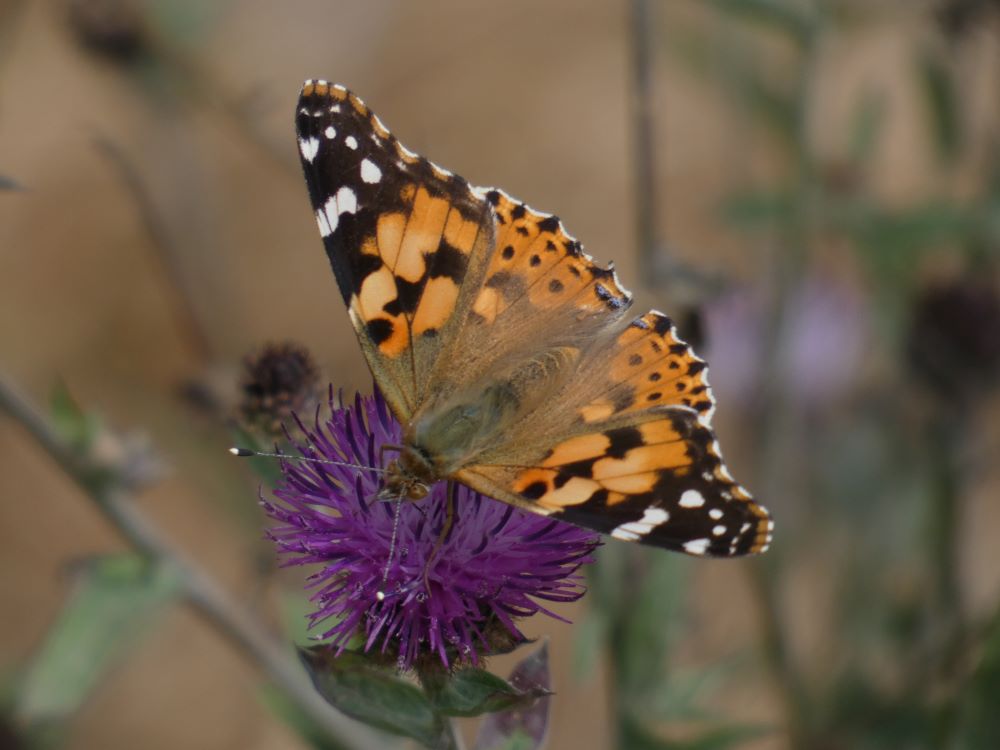 Painted Lady in the Village by Thomas Weston
The rest of the day was spent admiring our thriving Painted Lady butterflies, Hummingbird Hawk-moths, and the range of other pollinators visiting the flowers. We checked on a brood of Swallows in the Timekeeper's Hut, finding they were of ringable stage, and saw the Channel Wagtail pair at nearby Quarter Wall Pond.