


Bird Sightings
04/08/2026 – Birders Week Day 4
By Thomas Weston
The day started a little breezier than ideal, plus very foggy. The Birders Week team were going to join me in Millcombe for some ringing but alas it was not suitable at any of the nets. In fact, it turned out today was more of a relaxing day for the team after a couple of busier days gone by. No worries, because Lundy is full of adventures wherever you go and there is never a time when there is not a new place to explore.
However, Greg was up early and checked the moth trap. He caught 70 species caught including Dark Swordgrass, Diamondback, and Devonshire Wainscot for example, plus many many more not beginning with the letter ‘D’! Greg then went round to complete census with a couple of the birders, which was good, and included a nice range of migrants with Willow Warblers in fine form again. The change in wind direction to SW slightly halted some proceedings, but it is looking calmer and more suitable in the coming days, so we shall see!
Planned snorkelling did not happen due to the boat day proceedings, and as a result I ended up going to the meeting and having a look from the Ugly whilst the breeze was slightly stronger than recently, and very southernly too! The totals from an hour's watch from the Ugly between 08:00-09:00 involved 47 Manx Shearwaters, 24 Gannets, 36 Shags, 3 Kittiwakes, single Rock Pipit, Kestrel, and 4 Wheatears. Amazingly, the predicted rain was not apparent, and the clouds dispersed so much that there was bright sun again and excellent visibility. The seabirds started to fly further away from the Lundy coast, and so I packed up and headed to the Village. On my arrival, two of the Birders Week participants had just opened the traps and within a short period of time had already caught a House Sparrow. More amazingly, it was unringed! Excited at their discovery, it was equally more exciting to go and get Lucile who was actually leaving today from the island – but coming back in November. The sparrow was named James Joyce and released with some new bling. It has been incredible working with Lucile and we wish her a great autumn ahead of her, wherever she decides to go!
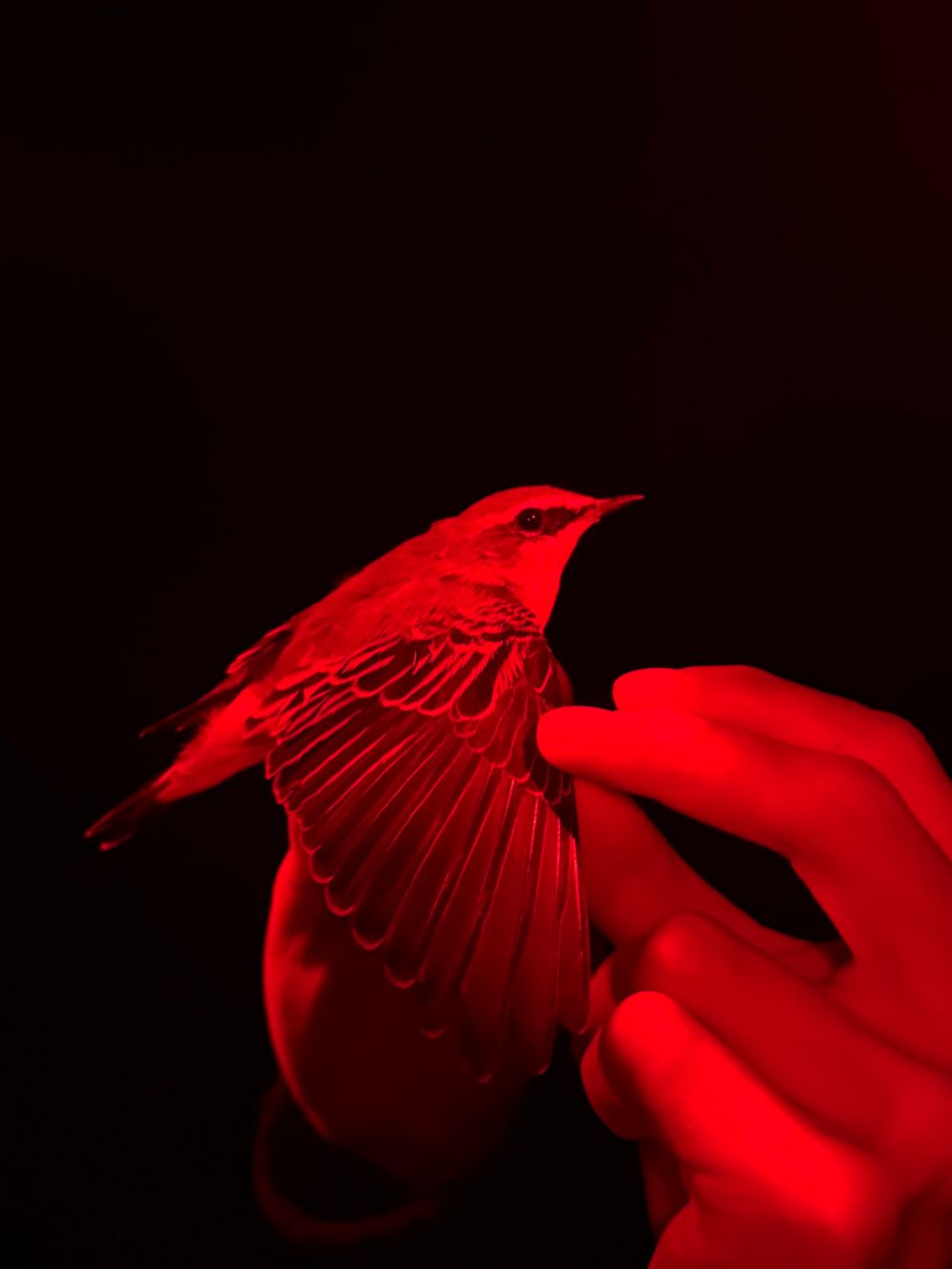 Adult male Wheatear - aging criteria shown by the super dark black greater coverts. Sex based on dark lore. By Thomas Weston
Meanwhile, the Birders Week participants were exploring the island. A highlight for the day was a Curlew seen by three participants as it came in at Jenny’s Cove, then flew east to Quarries, and then south out towards Rat Island. At the same time, I completed some blogs, data input, and helping with House Sparrow boxes was the last few things before the end of the official workday. Though this was a bird day in amongst Birders Week, so the fun continued post-work too. I saw 3 Swifts whilst walking to the Barn this afternoon, and in the evening, Simon gave a great Warden's Talk to the team. The idea to have a quieter one quickly changed when Wheatear dazzling was mentioned, and before we knew it, we had caught 9 out of 12 Wheatears seen this evening with the whole team. It was amazing! New birds coming through the island, mixed in with Lundy juveniles, and even more amazingly was a bird originally ringed two years ago. The bird was caught at North End plateau during fieldwork and seen in the car headlights around 1:40am. The bird was ringed, processed and released, but as a juvenile it is pretty difficult sexing them when they are still quite fluffy. Amazingly, two years and two days later this bird was recaught as an adult male, in Tent Field near the Tavern. Back by midnight and we hope the weather improves for more ringing in the morning tomorrow…
03/08/2026 – Birders Week Day 3
By Thomas Weston
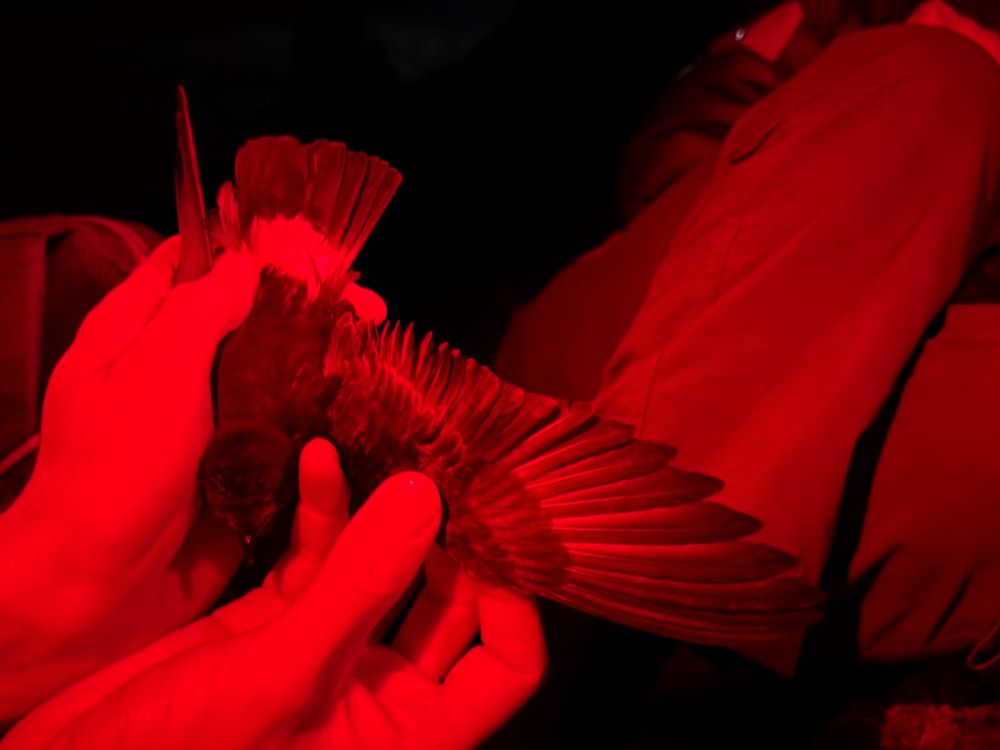 Storm Petrel ringing – by Thomas Weston
.......A late night last night on the cliffs resulted in a really nice mist-netting session for Storm Petrels returning to their colony. With half of the Birders Week team heading north by vehicle, the rest trekked up the island – including myself.
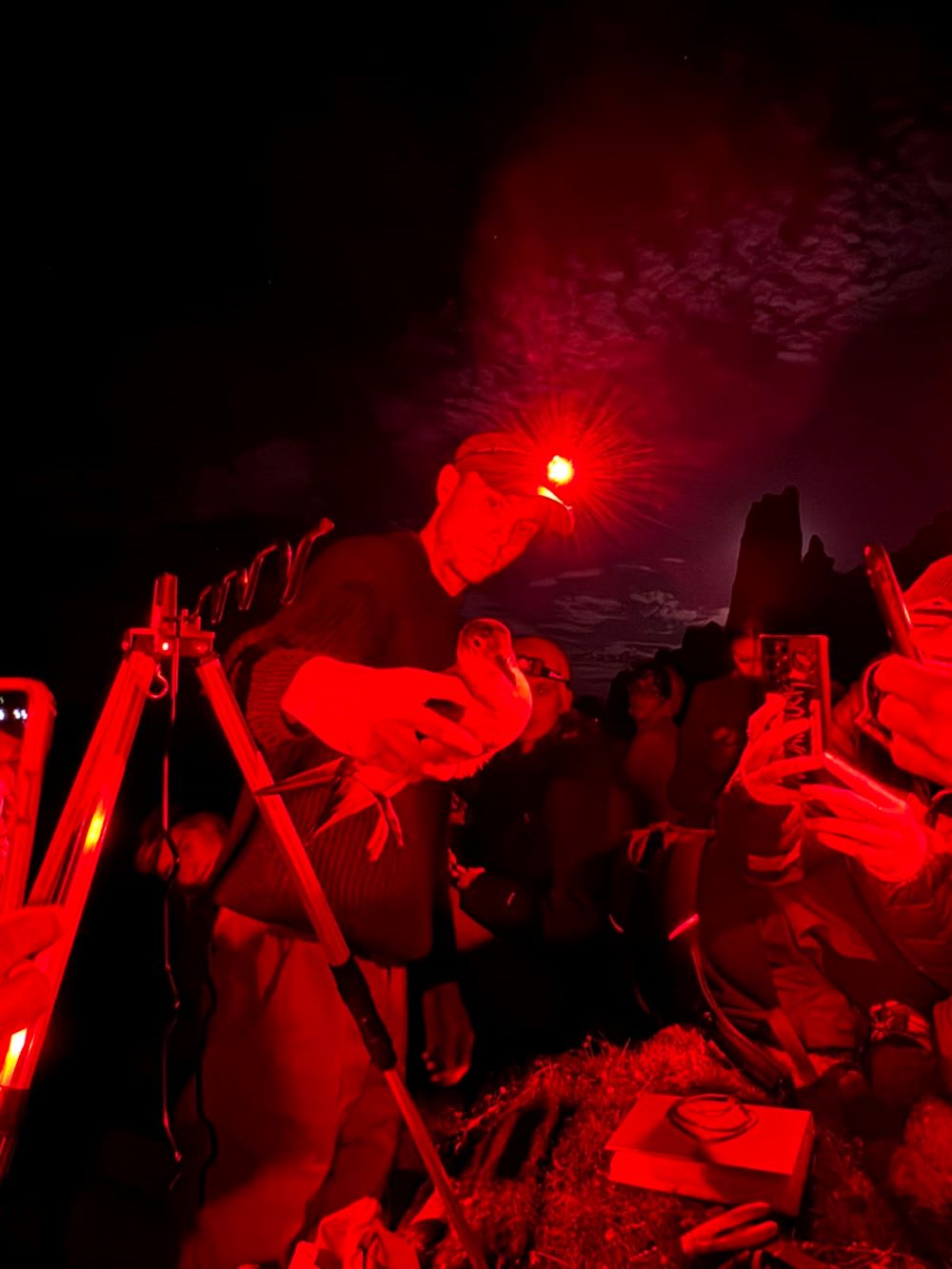 Manx Shearwater bycatch – by Thomas Weston
Once the mist-net was set, the team started to catch Storm Petrels returning. There was an initial rush ahead of the moon rising, with birds flying in and out of the colony. The later breeding season means the majority are now on chicks, but many of them are quite small and not big at all. However, we know there are some biggies out there! The risk of regurgitation is high when ringing, so we limit netting time with enough breaks in between sessions for birds to feed their chicks so we are not causing too much unnecessary disturbance. With the ringing data being collected towards a BTO Retrapping Adults for Survival (RAS) project for this species, it was great to ring a large number of birds, but also to catch birds with rings on already. It was amazing to see that the majority of birds were originally ringed elsewhere, and it will be great to see where these birds came from.
A few hours later and a long walk in the dark led to our bedtime being 2am this morning! As a result, the morning was spent sleeping. Eleanor's and my official day off was today, however Birders Week takes priority. Greg took charge of the moth trap again, but unfortunately due to some charging issues in the night, the light did not stay for long and the number of moths caught was only in single figures. Emma spent the morning completing admin ahead of her Seabird Productivity writeup and talk; fingers crossed it comes together nicely. And after a late night on the cliffs, Jessie had a slow start.
There was a buzz in the air in the morning, and even a little rain! The first for what feels like over a month-and-a-half for the island. Crazy. Coincidentially, there was a big push of hirundines arriving, flocks of Swallows were seemingly coming in off the sea and heading off near Benjamin's Chair; a flock of 70 Swifts appeared but headed out south and later replaced by another flock in the evening; 2 House Martins were super brief; and a Sand Martin joined the migration pulse. In the bushes things were quieter, and the plan for the early afternoon was to repair the Heligoland Trap on the Terrace.
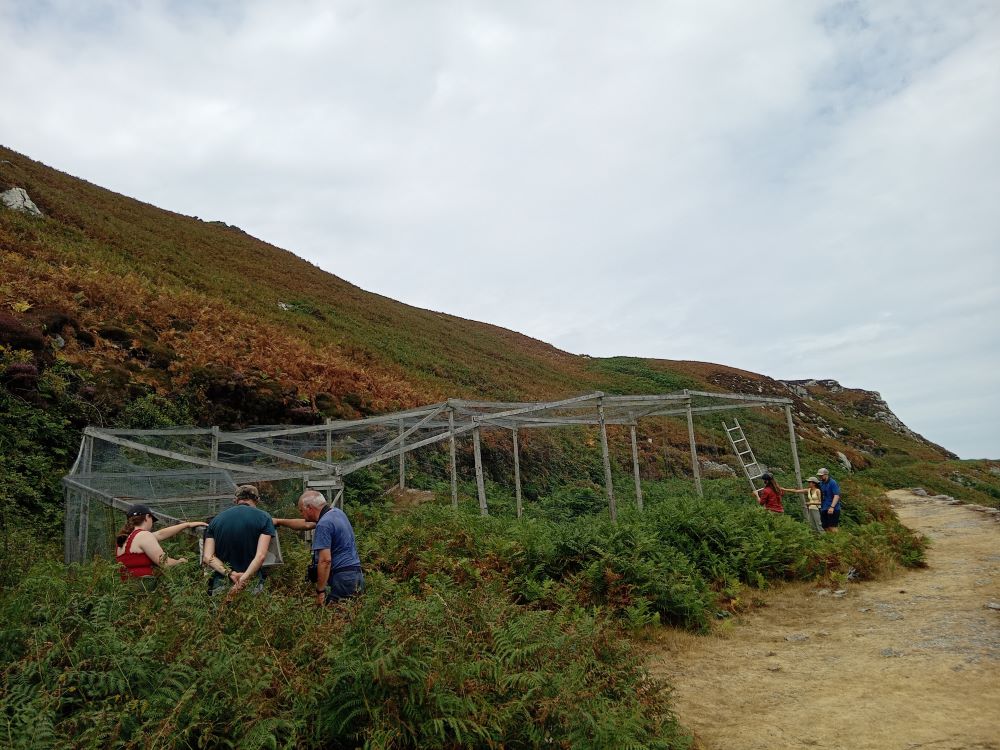 Heligoland Trap work – by Thomas Weston
Heligoland work was completed within a couple of hours, just in time for the Birders Week team to head on down for rockpooling with Jessie. The trap looks in a lot better shape, and we even caught a juvenile Linnet! It's always great when a plan comes together and works. Rockpooling went really well, but before the team knew it, it was time for the next bird related task.
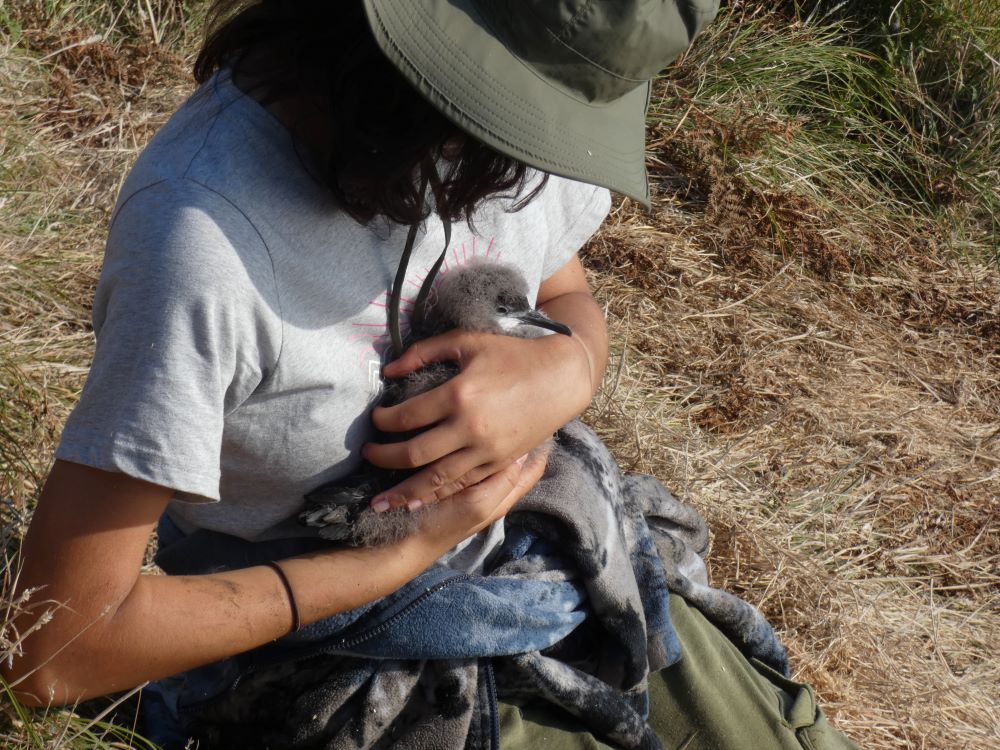 Weighing our Manx Shearwaters – by Thomas Weston
This involved checking our Manx Shearwater boxes to weigh the chicks. Weighing the chicks is an important technique to understand how well our chicks are gaining weight, as well as a good measure for survival too. Due to the number of chicks in the boxes, we almost had enough for one per person and so everyone got to experience holding a fluffy, big ball of Manx Shearwater in their hands.
We then got back to the Barn, just in time for Lucile's Lundy House Sparrow Project talk. An amazing overview of her PhD project and results so far, as well as the Lundy House Sparrow Project overall. Being her last night on the island until November, it was the last chance to wow the crowds with her knowledge and experience. The feedback was great and it is really good to host these evening 'lecture talks'.
Log was undertaken a little later, as some were having dinner, but an evening of Wheatear catching for the ringers, and bioluminescence for the rest of the team. Both sessions went well. We caught 8 out of 16 Wheatears and there was a good views of the bioluminescence and even 3 Common Sandpipers too.
A long but eventful day, back by midnight too!
02/08/2026 – Birders Week Day 2
By Thomas Weston
With the Young Birders spending the rest of the day yesterday settling in and exploring around the island, it was nice to see everyone getting to know each other and having some birding and nature chats.
Today, the aim was to introduce the team to ringing!
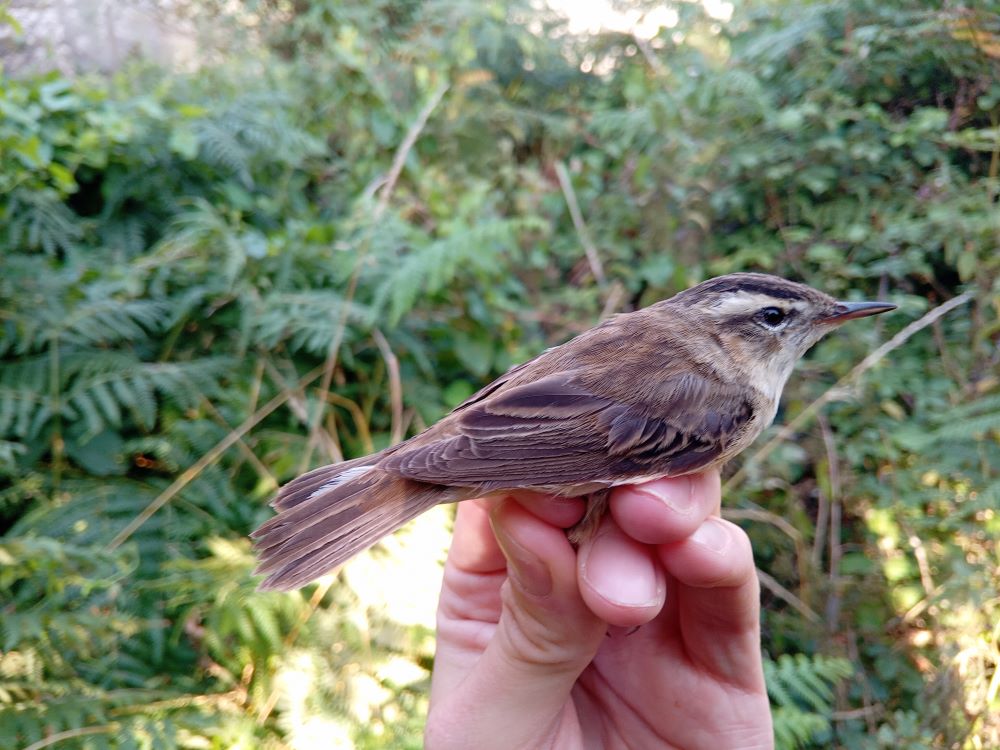 A Sedge Warbler caught and ringed in Millcombe by Thomas Weston
We got up early and headed to the Tavern for 05:15. An early start which led to a lot of the team needing some well-earned tea before heading into the valley – especially as the power was not going to be on for another hour. The day started with a nice breeze and a stunning sun rise too. We headed down and started opening the nets. The team gathered and we started to catch some birds. It was pretty productive with 67 individuals caught and processed throughout the morning. Ringing totals follow (new/retrap): Robin 1/1, Sedge Warbler 4/0, Linnet 5/1, Chaffinch 2/1, Blackcap 1/1, Whitethroat 1/0, Goldfinch 1/0, Swallow 1/0, Wren 3/2, Willow Warbler 15/1, Chiffchaff 1/0, House Sparrow 0/12, Spotted Flycatcher 0/2, and Dunnock 0/1.
A 100m away, Greg and Emma went through the moth trap from the night before. There were some good species seen and recorded. A moth list can be provided below in a bit, once counted and written!
Around 08:15, Eleanor came through undertaking our daily census. She ended up heading on round and recording a nice range of species throughout the route. Some of the highlights included Willow Warbler, Sedge Warbler, Spotted Flycatcher and a good number of Swallows and Linnets. It was great for some of the team to join and hear more about our work, as well as to see some nice species along the way.
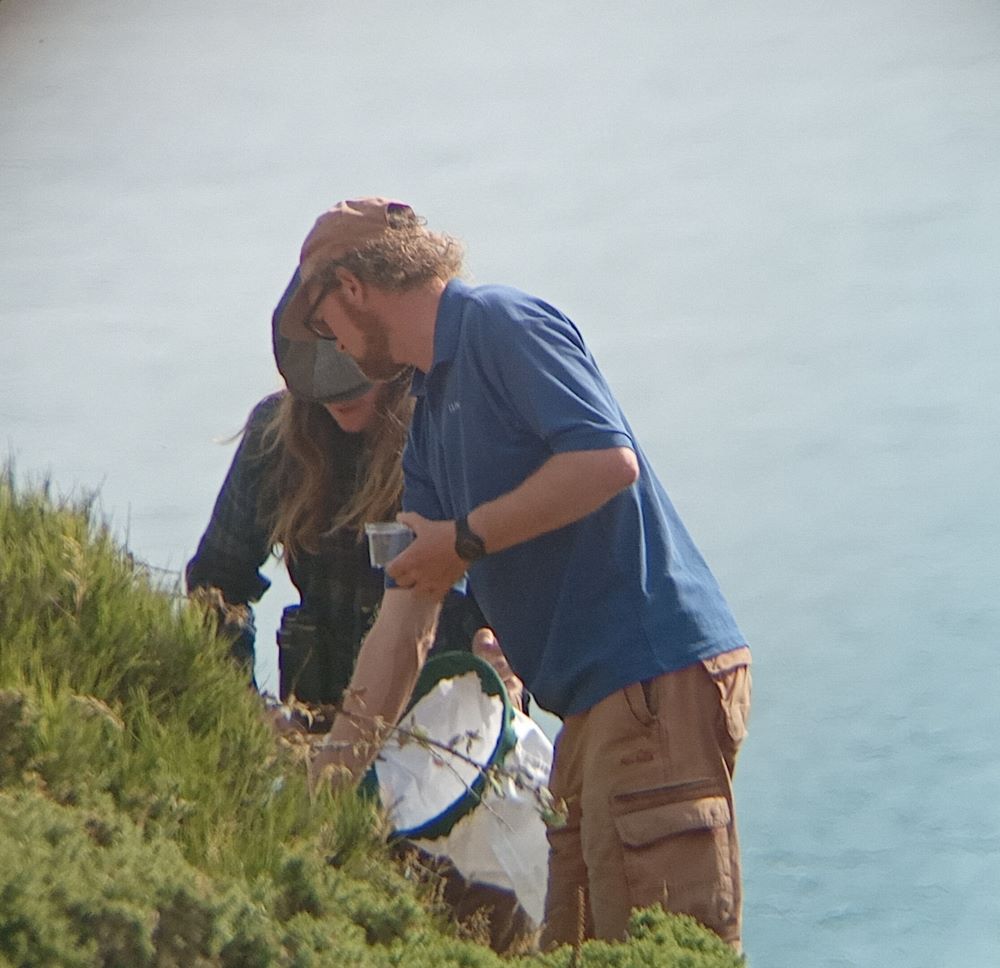 Simon sampling for Lundy Cabbage Flea Beetles in Millcombe by Thomas Weston
Meanwhile, the remaining team had the choice to either explore the island, help with some Lundy Cabbage Flea Beetle surveying with Simon and Kirsty, or continue in Millcombe a little longer. Some of the team were super keen to see two endemics for the island, as well as see some more ringing, so the team reamined down in Millcombe. It was great for Lucile as we caught so many House Sparrows that she could talk through the process of processing them, and to get some additional biometrics that other speces rarely require. The team thoroughly enjoyed themselves and by 11am we all headed out of the valley.
Back in the Village, Eleanor and I helped Lucile with some of the Starling and House Sparrow traps to help top-up the number of colour-ringed birds before the end of the season and before Lucile has to leave us until Novemeber. Lucile found a new brood of Sparrows, which we will monitor until they fledge, and we also ringed a brood of Swallows in the Vehicle Shed area. A lovely brood of 4 growing youngsters.
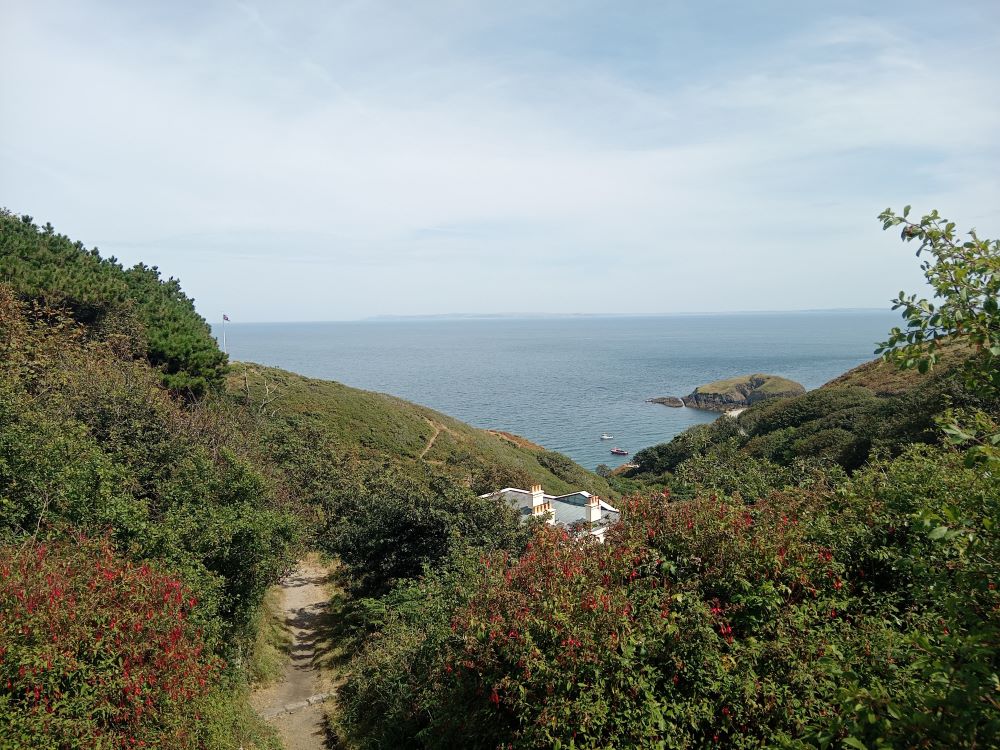 A brown Millcombe whilst collecting kit. Thomas Weston
I then decided to break for lunch and to gather all the relevant equipment ready for the evening ahead, featuring a talk by Greg and undertaking of some nocturnal surveys! More on that tomorrow....
01/08/2026 – Migrant Lepidoptera and new visitors
by Greg Lee
A quieter feel to census this morning with a lot of activity seemingly reduced, certainly for commoner species such as Starlings and Gulls. Whether there was a genuine reason for this is unclear. There certainly hadn’t been a big wave of migrants, with another light showing of Willow Warblers, numbering 14 across the entire census route and other species being a little bit on the scarce side. Insect-wise, it was a very good display though with lots of Hummingbird Hawk-moths and Painted Ladies on the wing. A knackered Clouded Yellow caught my eye in Millcombe, but posed well for photography, whilst a much fresher individual exhibited more classic Clouded Yellow behaviour and was zipping over the grassland at a speed much too great for me to follow for a perched photograph, now I’ve discovered my manual focusing hack on my lens! A Tree Pipit buzzing over caught my ear near Benjamin’s Chair, the first of the autumn for this fairly infrequent migrant. Otherwise, a Mallard flushed near the Gorse at Quarter Wall was a rare addition to my recent census counts and a Sedge Warbler on the wire next to a Linnet determined that I wouldn’t leave the notepad empty of its BTO code. The main event was heading down to the jetty, where we welcomed a group of visiting birders/ringers for the week who are coming to stay on the island and do lots of various activities and we also welcomed Kirsty, who is back as the seal volunteer for the next couple of months. As the Oldenburg pulled in, an immature Black-headed Gull was a bonus, seemingly moving in front of the Oldenburg before disappearing northward. Although a few had been reported recently, I had failed to see any on census, so this was a nice bird to see.
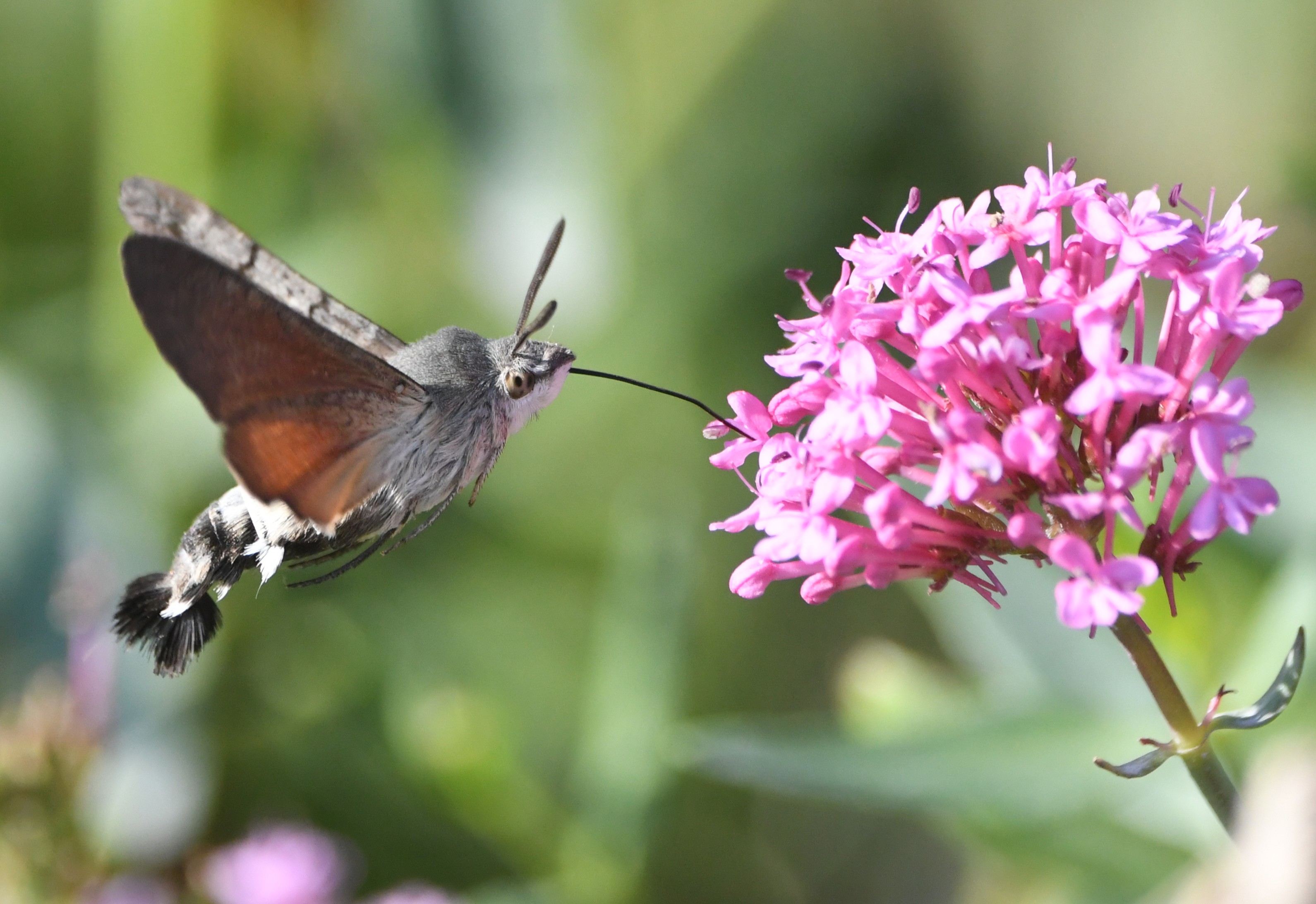
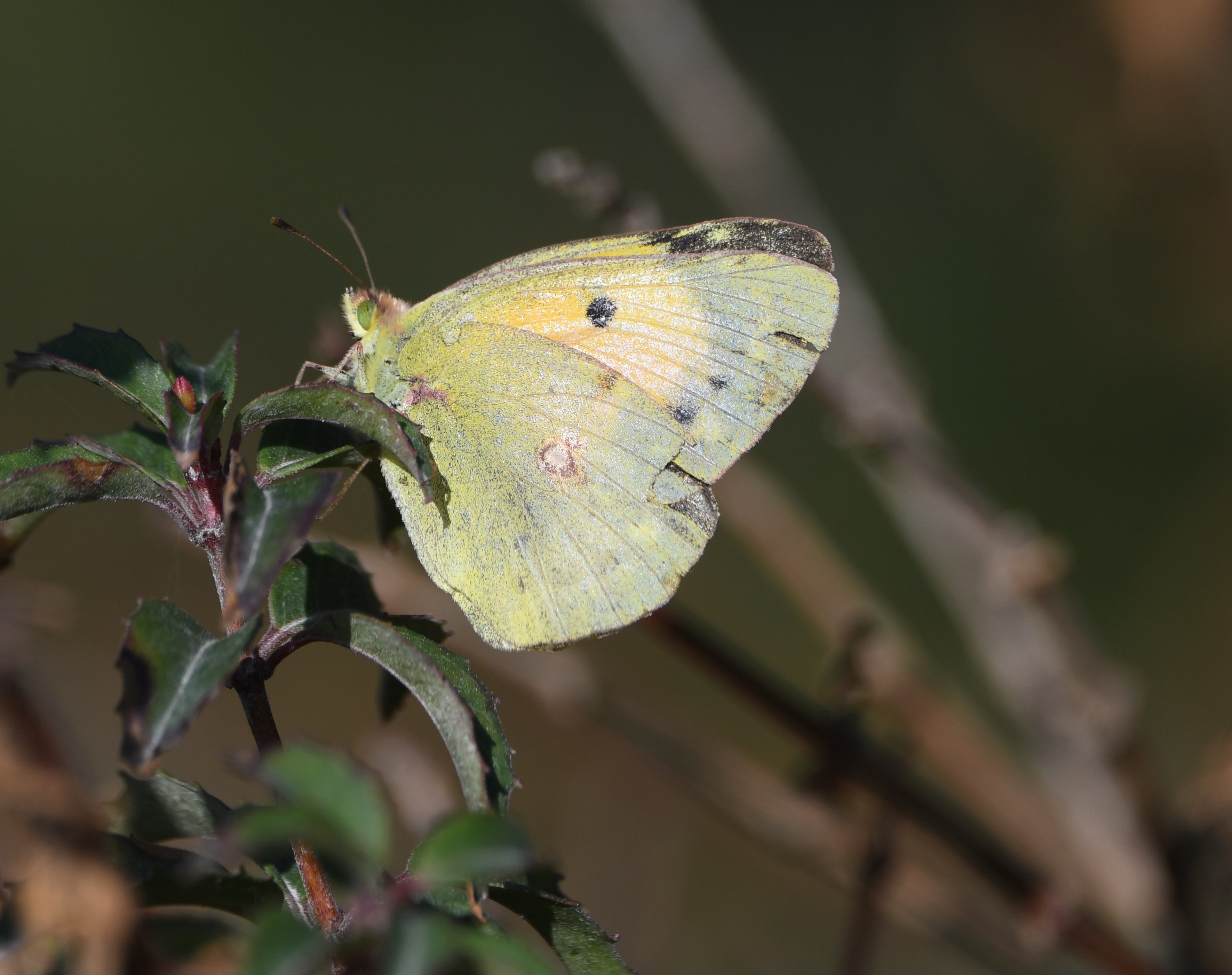 Clouded Yellow by G.Lee
Once we had met all our visitors, we took them up to the Village to show them around before letting everyone go and explore the island in the sun and get settled. As evening drew in, Emma and I went to set up the moth-trap in Millcombe. It didn't take very long for the moths to come in with the good conditions, one of which was hulking great female Oak Eggar, always a chunky addition to the August moth-trap! Here's to a good week full of interesting sightings and activities!