


Bird Sightings
14/07/2026 – A Hedgehog!?
By Thomas Weston
Today was a windy travel day. A day which was uncertain for many reasons – was the boat coming? Would it land? Would people have to stay another night? However, for me the day started quite early and before the power came on. I put the washing on just as the power was switched on and had a rather chill start to the day watching passing Swallows, Starlings, and House Sparrows from the house.
Around 8am I started census. It was blustery and Millcombe was quite windy. A couple of Swallows flew over and charms of Goldfinches made it on to the list. Linnets were scattered across the area in loose groups of 4-10. The Wrens were calling quite a bit today, with both juveniles and adults noted. Whilst Wheatear adults moult, the juveniles were the showiest today. However I did see an adult male and female in known breeding areas. Before leaving the upper section of Millcombe, two Chaffinches completed the current finch set on the island with anticipation for other finches to come soon!
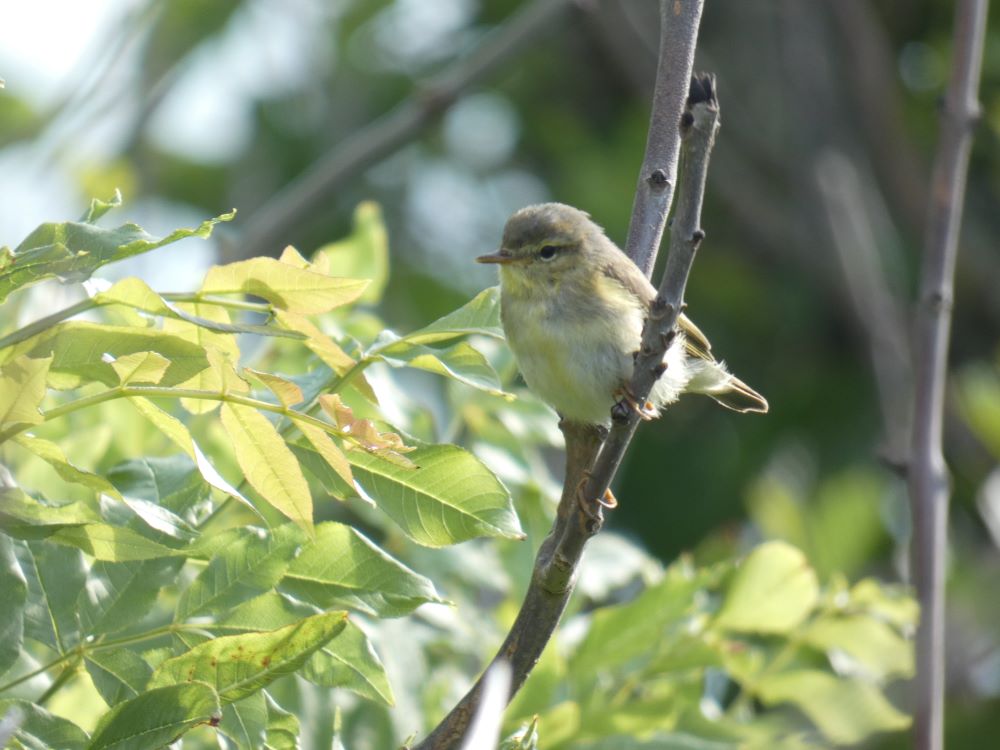 Lundy-born Chiffchaff by Thomas
A feeding frenzy near Rat Island/Benjamin’s Chair yielded 20 Manx Shearwaters, 4 Gannets, 6 Great Black-Backed Gulls, 70 Herring Gulls, 8 Lesser Black Backed Gulls, and 3 auk spp just too far away to see. Five Shags joined the party as I was heading away from the Landing Bay, where a few Meadow Pipits carrying food were noted along the banks – perhaps some late second broods yet to fledge? A Pied Wagtail in the vicinity of Brambles has been around for a while, but great to see! In the bushes a pair of Stonechat, a Willow Warbler, a Chiffchaff, and a Woodpigeon were the best in the wind. Small birds were really challenging to find up to Government but did include a Whitethroat and a Blackbird. Carrion Crows have bred around the island successfully this year with 9 adults and 3 juveniles noted on the way out of Millcombe and on the south coast.
Looking towards the Castle, there were 2 Ravens in the sky being mobbed by crows. On the South Coast a calmer feel prevailed. A Swift flew by, and small flocks of passerines hid in bushes and flew out of the grass when I was passing. A nice range of butterflies were seen with Painted Lady, Red Admirals and Meadow Browns all being noted. Birdwise, the Starling flocks must have been hiding, as only a few were seen today. Thee best of the bunch included 2 Sand Martins – a sure sign that Bird Autumn is here! A Mallard in front of the house and a small proportion of the island's House Sparrows were the last couple of species noted.
Off to the Tavern for me. The boat was weather delayed, and stayers didn't arrive until 2pm by which point my break had almost started. There were no bird reports from visiting guests, but we shall see later as they settle in, and my break comes to an end. However, there was an unusual report of a Hedgehog. These adorable, spiny, garden visitors are much loved, but they are a biosecurity hazard on the island (due to the predation risk they pose to the eggs and young of ground-nesting birds, from Skylarks to shearwaters) and luckily for our breeding birds, it was not alive on arrival. Nevertheless, a fascinating find – and extremely bonkers record!
We shall see how the rest of the day goes…
13/07/2026 – Census returns!
by Greg Lee
Today saw a marked shift in the calendar, the return of the daily Observatory Census as we gear up for autumn. Admittedly, it has only been a month since we stopped the spring migration census, however it signals the starting of that busy and anticipated time in the British birding year. This season, we shall be doing census right up until November so lets hope that it can be as productive as spring for some varied and busy days!
It perhaps wasn't the most auspicious start today, with a very strong easterly breeze that swayed the trees and drowned out any avian sounds coming from the bushes. In a couple of months, a similar direction to the breeze could potentially be quite exciting but it is a little early at the moment. Millcombe itself was quite quiet but as I reached the top of St John's Valley, I came across a real pocket of activity with a group of young sparrows being joined by a Pied Wagtail, some Stonechats, a Dunnock and two Willow Warblers. The latter were certainly local progeny but by the end of the month, we should expect to see migrants from elsewhere passing through, perhaps even in considerable numbers. For now though, it was enjoyable watching the lemon-yellow juveniles working through the bushes and trees. Heading up to Old Light, I then spotted two Sand Martins somehow flying against the wind and heading southwest towards the village, with a Swift also spotted distantly over the Airfield indicating there was some migration afoot in spite of the windy conditions.
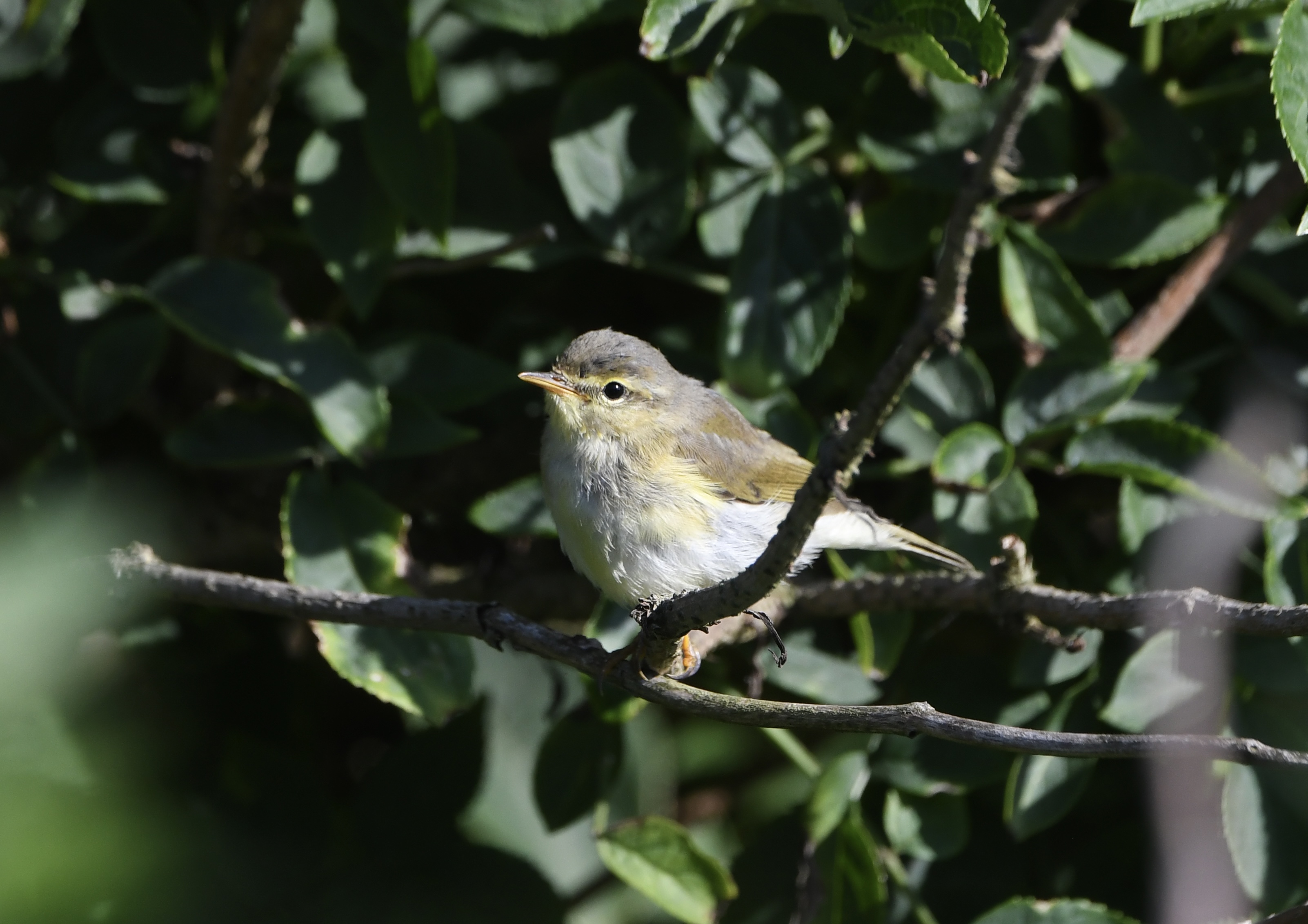 Willow Warbler by G.Lee
The rest of census saw birds generally lying low with a few Meadow Pipits squeaking in the areas of long grass and another Collared Dove also appearing in the Village. On the other hand, it was surprisingly good for Red Admirals, with an influx clearly underway of these migratory butterflies. The rest of the morning and early afternoon saw some data input and also collating the various descriptions of Golden Orioles collected during the spring, with at least nine different individuals thought to have occurred on the island!
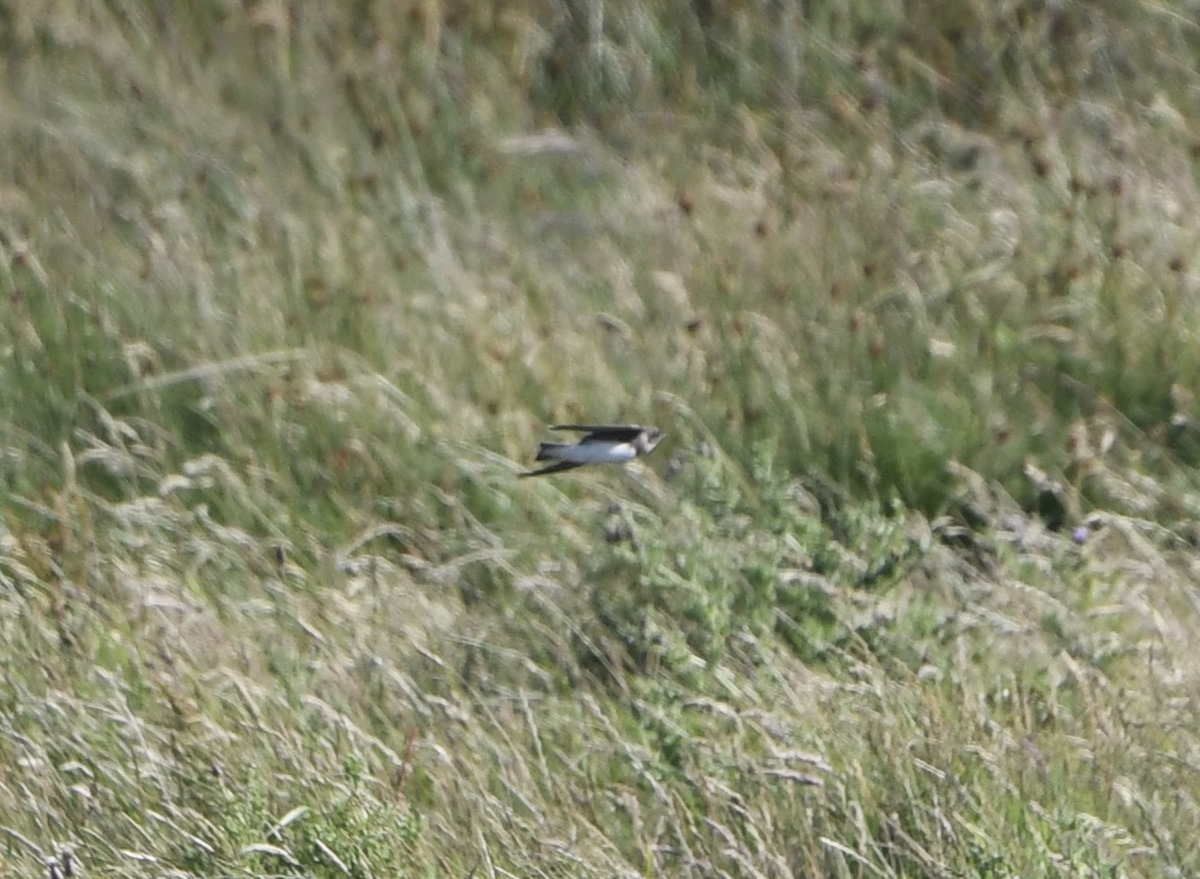 A windblown Sand Martin by G.Lee
Thomas and Eleanor undertook a seawatch from the Ugly in the late afternoon and were rewarded with some good gull activity including five Black-headed Gulls, which so far this year have been quite scarce on the island.
12/07/2026 – Starlings, Shearwaters, Swifts and Swallows!
By Thomas Weston.
Sunday starts with an S and so do most of the birds seen today!
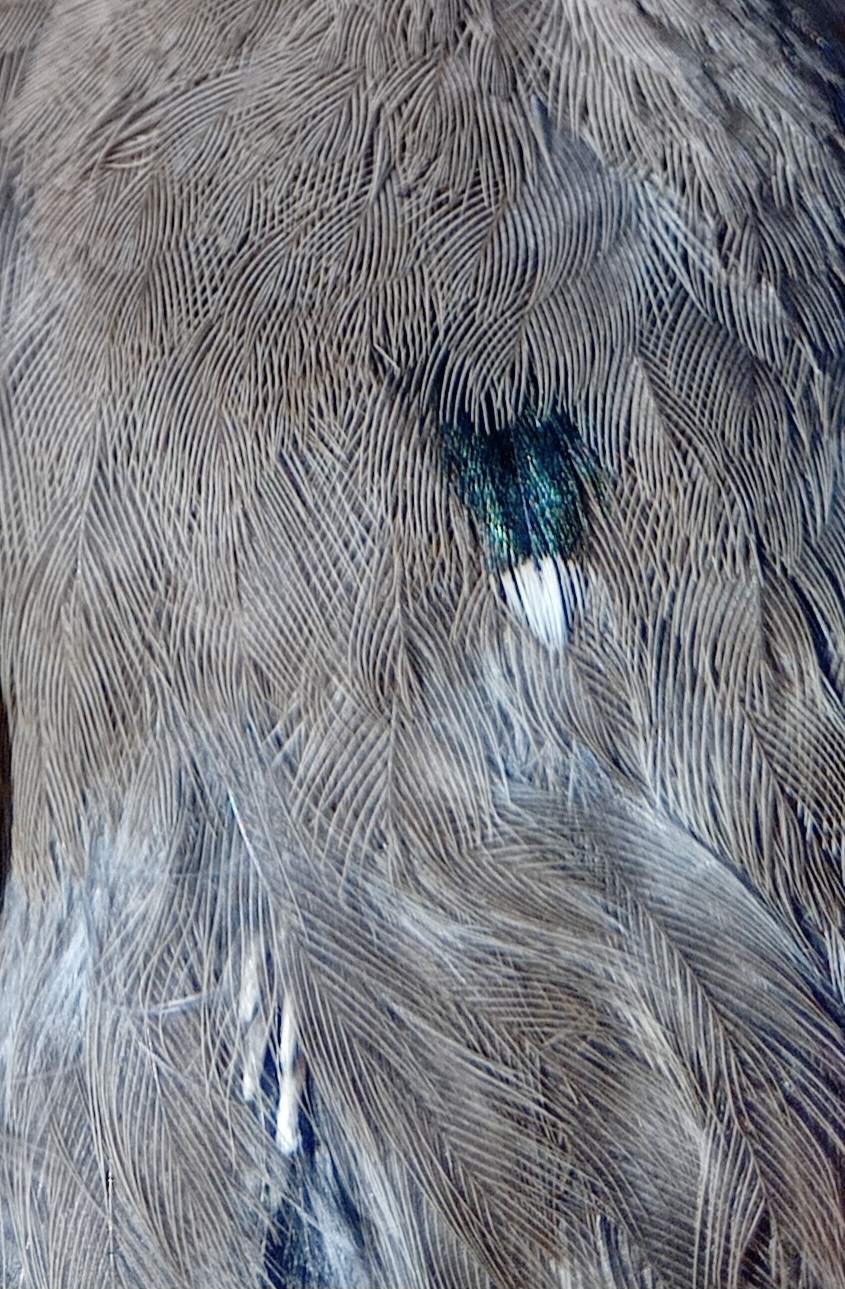 Signs of moult in our Starlings!
Ringing this morning with Luca and Lucile went really well. Our mission was to catch an unringed wild brood House Sparrow. A brood we have been seeing since the third week of June and during recent ringing sessions, both of its siblings have been caught and colour ringed, blood sampled and pit tagged leaving just the one bird out of three. This for context was the only unringed House Sparrow of ringable size on the island. Yes, the Sparrow Project has reached that moment where they have almost completed what most Pokemon players dream of. Alas today was the day. Lucile ringed a brood in a box and whilst checking the traps I returned with our target individual. Almost completely the same biometrics as the previous two, we knew we had finally found our last fledged wild brood individual - until the next! By way of Starlings we caught and we processed 14 in total - 1 new and 13 retraps. The retrapping is great, watching their moult develop and the birds being a lot bigger now then they were in the nest back in May! A cute round circle and soon to have that glossy plumage for the first time.
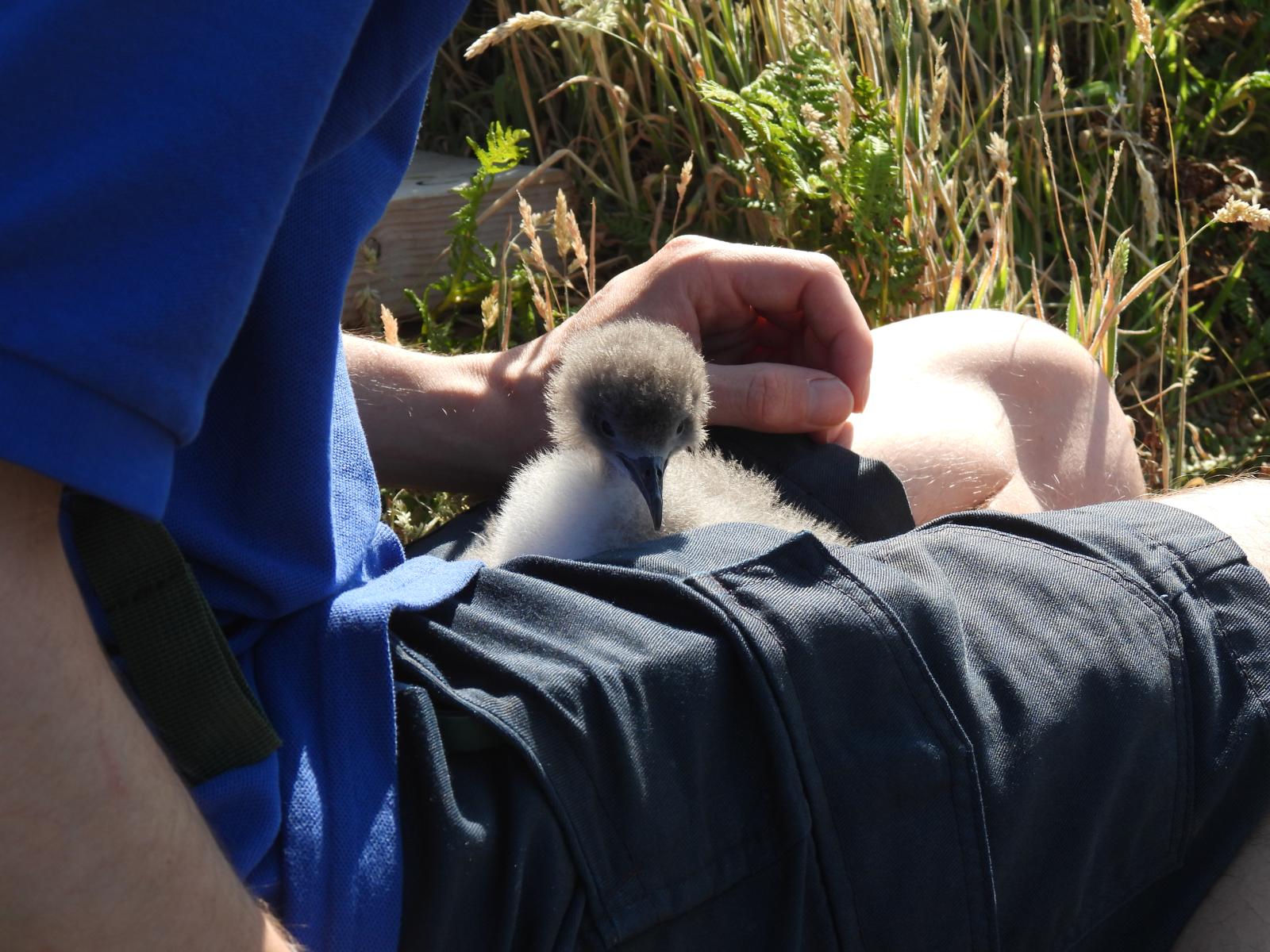 Weighing and measuring our Manx chicks. Jessie
A couple of Sand Martins headed south later and at 10am I gave a walk and talk about Manx Shearwaters, showing guests and staff the cutest and fluffiest breeding birds we have on the island currently. The chicks are growing well and it was a surprise to find a further chick had hatched. A nest we thought had failed, turned out to be a success! Having an expected hatch date of the 22nd June, it is certainly a 'late one' though not 'too late' in the shearwater world. It is so great watching them grow and to be in the company of people who love the Shearwaters too! We really feel privileged every time. On our way back, a seemingly slight passage of Swifts was ongoing with some coming a few metres in front of the face! More came through later which was nice.
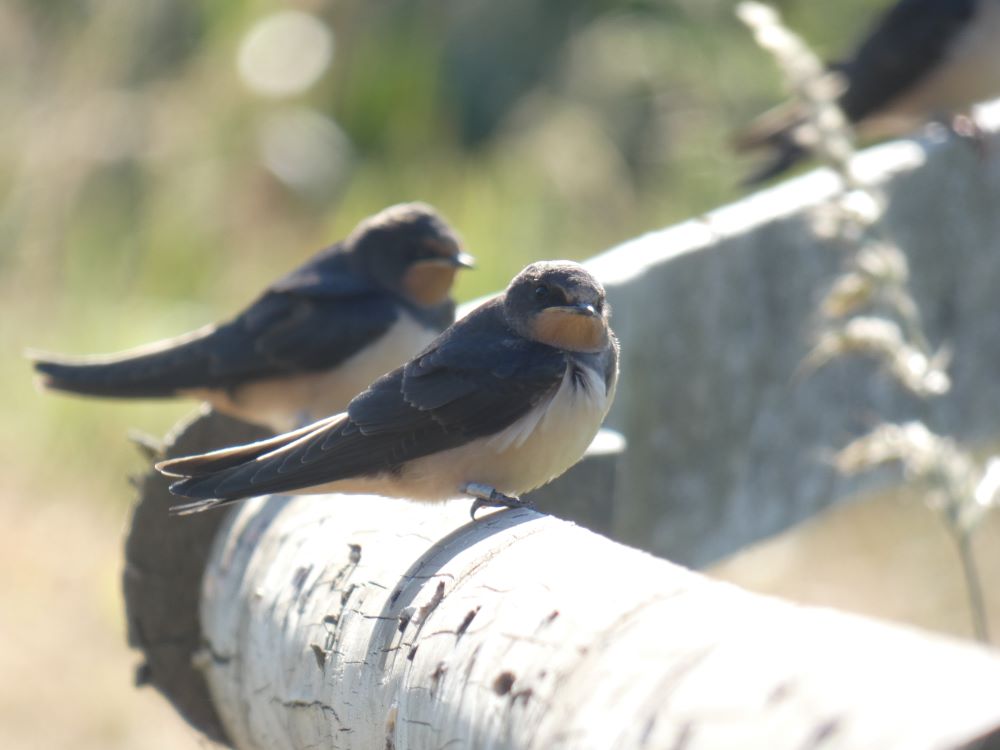 Governement brood were the 2nd to flegde this year, with another four active nests. Thomas Weston
Gathering a team together after some lunch we checked on our Swallow broods. With fine weather and adults happily feeding, we manged to ring two broods whilst another brood were too small to ring, whilst the final pair were on eggs. This means we have had at least 6 broods of Swallows this year, a high in recent times!
Back to the office for admin and catching up on emails before an evening of blog and log later!
11/07/2026 – Quiet Cliffs
By Emma Abel
This morning Greg headed out to monitor the Guillemot plot and arrived to a slight surprise. The ledges that have been so chock full of birds were almost entirely empty. Now, this is the time of change in the seabird world as the chicks have been fattened up with Sand Eels over the last couple of weeks and are ready to make the treacherous jump down into the sea and begin their final development into an adult out on the open ocean, accompanied by their father. Therefore, the sight of just one single chick left on the plot should have been no surprise, but it was still a shock to have such a visual reminder that the season is coming to an end. Now it is time for autumn migration to begin!
 A very empty Guillemot ledge by Greg Lee
Over on the east coast, Jessie was counting the Fulmars at Gannets' Rock where they saw the first couple of downy chicks appearing on the ledges. They were also accompanied by a young Peregrine getting a good look at both Jessie and the Fulmars. Today was a good day for spotting Peregrines across the island as many adults were out with their fledged young, their distinctive calls even being heard from the office in the village! Eleanor spotted a group of four over at the Quarry later in the evening.
 Juvenile Peregrine at Gannets Rock by Jessie Dermody
Another raptor sighting was from Thomas, who spotted a possible Hobby chasing the Swallows and Swifts over Barton Field. Unfortunately, there was quite a glare off the sea to get a definite ID; thinking initially that it was a Peregrine, he then noted that it was quite small and was being mobbed by the hirundines – a common sight when Hobbies are around. However, it may have been a young Peregrine trying its luck with the Swallows.
As the auks are rapidly disappearing from the cliffs, we decided to head to Jenny’s Cove this evening to see if we could glimpse any jumplings in action. It was a beautiful clear evening with the cove bathed in the golden light of the setting sun. Puffins were looking extra beautiful scattered down the grassy slopes and suddenly more visible on the large rocky face where they are often hidden among the Guillemots. A usually cacophonous section of coast, the cliffs were strangely quiet tonight. Instead of the constant gargling noises of the adults, the loudest calls came from chicks, a distinctive high pitched squeak that in some cases echoed all the way up from fledged chicks in the water down below. We managed to spot one Razorbill chick with its father, that had already made most of its way down to the rocks near the base of the cliff, when they both jumped into the water and swam off together into the sunset. A couple of Great Black-backed Gulls were also on the prowl, the remaining chicks extra vulnerable without the safety of a full colony.
 A sunset auk watch at Jenny's Cove by Greg Lee