


By Emma Abel
Today a team from Buglife came over to train up the conservation team in surveying the Lundy Cabbage for presence of the Lundy Cabbage Flea Beetle. This species is well-renowned for being the only endemic species reliant on another endemic species in the UK, requiring the Cabbage for all of its life stages. Starting in Millcombe, we looked for specimens of Lundy Cabbage, many of which had the distinctive damage to the leaves caused by the rare beetles. Once given a brief talk about the key features of our target species, mainly the bronze colouration to the body and powerful legs for jumping, we were ready and armed with sweep nets and hand lenses. As Lundy Cabbage is such a rare plant, we carried out this survey technique with permission granted to disturb the plants, using careful sweeps to not damage them.
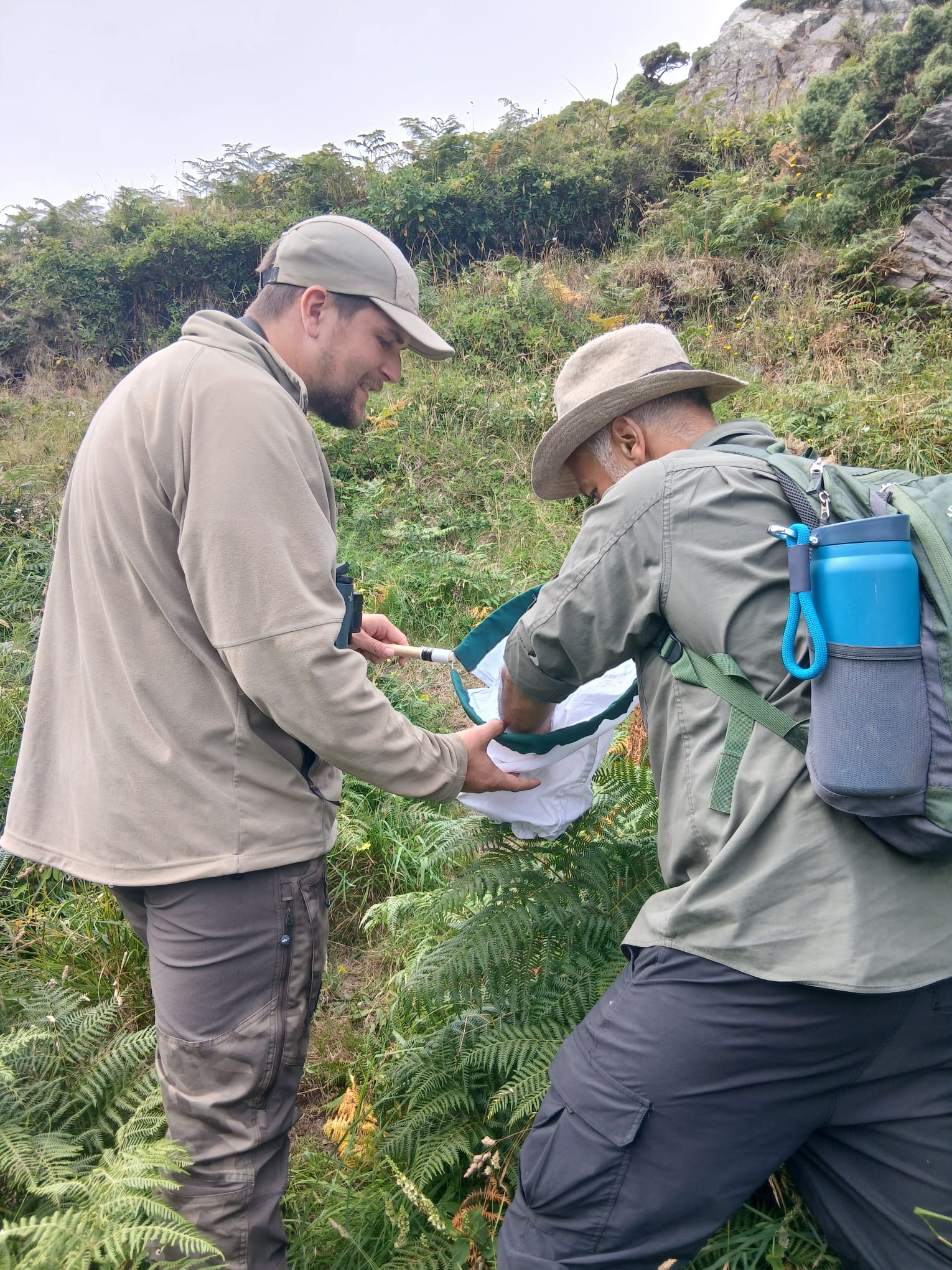 Sweep Netting Lundy Cabbage by E Abel
It didn't take long for a beetle to be swept, though this was a different species, with a distinctive "go faster" stripe going down the body. Rather incredibly though, it wasn't a net that delivered the first Lundy Cabbage Flea Beetle, but the sharp eyes of Greg, who spotted one going under a leaf on one of the cabbage plants. However, as the specimen was potted up and an attempt to transfer it to a smaller pot was undertaken, the beetle showed why it has flea in the name, and pinged itself with a mighty jump into the ether. The next beetle to be found was another of the flea beetle species that could be confused with our target beetle, with a more blueish black body. What followed was a very successful session, with double-figures of the beetle being found by the Conservation Team, and after finally getting the hang of transfering into pots, we all got great views of this rare beetle. Tara and Chloë got to use an extendable net pole, increasing the reach of our cabbage sweeps, using the pair-sweep technique for maximum reach. The only temporary distraction from the birds was the lingering Great Spotted Woodpecker that caught Greg's ear. Over the summer, we hope to continue to survey the plants to get a further insight into the population and movements of these exciting insects.
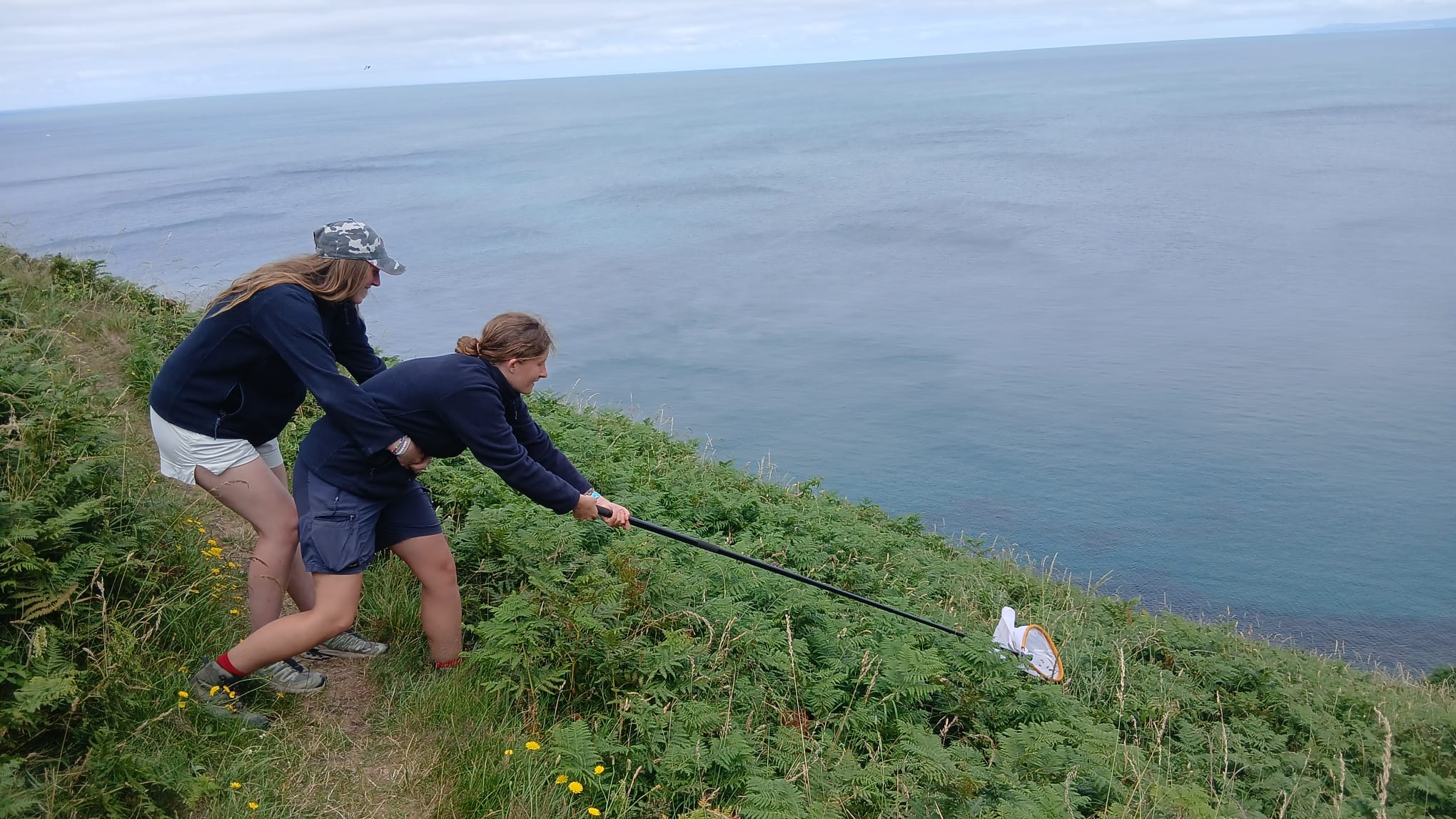 The joys of an extendable net pole by E Abel
Elsewhere around the island a visiting group of ringers were having a successful time out finding Shag nests for a colour ringing project. Along with very fuzzy but stinky Shag chicks, they also found Herring Gull chicks (possessing a similar odour) and some Razorbill chicks.