


By Greg Lee
A warm day beckoned and it was another check of the Guillemot and Kittiwake plots at Aztec Bay. It feels quite exciting every day to see a reduction in the Guillemot numbers as chicks fledge and adults leave the ledges where they have been packed in like sardines for two months, if not more. Some of the Kittiwake chicks are now looking quite nice and large, with the rather smart juvenile plumage coming through, with lovely dark carpal bars contrasting with the grey mantle, smart black tailbands and black neck collars. However, some still remain fluffy and small. It wasn’t all rosy however, as it was clear that something had been predating some of the Kittiwake nests with a couple of nests that once held chicks being empty, with a rather despondent-looking adult stood on top. I suspect that the Ravens or large gulls have been making use of this easy food source. Perhaps Kittiwakes should think about taking a leaf out of an Arctic Skua's book and be a bit more vicious in their nest protection. They could also learn a thing or two from some of the Terns! Still, life and death are a large part of seabird colonies and it isn’t an easy place to live... We’re just lucky on this island to witness some of the dramas that unfold every season in our seabird 'cities'.
Heading back to the Village after my plots, I then spotted yet another Red-veined Darter, a nice and bright male just north of Halfway Wall. The LFS report for this current year is going to be quite stuffed with records of this dragonfly, just how many are we going to get?!
Later on, it was seabird station and whilst gleefully showing our day visitors good views of Puffins, I was thrilled to see a well-developed chick or 'Puffling' emerge from its burrow, take a small look around, whirr its wings and then dive back into the safety of its subterranean recess. This was my first for the season and hopefully a few more Pufflings should appear before they fledge.
Elsewhere on the island, Hummingbird Hawk-moths are becoming quite conspicuous and both Red Admirals and Painted Ladies are in good numbers, though perhaps not as numerous as the Meadow Browns, with certain areas seeing a cloud of this species fly out with every footstep through long grass. Two Swifts seen streaming over were also counted. With a warm night, we also set the moth trap at the Castle, being treated to another very stunning moon rise, illuminating a long streak of moonlight in the Bristol Channel.
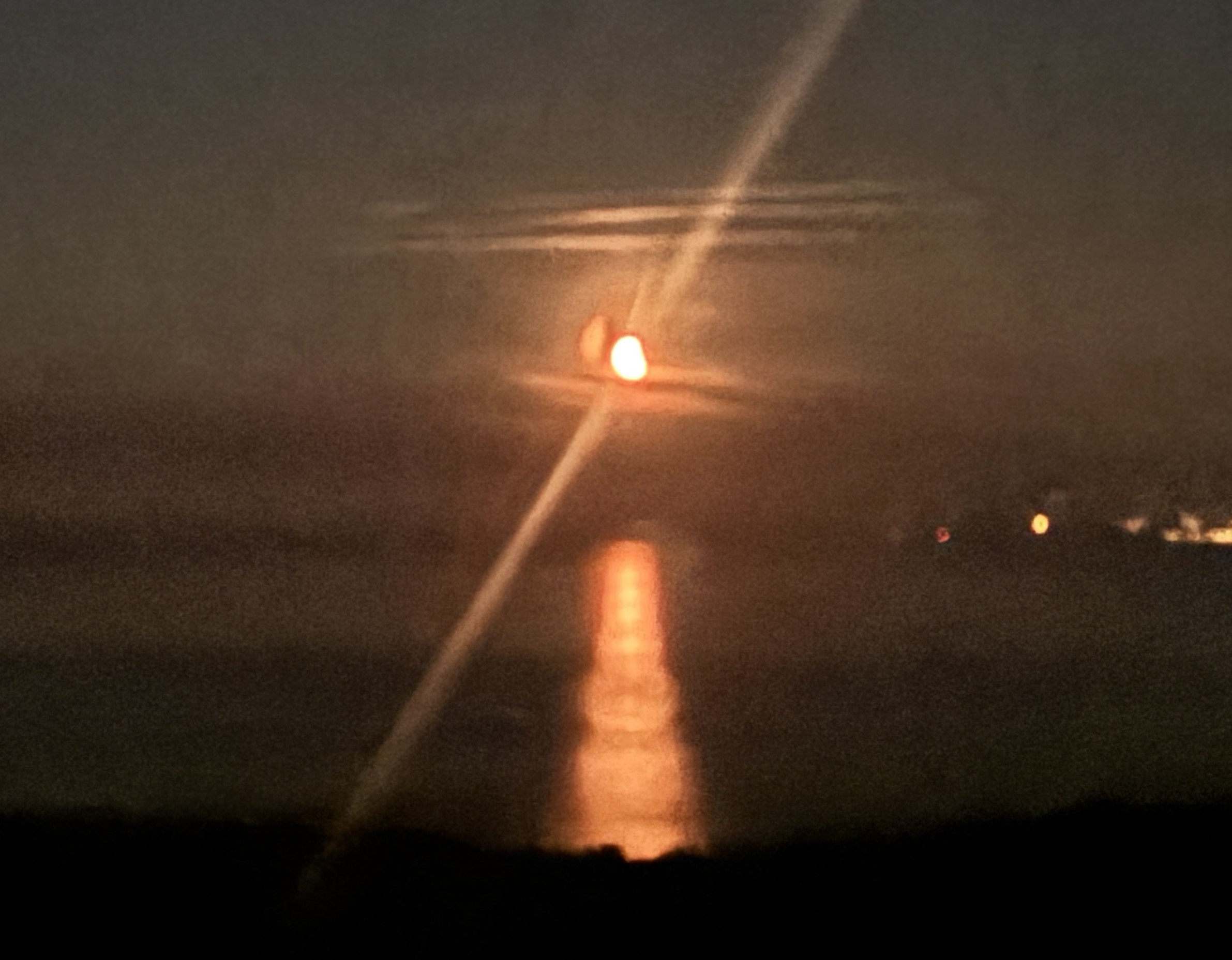 An impressionistic moonrise by G.Lee