


By Greg Lee
A close feeling in the air on census this morning was my first impression of the day with a rolling band of rain clearly threatening on the horizon. A Cuckoo singing in Millcombe and St Helen’s Copse was a nice surprise, though I was unsure if this was the bird I had photographed the previous day. A Garden Warbler singing too could feasibly have been the same bird, but a charming female Redstart was new in as she worked her way up the valley. By the time I had reached the Rocket Pole area, the fog and rain had descended, and this section of census was quiet and very damp, though the island was very much in need of some good rainfall. At Pointless Wall, a few Willow Warblers were hiding in the Gorse bushes but as I approached Quarter Wall gate, I spied a very soggy-looking Whitethroat, that clearly wasn’t a big fan of the rain either but was still feeding along the wall. Another five were also working the scrub along Quarter Wall, with a Sedge Warbler also in the general area. As I headed back to the Village, things started to clear and I was surprised to see two Spotted Flycatchers along the Wall, with another three on the various fencelines along the East, indicating that they may have just arrived with the rain. As I started to encounter other warblers in the village I pondered whether a mid-morning arrival was about to occur, with a British flavissima Yellow Wagtail feeding up on the floor. Two Whimbrels associating with the gull flock near Barton Field were also bonuses to the census and seemed to be quite happy in the area.
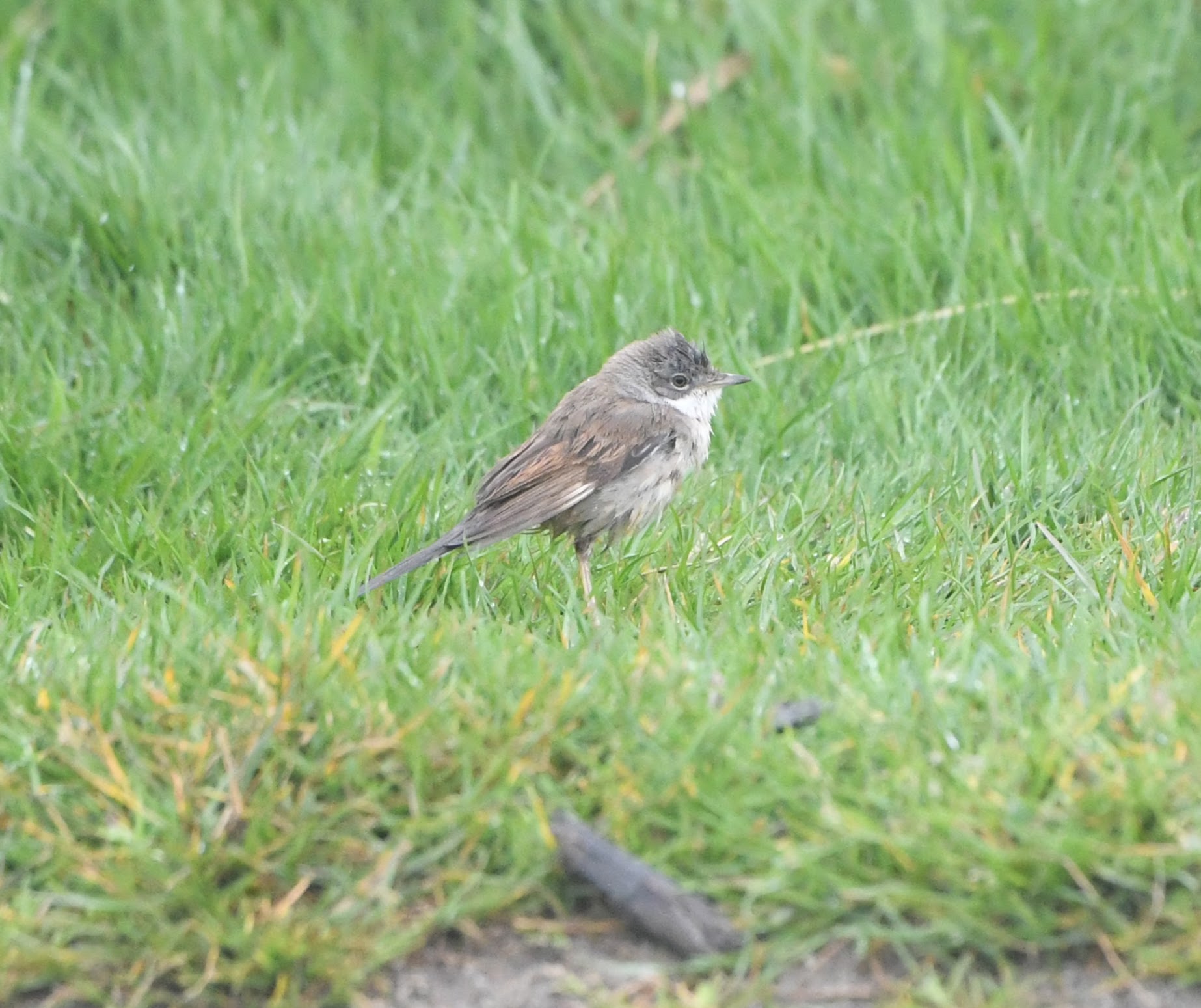 A rather soggy Whitethroat by Greg Lee
Whilst the birds were arriving, we also welcomed a boatload of Devon Bird Club members onto the island, who immediately set about birding the various corners and hotspots. With so much coverage, it seemed inevitable that something would turn up. Since I had a KP shift in the evening, I decided to take it easy after lunch and spend some time back in the Lodge. Since I don’t appear to get mobile signal at all in the Lodge, I said to Emma (who does get mobile signal at the Lodge) if a message came through about anything that seemed unusual, she had permission to knock/pound/kick down my door. Within five minutes of me going into my room, I heard the door to the accommodation swinging open and rapid footsteps approaching my door with Emma exclaiming that an alert had just gone out of a Golden Oriole found along the fenceline in the field behind the church! So, with optics and camera armed we rushed out to the area where a small crowd of appreciative birders were gathered including Tara and Lundy Island cargo co-ordinator Steve. The bird was showing very well, particularly for a species that is more than adept at hiding in the canopy of mature trees, even the luminous adult males, and on Lundy, often favours hiding in Millcombe or one of the East Side Copses.
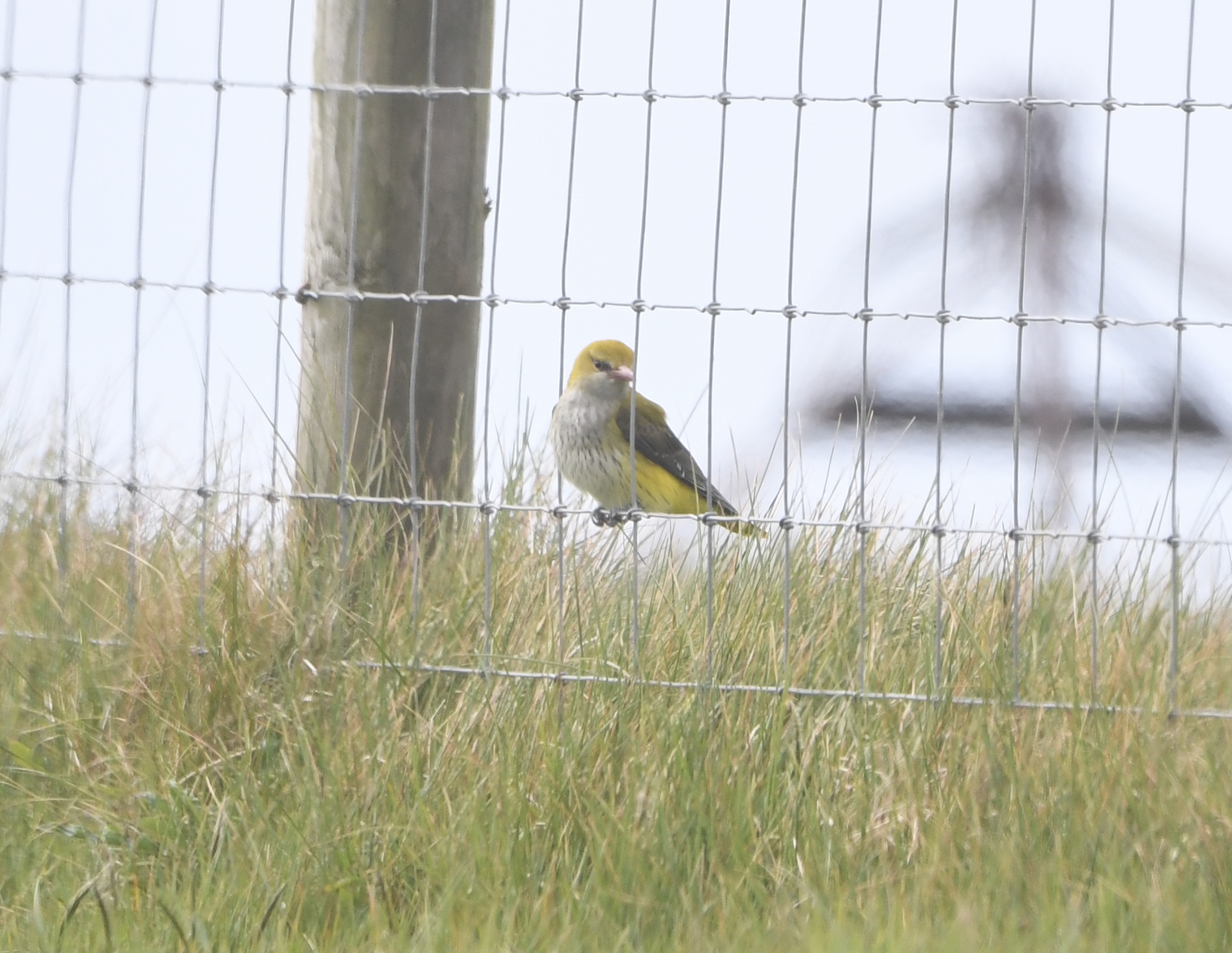 Golden Oriole by Greg Lee
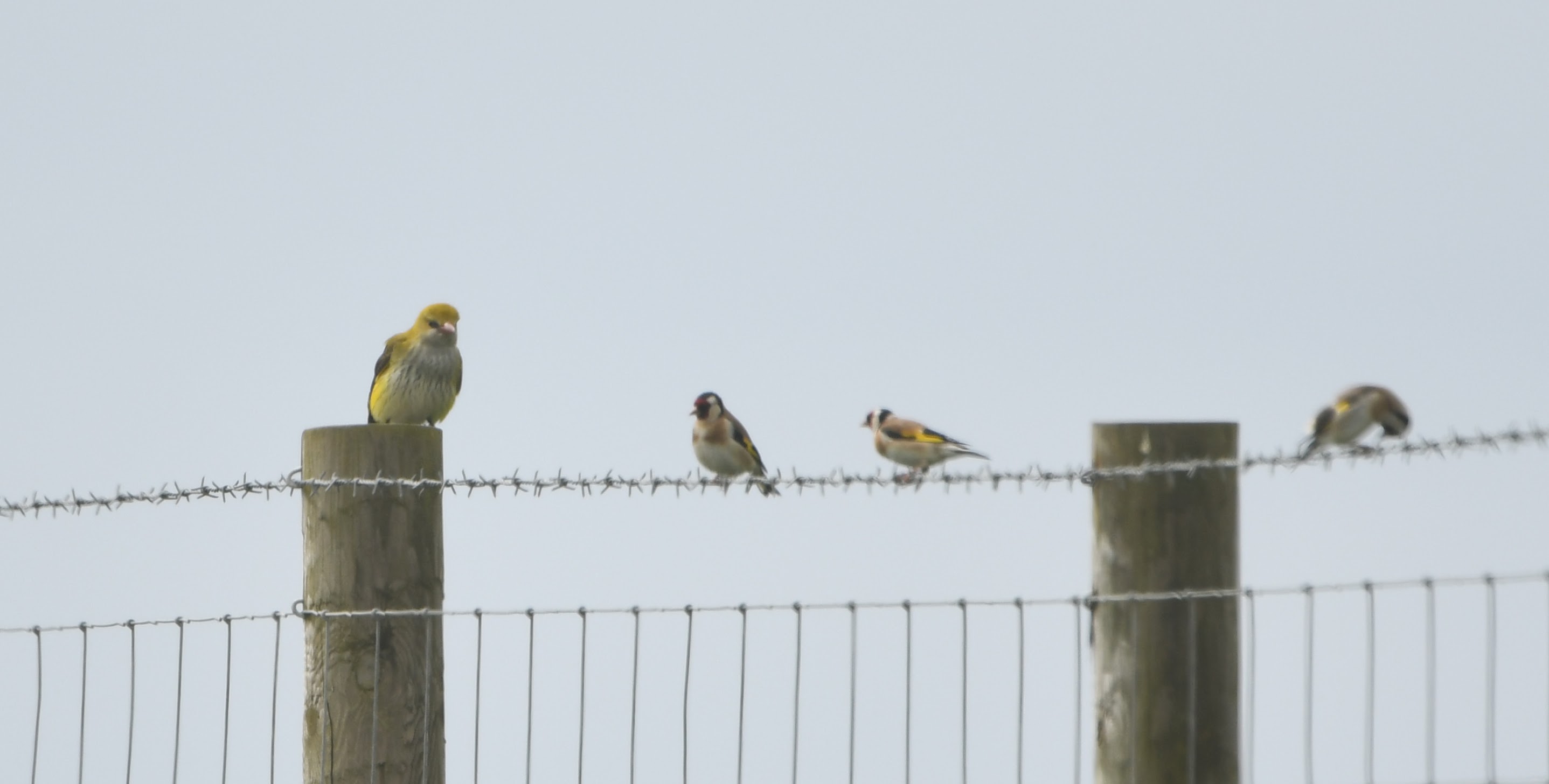 Golden Oriole meets Goldfinches by Greg Lee
Elsewhere around the island, another two Whinchats and Tree Pipits were discovered, and commoner migrant totals included 13 Spotted Flycatchers, 20 Whitethroats and 13 Sedge Warblers. Late evening, with low cloud and forming and a late moon rise, it was decided that conditions were sufficient enough for some night-catching, with two Meadow Pipits caught. However, the whole time it was clear that there had been a big return of Manx Shearwaters with a cacophony of noise all around the island. Perhaps unsurprising as late evening, large rafts of approximately 2500 birds were seen on the flat waters off the Tavern by staff. With a small team over the two hours, 44 birds were processed, with a few new birds and several subsequent encounters.