


By Emma Abel
Today was a glorious day on Lundy.
Last night we set out the moth trap as the night was due to be warm and cloudy – ideal conditions for trapping. We had 21 moths of 6 species, the most abundant species being Brown Silver-line, of which we trapped 9. There were also 4 Bright-Line Brown-Eye, 3 Marbled Coronet, 3 Common Quaker and 1 Garden Carpet. Finally, our largest moth of the day was the Brindled Ochre, a chunky moth suited to coastal habitat, with an amicable face.
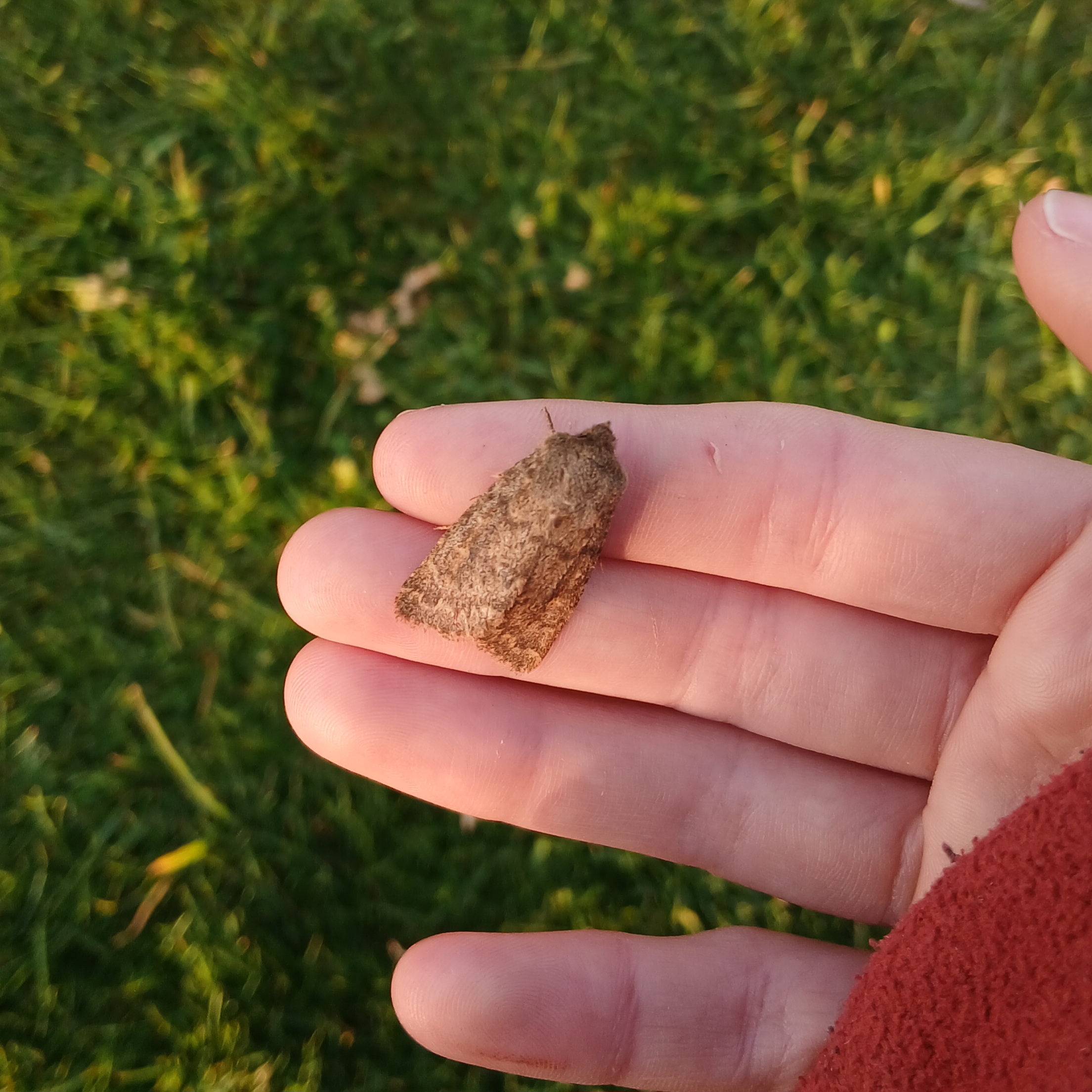 Brindled Ochre by Emma Abel
As it was such beautiful morning, the mist nets were also set up for a bird ringing session, where a good mixture of species were recorded and ringed. One bird stood out the most, which was a Nightingale caught in the laundry garden by PHD students working on the Sparrow project. It was aged as an adult and based on several plumage features, it was confirmed to be a different individual to the one seen yesterday at Quarter Wall. Additionally 5 Sedge Warblers, 2 Blackcaps, 1 Whitethroat, 1 Linnet, 1 Goldfinch, 1 Chiffchaff and 3 Willow Warblers were ringed and 1 Dunnock re-trap.
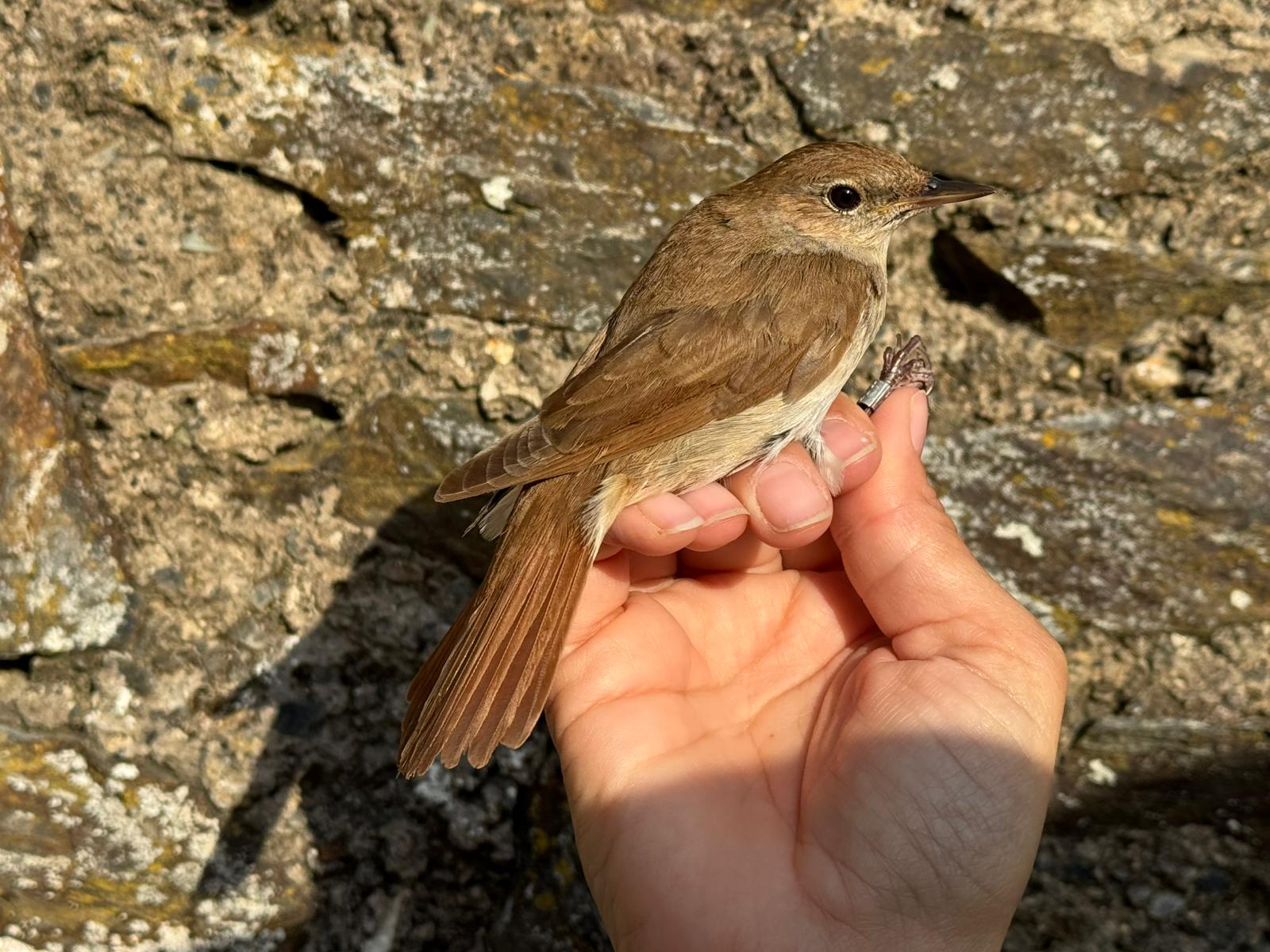 Nightingale
I left the ringers to go to Jenny’s Cove to carry out my Puffin monitoring. The cliffs were much fuller today, which is a relieving sight after last week’s empty shelves during the strong easterly winds. There were 83 puffins on the slopes going in and out of burrows, billing with their partners or just sunning themselves in the morning rays. These are still low numbers for the Jenny’s Cove Colony, and we do hope to see the population increase. The light brown Leucistic Puffin was back on the colony today, prospecting various burrows, most of which seemed to be occupied by existing pairs that did not want company. As for Guillemots, the shelves were very full with an estimated 2000 birds packed in around the cove.
Additionally, this afternoon a female Dotterel was seen at the North End, along with a Lesser Whitethroat and a Spotted Flycatcher at the Terrace.
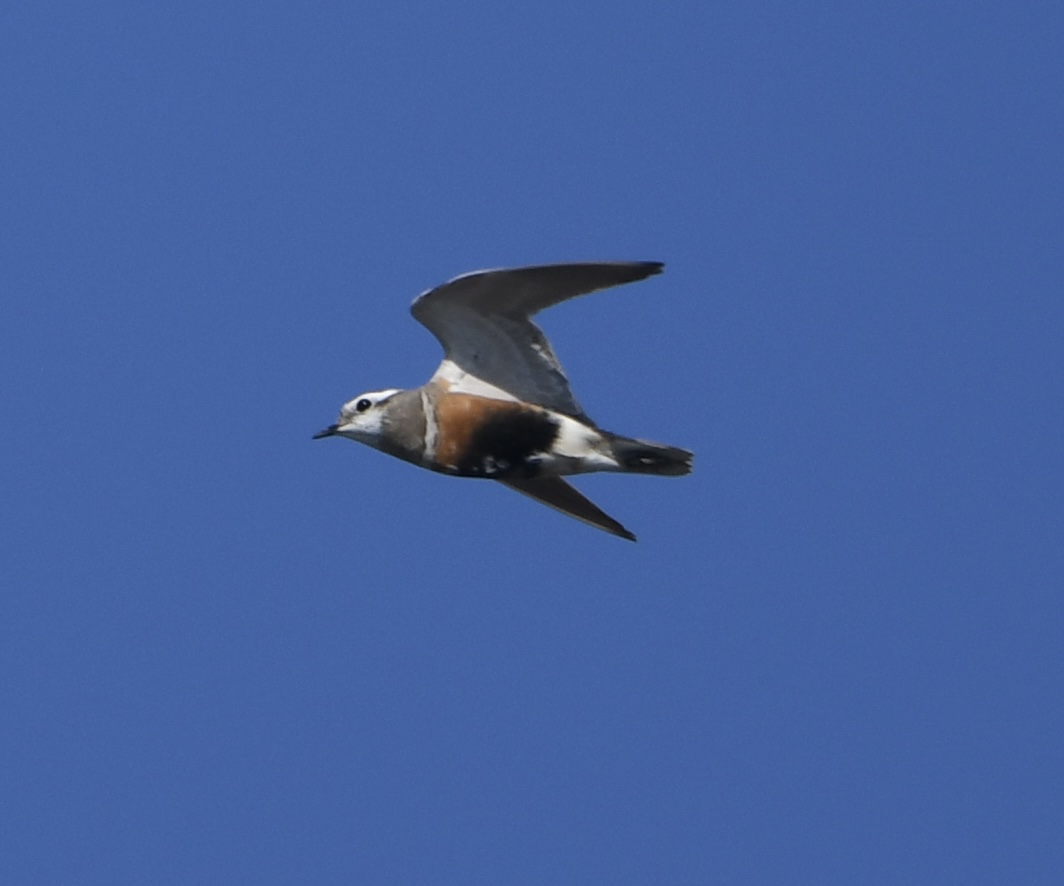 Dotterel by Greg Lee