


By Thomas Weston
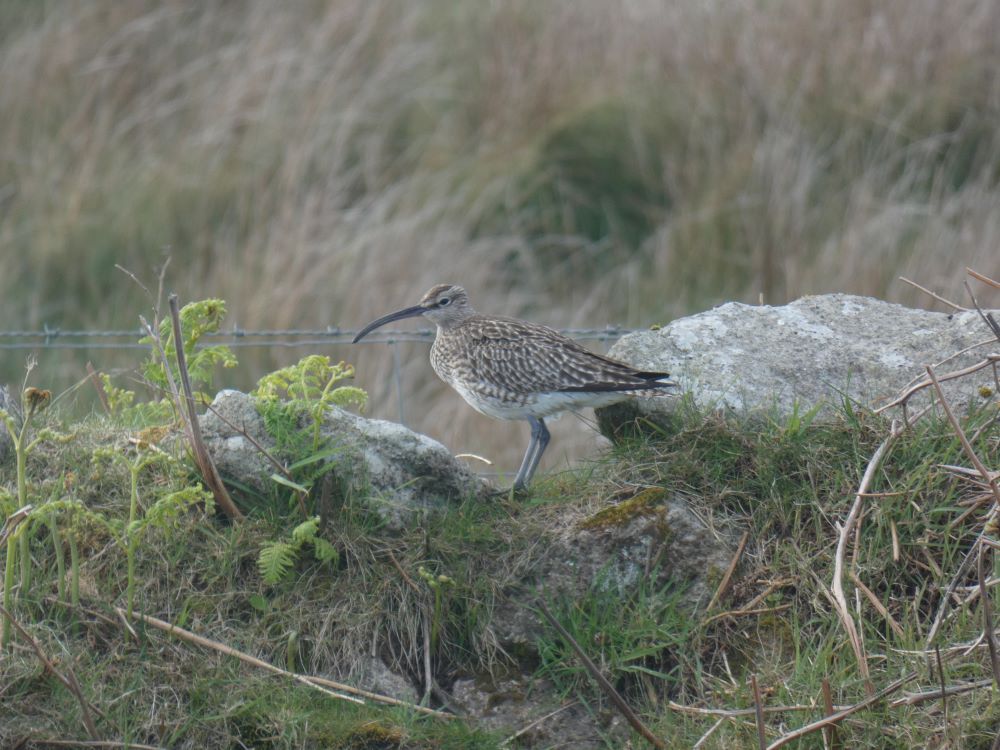 Whimbrel at Quarter Wall © Thomas Weston
The day started cool and breezy, with a brisk north-easterly coming across the island again. Eleanor and I decided to do census, and we started walking into Millcombe. The wind was strong and many of our residents were under-recorded for sure. The local Linnets were the showiest on census, whereas our Goldfinch flocks hid, trying to keep out the wind. Our Chaffinches have started nesting, and it is great to see them attempting to nest in the valley. Swallows darted past, but only a few today, although passage did however pick up as the day went on and about one hundred were seen by visitors. Heading out of the valley, 2 Willow Warblers were heard singing, and a single Blackbird emerged from the undergrowth. Walking to Benjamin’s Chair, the wind direction made for some choppy seas, though our Razorbills and Guillemots were still bobbing around and visiting their nesting ledges whilst Shag, Fulmar and Gannets passed. The three pairs of Raven were spotted across the route, the youngsters today remaining hidden out of the wind. Herring, Lesser Black-backed and Great Black-backed Gulls were recorded throughout census, with the former totalling over 170 birds. The migration ‘line’ across the island led to an alba wagtail, a Ringed Plover who flew low North over Stoneycroft accommodation, and 2 Swifts following behind. A couple of House Martins were the last ‘visible migration’ birds seen heading north past Old Light, whilst in the bushes a single Spotted Flycatcher flew to the nearby wall and hid, sheltering. The Airfield was very blustery, though our Skylarks were still in full voice. A Whimbrel at Quarter Wall Gate hid amongst the sedges, though was seen walking along Quarter Wall at one point! Not liking the male Kestrel who managed to catch a Meadow Pipit in mid-air over Brick Field.
Arriving back into the Village and the afternoon was spent completing some Bird Observatory admin, inputting the recent ringing activities and making sure all our rare bird forms of Devon and the UK were written out, ready for submission.
A weak area of low pressure coming up from France led to some dark, cloudy skies despite the full moon. We gave a half an hour talk to a birding group on the island and the team took them out to the cliffs to show them Manx Shearwaters in the hand. We ended up catching five in total, including three new, one ringed at a previous session this year and one ringed in 2024, though this will be confirmed when we input the next batch of ringing records.