


By Tara McEvoy-Wilding
This week is the annual Lundy Cabbage count! For those who don’t know, Lundy Cabbage is endemic to Lundy. It produces small yellow flowers with 4 petals, which are in bloom during late May and early June, with this week being peak. As well as being endemic itself, it is home to an endemic beetle called the Lundy Cabbage Flea Beetle.
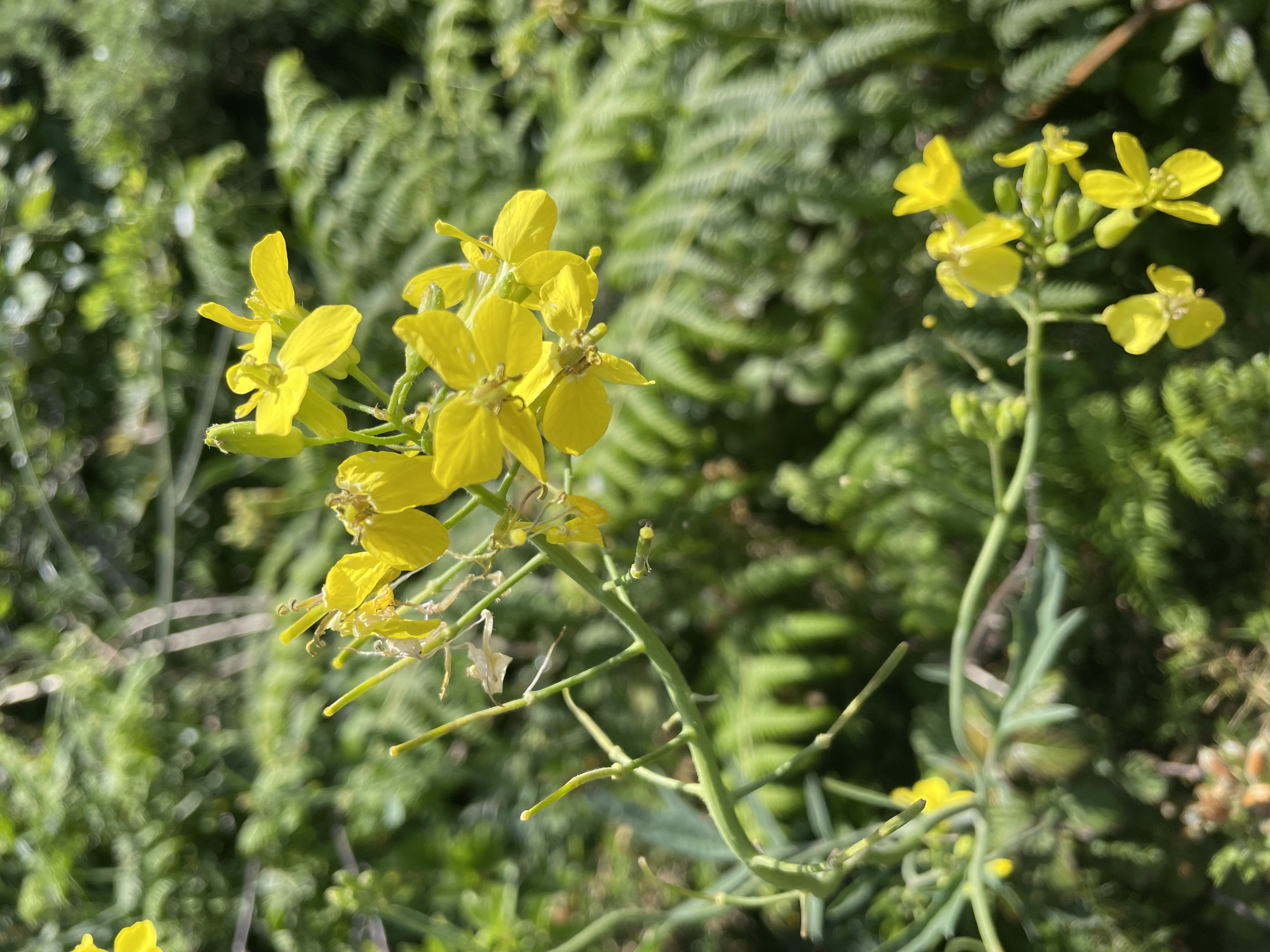 Lundy Cabbage in Millcombe
Lundy Cabbage is hard to count as it tends to grow in hard-to-reach locations such as on steep slopes and cliffs. Because of this, most cabbage has to be viewed from a distance and involves estimating the number of cabbage plants using binoculars and a clicker.
Throughout the week, LFS Chair Bee Cox and myself have been counting cabbage on the east coast of the island from the coastal paths, by kayak and from MS Oldenburg. Hotspots have included the Slopes above the Landing Bay, Millers Cake and the cliffs above Halfway Bay. Today was the last part of our survey where we headed to the Lundy Cabbage’s northern range at Knights Templar Rock and the surrounding rocky outcrops. We counted 68 cabbage plants in this area, which was lots more than last year when only 27 were recorded.
 Simon and Bee counting Cabbage
I spent the afternoon digitalising the data from the cabbage count and adding up the counts from different areas. In total we estimated that there are 5255 cabbage plants, compared to 4127 in 2025. Overall a successful few days!