


Moths again to start the morning and I was joined by Chloe and Emma to take a gander at the goodies. With the colder breeze, it wasn’t as busy as the previous night but there were still some new moths for the year such as Yellow Belle, Shoulder-striped Wainscot and Ruby Tiger. Migrant totals were lower than expected but the westerly breeze may have pushed them further towards the mainland.
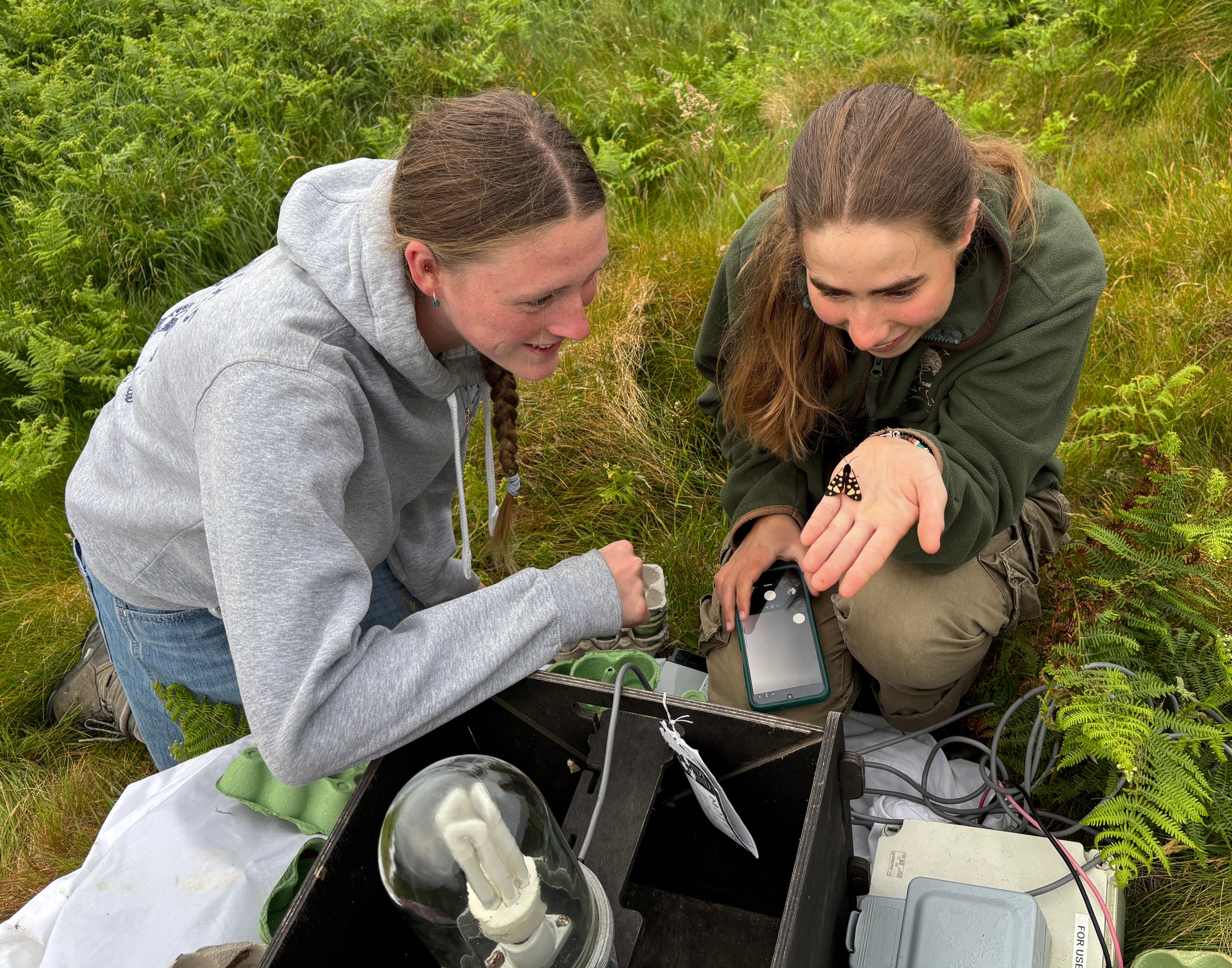 Chloe, Emma and a Cream-spot Tiger
Next, after some needed coffee, it was census, where I reported a low number of arrivals although two Spotted Flycatchers and a Reed Warbler were in Millcombe. Of course, the Golden Oriole made an appearance, though this time, perched up quite nicely in the big trees allowing for my best photos, despite the number of times I’ve seen these birds this month. Near Quarries, a pair of Blue-tailed Damselflies were my first for the year. Once finished, it was time to make use of the sun and grabbed our new pheromone lure to head to Pilot’s Quay, where I was joined by Emma. Sitting at the platform of Thrift at Pilot’s Quay, we put the lure down and were immediately set upon by Thrift Clearwings with 10+ surrounding us. Being the smallest UK clearwing species, it was quite amazing to see so many around the place.
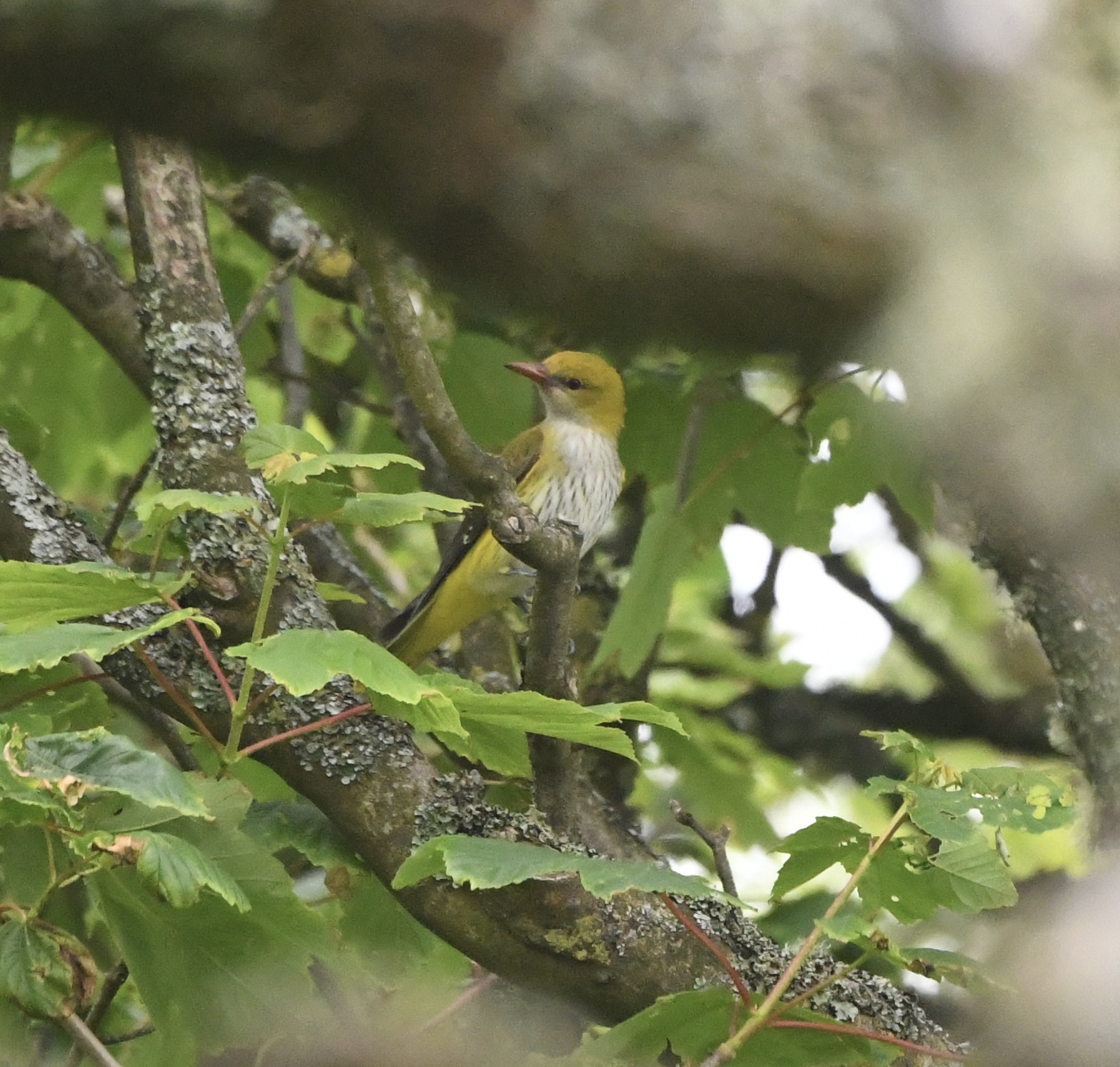 Golden Oriole by Greg Lee
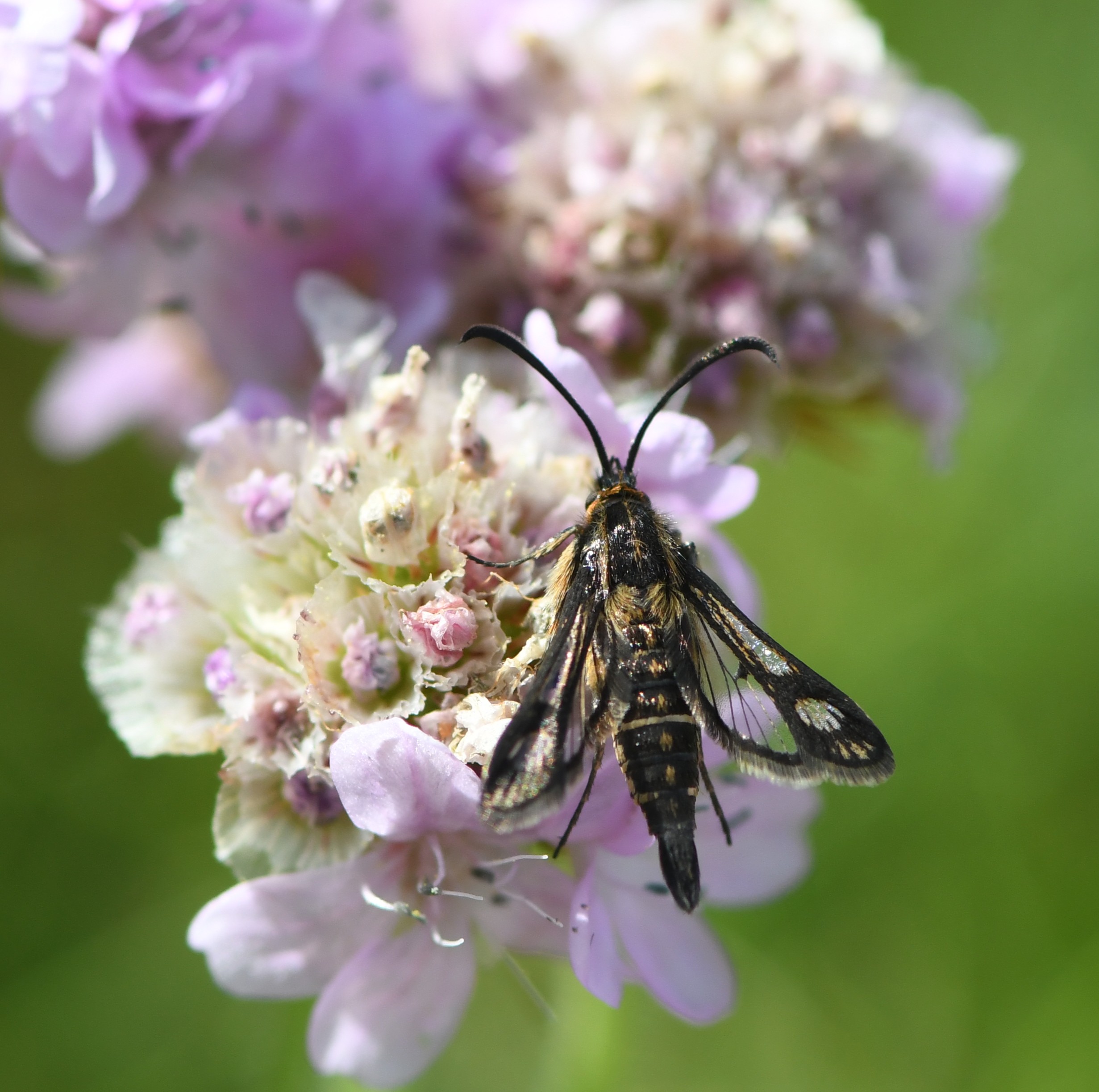 Thrift Clearwing by G.Lee
Later on, I joined Thomas to check the last brood of Starlings near the Vehicle shed, unfortunately, the cavity was quite deep but mercifully two birds jumped into the hands of Thomas, allowing for them both to be ringed.
The main excitement was to come later in the night though. Early last week, on a late-night walk over Ackland’s Moor, I heard a strange, repetitive noise coming from Quarter Wall direction, but on the wind, I couldn’t tell what distance it was and I didn’t investigate further. However, the LFS also heard this noise too on a different night and took a recording. Initially, we thought it may be a Water Rail or even a Moorhen, but something didn’t quite add up. So, last night, Thomas had a listen and expressed his belief that it was certainly not a Water Rail. Then, the penny dropped, the sound appeared to match the call of a female Corncrake! So, I went out to listen with my shotgun microphone in hand. Within just walking up the track on the still night, I could hear the sound blasting way further ahead, a consistent and distinctive noise. It immediately was obvious, it was very crake-like, with the sound continuous for the whole duration of the stakeout. Taking some recordings, I then headed closer to Quarter Wall, with Brick Field having a fantastic area of juncus and lush vegetation, the perfect amount for a Crake. Fortunately, I brought my thermal imager too, which would prove to be useful. Once activated, I had a look at the field, eventually walking the wall I then picked out a small thermal spike in the vegetation which obviously was the head of the Crake, where it was stood calling proudly from its spot and rotating its head to project its call. Once having collected sufficient recordings, I headed back to the Village. This is the first live record of a Corncrake on Lundy since 2004, with two dead birds being found in the autumns of 2006 and 2011.