


By Lucile
Hello,
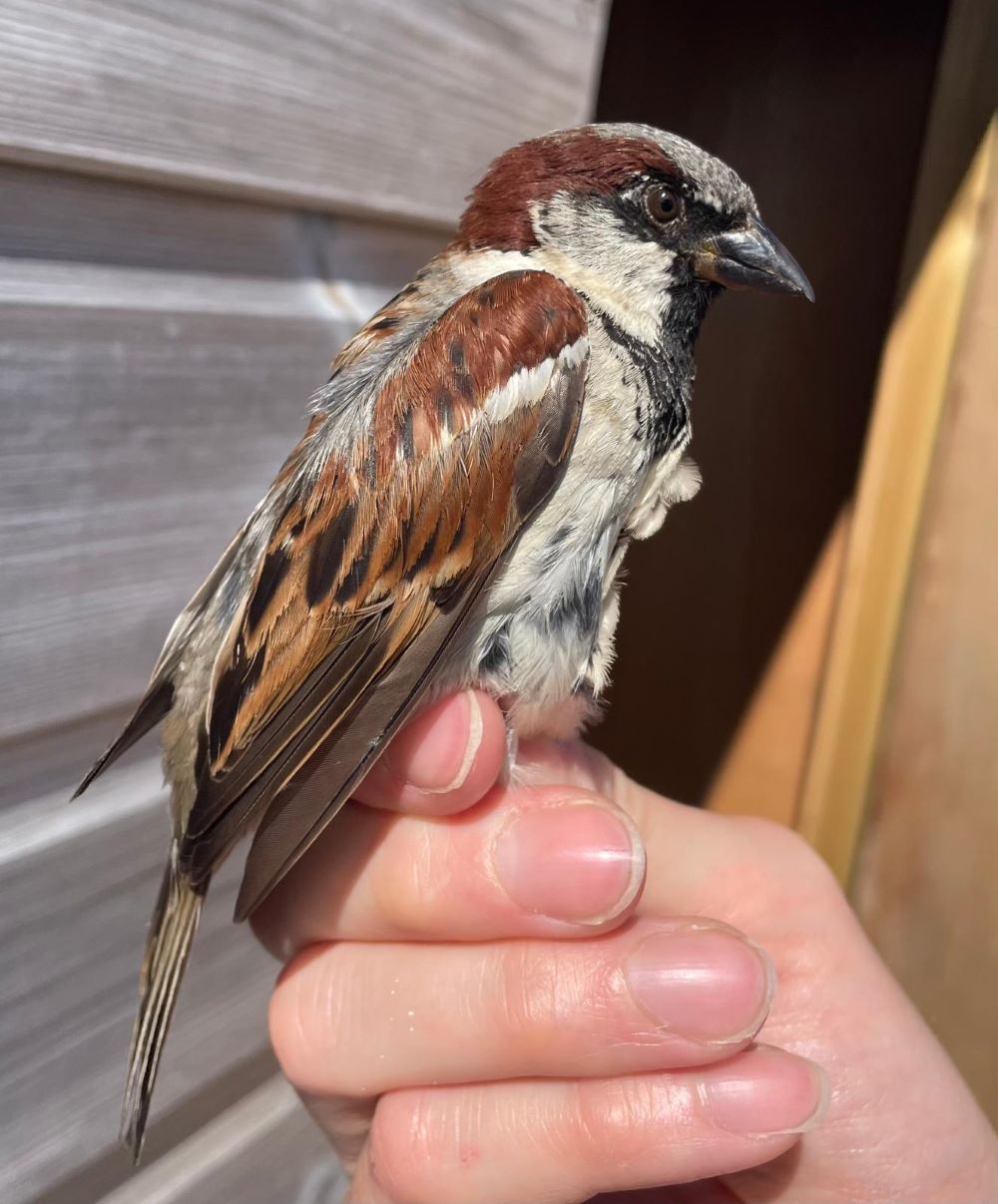 House Sparrow in the Village, ringed 9 years ago!!! Pic by Thomas Weston
I am Lucile, a new Phd student working on the Sparrow project. I come from France and do my studies between Taïwan and Lundy Island. I studied Neurosciences and Ethology in Toulouse (France), and finished my masters in Cornwall, studying the social environment of wild Jackdaws. I am extremely grateful to now study the influence of the social and ecological environments on the cutest individuals: the House sparrows (Passer domesticus) of Lundy Island !
House sparrows are socially monogamous species, meaning they form a pair bond with one unique partner during a breeding attempt. However, both males and females tend to reproduce with partners outside of the pair, which is called extra-pair mating. There are clear benefits for males to do so: with countless reproductive cells, they can increase the number of offspring with multiple mating. Females, however, invest in fewer reproductive cells, and they will lay a limited number of eggs. Mating with other partners therefore won’t increase the number of offspring they produce, and they will even suffer from reduced paternal care if their paired partner suspects cuckoldry. So, why are they doing it?
You might think that females cheat with males of higher genetic quality than their social partner, or with more compatible ones, to secure better genes for their offspring to inherit. These hypotheses, respectively called the good genes hypothesis and genetic compatibility hypothesis, have been widely studied across five decades of research. They surprisingly hold rather inconclusive results, with cheating females sometimes doing better, sometimes doing no better than faithful ones of the same species (sometimes even in the same population, as seen in blue tits).
Numerous factors might be in action to modulate extra-pair mating patterns, with the outcomes of cheating being actually context-dependent. For instance, mating with different males — thus increasing genetic diversity in the brood — might be adaptive in a fluctuating and unpredictable environment, allowing for at least part of the brood to survive. Genetic diversity might not make a difference under a favourable environment, in which anyone will have a high chance to survive.
The social environment could also make a difference! Group-living species tend to feed together with conspecifics (one example among other activities). Just like humans, they will associate more often with specific individuals, with whom they might eventually get more familiar. They will feed more often with specific “friends” than with others. It is possible that they associate preferentially with efficient individuals, with whom they find more food, for instance. In tit species and in corvids (and probably a lot of other species) information about a new source of food is easily spread between close associates. Therefore, there are many subtle reasons to benefit from associating with efficient foragers. Such social bonds in birds have only recently been studied, but it has already been observed that individuals mate or extra-pair mate with their closest “friends” (seen in blue tits). Could it be because females can assess their quality and select more performant males as their close “friends” / future extra-pair partners ? Lots of questions are still to be resolved! Could females cheat because it would allow for a higher diversity of offspring surviving in different environmental conditions to come? Could cheating with closest friends hold benefits that are still unexplored? This is a very exciting adventure to contribute to solving this mystery.
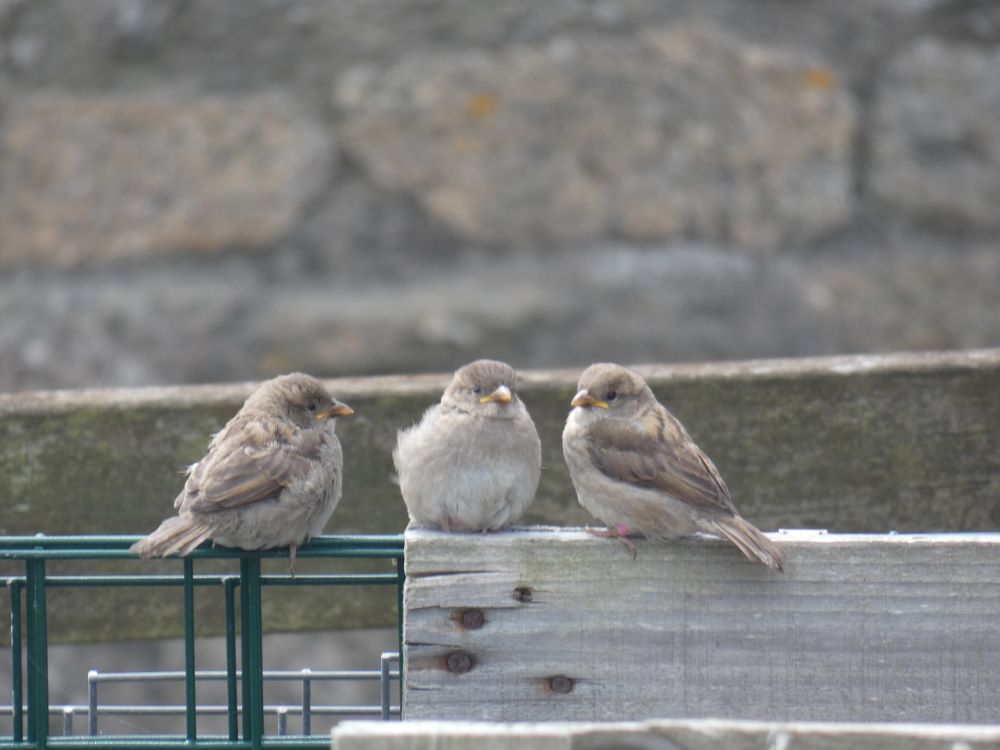 Fledged House Sparrow chicks in the Village by Thomas Weston
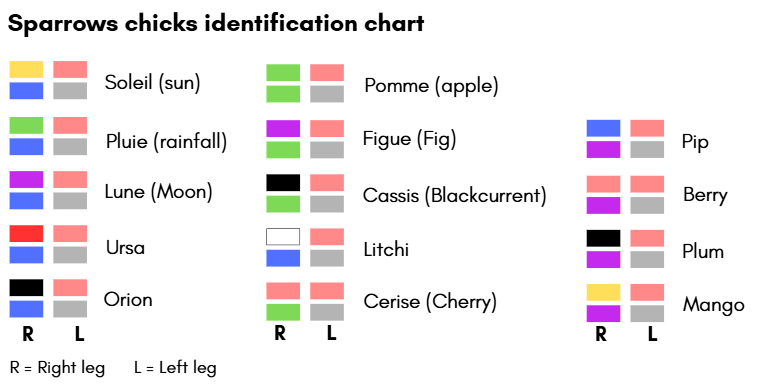 Our 2026 Colour ringed chicks created by Lucile
The Lundy Sparrow population is quite low at the moment. We have 4 broods so far, two of them having fledged already. If you see a juvenile, you can look for the rings: the left leg has a pink and a metal ring. On the right leg, the bottom ring indicates from which brood they come from:at the moment, it would be green, blue, or violet. Green brood chicks are named after weather elements, blue brood chicks are named after fruits, and violet brood chicks have been named by bird volunteers. The 4th brood will hatch soon! Hopefully they will do well and help the population thrive again. One little trap: pink metal (left leg) and blue pink (right leg) is an adult female named Fleur, she is not a juvenile.
If you want to discuss anything about sparrows, feel free to reach out! It is always very nice and interesting to hear when you see them.