By Lucile Doyen
Today started on the middle of a cliff, under the sole light of two red head lamps and a light drizzle. It was around midnight. Gaya was recording Manx Shearwater responses to different conspecific vocalizations, with an interval of 30min between each playback to reduce disturbance. The two birds she targeted produced no response, and we wondered if we had spent two hours recording empty nests under a sky that threatened to show us what British rain is like. This is part of science ! The silence of the Manxs was soon broken by a good amount of them enjoying the bad weather conditions to come back on the Island, and we probably saw 30 of them flying around in the last 20 minutes on site. It reminded me of the first night I joined the team of ringers to catch Manx on this cliff, one of the most beautiful of my life. The sky was full of birds and stars that night. Walking on the cliffs was intimidating at first, but the presence of all group-members and learning more about Manx ageing and sexing from Thomas made it a most wonderful memory.
One of this year's youngsters by Lucile
Later in the day, when the sun was up, I checked our little House Sparrow nestboxes. We have two second broods on the Island, from parents whose first brood fledged around two weeks ago and that haven’t changed partners ! Something to note : During three days, one of these broods had a unique surprisingly small egg. House sparrows usually lay one egg per day and start incubating after the full clutch has been laid. As this egg was warm and so alone, I was wondering if this clutch had met its limits already. However, this morning, there was a second warm egg in the nest. My fingers are crossed for them to make it. In total, we can now count 29 adults, 22 known juveniles, and 6 eggs in incubation, distributed in two nests. The next time I will check the nests will be in four days, with hopefully some good news to write !
It is a small population, but there are also advantages in that : you get to know every individual, which is useful for individual recognition. You can quickly tell if juveniles spotted together are siblings, recognize which male is calling given the location and the behaviour, and remember when a bird has been trapped for the last time, which facilitates an immediate release if it has been processed recently and prevents avoidable stress.
An adult male Chaffinch caught and processed in the Village by Lucile
While parents peacefully incubate, I will spend three days ringing wild adult jackdaws on the Cornish Jackdaw project. I was fortunate enough to gain experience with House Sparrows, Starlings, a Mallard duckling and a Chaffinch this week, and I am eager to learn more on bird processing with one of my very favourite species! On my way to the boat, I had a nice little walk under a warm sun, and could hear some eurasian Wrens, Goldfinches, House Sparrows, a Blackcap, and, closer to the sea, some Oystercatchers. A wonderful Meadow Brown did a good part of this little walk, flying around and landing every few seconds. It was soon time to board the boat, and as we distanced from the sea, I thought about the little House Sparrows that I won't see for three days. My heart felt a bit heavier. They are very smart birds — anyone trying to trap a bird at its nest would attest to it, but they will never know that they all have a name nor how loved they are.


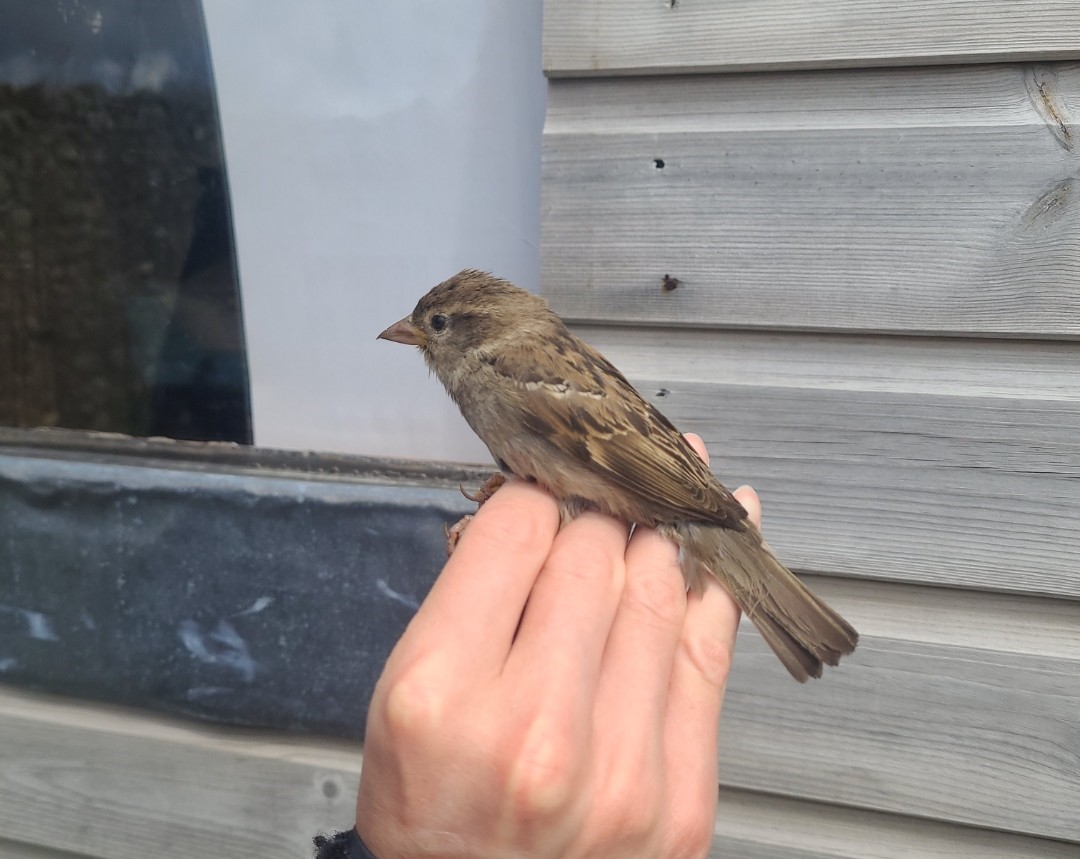 One of this year's youngsters by Lucile
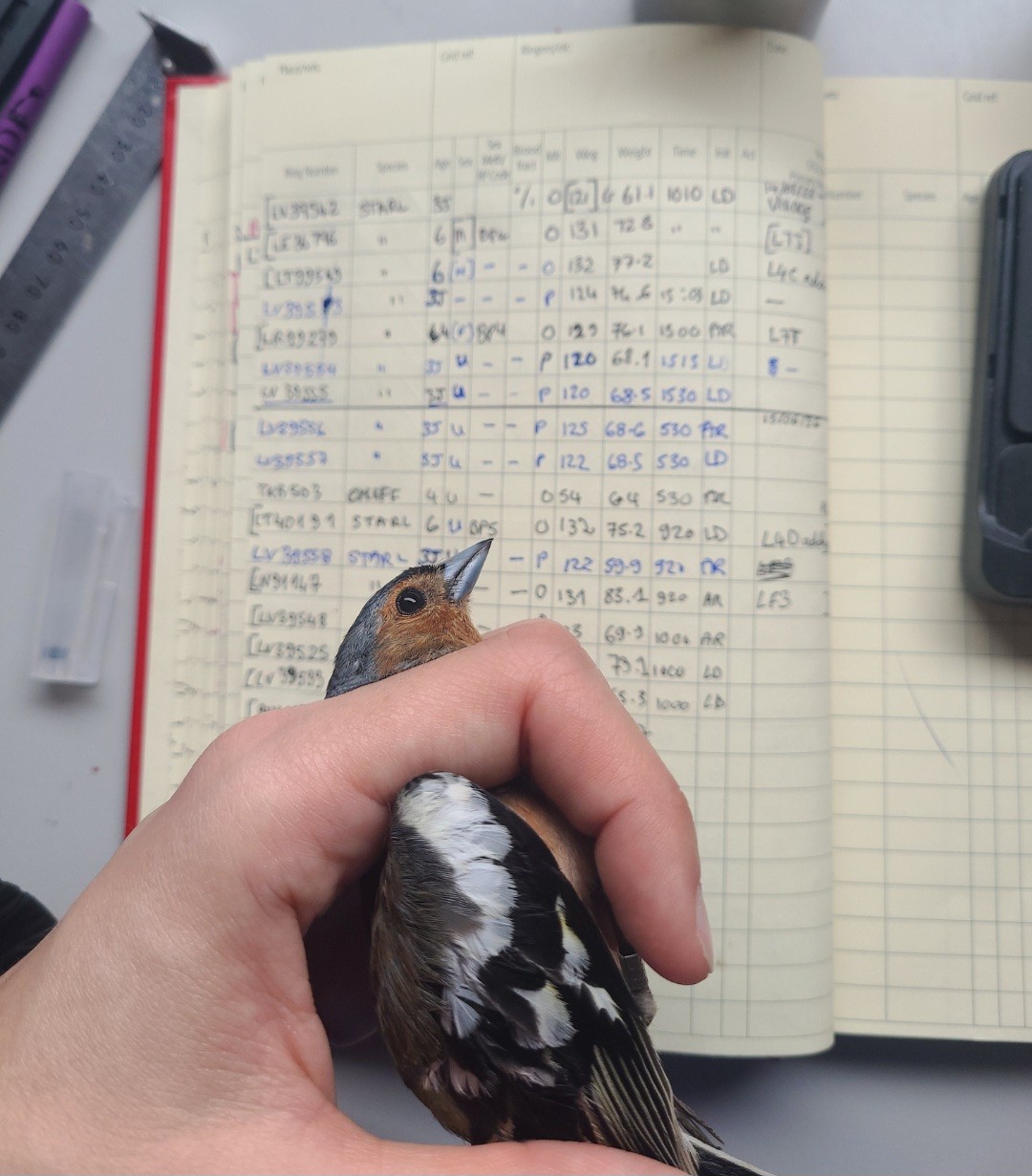 An adult male Chaffinch caught and processed in the Village by Lucile