


By Greg Lee
The first settled day for what seems like ages. As a result, I was quick to head out and do an early morning patrol on census joined by Emma. Although migration is nearly over (for the timebeing), the patrols at the moment are certainly full of life with plenty of young birds to be enjoyed. Noisy brown Starling chicks squawk at and follow their parents all over the place, young Goldfinches lacking the red facial colours of the adult birds flit in the sycamores and streaky, young Linnets seem to be in every bush! Meanwhile, other birds were still on parental duties with Blackcaps, Chiffchaffs and Willow Warblers seen carrying food to their fledglings. In the meantime, our Millcombe Spotted Flycatcher pair were taking advantage of the drop in the wind to flit out and snatch insects on the wing. Our well-known Song Thrush is still going strong too, though the repertoire seems to have stalled, with passage waders being a firm favourite. Over on the Airfield, a female Mallard with a brood of nine small ducklings in tow, waddled into the thick Bracken and disappeared.
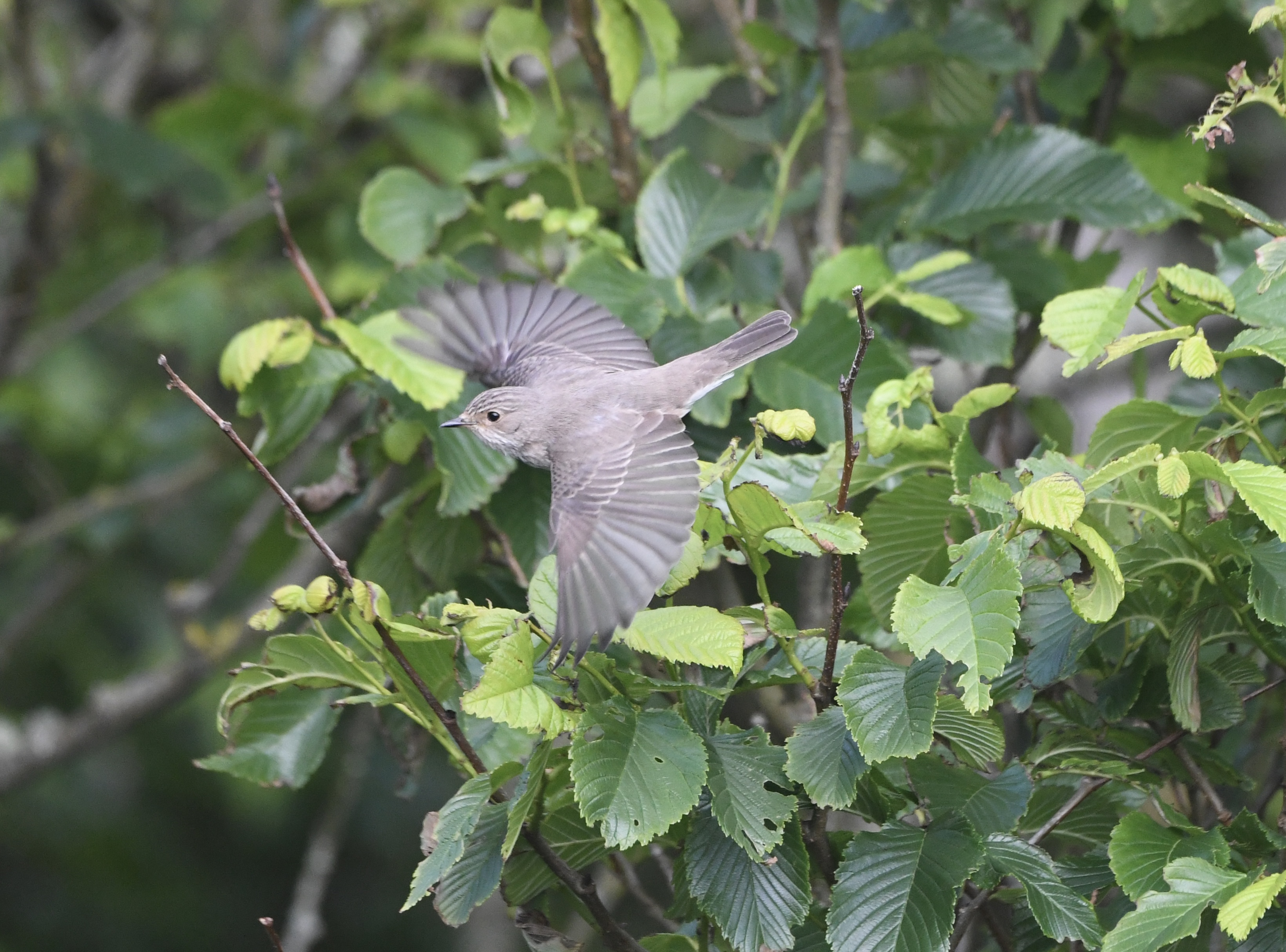 Spotted Flycatcher by G.Lee
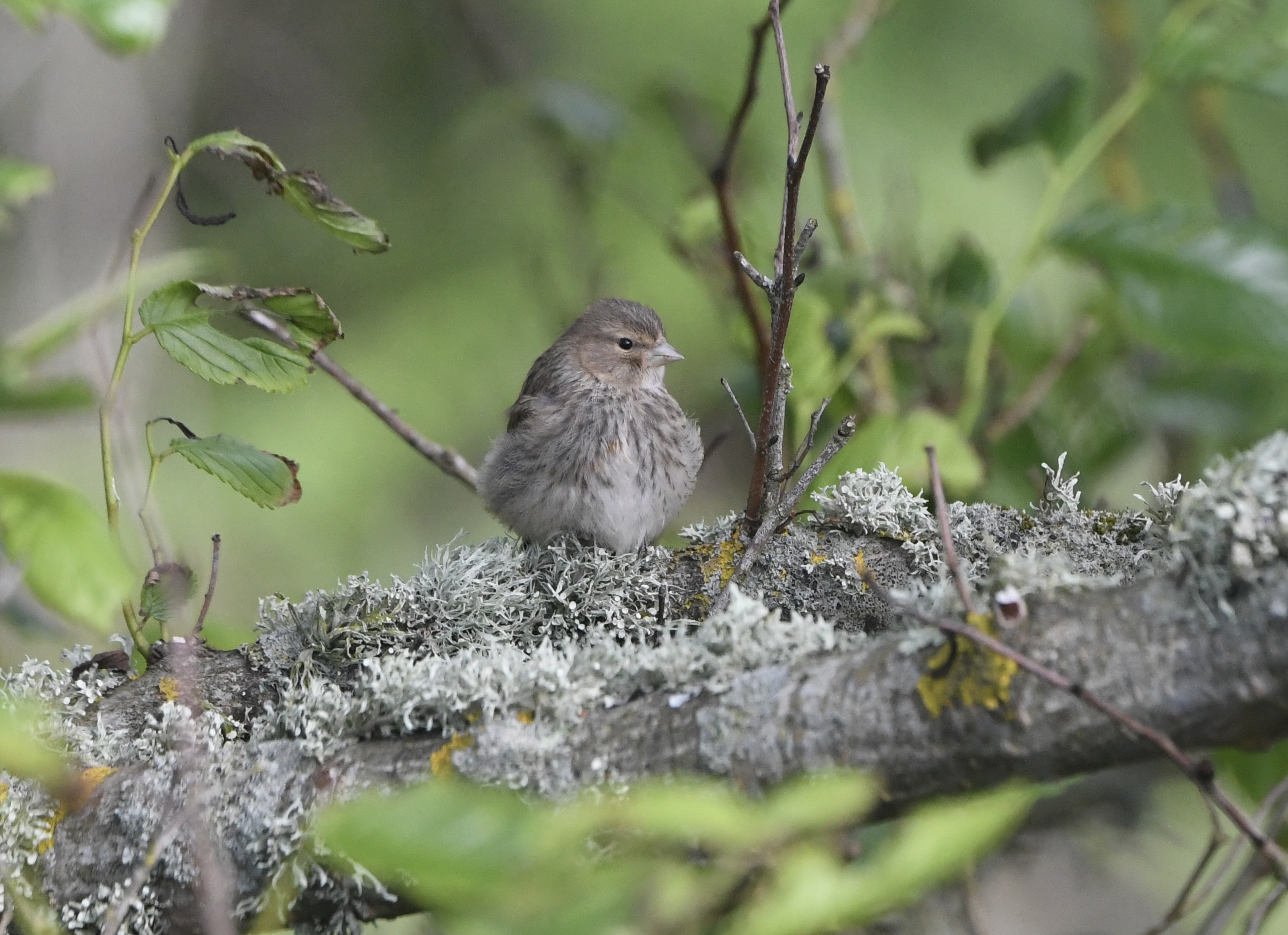 Linnet by G.Lee
For a lover of the outdoors, it seems to be some sort of cruel irony that I'm somewhat allergic to it, the long grass near Government House releasing a dust cloud of pollen. Cue sneezing, itchy eyes and a streaming nose, my nemesis at this time of year. Emma, (positively unaffected by the offerings from the grasses), may well have frolicked through the vegetation just to further exemplify the blissful existence that I can only imagine the non-sufferers have in summer. So, once census was completed, the eyedrops and antihistamines were produced to prevent people wondering if my glassy, red eyes were an insight into my wellbeing.
Then, it was out to the coast to lead the seabird station at Jenny's Cove for the host of day-trippers and new staying guests arriving on the island. On the way, a party of Swifts streaming overhead and screaming caught my ear. Back in my small Gloucestershire village where I grew up, I always hallmarked the day that these marvellous birds would arrive back on territory to swirl in the summer skies. Whilst the Swifts may have been late spring arrivals, a Sand Martin heading southward wasn't so clear. Most Sand Martins pass through in March and April, with May birds generally being quite late. On the contrary, one of the first autumn migrants I expect to see moving southward in July are small parties of Sand Martins moving through. So, was this bird a failed breeder that decided to head back to warmer climes? Or was it a tardy spring migrant that had stalled its journey northward? Even though I often treat mid-July as the start of autumn. I concede that it may be just a tad early to start treating the biridng as though autumn is here, though I'm sure some southbound waders will be spotted before June comes to an end.
The biggest surprise came on the walk back when I spotted a small dragonfly basking on the main track. I saw this was a Darter sp. which, with the lower sections of the eye being blue, helped to identify it as a Red-veined Darter, our third record this year of this migrant species to Lundy. Unfortunately, as I didn't have a camera to hand, I had to take record shots through my binoculars.
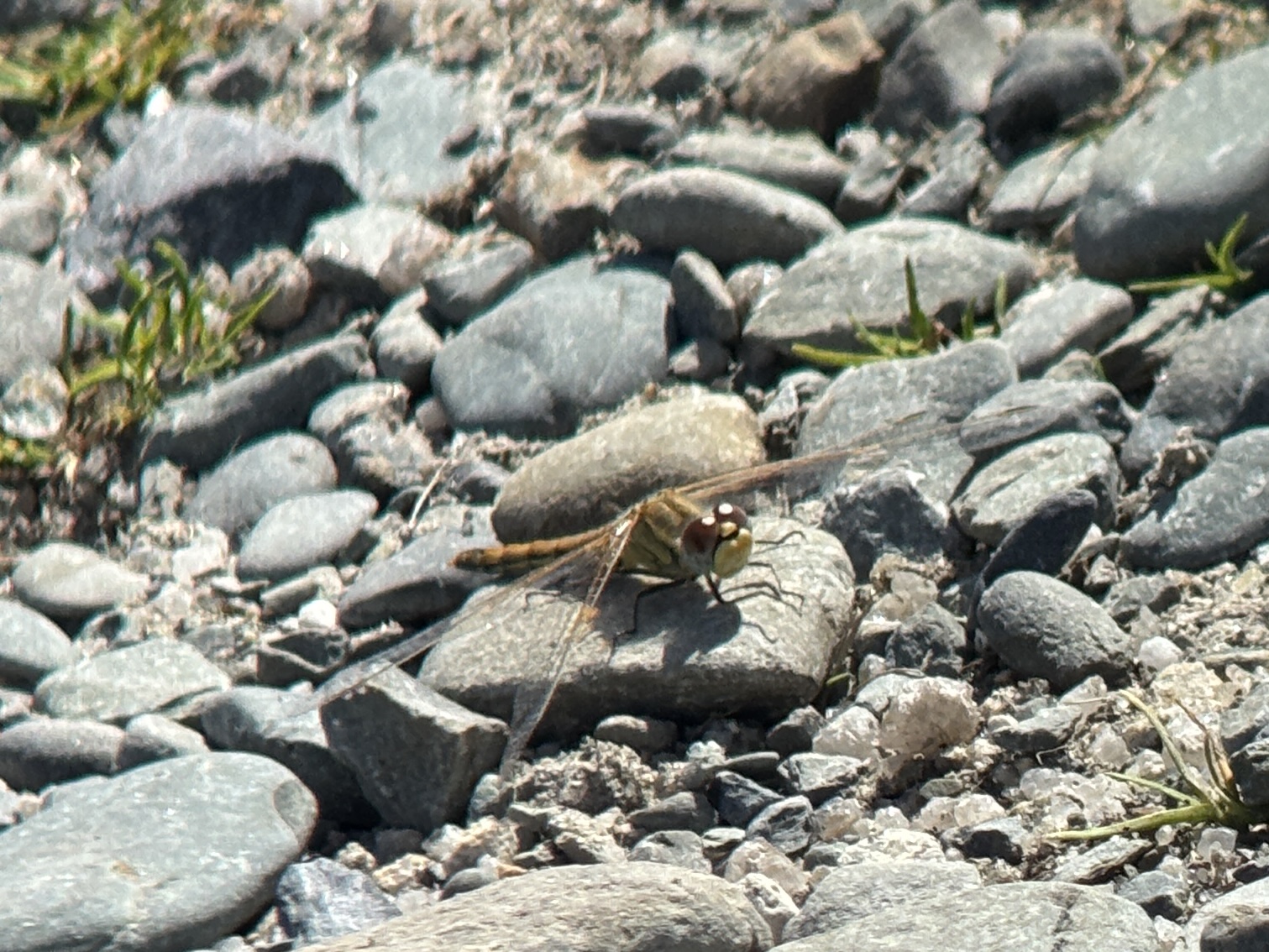 Red-veined Darter by G.Lee