


By Jessie Dermody
It was a bit of a slow start for the conservation volunteers this morning, as island karaoke went on until very late last night. After 3 strong cups of coffee, I began to walk up to the northeast of the island to complete my scheduled seal disturbance survey. I was rewarded for my efforts by many butterflies along the way! This was one of the first sunny days since I have been on the island, and it was lovely to see the migrant butterflies and moths in full force! We had a total count of 40 Painted ladies across the island, and around 30 Red admirals. This is a big step up from last week, when I walked the butterfly survey route and only saw one Tortoiseshell butterfly.
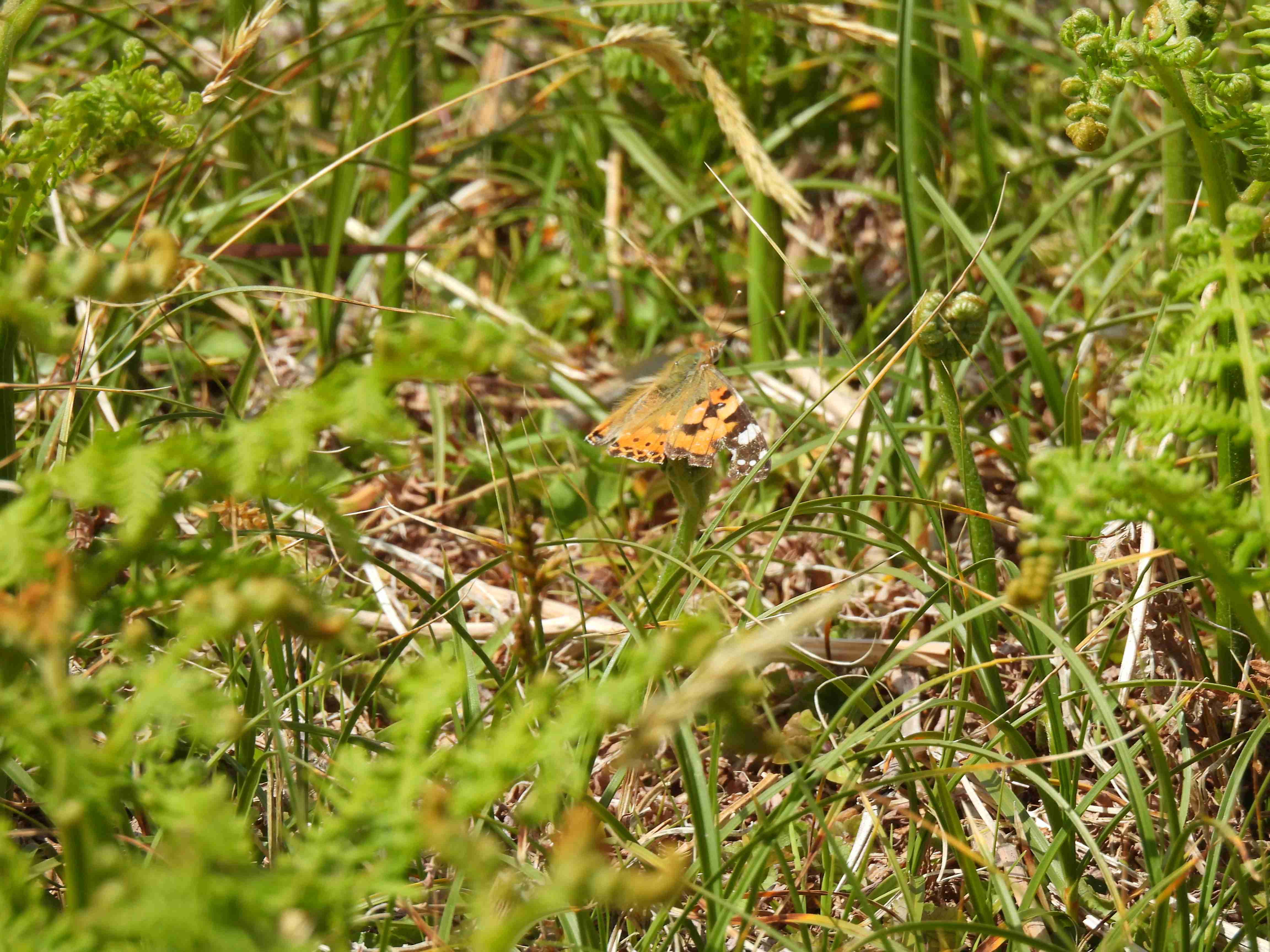 A painted lady butterfly by Jessie Dermody
Unfortunately, I did not see as many Seals during my survey. I also witnessed quite a bit of disturbance of resting seals in the bay, with several seals scared off the rocks into the water by a boat. There were only four seals in the bay when I got there, which is crazy as last week at the same site, around the same tide, there were 38 seals. For most of the survey, I watched one lonely seal (she was pretty cute though!). The decrease in numbers at this site is likely due to disturbance.
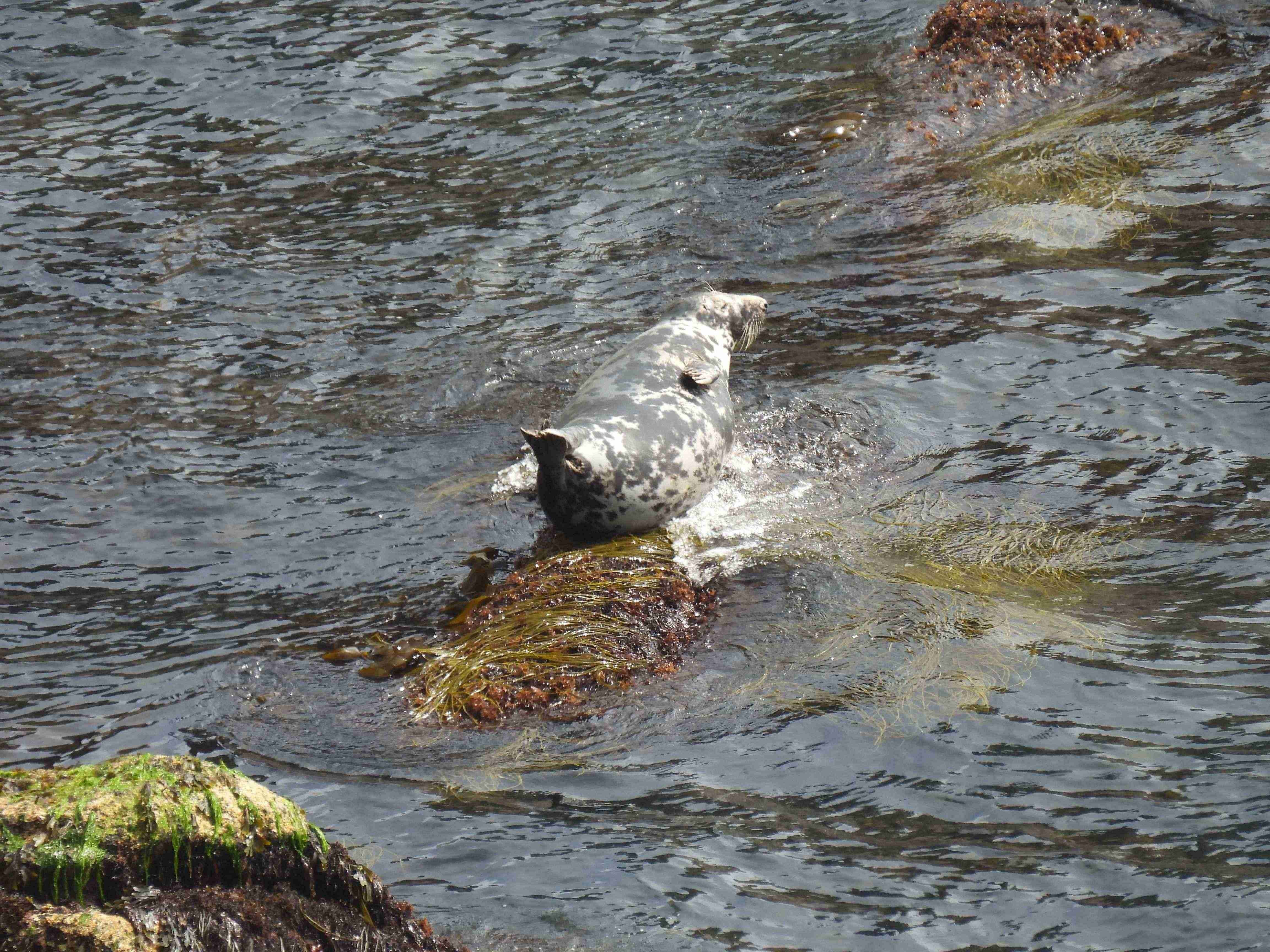 The lone seal in gannets bay. She is 'banana-ing' which indicates she is calm and resting. Photo by Jessie Dermody
Grey seals “haul out” (flop onto the rocks) during the hours around low tide to digest the food they caught while the tide was higher. If the seals get stressed during this time, they cannot digest their food properly, so they lose a lot of energy. Even something as small as people walking on the cliff nearby can cause enough stress to disrupt digestion in a seal. Regular disturbances like this have been shown to have some very severe impacts on seal colonies over time, like causing them to move to areas that do not have optimal conditions for them or shortening their lifespan. The seal research trust has some great resources about this on their website: What to do if you see a disturbed seal.
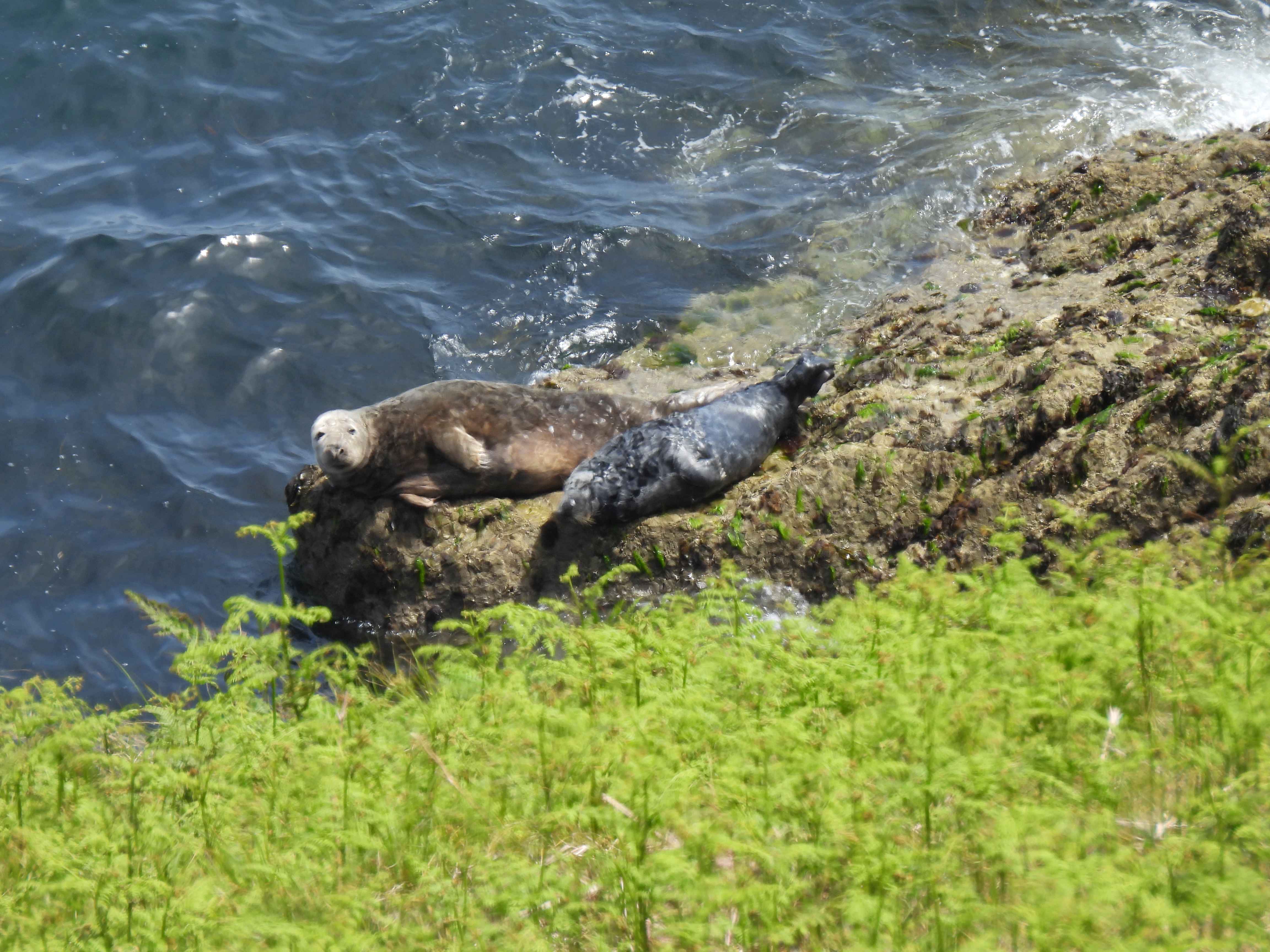 One seal in this photo has been disturbed by me on the cliff, while the other is not bothered. Photo by Jessie Dermody
When Chloë and I do our disturbance surveys, we are watching the seals for any signs that they are stressed. We note down the causes and how severe their stress is based on how they act. A seal that is looking around at you or at something else while hauled out, has been disturbed slightly. A seal shifting or moving positions on the rock while looking around has been disturbed more, and a seal that rushes off the rocks into the water, or dives down with a splash, has been severely disturbed. We do these surveys to measure how much disturbance effects our seal colony, so that the islands warden team know when and how to act to mitigate any disturbance that could have long-lasting impacts. The islands seal colony is impacted by disturbance a lot, especially since they are known to be very friendly, so they attract many visitors. If you witness any severe disturbance incidents whilst on the island, please do report these to the conservation team, with evidence if you can!
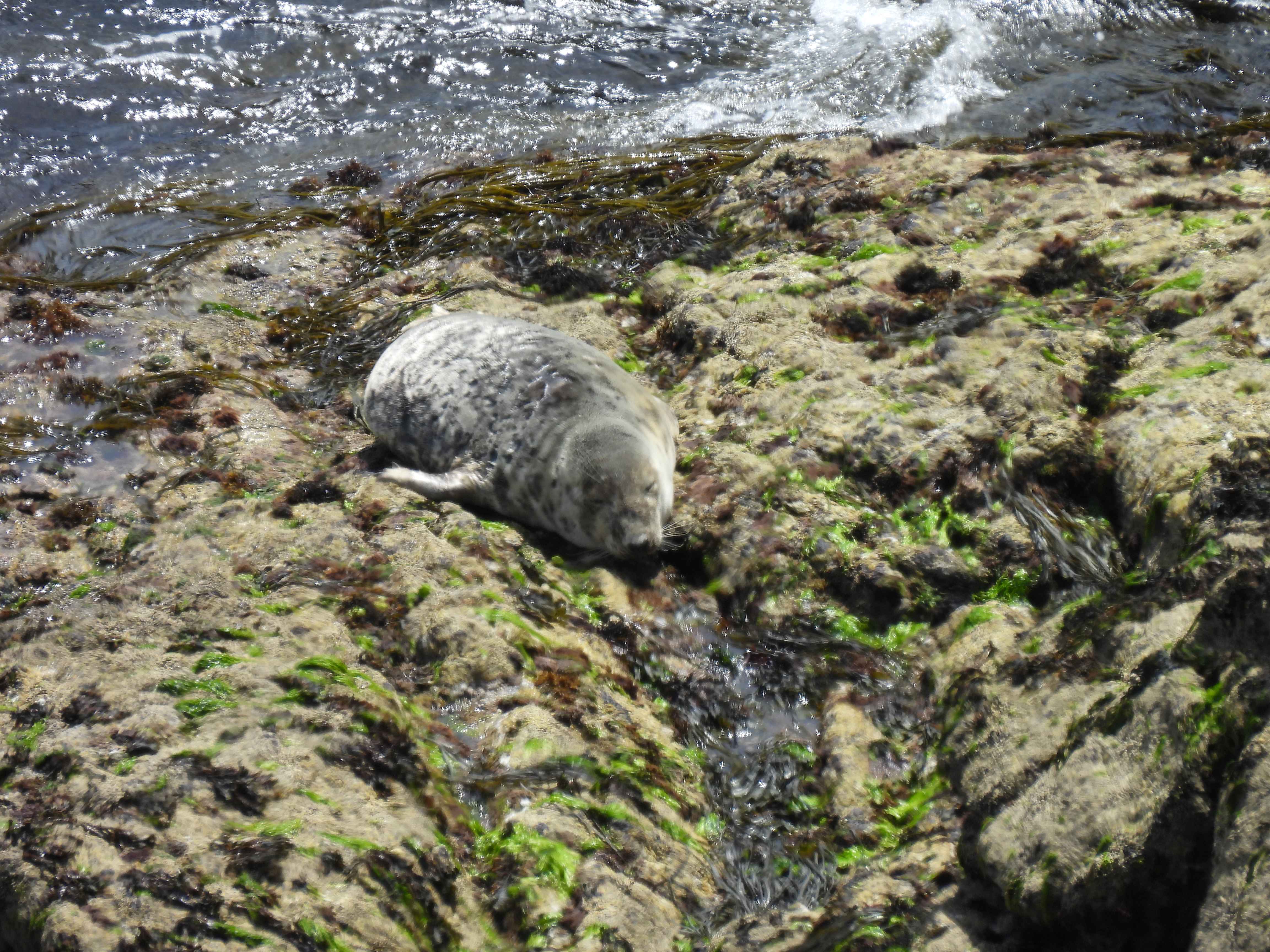 A sleepy seal in the bay by Jessie Dermody
After my survey, I took my time to the walk back, as I wanted to count all the butterflies I saw outside the census route on the way. I also kept up a count of the bird species I saw. I am not as good at counting as some of the other volunteers, but hopefully I will get better over time! I counted 13 Painted ladies, 8 Red admirals, 7 Small Heaths, 3 Shags, 7 Oystercatchers, 9 Linnet, 5 Skylarks and two Carrion crows on that walk. I also met a friendly Rose Chafer beetle! I took a lot of photos along the walk as well. I returned from my travels to make some tasty pasta, then spent the rest of the day trying to get the seal disturbance videos I had taken onto my laptop and hanging out with the other volunteers. An early night was required, and I fell asleep as soon as my head touched my pillow!
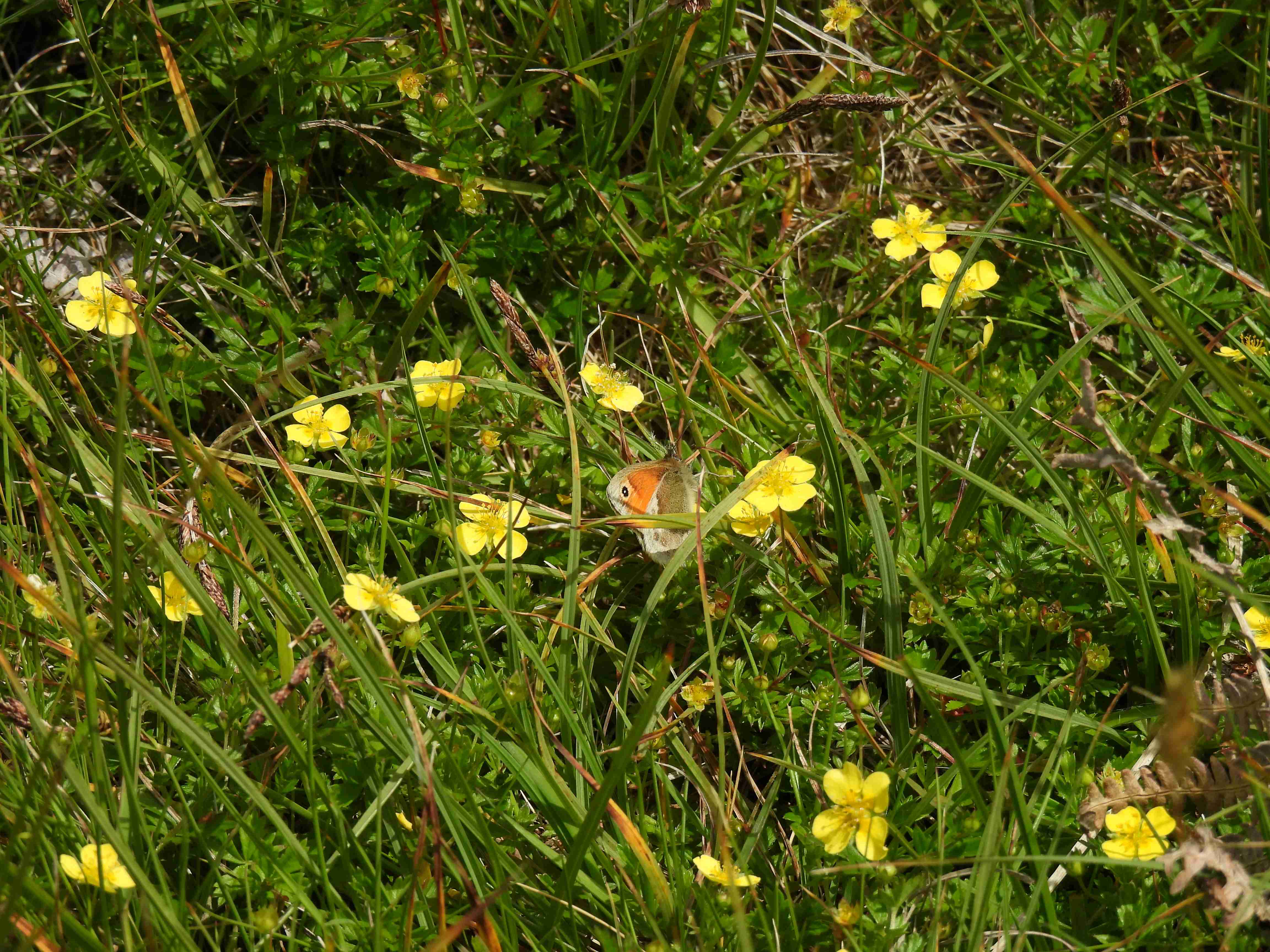 A small heath butterfly by Jessie Dermody