


By Jessie Dermody
A very rainy day today, but luckily it was still quite warm on the island. Most of my planned activities for the day revolved around the water anyway, so I didn’t mind getting very soggy. The assistant warden team aimed to test our baited remote underwater video (BRUV) setup today. This is the camera trap that Chloë mentioned in her last blog post.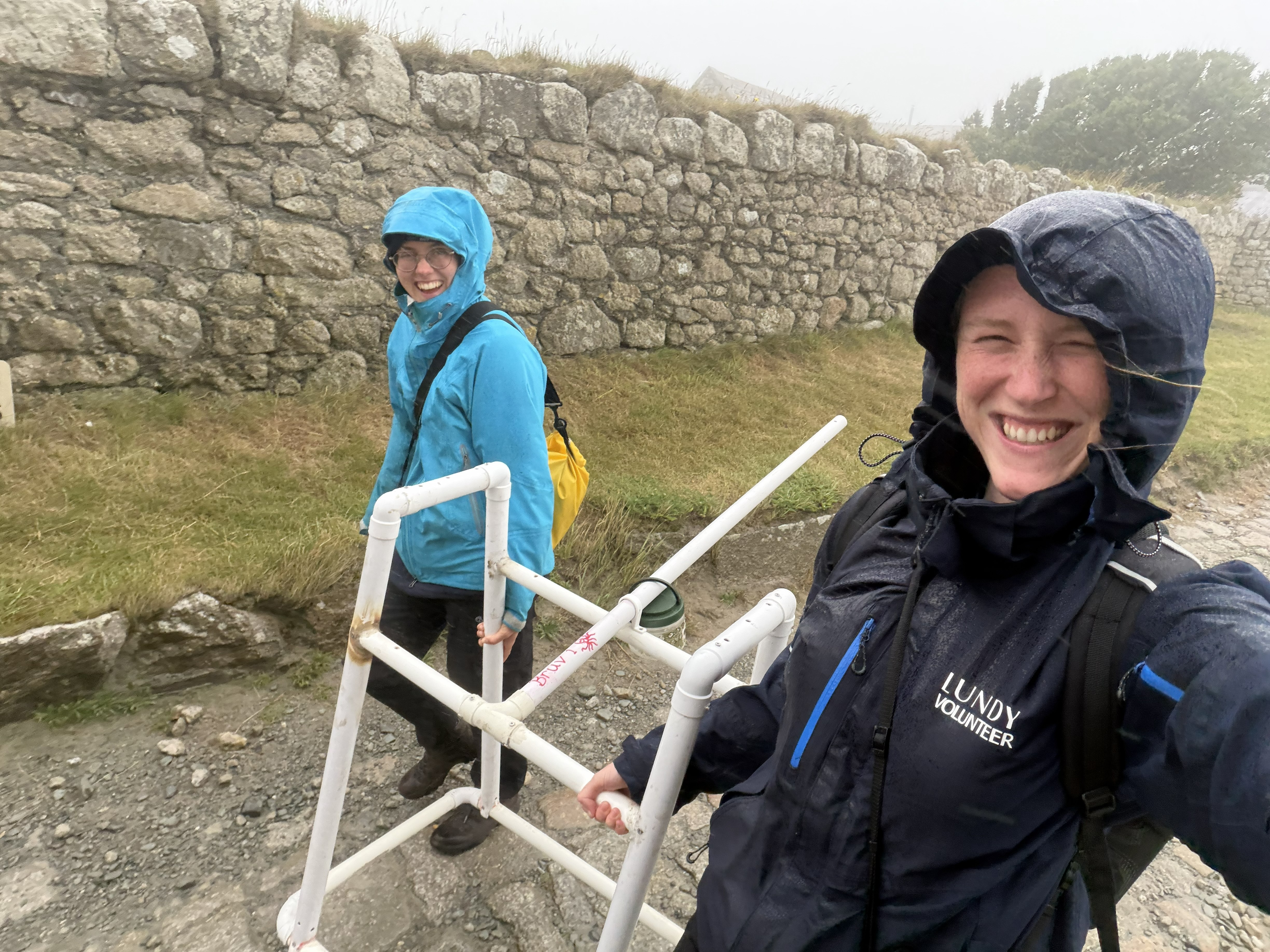 Jessie and Chloe carrying the BRUV frame to the beach. Photo by Chloe Langmead
We hope that this will be a very useful tool in assessing which sea creatures are thriving within lundy’s marine protected area, as we can use this camera to count how many different species are present in a given area. Chloë, Tara and I spent a good part of the day attaching the camera, bait canister and weights to our frame. We had a couple of setbacks, including a broken camera, a lost camera and some issues with mounting the camera that we did have. Once we’d fixed these issues, we lowered our BRUV onto the seabed to film for an hour, and went to do some rockpooling!
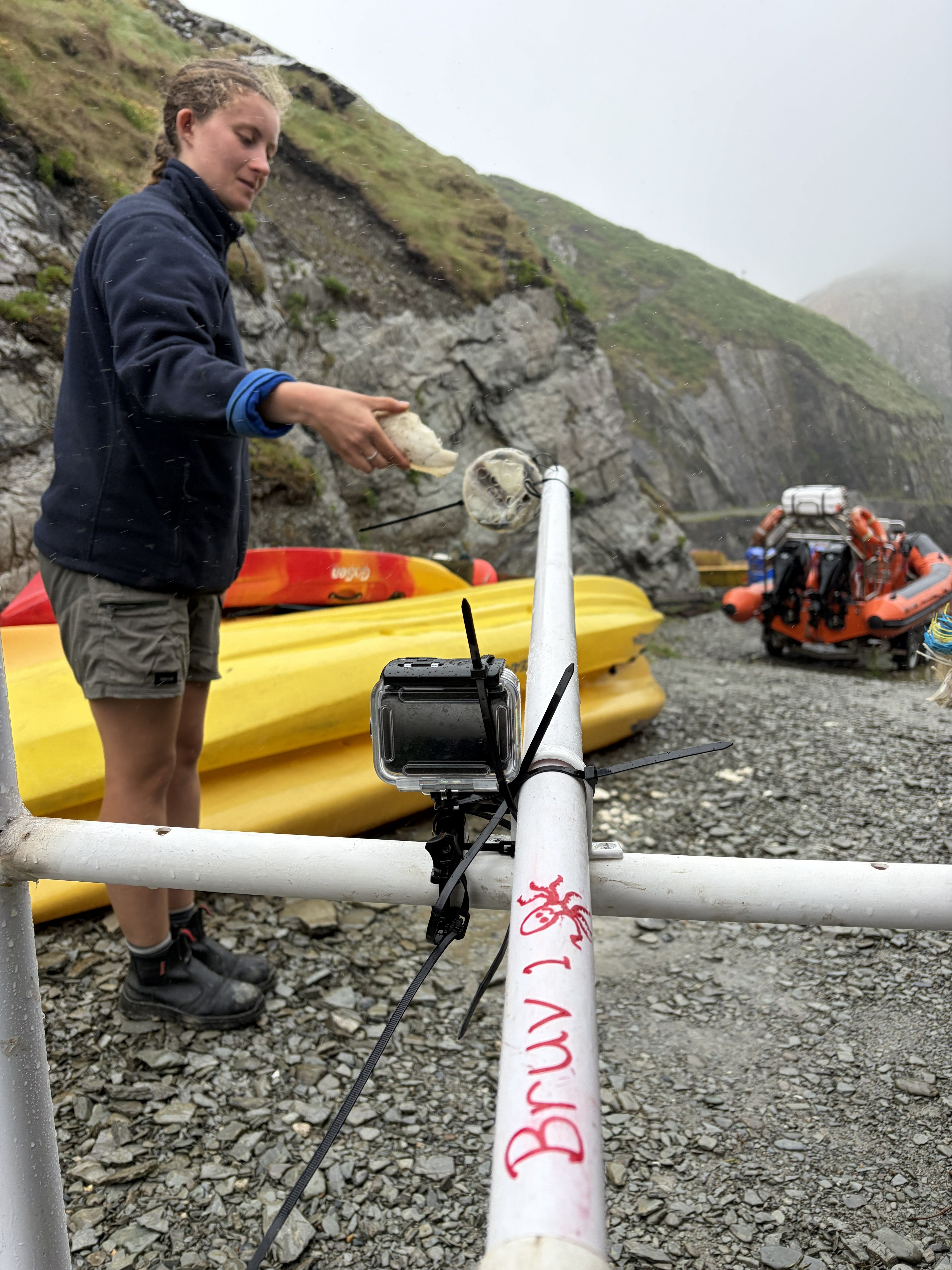 Assistant warden Tara testing what our camera would see if a fish approached the bait. By Chloe Langmead
We were supposed to lead a rockpool ramble today, but the weather did not allow for that, so the three of us went for a ramble by ourselves! I was very happy to find two sea slugs (my favourite animals) in the pools, Favorinus branchialis and Antiopella cristata- the crystal sea slug!
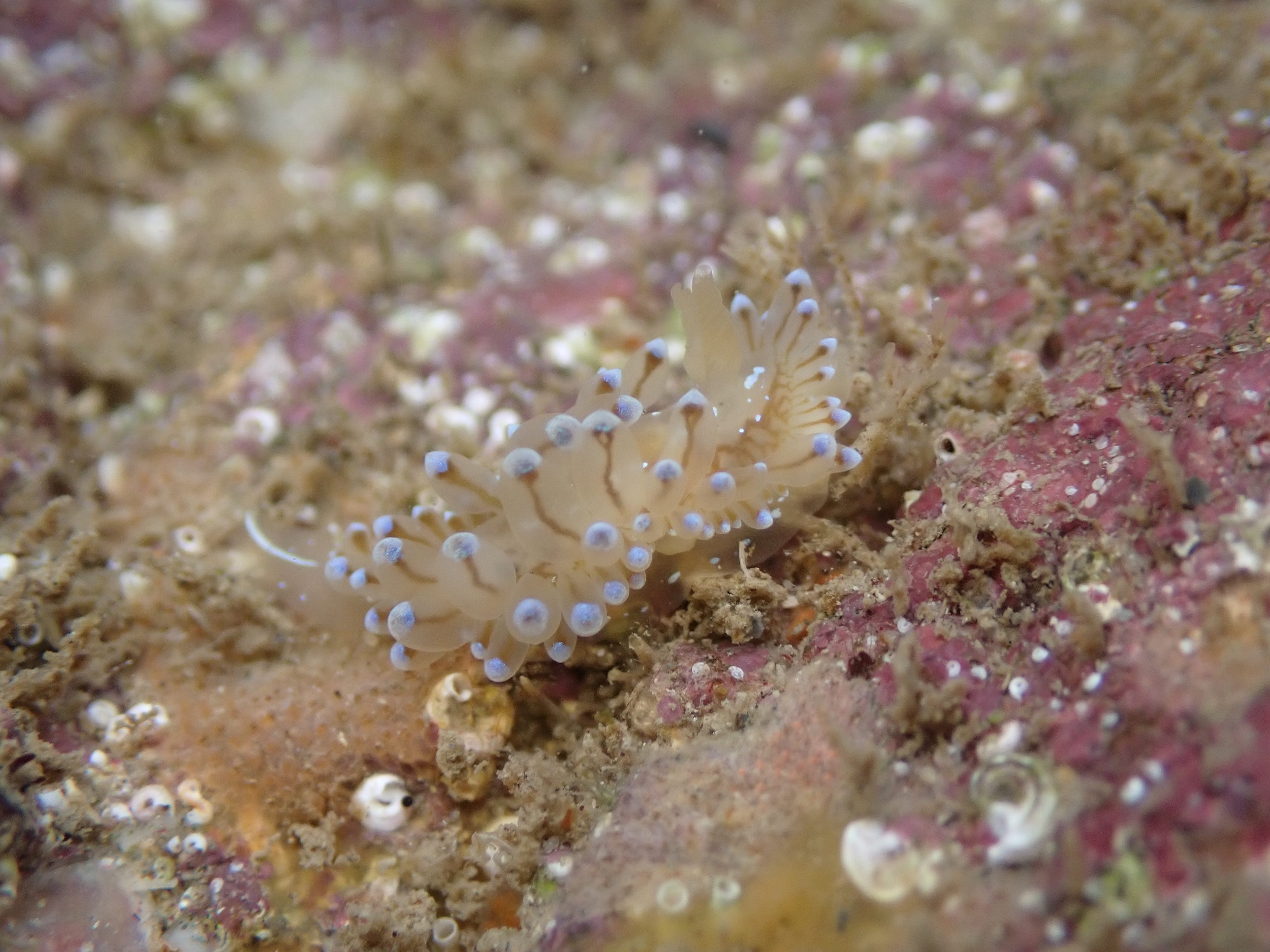 Crystal sea slug on the underside of a rock in Devils Kitchen by Jessie Dermody
This was my first time finding a crystal sea slug myself, so I was very excited. Favorinus is also an exciting find, as this species of slug feeds on the eggs of other nudibranchs, so its presence here shows that there are lots of slugs around.
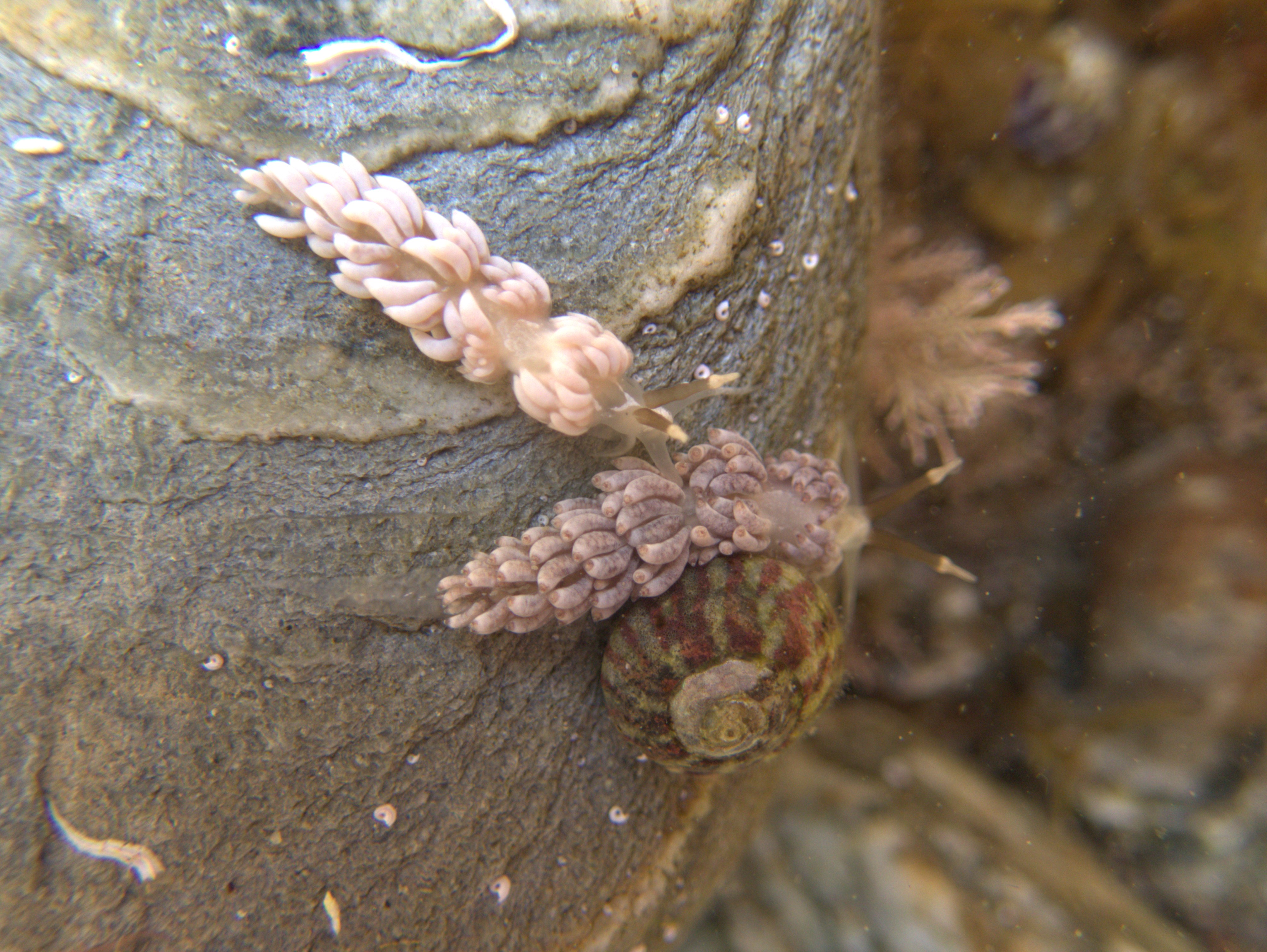 Two Favourinus branchialis sea slugs in Falmouth, Cornwall (I couldn't photograph the individual I saw today). By Jessie Dermody )
We also found an interesting fish, a large edible crab and both types of cushion star! The most commonly reported cushion starfish (Asterina gIbbosa) and has many different colour morphs, whilst the other type of cushion starfish (Asterina phylatica) is a lot smaller, and can be identified by the red star in the middle. Along with one of the large cushion stars, I discovered many starfish babies.
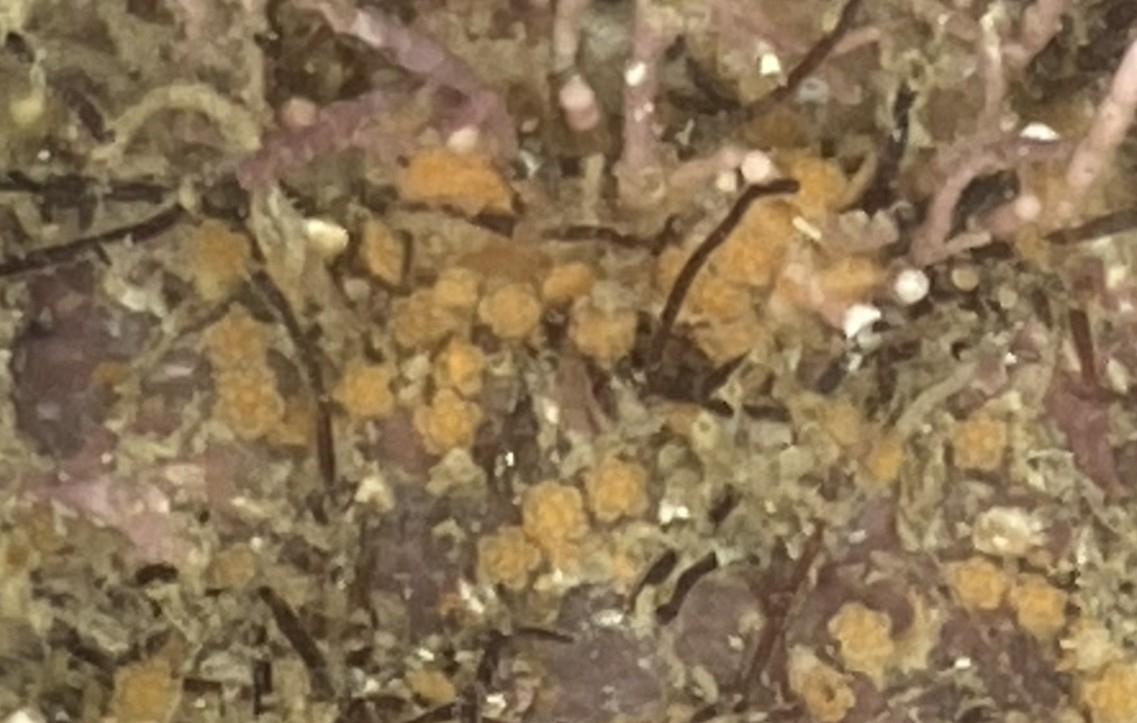 Tiny baby cushion starfish (likely Asterina gibbosa). Terrible iphone camera photo by Jessie Dermody
After rockpooling, we returned to retrieve our BRUV. Unfortunately, when we tried to pull it up out of the water, we noticed that part of the frame was caught on the rope, and we were at risk of breaking it. Eventually, we managed to pull it up using a mixture of the rope and a boat hook. Upon reviewing the footage, we realised that our setup had fallen backwards while under the water, so instead of filming the seabed, it had been pointing upwards the whole time!
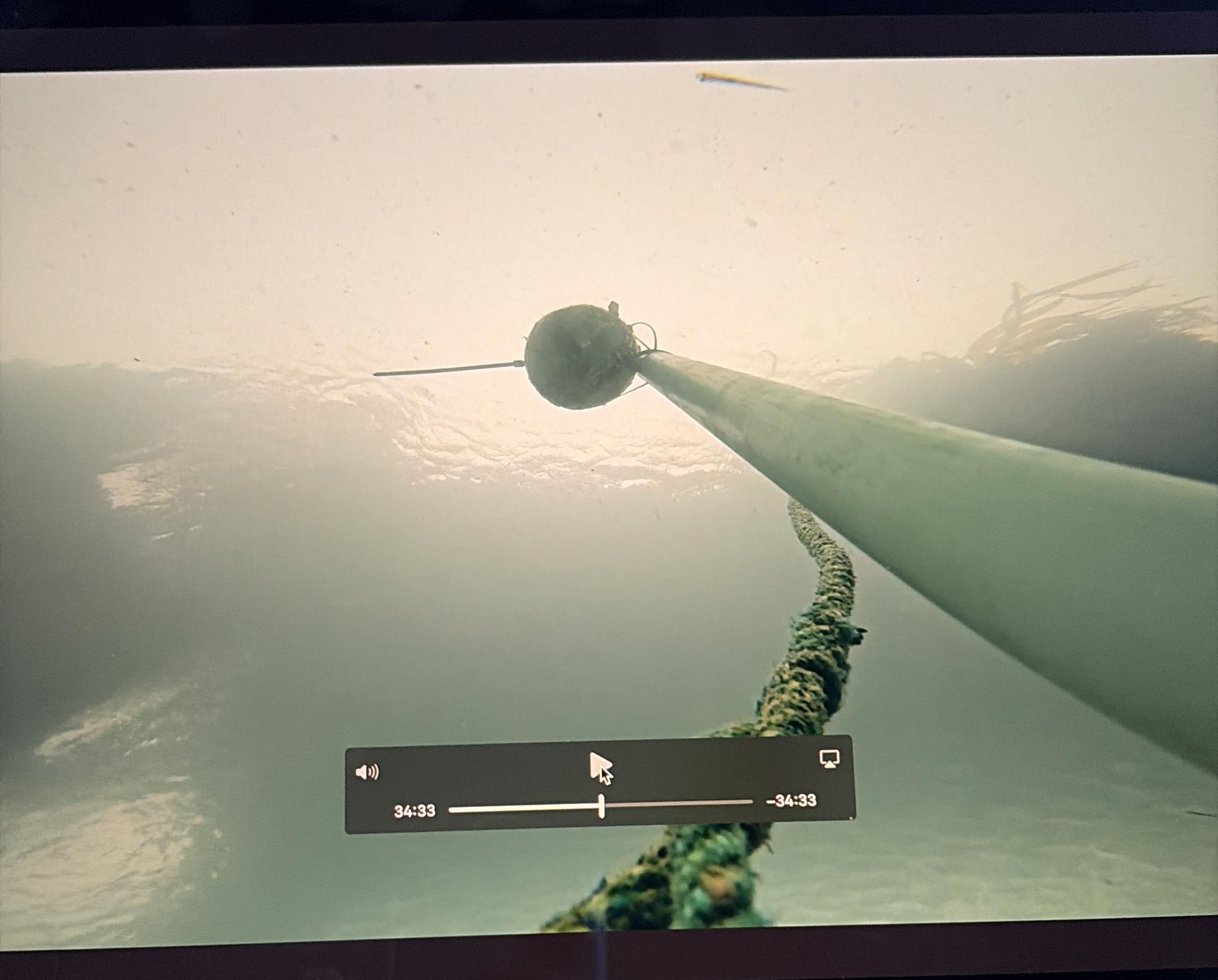 An anti-climatic BRUV screen capture. Can you spot the sand eel?
Not many sea creatures were caught on camera today, which was disappointing. Then again, that’s what a pilot test is for! The camera worked and we learnt a lot about what to look out for in deployment sites. Hopefully our next try will be more successful. Given the weather today, I do not have any other exciting sightings to report! I will hopefully have some better news in my next blog post.