


Bird Sightings
18/05/2026 – A Wet and Wild Day on the island
By Thomas Weston
This week started at around 4:30am this morning, when some extremely heavy and persistent rain fell across the island, and it seemed to last for a good 20mins or so. Getting that extra rest we awoke and enjoyed watching the weather from the comfort of our house for a little.
Today we had a day off and some free time, so me and Eleanor were keen to join the RSPB Large Gull survey that is currently being undertaken across the island. The survey involved counting individuals within each section of the island, and making a note of any sat on something that resembles a nest – aptly known as an Apparently Occupied Nest (AON), which is a technique we use for studying and calculating the number of breeding pairs of seabird species on the island. During the nicer weather on Saturday, the team made a conscious effort to complete as much of the South and East when they arrived, before finishing the last of the East coast yesterday. Meaning only the West coast to complete today! We met up at 09:30am and joined the team, consisting of four RSPB and three Conservation Team members. We had a briefing, protocol and risk assessment read before we split into two smaller teams consisting of Eleanor, two of the RSPB colleagues, and myself, and then Emma and the other two RSPB colleagues. Our team headed to the Battery and began counting gulls within the first survey square, whilst Emma and her team headed to Aztec Bay. After completing our first site, we headed to Jenny’s Cove to complete our second square, before Emma and the team headed North into their second survey square too.
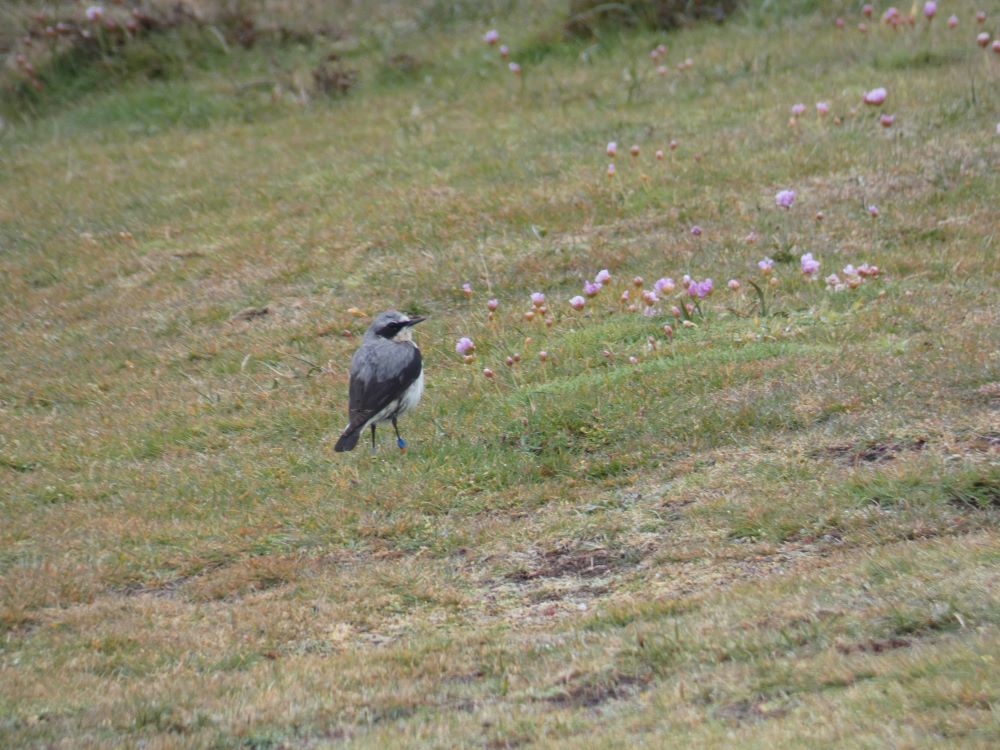 A wet Wheatear at Dead Cow Point by Thomas Weston
Some our survey highlights included a nice range of gulls, including Lesser Black Backed Gull, Herring Gull, and Great Black-Backed Gulls including some on AONs which was amazing to record and see! It was not only the gulls we saw, but good numbers of 2500+ Guillemots, 100+ Puffins, and 500+ Razorbills within our sections. A flyby Gannet, some resting Fulmars on AONs and a frenzy of nest-building Kittiwakes made up the seabird festival. Walking on back, the weather deteriorated, but we did see a colour ringed Wheatear near Dead Cow Point. This male had also been seen by a guest which was quite funny. The Wheatear colour ringing team are on the island currently, so please keep an eye out for some colour ringed bids – one of ‘our breeders’ is a Skokholm ringed bird first seen last year.
We spent the afternoon taking it easy and having a more relaxing day off before giving the Lundy Field Society ‘Discover Lundy’ group a Manx Shearwater talk and walk. The evening was successful with a 45-minute talk in the Church followed by a brief wander out to a colony. The weather was atrocious, gusting 40mph and horizontal rain was not the most fun, but we quickly found a bird and processed the retrap. We walked back with the team and finished at a rather respectable time of 11pm.
17/05/2026 – A couple of surprises...
By Greg Lee
The westerly wind remained quite breezy this morning, but census certainly had activity. Spotted Flycatchers are a staple of May migration, so it was pleasing to see at least five birds around Millcombe, sallying from prominent perches and generally showing very nicely. On occasion, the loud bill-snapping was heard indicating that another winged insect had met its fate. A Reed Warbler was perhaps less accommodating, but the warm, brown colouration contrasted nicely to the greener Chiffchaff sharing the same Sallow bush with a Sedge Warbler snatching briefly into song. A different migration was happening at the same time as the island welcomed a large cruise ship full of visitors, who were working their way up the beach road as I walked about on census. On the upper plateau of the island, House Martins and Swallows were pulsing through with 33 and 28 counted respectively this morning, although this seemed to tail off further into the patrol. On the other hand, the Meadow Pipits and Skylarks seemed to be quite quiet today, preferring to hunker quite low in the breeze. A Siskin over the Quarry Cottages seemed a little unseasonable but was something quite different on census. The male Kestrel drifted along the coast as well; the first time I had seen him for a week.
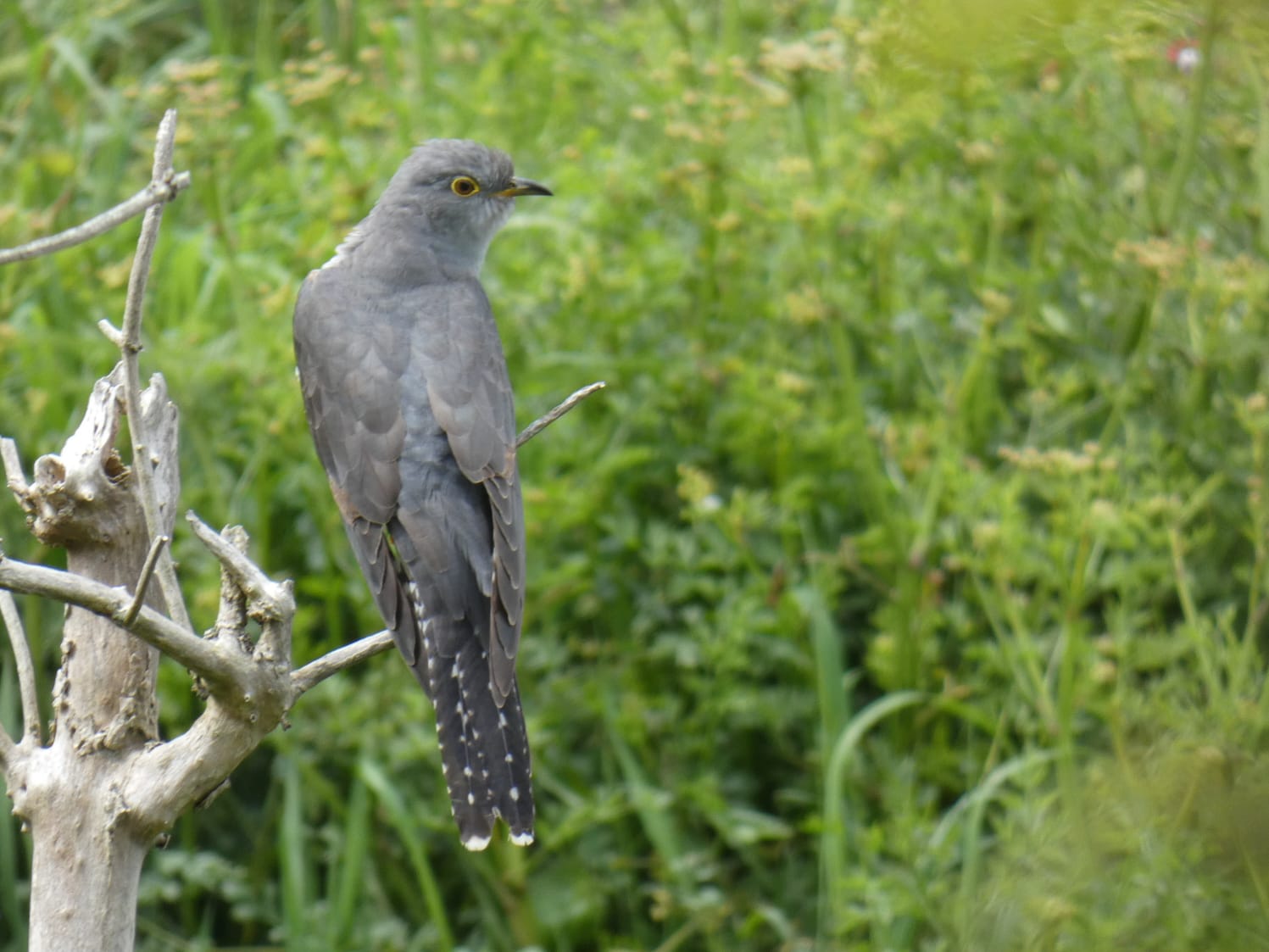 Cuckoo by Thomas Weston
Heading back into the Village, there appeared to be lots of Starling and House Sparrow activity with chicks of the former heard squeaking from various cavities and the Sparrow Team reporting the first hatched chicks of the year. A Cuckoo was seen by multiple observers across the island during the day, with this particular bird occasionally singing away and decimating the large caterpillars. However, top prizes go to the summer-plumaged Turnstone down near Rat Island, a good record of this surprisingly scarce species on the island and a small tidbit of that lovely May passage of arctic-bound waders that the rest of the country enjoys. In addition, a first for the year arrived in the form of a Quail, which was flushed along the East Side.
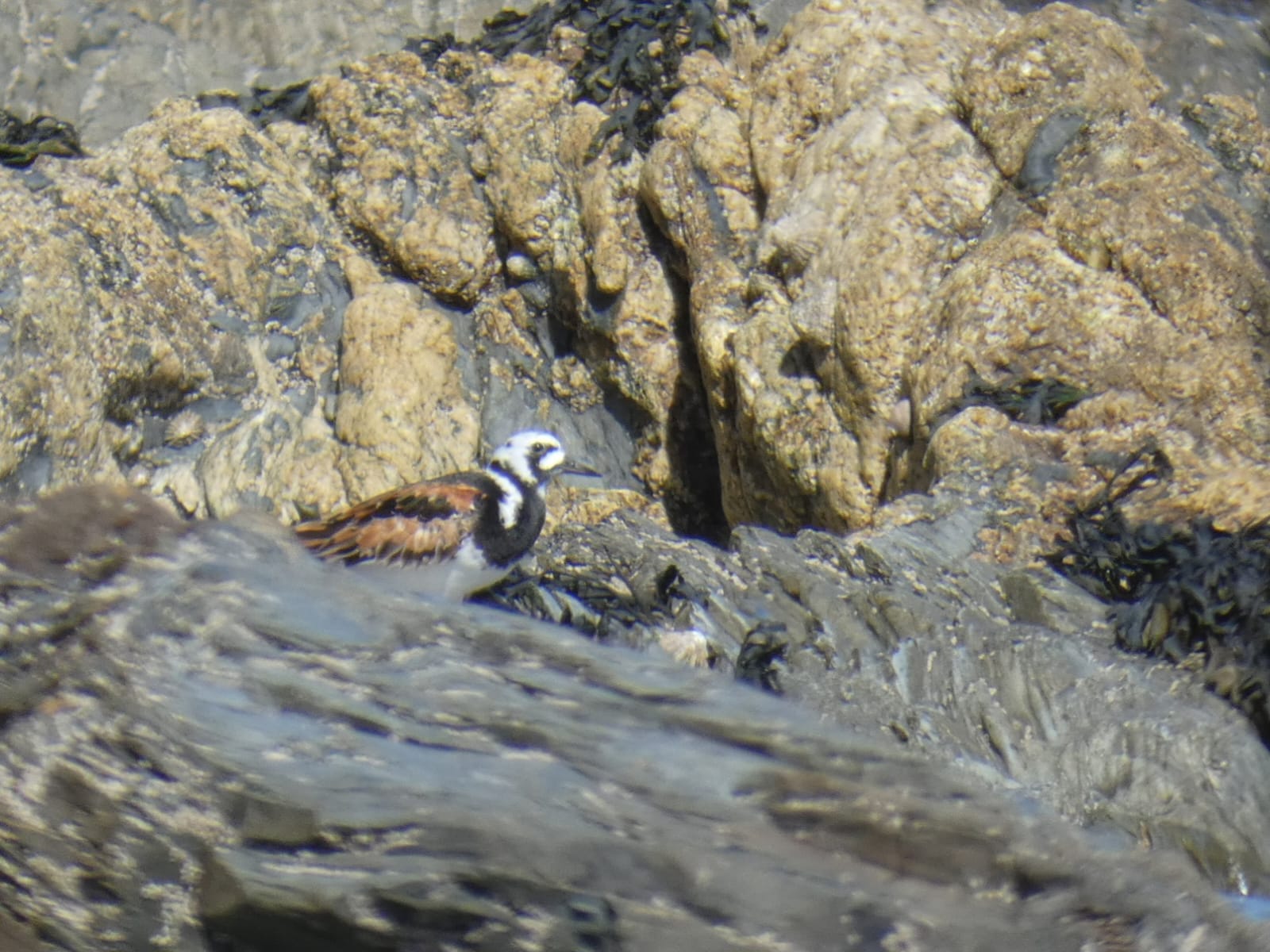 Turnstone by Thomas Weston
16/05/2026 – Mothing Madness
By Emma Abel
The morning started with a successful moth trapping session in Milcombe with 81 moths of 14 species waiting to be identified in the trap. The most abundant moth species was Bright-line Brown-eye with 24 individuals. Some of the most exciting species included a Buff Tip, with its twig-like camouflage, and a Pale Tussock with its signature positioning of the front legs, presenting its fluffy legs to the world.
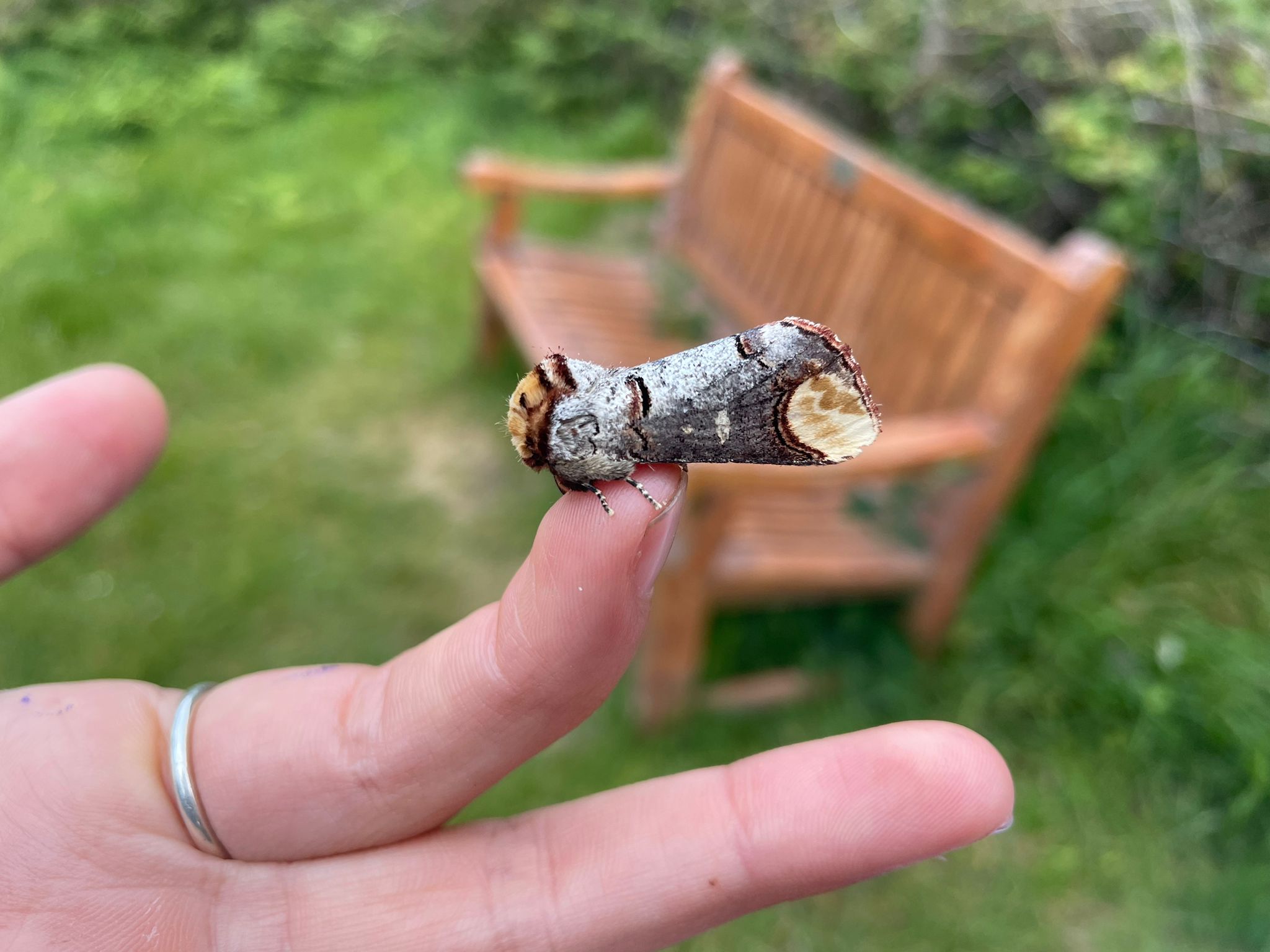 Buff Tip Moth By Tara
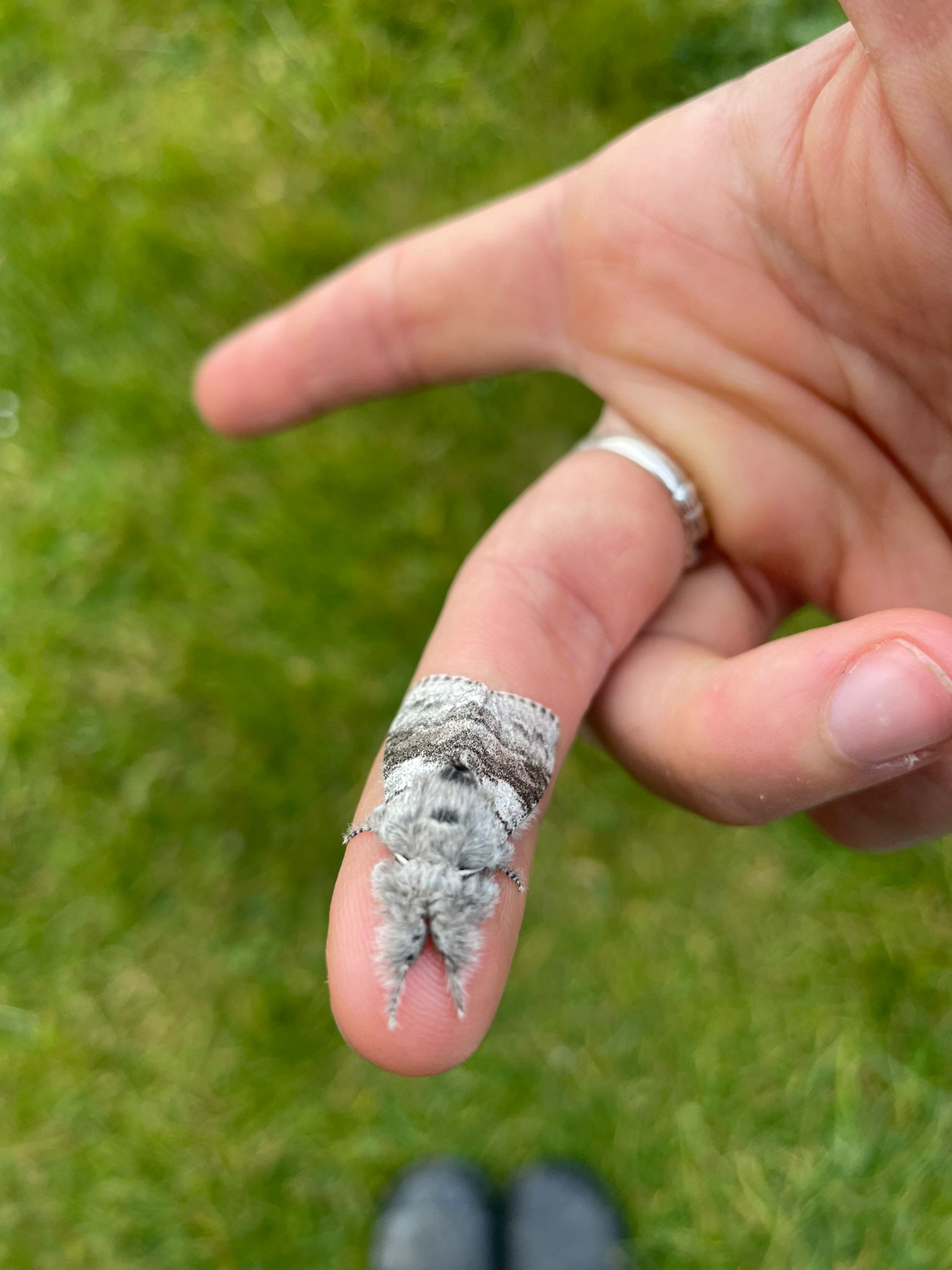 Pale Tussock Moth By Tara
I walked to Jenny's Cove early this morning and was greeted by a Cuckoo's song echoing across Acklands Moor from the direction of Old Light. After scanning Pondsbury for any sign of the Teal duckings (no such luck...), I sat and monitored Puffin burrows for the morning. Although numbers are not what they ususally are this time of year, breeding adults are still back and using burrows and I'm up to 185 potential burrows mapped at the Jenny's Cove monitored colony. As Puffins lay their eggs in burrows we cannot be sure when eggs are laid and hatched, but judging by the birds bringing back nesting material we can assume that eggs are being laid at this month. Other birds that are laying eggs less secretively are the Guillemots, with their bare rock ledges to call a nest. My estimation of Jenny's colony was 2887, many of which will hopefully be laying their bright blue pear shaped eggs at the moment.
After finishing my monitoring, I was joined by Jacob who has been helping out around the island with the LFS work party. Together we ran the Seabird Station, chatting to visitors about the seabirds and bringing the Puffins closer using our scope. It is always rewarding to share the joy of seabirds with people and share in their excitement at seeing Puffins up close, often for the first time. Maddie was also running a Seabird Station at the Battery and together we spoke to over 100 people, despite the grey and windy conditions.
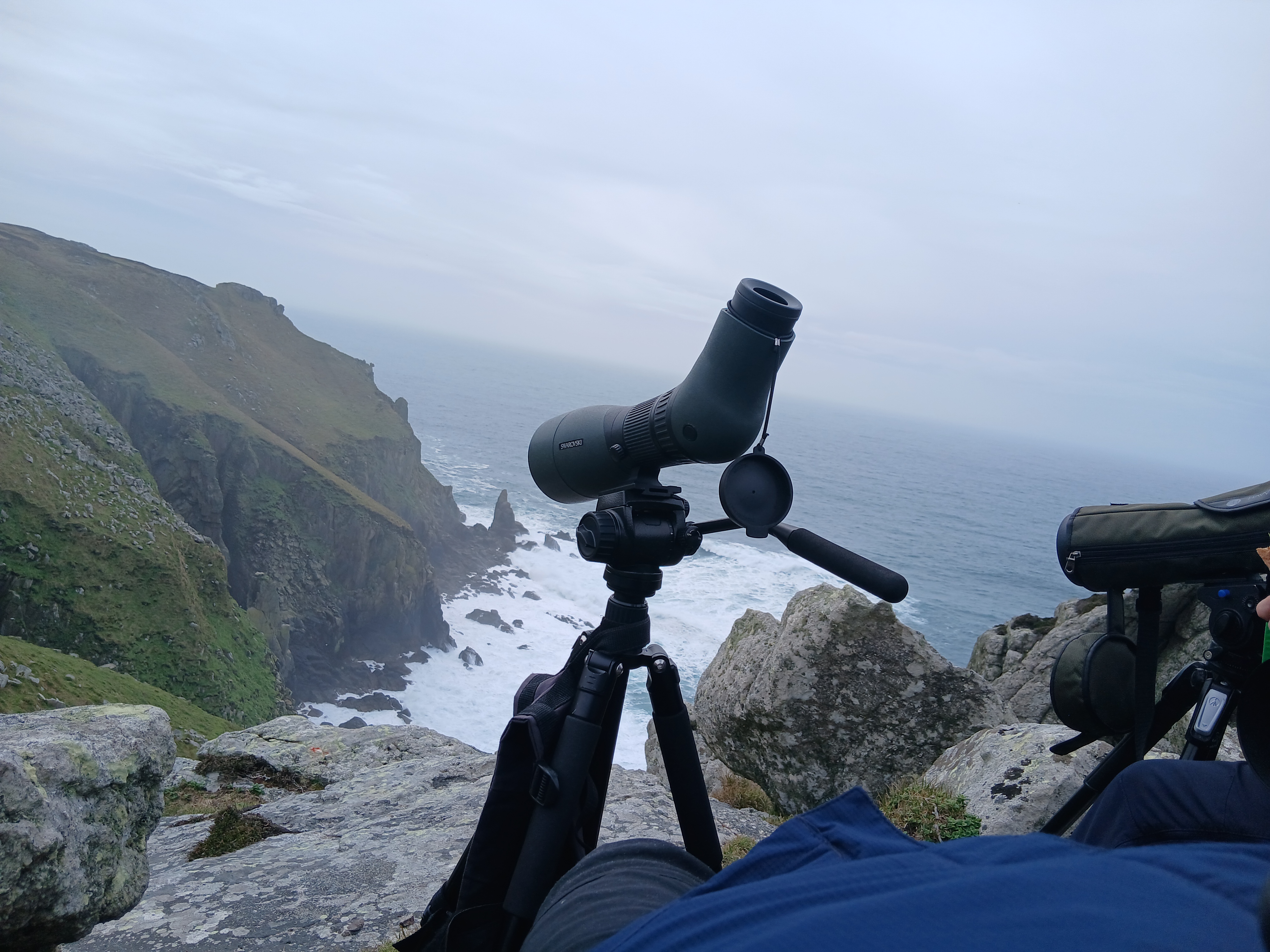 A grey but beautiful Jenny's Cove
Elsewhere on the island a Reed Bunting was seen over at Quarry pond, while Millcombe had 3 Sedge Warblers, a Whitethroat and a juvenile Stonechat. 2 Collared Doves were also hanging around after a few days hunkering down in the South.
15/05/2026 – A sunny spring day!
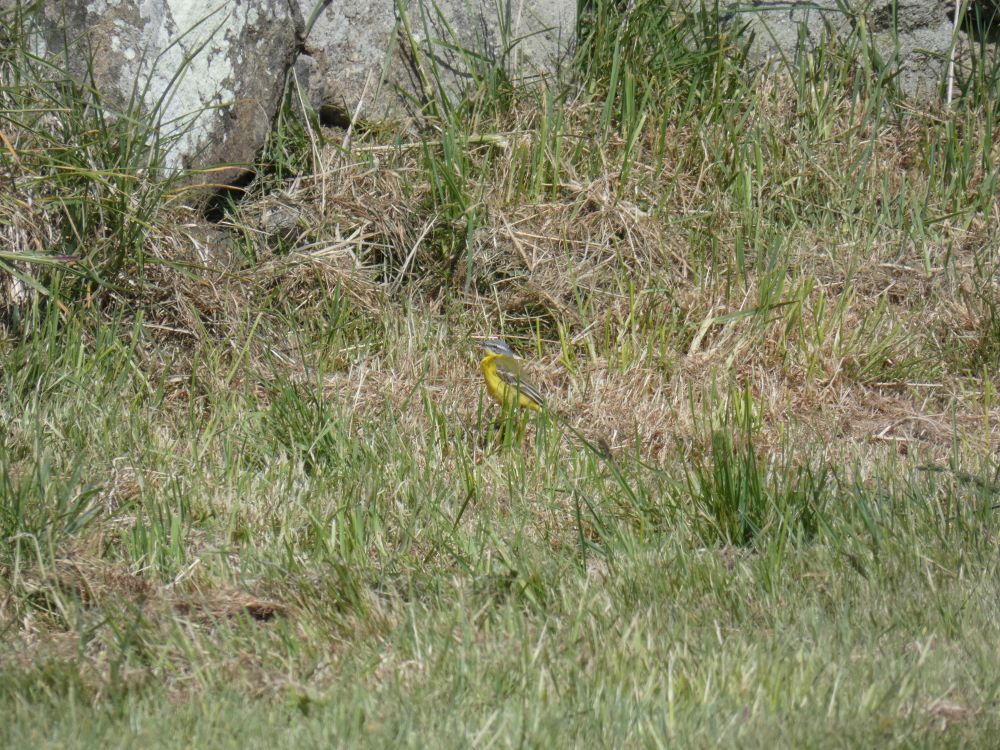 Channel Wagtail male in the Campsite by Thomas Weston